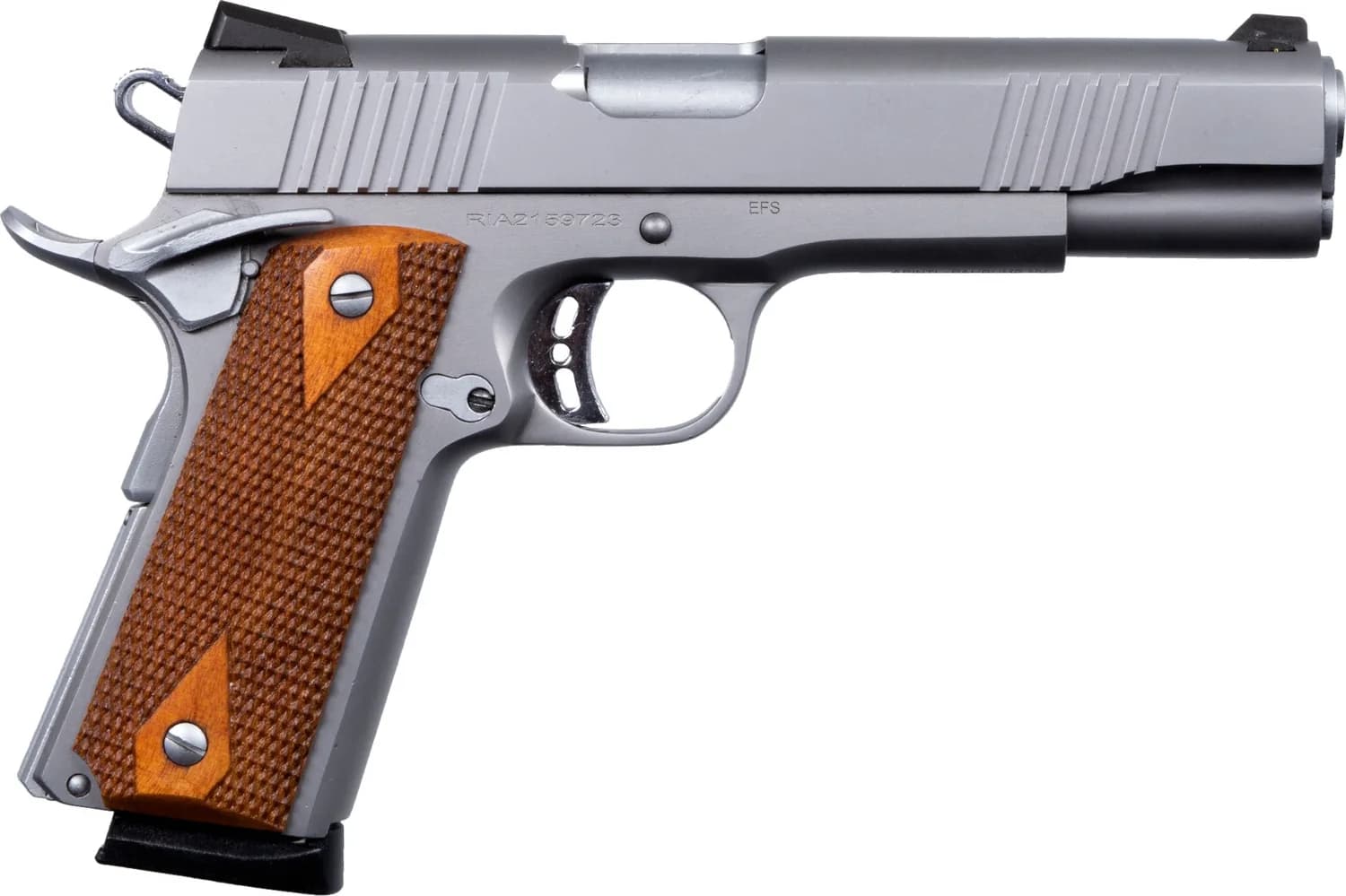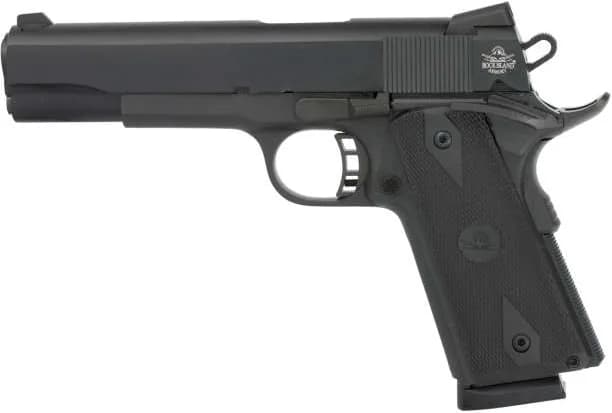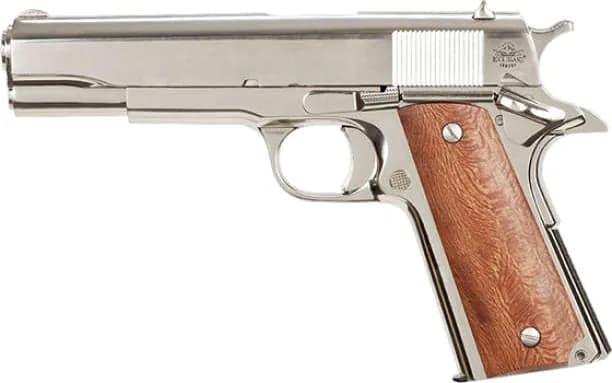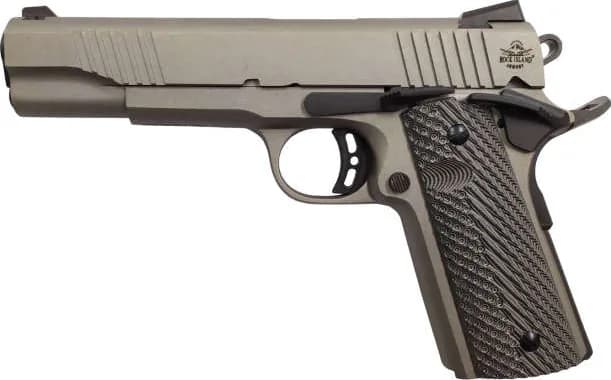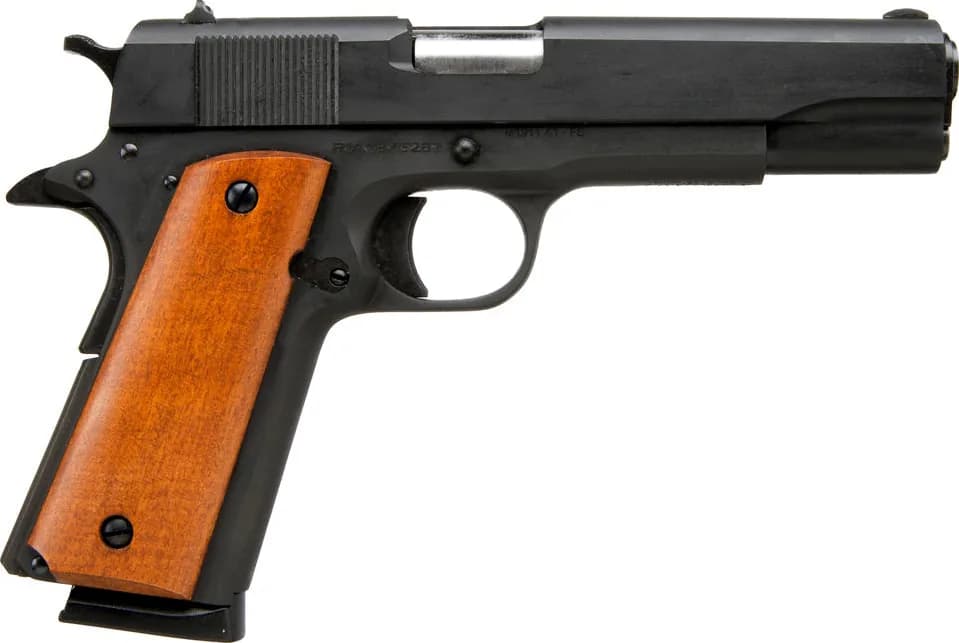
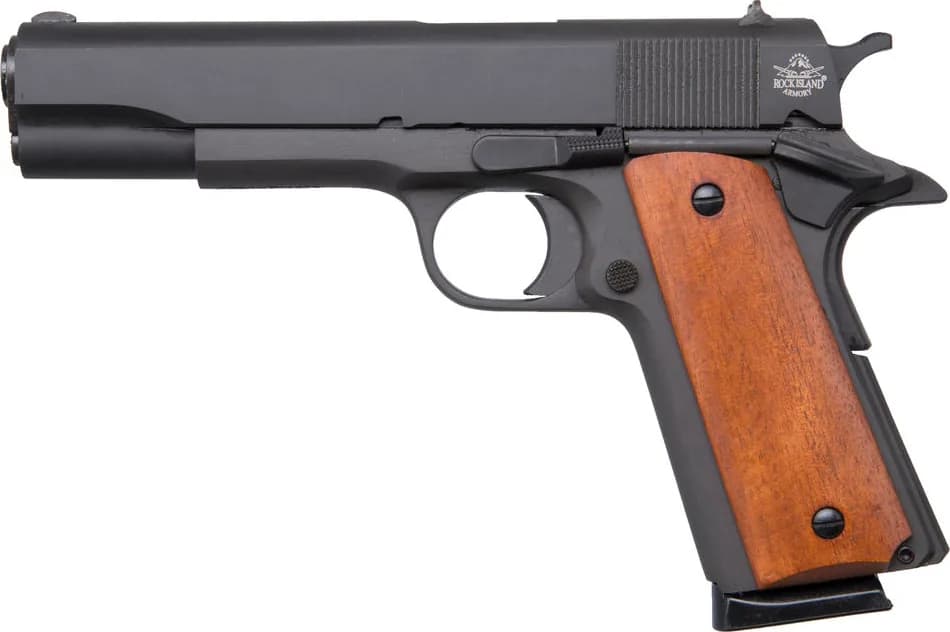
Series 70 Type Firing System, G.I. Style Trigger and Hammer
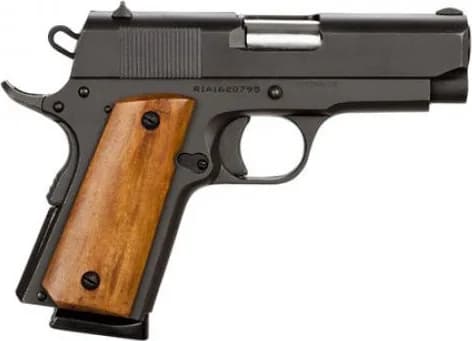
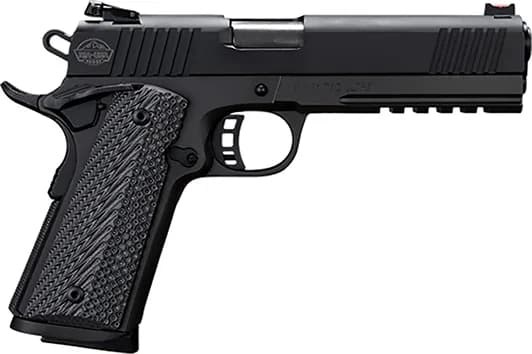
The Armscor / Rock Island Armory M1911‑A1 FSP GI Standard FS is Armscor’s no‑frills interpretation of the iconic Government‑pattern 1911A1. It sits in the company’s long‑running GI series as the faithful, full‑size 5‑inch offering intended for buyers who want a traditional single‑action .45 ACP 1911 without modern tactical add‑ons. Armscor has listed this model in its North American product catalogs for several years, and mainstream gun publications have featured the GI Standard FS as a value‑oriented, historically styled option among contemporary 1911s.
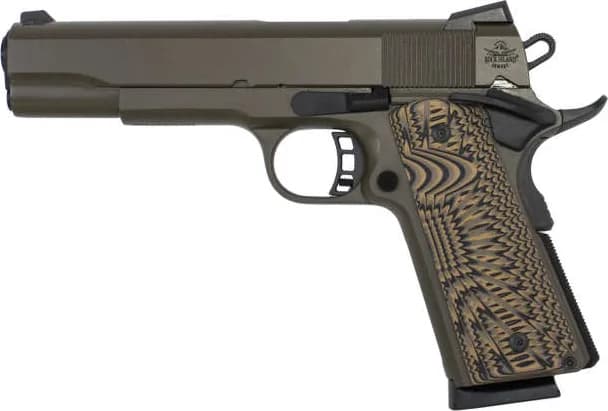
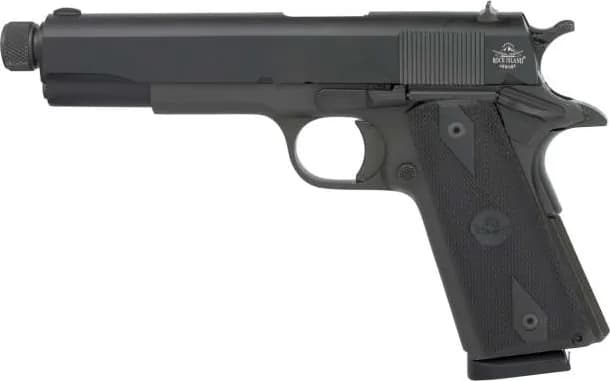
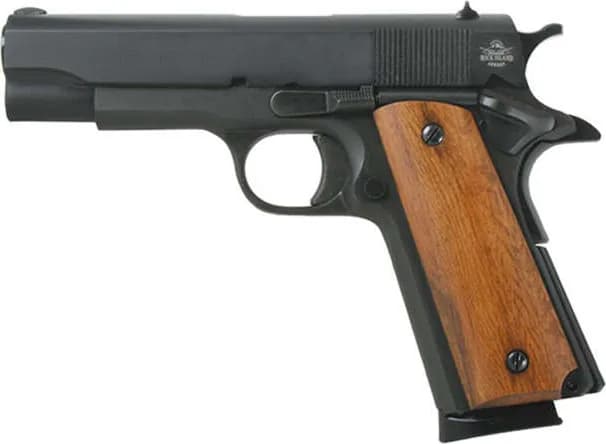
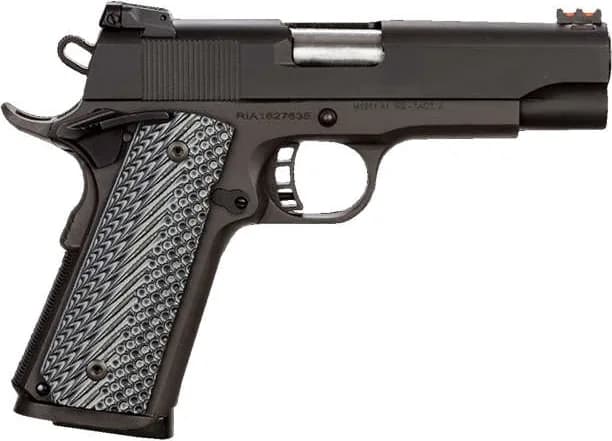
The pistol is built to conventional mil‑spec lines: single‑action operation, fixed G.I. sights, flat mainspring housing, smooth wood grips and a standard G.I.‑style thumb safety plus grip safety. That conservative approach is deliberate — the GI Standard FS is meant to echo service pistols of the mid‑20th century while remaining suited to modern ammunition and use. Armscor positions the GI line as a rugged, broadly capable family of 1911s that covers multiple calibers and configurations.
On paper and in hand the GI Standard FS reads like a classic full‑size Government model. The pistol uses a 5‑inch barrel on a parkerized steel slide and frame, single‑stack eight‑round capacity in .45 ACP, and overall dimensions that preserve the familiar balance of the original design. Manufacturer literature and independent reviewers note that the slide and frame are made from 4140 steel and that barrels are button‑rifled; Armscor also states that these pistols are hand‑fitted and inspected to controlled tolerances. Those construction choices speak to a conservative, durable build rather than a lightweight or feature‑heavy modern 1911.
Measured weights and geometry back up the “classic” feel. Published test data lists an unloaded weight around 39.5 ounces and an overall length of roughly 8.5 inches; combined with the 5‑inch barrel this gives the pistol a firm, muzzle‑heavy balance that tames recoil but also makes it less convenient for concealed carry. Controls — thumb safety, grip safety and the GI‑style sights — are simple and familiar to anyone who has handled G.I.‑pattern 1911s. The pistol’s Series‑70‑type fire control (no internal firing‑pin block) preserves a crisper, less complicated trigger break in exchange for the older‑style internals many 1911 traditionalists prefer.
Ergonomically, the GI Standard FS is neither radical nor modernized: the smooth wooden grips and relatively narrow beavertail area produce an interface that will suit shooters who like a traditional hand‑filling grip. The short guide rod and conventional recoil spring/plug arrangement make field stripping straightforward for those accustomed to classic 1911 disassembly. Reviewers note that the factory thumb safety is slightly larger and more user‑friendly than some original WWII parts, which helps with manual manipulation during defensive training.
Independent evaluations place the GI Standard FS in the “good, honest” range of accuracy and reliability for a mil‑spec 1911 at its price point. Bench groups at 25 yards reported average group sizes in the low‑to‑mid‑2‑inch range with quality full‑metal‑jacket and defense loads, and the pistol produced occasional sub‑2‑inch strings with well‑matched ammunition. In practical short‑range drills (7–10 yards) testers were able to deliver rapid, accurate hits, a reflection of the platform’s controllable recoil impulse and standard sighting geometry.
Trigger characteristics are a frequent topic in reviews. Armscor rates the factory single‑action pull in the mid‑range for mil‑spec 1911s; published test pulls have varied, with some reviewers measuring lighter‑than‑spec pulls on individual examples and others noting a slightly gritty or heavier pull near the 5–7 pound range. In practice that translates to a serviceable, if not match‑grade, trigger that many owners find easily improved with standard gunsmithing tweaks. Barrel and lockup quality as delivered is generally reported as acceptable for the intended use: accurate enough for defensive and range work without the hand‑fitting and tuned components of higher‑end custom 1911s.
Reliability in testing and owner reports is broadly positive. Testers in controlled evaluations ran multiple brands of factory ammo and defensive loads with few to no malfunctions, and many owners report hundreds of rounds through their RIA/Armscor 1911s with no persistent feeding or extraction issues. As with many value‑priced 1911s, some owners recommend minor break‑in, polished feed ramps or an extractor turn if a specific gun shows edge‑case feeding quirks, but those are typical adjustments rather than red flags.
Where the GI Standard FS excels is straightforward: it’s a full‑size, serviceable .45 ACP 1911 for range work, classic‑platform enthusiasts and those who want a historically styled duty pistol without a large premium. The weight and 5‑inch barrel make it a soft‑shooting proposition for center‑fire .45 loads, helping with rapid follow‑ups and consistent sight pictures under recoil. For range sessions, nostalgia shooting and as a base for staged upgrades (sights, trigger work, refinishing) it is an economical starting point.
The platform’s limitations are equally clear: at roughly 40 ounces unloaded and with full‑size dimensions, it is not ideal for everyday concealed carry for most shooters. The fixed small G.I. sights, while period‑correct, are less forgiving for long‑range precision or fast target acquisition than modern three‑dot or fiber‑optic setups. And because the pistol follows a Series‑70‑style approach, it lacks a firing‑pin block — a design choice many 1911 fans endorse for trigger feel, but one that some prospective buyers will want to understand and mitigate through choice of carry practices or after‑market parts.
In the broader market the GI Standard FS occupies the entry‑to‑mid segment of the full‑size 1911 arena: it’s priced and specified to compete with other value 1911s while offering a close, historically minded interpretation of the Government pattern. Reviewers routinely characterize the RIA/Armscor GI series as high value for buyers seeking a serviceable 1911 without paying for hand‑tuned premium components; that reputation has made the model a common recommendation for first‑time 1911 buyers or those who want a robust shooter that can be upgraded over time. Critics point out that finish and fitment are not on par with premium makers, but the tradeoff is a substantially lower out‑the‑door cost for a full‑size .45 ACP 1911 that will perform reliably at the range and in defensive drills.
For readers who want a traditional, steel‑framed 1911 with period styling and a straightforward mechanical layout, the Armscor / Rock Island Armory GI Standard FS is a defensible choice: it provides the classic balance, handling and durability expected from a Government‑pattern pistol, with enough factory competence to serve straight out of the box or to act as a foundation for later personalization.
Start with a practical guide if you want a faster way to narrow the field before comparing specific models.
Learn how to choose the right concealed carry handgun based on size, comfort, safety, and everyday usability.
Read guideHome-focused buyersLearn how to choose the right handgun for home defense based on safety, ease of use, and practical everyday considerations.
Read guideBudget-minded buyersLearn how to find a reliable handgun under $500 without wasting money or compromising on quality.
Read guide