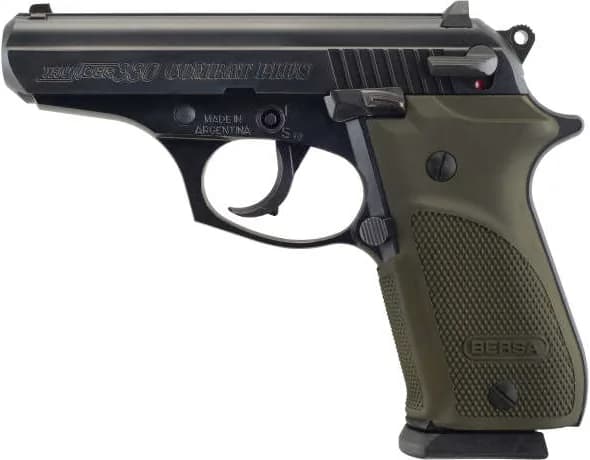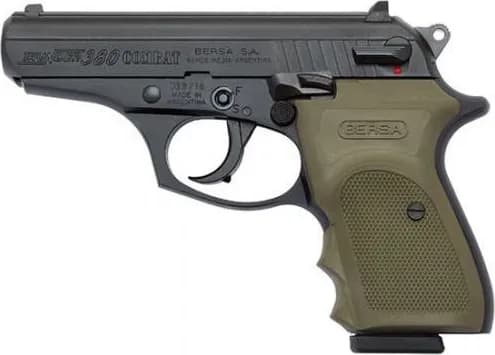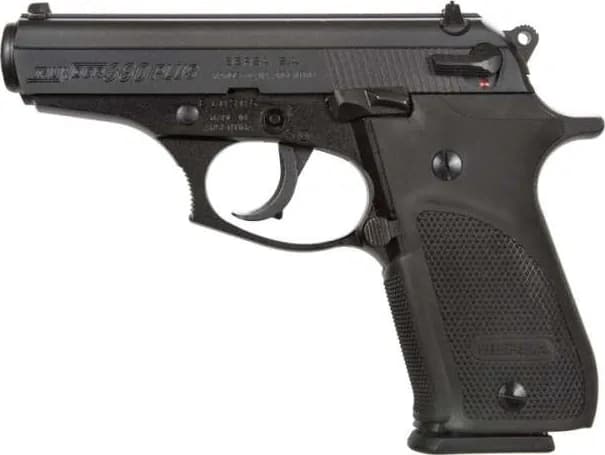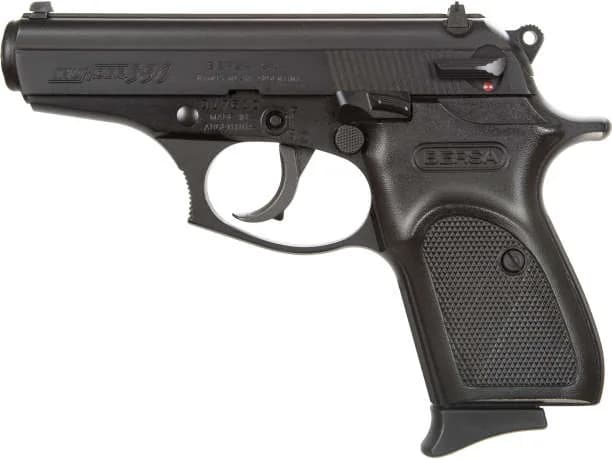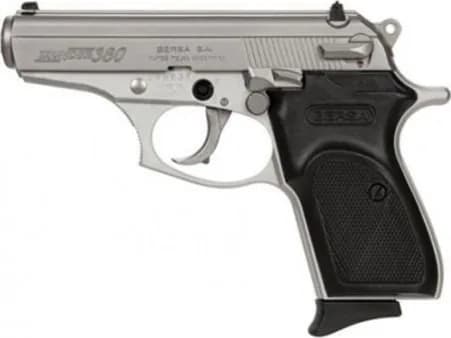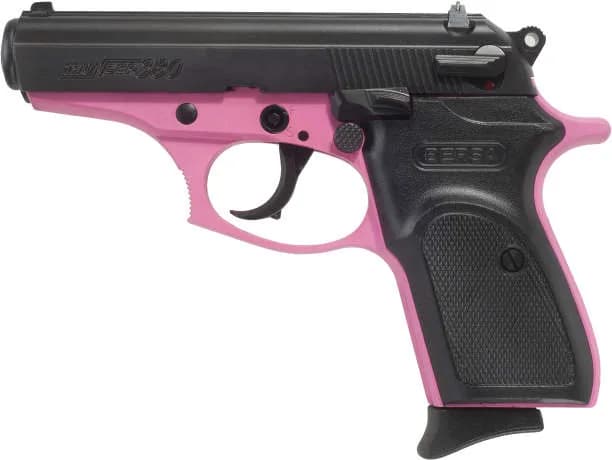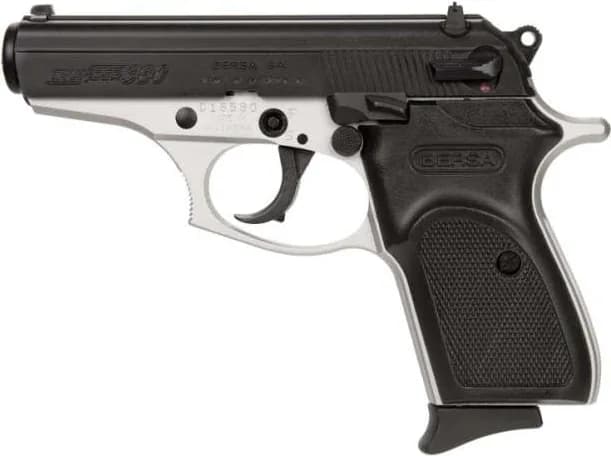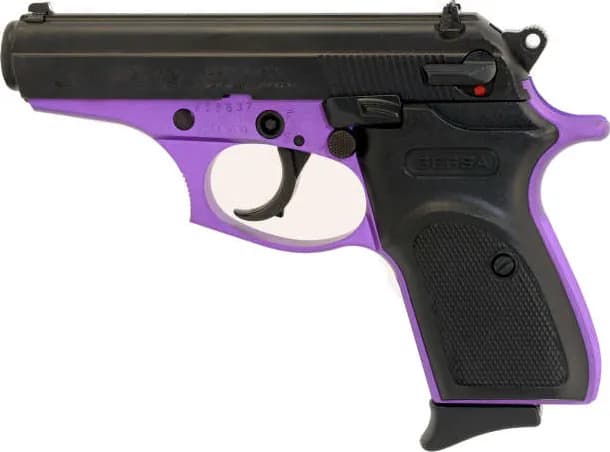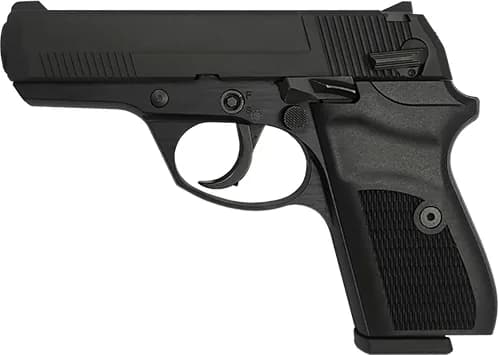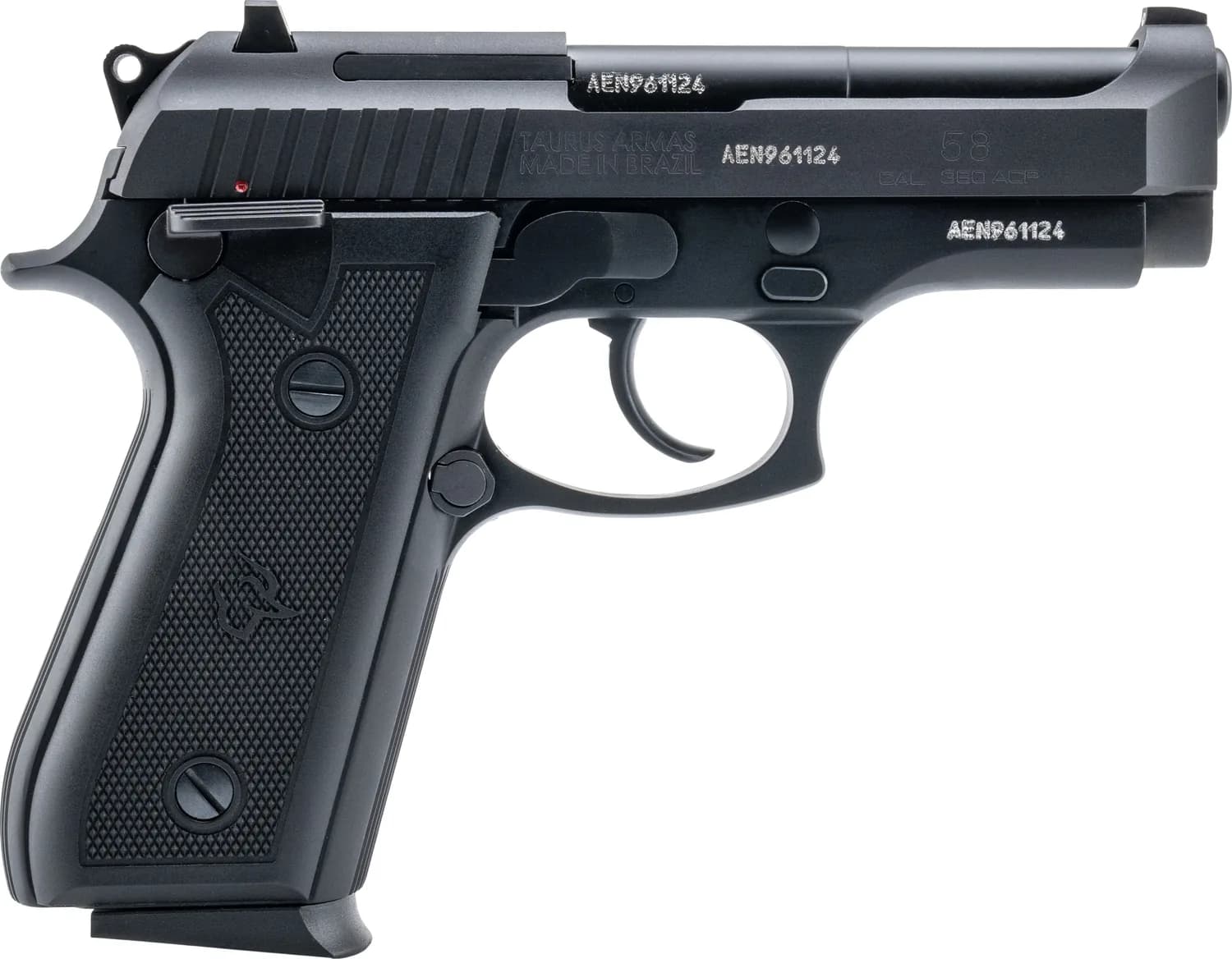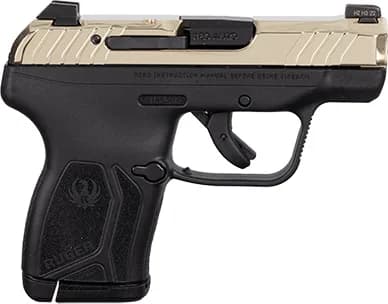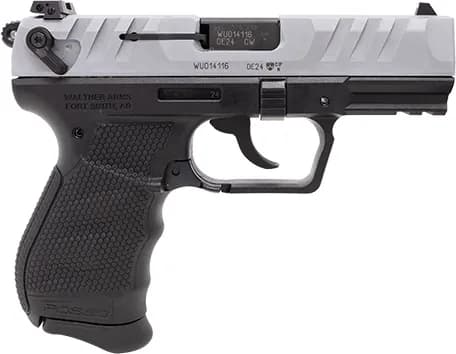
Black Grips
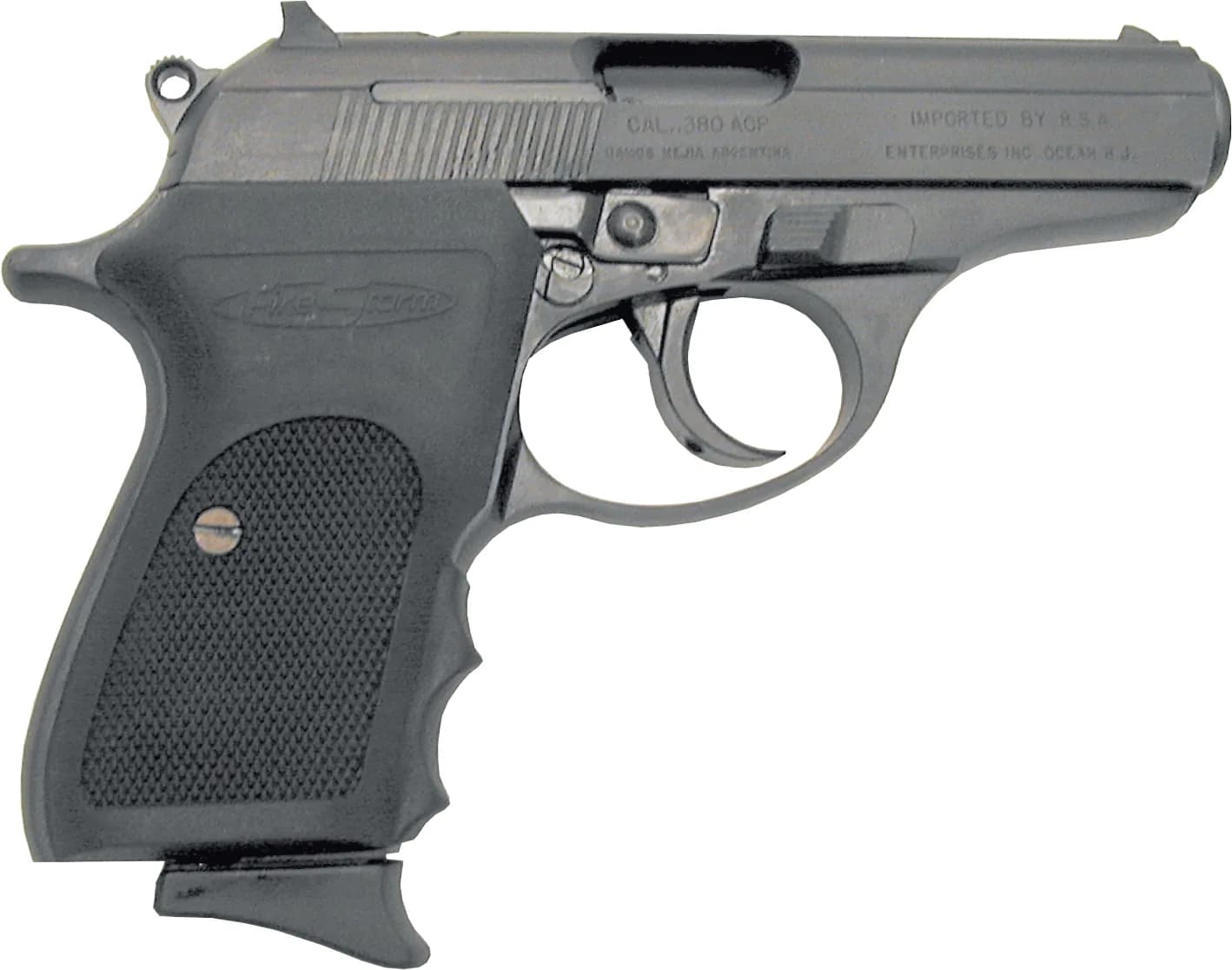
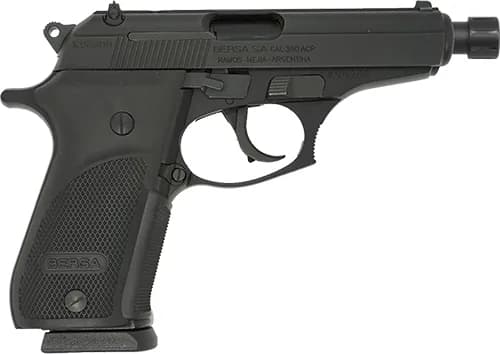
The Thunder .380 traces its lineage to Bersa’s long-running compact pistol line that has been sold in North America for decades. Originally introduced in the late 1990s as a modern, compact blowback pistol in .380 ACP, the Thunder family built on Bersa’s experience with small, hammer-fired designs inspired in size and controls by classic European compacts. The “Plus” designation expanded the model into a double‑stack variant with a 15‑round magazine, giving the platform a higher-capacity option for buyers who wanted more rounds without stepping up in overall pistol size. In recent years the lineup was refreshed with factory-threaded versions of several Thunder models — including a threaded-barrel Plus — which Bersa added to its catalogue and to some U.S. distributor inventories.
Mechanically the Thunder .380 family is a straight‑blowback, fixed‑barrel design with a hammer and a double‑action/single‑action trigger. The fixed barrel and blowback action are common for compact pistols chambered in .380 ACP because they simplify the mechanism and can aid inherent accuracy: the barrel does not tilt under recoil, so barrel‑to‑slide alignment remains consistent shot to shot. Construction uses an aluminum alloy frame with a steel slide and barrel, and the pistol incorporates multiple safeties — manual thumb/decocking style safety, a firing‑pin safety, an integral locking system on some contemporary models, and a magazine disconnect on certain configurations. Factory spec sheets for the Plus list a roughly 20‑ounce unloaded weight in an alloy/steel package that balances low carry weight with enough mass to help tame felt recoil.
On the Plus models Bersa stretches the frame laterally to accept a double‑stack magazine, giving 15+1 capacity without radically changing the platform’s overall footprint. For the factory‑threaded versions Bersa lengthened the barrel by roughly three‑quarters of an inch versus the standard 3.5‑inch barrel to accommodate threads and a thread protector; this results in a barrel length in the mid‑four‑inch range on the threaded Plus models. Bersa and its U.S. distributors sell the threaded examples as factory options rather than aftermarket conversions, which preserves factory tolerances and warranty coverage. The longer, threaded fixed barrel also makes the Plus a competent suppressor host in principle, since fixed‑barrel blowback pistols hold alignment well.
Ergonomically, the Thunder Plus follows the original Thunder layout: a modest grip angle, a beavertail‑style backstrap, an extended magazine floorplate on some magazines for improved purchase, and simple three‑dot sighting (dovetailed front blade and notched‑bar rear on many trims). The extra width for a double‑stack magazine makes the grip less pocketable than single‑stack compacts, but it gives a fuller handhold that many shooters find improves control and follow‑up shot speed. Control placement is conventional and simple; the manual safety is large and intuitive for those who want it.
Across independent tests and user reports the Thunder .380 series tends to earn praise for accuracy relative to its size, and for being a capable, straightforward design — especially when fed suitable ammunition. Formal testing has shown the fixed barrel and decent sight radius allow tight groups at typical defensive distances, and bench tests conducted in single‑action demonstrate the pistol’s potential for precision beyond “point‑and‑shoot” expectations. Felt recoil is described as snappy but manageable: the combination of a light alloy frame and the energy of .380 ACP produces a sharp impulse rather than the heavy push of larger calibers, but the added grip mass of the Plus helps distribute that impulse.
Reliability and feed‑ment are largely positive but not unanimous. Several hands‑on reviews and long‑term shooters note that Bersa pistols can be ammo‑sensitive, with certain hollow‑point loads occasionally requiring testing to identify a reliably feeding defensive round. Others report long runs of trouble‑free shooting, and the platform’s simple blowback mechanism is easy to clean and maintain. Trigger feel is the expected DA/SA tradeoff: a relatively heavy, longer double‑action first pull and a crisper single‑action pull for follow‑ups. Many shooters find the factory single‑action pull adequate for accurate fire in a defensive context.
For the threaded variants specifically, reviewers who tested suppressors noted that the added back‑pressure from a can can accelerate cycling and may increase slide impact forces; some owners have experimented with stiffer recoil springs to moderate that effect. The fixed, lengthened barrel does improve muzzle velocity slightly versus the shorter factory barrel, and it simplifies mounting a suppressor without the need for a separate adapter.
Where the Thunder 380 Plus shines is obvious: shooters seeking a compact, affordable .380 ACP with double‑stack capacity and the option to accept a suppressor will find it compelling. The Plus is large enough to be comfortable for range work, home defense backup, and those who want higher capacity without moving to a full‑size 9mm. Its fixed barrel makes it a better precision and suppressor host than many tilt‑barrel micro‑compacts, and the double‑stack grip improves control for rapid fire.
Limitations are also clear. The Plus is not a micro pocket pistol; its double‑stack grip makes deep pocket carry difficult. Some owners report spotty aftermarket support for spare 15‑round magazines and that certain holsters and accessories built for the standard single‑stack Thunder will not fit the Plus without modification. As with many .380 designs, buyers should test defensive hollow points for reliable feeding and terminal performance rather than assuming universal reliability. Finally, while many owners are content with the factory sights, others prefer upgrading them for faster sight acquisition.
Bersa’s Thunder Plus threaded offering occupies a niche between ultra‑compact single‑stack micro pistols and larger 9mm carry guns. It competes on value: for a relatively modest outlay it delivers a steel slide, alloy frame, fixed barrel, and a 15‑round capacity in .380 — features that, historically, have been expensive to find together. Compared with alternatives from other manufacturers, the Thunder Plus trades the raw ballistics and widespread accessory ecosystem of modern 9mm subcompact striker guns for simpler mechanics, a traditional DA/SA control set, and the option of a factory‑threaded fixed barrel. That makes it attractive to shooters who prioritize mechanical simplicity, suppressor capability, or capacity in a compact, hammer‑fired package.
Reputation among experienced shooters is mixed but pragmatic: reviewers and range testers tend to praise the platform’s accuracy and ergonomics for the price point, while advising buyers to be deliberate about magazine availability and ammunition selection. For those who want an inexpensive, robust .380 with factory threading and higher capacity, Bersa’s threaded Plus is one of the few factory‑built options on the market — and that distinctiveness helps define its place among compact defensive pistols.
Start with a practical guide if you want a faster way to narrow the field before comparing specific models.
Learn how to choose the right concealed carry handgun based on size, comfort, safety, and everyday usability.
Read guideBudget-minded buyersLearn how to find a reliable handgun under $500 without wasting money or compromising on quality.
Read guideComparison-focused shoppersA practical guide to comparing handguns the right way: what actually matters, what to ignore, and how to use comparison tools effectively.
Read guide