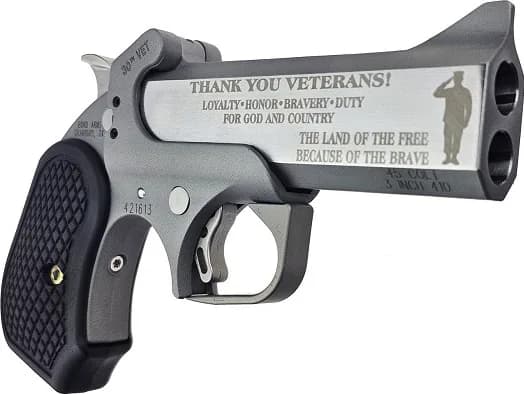
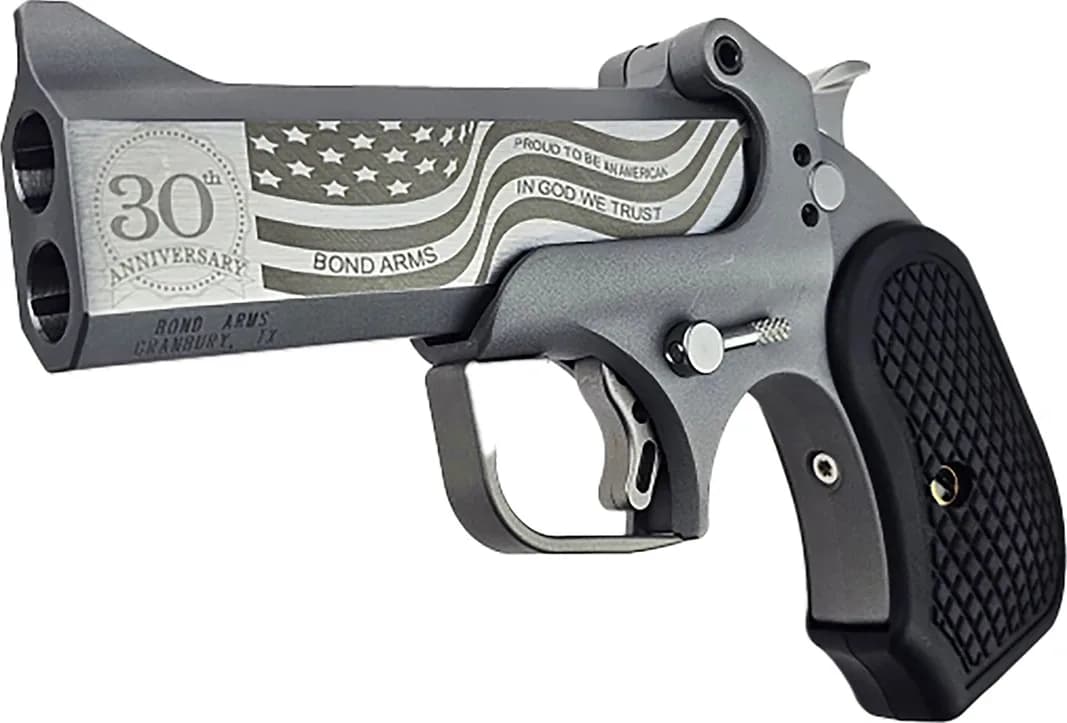
30th Anniversary Limited Edition, Spring Extractor, Rebounding Hammer, Patented Locking Lever
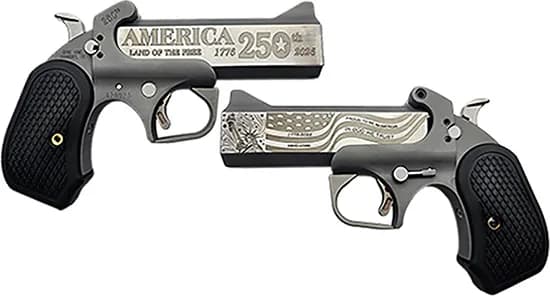
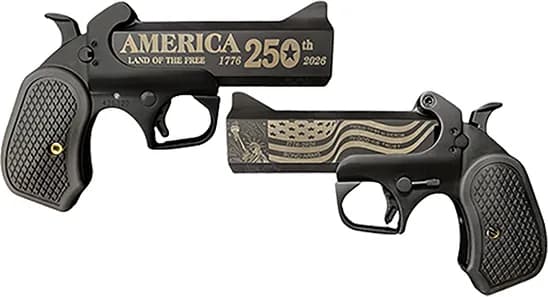
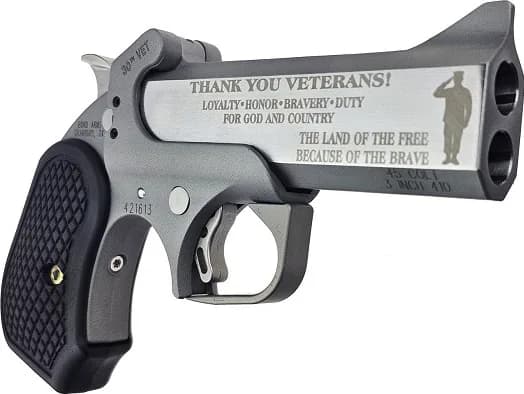
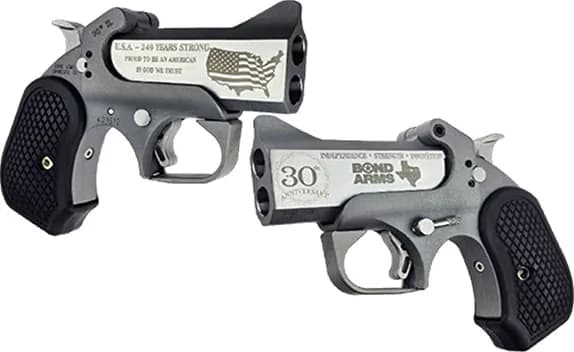
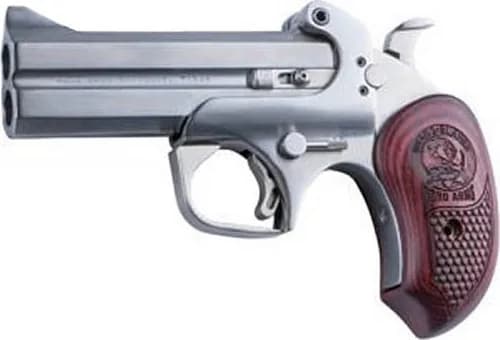
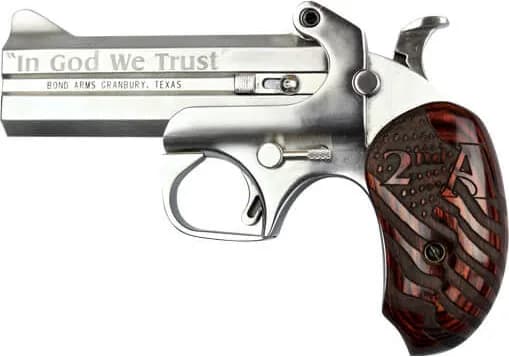
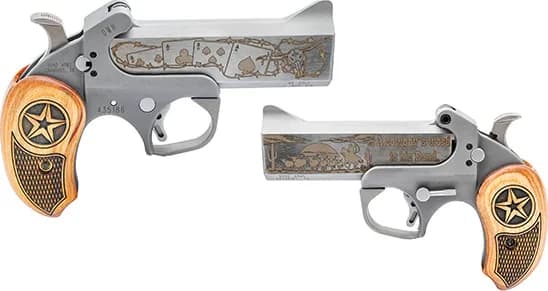
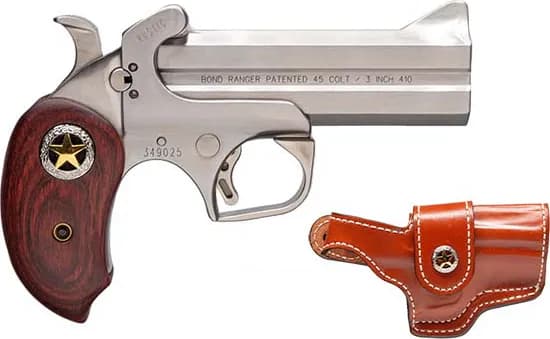
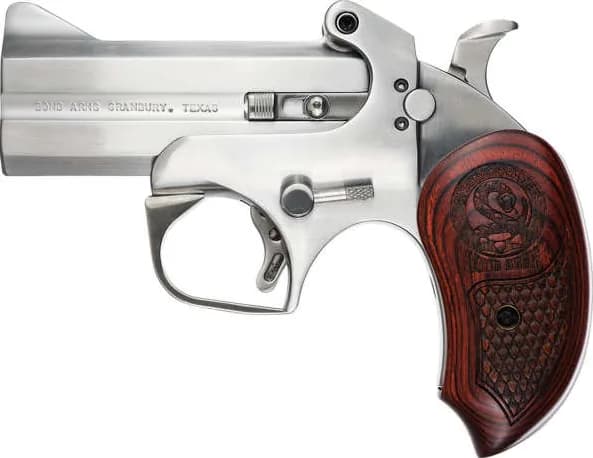
The 30th Anniversary VET is one of three limited-edition models Bond Arms introduced to mark the company’s 30th year in business. Announced as part of a small special-edition series in 2025, the VET variant was created as a tribute to U.S. veterans — distinguished visually by patriotic engravings and messaging on the barrels — and sits alongside two simpler 30th models in the commemorative family. Bond Arms built the program on its long-running “hand-cannon” derringer platform, a modernized descendant of the Remington-style over/under pocket pistol that the company has produced in many calibers since the mid-1990s. The 30th VET specifically pairs the dual-capability .45 Long Colt/.410 chambering with a longer 4.25‑inch barrel and extended B6 grip panels, a combination that Bond Arms bills as a more accurate, controllable version of the anniversary pieces.
Bond Arms grew into the largest maker of modern derringers by reworking the classic design with stronger steels, modern safeties, and modular barrels. The 30th VET is a straightforward expression of that heritage: a break-open, two-shot stainless pistol that emphasizes mechanical robustness and American-made construction.
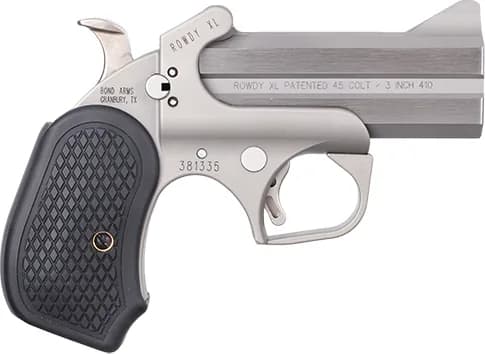
Mechanically the 30th VET is quintessential Bond Arms: a beefy, break-open “hand‑cannon” frame machined from stainless steel, fixed sights, a crossbolt safety, and the company’s patented rebounding/locking hammer and locking lever system. Those features address the traditional weaknesses of 19th‑century derringers by keeping firing pins spring‑loaded and preventing the hammer from resting on the pins after a shot. The locking lever and stout latch geometry are intended to keep the barrels positively locked under recoil, and the spring extractor on rimmed‑cartridge barrels eases unloading. These core engineering elements are common across Bond’s Hand Cannon/Rough‑series frames and are present on the anniversary models.
Ergonomically the 30th VET’s B6 extended resin grips change the handling compared with the slimmer anniversary model: the larger three‑finger profile gives more purchase and spreads recoil across more of the palm, which is especially helpful with heavy .45 Long Colt loads or stout .410 shotshells. The 4.25‑inch barrel also shifts balance slightly forward relative to shorter-barreled Bond derringers, which many shooters find improves sight picture and one‑handed control. The pistol’s small footprint — a true two‑round capacity — keeps it compact, but it remains a handful to fire with magnum pistol levels of energy.
Bond Arms documents a trigger pull in the neighborhood of seven pounds on its modern hand‑cannon models, and the 30th VET conforms to that expectation; the platform’s single‑action style and rebounding‑hammer design deliver a predictable, relatively heavy pull that complements the handgun’s simple safety set. For recoil, Bond Arms’ own materials and long‑running user reports emphasize that felt recoil varies a great deal with ammunition: light .410 defensive loads can be surprisingly manageable in short barrels, while stout 4.25‑inch .45 Long Colt loads produce sharp impulses that the extended B6 grip helps tame but does not eliminate. Bond Arms’ user guidance and product literature stress that proper grip technique and the extended panels materially reduce the subjective “bite” of big‑bore cartridges.
Published coverage of the 30th series highlights the VET’s intent to favor controllability and a longer sight radius: writers who handled the new pieces noted the 4.25‑inch VET as the lineup’s best option for practical accuracy at short defensive distances, and reviewers emphasized the solidity of the lockup and finish as improvements over historic derringer designs. Those same write‑ups, and the broader Bond community, routinely describe Bond derringers as accurate for point‑blank to close ranges (typical use for a two‑shot pocket pistol) but not long‑range precision instruments; the VET’s increased barrel length simply moves its effective window outward by a few yards.
Durability and reliability are where Bond’s reworked derringer platform traditionally scores well: stainless construction, replaceable barrels, and a simple break‑open action make for a pistol that is easy to maintain and unlikely to suffer catastrophic failures from repeated use. The extractor and firing‑pin spring systems Bond uses on rimmed calibers are proven in service, and Bond’s modular barrel system increases the platform’s longevity by allowing worn barrels to be replaced instead of the entire frame.
The 30th VET is best understood as a specialty close‑quarters firearm and commemorative collector piece that retains real practical utility. It excels as a backup or a novelty close‑defensive handgun for someone who wants a compact package that can deliver large pistol rounds or a single‑barrel shotgun burst in .410, and the longer barrel + B6 grips make it more shootable than many subcompact derringers on the market. For range‑use and novelty shooting it is equally well suited: the unique .45LC/.410 combination and the rifle‑grade finish/engraving make it an enjoyable range pistol that many owners will shoot frequently.
Conversely, the platform’s two‑shot capacity, external break‑open reloading, and heavy recoil with full‑power loads are intrinsic limitations for anyone seeking a primary defensive arm or an everyday‑carry solution substituting for a multi‑round semi‑automatic. Bond derringers require careful handling practices and clear awareness of their manual of arms: swapping barrels, clearing, and safety manipulation are simpler than some historic derringers but still different from a modern semi‑auto. Bond’s literature underscores safe handling and correct ammunition selection as essential.
Within the small class of modern, large‑bore derringers, Bond Arms occupies a singular position: it is the industry’s best‑known and most diverse maker of over/under pocket pistols, and the company’s reputation is built on rugged engineering, interchangeability of barrels, and a broad caliber catalog. The 30th VET sits at the premium end of the limited‑edition anniversary subfamily — visually differentiated and positioned for buyers who want a tribute piece with better shootability than the thinnest panel‑grip variants. Compared with other contemporary derringers and novelty pocket shotguns, Bond’s combination of build quality, parts support and modularity gives it a long‑term ownership advantage, even if the two‑round format and manual reload remain functional constraints for many defensive scenarios.
The 30th VET will appeal to Bond collectors, buyers who value a rugged American‑made small pistol with historical styling and modern safeties, and shooters who want a short, powerful backup that can be tailored with different barrels. It is not a substitute for a multi‑round duty pistol, but for what it is — a compact, mechanically robust derringer that celebrates the company’s three decades while offering sensible ergonomics (B6 grip) and a longer barrel for improved handling — it is consistent with Bond Arms’ long‑standing strengths.
Start with a practical guide if you want a faster way to narrow the field before comparing specific models.
Learn how to choose the right concealed carry handgun based on size, comfort, safety, and everyday usability.
Read guideHome-focused buyersLearn how to choose the right handgun for home defense based on safety, ease of use, and practical everyday considerations.
Read guideBudget-minded buyersLearn how to find a reliable handgun under $500 without wasting money or compromising on quality.
Read guide