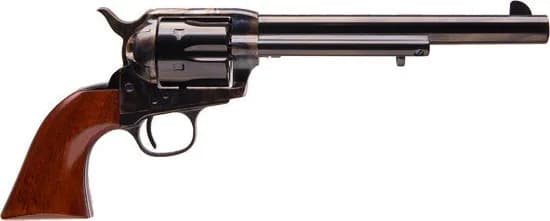
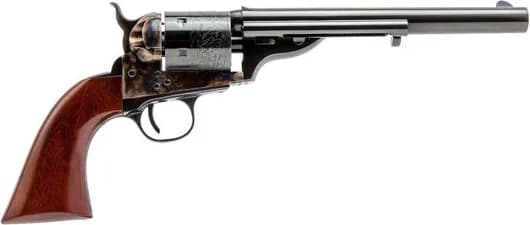
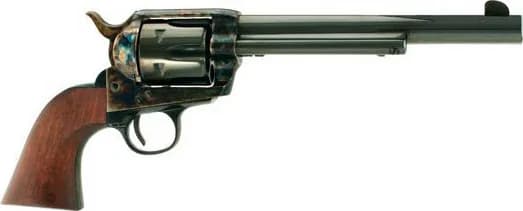
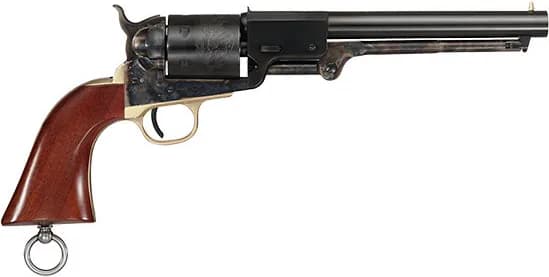
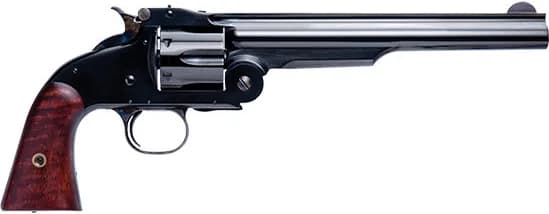
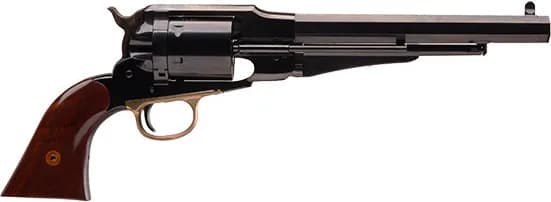
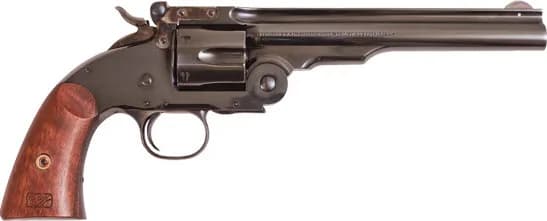
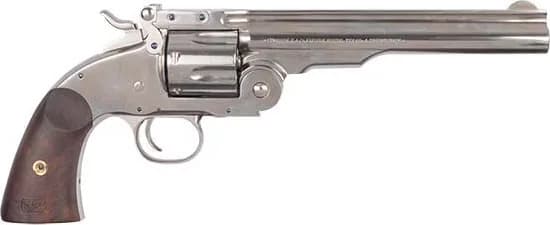
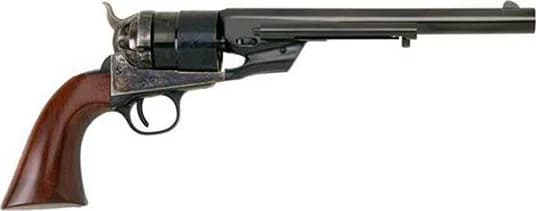
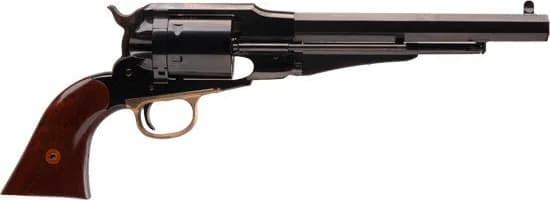
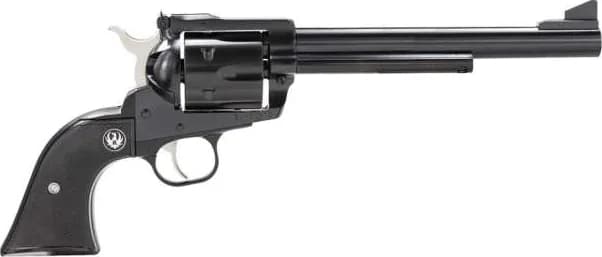
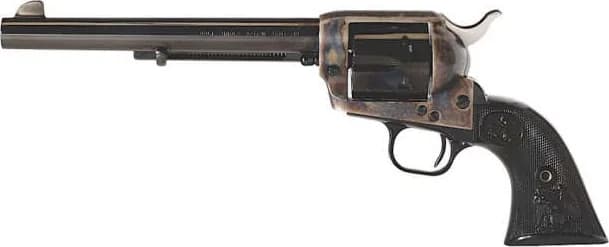
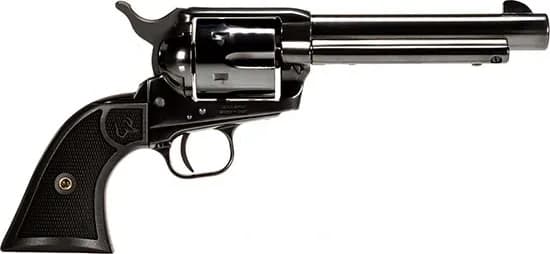
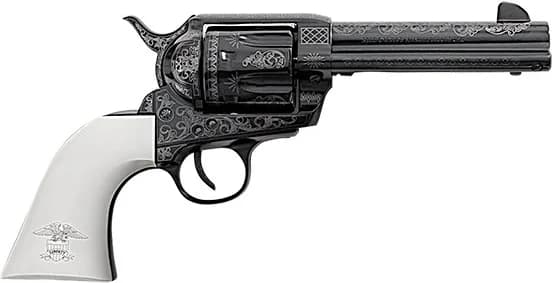
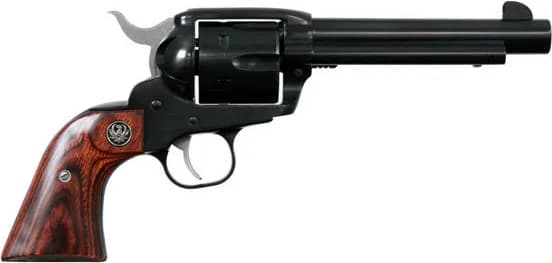
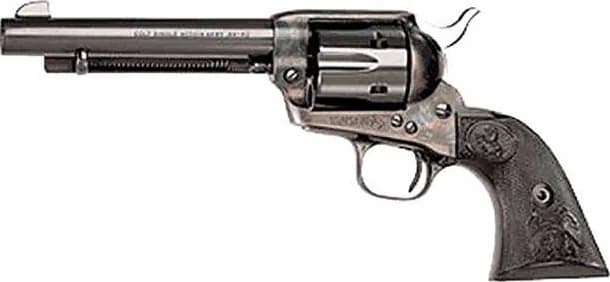
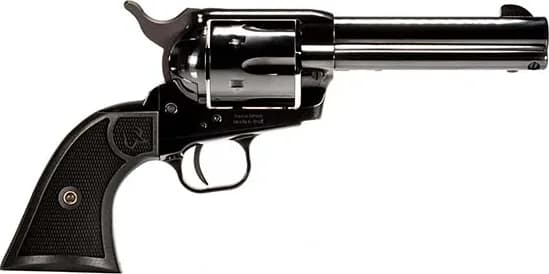
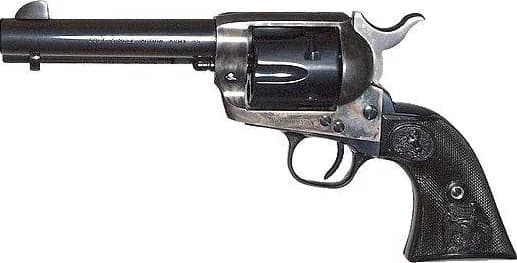
Made by Pietta-Italy, Old Model Frame, OWA Cartouche on Grip
The Cimarron General Custer 7th Cavalry is one of Cimarron’s historically themed Colt Single Action Army–style reproductions, offered as part of the company’s long-running lineup of western and military replica pistols. Market listings for the model identify it as a 7.5‑inch .45 Long Colt single‑action revolver built to evoke the long‑barrel cavalry pieces associated with late‑19th‑century U.S. service pistols. The piece is produced for Cimarron by the Italian firm Pietta and appears in Cimarron catalog/retailer inventories as the “General Custer 7th Cavalry” with period styling cues such as a case‑colored frame and a walnut one‑piece grip carrying the historic “OWA” cartouche.
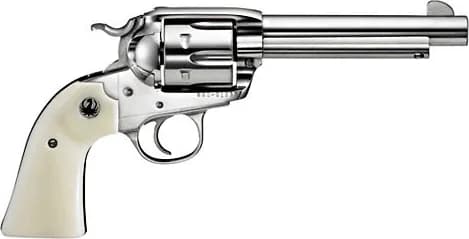
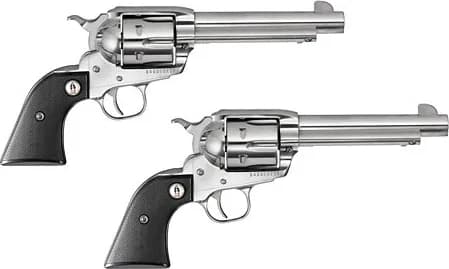
Cimarron’s historical models typically aim at shooters who prize the look and handling of the 1873 era Single Action Army rather than at those who want a modern defensive handgun. The General Custer sits alongside other Cimarron SAA variants (Frontier, Model P, Wyatt Earp, etc.) and is positioned as a historically faithful reproduction for collectors, Cowboy Action competitors, and shooters who appreciate the longer sight radius and classic balance of a 7.5‑inch service‑length barrel.
Mechanically the General Custer is a straightforward reproduction of the Colt 1873 single‑action revolver: six‑shot, single‑action only, fixed sights, and a long, 7.5‑inch barrel. The “Old Model” frame designation on retailer documentation indicates Cimarron/Pietta used the early‑style frame and fitting cues that many enthusiasts associate with pre‑war Colts: narrow sight profile, traditional ejector‑rod housing, and historically inspired external dimensions. Cimarron’s product notes for this variant specifically list Pietta as the maker and identify the Old Model frame and a case‑colored frame finish, confirming the intent to replicate the period aesthetic and mechanical layout.
Two design points matter most for how the pistol feels on the range. First, the 7.5‑inch barrel increases sight radius compared with shorter SAA clones and therefore makes aimed shooting easier at practical handgun distances; it also allows fuller powder burn for many .45 Long Colt loads, yielding modestly higher muzzle velocities than shorter barrels. Published barrel‑length tests show measurable velocity gains as barrel length increases, and .45 Colt results for 7.5‑inch test barrels illustrate that effect. Second, the Old Model profile, along with a one‑piece walnut grip, shifts weight forward and produces a steadier point of aim—many shooters describe long‑barreled SAAs as balanced and comfortable for single‑hand and two‑hand target work.
On the subject of internals and safety, modern repro SAAs are made with several different factory choices (Pietta vs. Uberti parts and small differences in hammer/firing‑pin design). Enthusiast threads and technical discussions note that Pietta‑made 1873 clones often employ the classic four‑position hammer notching and a traditional hammer‑mounted firing pin, features collectors prefer for historical fidelity. Those same conversations show variations across suppliers in pin length, cylinder pin retainer screw design, and finishing; those small differences can affect user experience and may require minor aftermarket tweaks for some owners.
Measured accuracy from a fixed‑sight, single‑action revolver like the General Custer is best judged at typical handgun distances. Owner reports and forum threads from shooters who own Pietta‑built Cimarron SAAs commonly describe practical accuracy that is quite adequate for targets and Cowboy Action shooting out to 25–50 yards, with particularly pleasing results at 7–10 yards when fired from a rested position. The long barrel and sight radius help keep groups tight for iron‑sight handgun work; at the same time, the fixed, narrow sights limit precision when compared with modern adjustable target sights.
Recoil and trigger feel are dictated by caliber and mass. The .45 Long Colt in standard pressures is not a punishing round in a heavy, long‑barreled revolver; the General Custer’s mass and long barrel tame muzzle flip and make follow‑up shots manageable. For shooters who handload, the .45 Colt’s wide spectrum of safe pressures and bullet weights is an advantage—light target loads produce soft recoil, while stout hunting or “magnum” loads require careful selection and a platform rated for higher pressures. Ballistics tests document that longer barrels produce appreciable velocity for many .45 Colt loads, which translates into slightly different felt recoil depending on the load.
Reliability is generally acceptable but not immune to the typical issues seen in repro SAAs. Community reports going back years describe isolated problems such as burrs around the recoil‑shield/firing‑pin area or cylinder‑pin retainer screws that can work loose; these are fixable at the bench or by a gunsmith, and many owners treat them as part of the ownership curve for a historically faithful reproduction. Overall, Pietta builds used on Cimarron models enjoy a sound reputation for function when inspected and set up properly.
The General Custer is not a practical everyday defensive pistol by contemporary standards: it is large, single‑action only, and fitted with fixed sights and a long barrel that makes concealed carry impractical. Where it shines is in historical re‑creation, Cowboy Action competition, range shooting where the classic look and weight are assets, and for collecting. It also appeals to handloaders and revolver hunters who want a heavy‑framed .45 Colt with a long sight radius; with proper modern loads and careful consideration of pressure, the cartridge can be used for medium game in capable hands. For those purposes the General Custer’s balance, traditional controls, and period ergonomics make it enjoyable and effective.
Limitations are straightforward: single‑action operation slows follow‑up and reload times; fixed sights restrict precision at longer ranges; and the historically inspired fit and finish choices (case coloring, narrow front sight) prioritize authenticity over modern tactical convenience.
Within the crowded market of Colt‑pattern repro revolvers, the Cimarron General Custer occupies the middle ground: a branded Cimarron offering built for historical fidelity and supplied by Pietta at a price point that places it between entry‑level repros and higher‑end, hand‑fitted collector pieces. Industry pricing and sale‑history aggregators show regular retail and resale activity for this specific model, indicating steady demand among shooters who want the long‑barrel cavalry look without paying a premium for custom work. Enthusiast discussion repeatedly compares Pietta‑built Cimarron pistols favorably with Uberti and other makers, with nuanced debate over finish and fit that typically comes down to individual examples and owner preferences.
For a buyer seeking a faithful, usable long‑barrel .45 Single Action Army that evokes the 7th Cavalry aesthetic, the General Custer offers a credible mix of period styling, solid mechanical design, and the flexibility of the .45 Colt cartridge. Those who demand modern ergonomics, modularity, or compact defensive concealability will find the model’s historical focus limiting; for collectors, re‑enactors and range shooters who prize authenticity, it remains an attractive option.
Start with a practical guide if you want a faster way to narrow the field before comparing specific models.
A practical guide to comparing handguns the right way: what actually matters, what to ignore, and how to use comparison tools effectively.
Read guideFirst-time buyersLearn how to choose your first handgun by focusing on size, comfort, ease of use, and budget instead of getting lost in unnecessary details.
Read guide