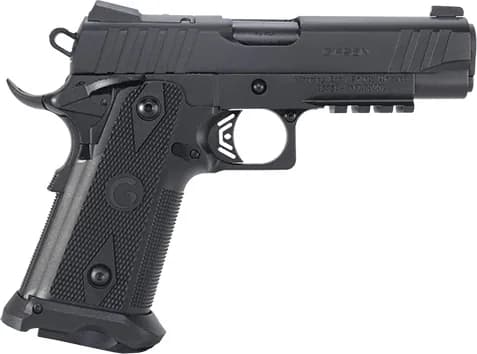
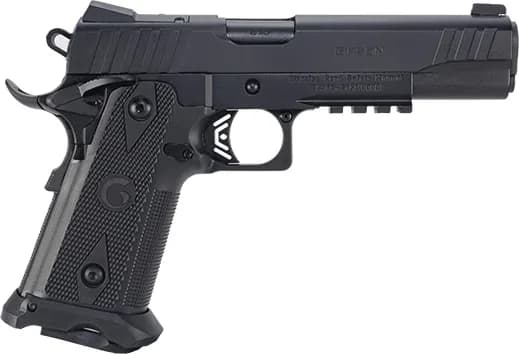
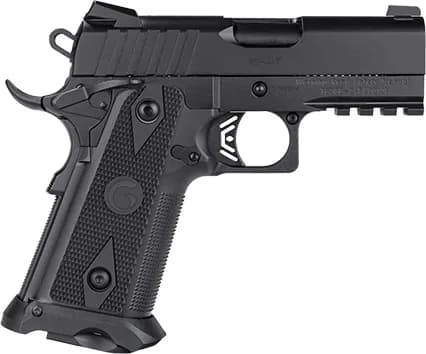
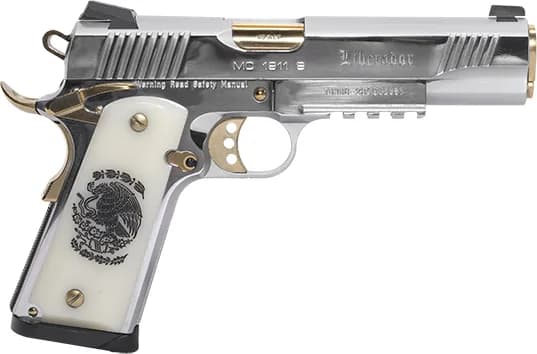
Integral Compensator, Optic Ready, Magazine Well, Full Length Accessory Rail
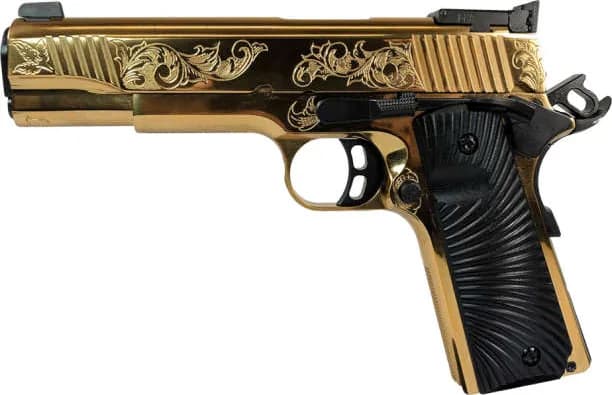
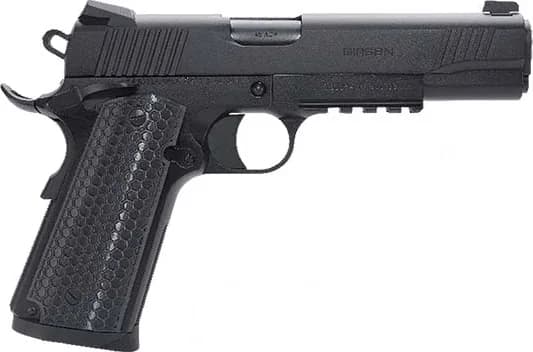
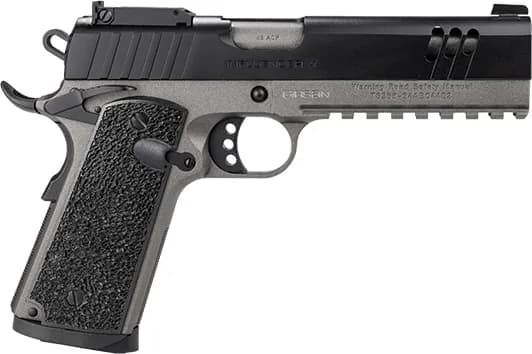
The Witness2311 CMXX is the latest compact, compensated entry in European American Armory’s (EAA) expanded Witness2311 family, built by Girsan and imported and distributed in the United States by EAA. The CMXX form factor was unveiled at industry events earlier in 2026 as a compact “2011-style” pistol that blends a shortened slide and integral compensator with a full‑size grip module; EAA began shipping the .45 ACP version to dealers in mid‑May 2026. The CMXX was positioned as a performance‑oriented carry/competition crossover that brings many high‑end 2011 features to a more accessible price band.
Within EAA’s lineup the CMXX sits alongside other Witness2311 variants as the compact, compensated option—intended for shooters who want a balance of controllability and capacity in a platform that is familiar to 1911/2011 users but updated for optics, higher magazine counts and modern controls. The platform’s move away from a traditional 1911 grip safety in favor of an internal firing‑pin block and ambidextrous thumb safety reflects the CMXX’s aim at a broader user set, including competitors and defensive carriers who prefer easier grip ergonomics.
Mechanically the CMXX follows the 2011 tradition: a double‑stack grip module mated to a more compact slide and barrel. The model’s defining characteristic is a 4.25‑inch bull barrel with an integral compensator cut into the muzzle—machined as part of the barrel rather than an add‑on device—which shortens the slide length while providing porting and gas redirection to reduce muzzle rise. The slide is optics‑ready with an RMSc footprint beneath a removable rear sight plate, and the pistol ships with a bright fiber‑optic front sight and an adjustable rear or removable plate depending on trim. A full‑length dust cover provides a full accessory rail for light/laser mounting and the frame includes a flared magazine well to ease reloads.
EAA and Girsan modernized the control set: the CMXX dispenses with the beavertail grip safety and instead uses an internal firing‑pin block (often described as a Series‑80 style feature) alongside an ambidextrous thumb safety. That change contributes to a slimmer grip profile and a more universal fit for smaller hands while maintaining passive drop safety. The grip module is aggressively textured polymer over a steel frame, designed to keep purchase during fast strings; the gun’s listed overall length is about 8.0 inches and its weight in reviewer tests comes in around 1.6 lb—light enough for a practical carry/competition cross‑over yet hefty enough to help tame recoil when combined with the compensator.
Ergonomically the CMXX is engineered for rapid sight recovery and positive indexing: the combination of a shortened, lighter slide and a full‑size, flared grip helps the muzzle track vertically less during recoil, and the magwell aids fast reloads. The optics‑ready slide (with a removable sight plate) is a pragmatic choice that preserves a co‑witness or iron‑sight option while giving users a straightforward path to a red‑dot. Reviewers do caution that removing the rear sight exposes the firing‑pin block spring and small parts—so field work should be done deliberately.
Range reports and reviews describe the CMXX as a “flat‑shooting” design for its size class: the integral compensator noticeably tames muzzle flip and allows quicker follow‑up shots compared with an uncompensated commander‑length 1911 slide. That benefit comes with tradeoffs—compensators amplify concussion and muzzle blast, and some indoor range testing highlighted increased perceived noise and concussion for adjacent shooters. Shooters who prioritized speed and reduced vertical climb tended to view the tradeoff as worthwhile.
Trigger specifications from factory materials list a tuned single‑action trigger in the mid range (EAA’s materials reference a factory‑tuned pull around 4.5 lb on models), and published hands‑on reviews agree that the trigger is serviceable for fast work. A consistent note from early testers is that the trigger and break can be a bit “rough” out of the box and benefits from a break‑in period or minor tuning; several reviewers found that the trigger smoothed after modest use. Reliability under test was generally favorable: reviewers ran multiple magazine types and varied ammo and reported mostly trouble‑free operation after an initial bedding‑in, though as with many 2011‑style pistols magazine choice and break‑in can be important variables.
Accuracy at typical defensive or competition distances is in line with expectations for a well‑regulated 4.25‑inch compensated barrel: groups at seven to twenty yards were described as tight enough for both practical defensive work and many production‑class competitive applications when paired with a red dot or good iron sights. Durability and fit/finish from early reviews place the CMXX above many value‑priced 2011 attempts—fit is commonly described as “solid” if not bespoke—reflecting Girsan’s experience building 1911/2011 patterns.
The CMXX is most at home as a competition‑oriented or range‑centric carry gun: its quick follow‑up capability from the compensator, optics readiness, and flared magwell make it a sensible choice for production or carry classes where speed and magazine capacity matter. In .45 ACP trim the platform’s 11+1 capacity gives the power of the larger caliber without the length of a full government slide, and many reviewers noted the gun made heavy recoil calibers feel more manageable.
Limitations are practical: the integrated compensator increases muzzle blast and concussion (not ideal for quiet indoor shooting without hearing protection or for neighbor‑sensitive environments), and the compensated design can complicate holstering and may require dedicated holsters. The absence of a traditional grip safety will be a philosophical plus for some shooters and a minus for others who prefer the redundant manual safeties of classic 1911s. Finally, as with other 2011‑style designs, magazine selection and initial break‑in can influence absolute reliability; carrying shooters should confirm reliable magazine and ammo combinations before relying on the pistol for defense.
The Witness2311 CMXX’s value proposition is straightforward: it brings many of the features that made high‑end 2011 platforms popular—compensated barrel, optics readiness, magwell, strong ergonomics—at a price and feature set that reviewers characterize as competitive for the segment. Reviewers comparing it to boutique 2011 makers note the CMXX doesn’t precisely equal bespoke competition pistols, but it closes much of the performance gap for a fraction of the cost and with modern factory options. That positioning makes it attractive to shooters who want a turnkey, optics‑ready, compact 2011 experience without immediate custom gunsmith work.
Early adoption notes from industry reviewers and first owners highlight the CMXX as a pragmatic “bridge” product: more capable and more modern than entry‑level 1911 clones, but not in the same price or custom tier as top‑end competition 2011s. For shooters prioritizing fast follow‑ups, optics integration and a compact footprint with larger‑caliber options, the CMXX is a contemporary alternative—provided buyers accept the compensator’s acoustic tradeoffs and validate magazine choices for their loadout.
Start with a practical guide if you want a faster way to narrow the field before comparing specific models.
Learn how to choose the right concealed carry handgun based on size, comfort, safety, and everyday usability.
Read guideHome-focused buyersLearn how to choose the right handgun for home defense based on safety, ease of use, and practical everyday considerations.
Read guideComparison-focused shoppersA practical guide to comparing handguns the right way: what actually matters, what to ignore, and how to use comparison tools effectively.
Read guide