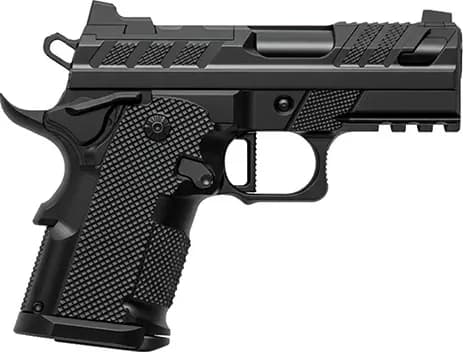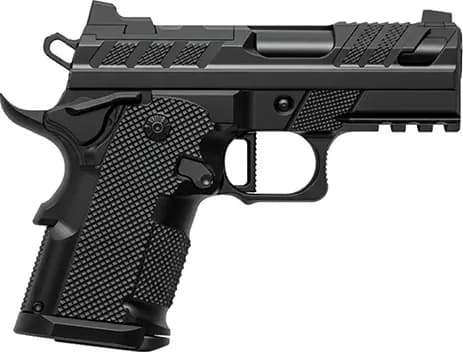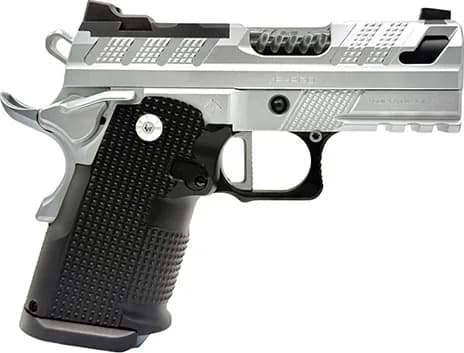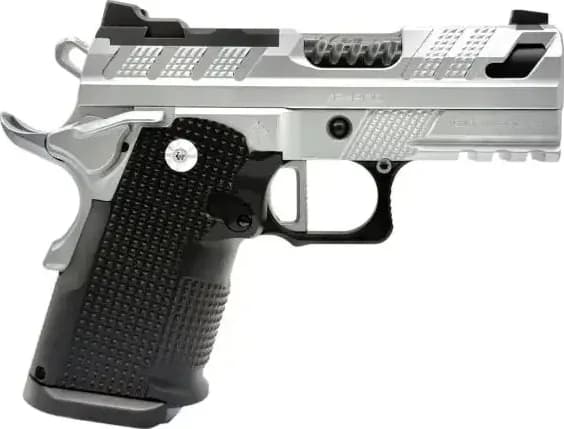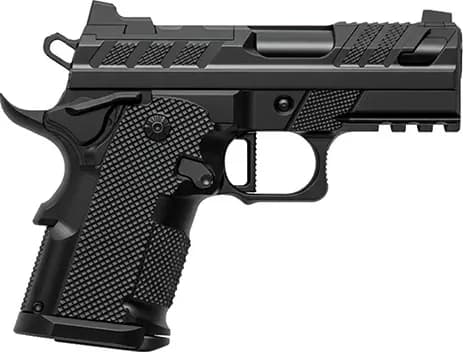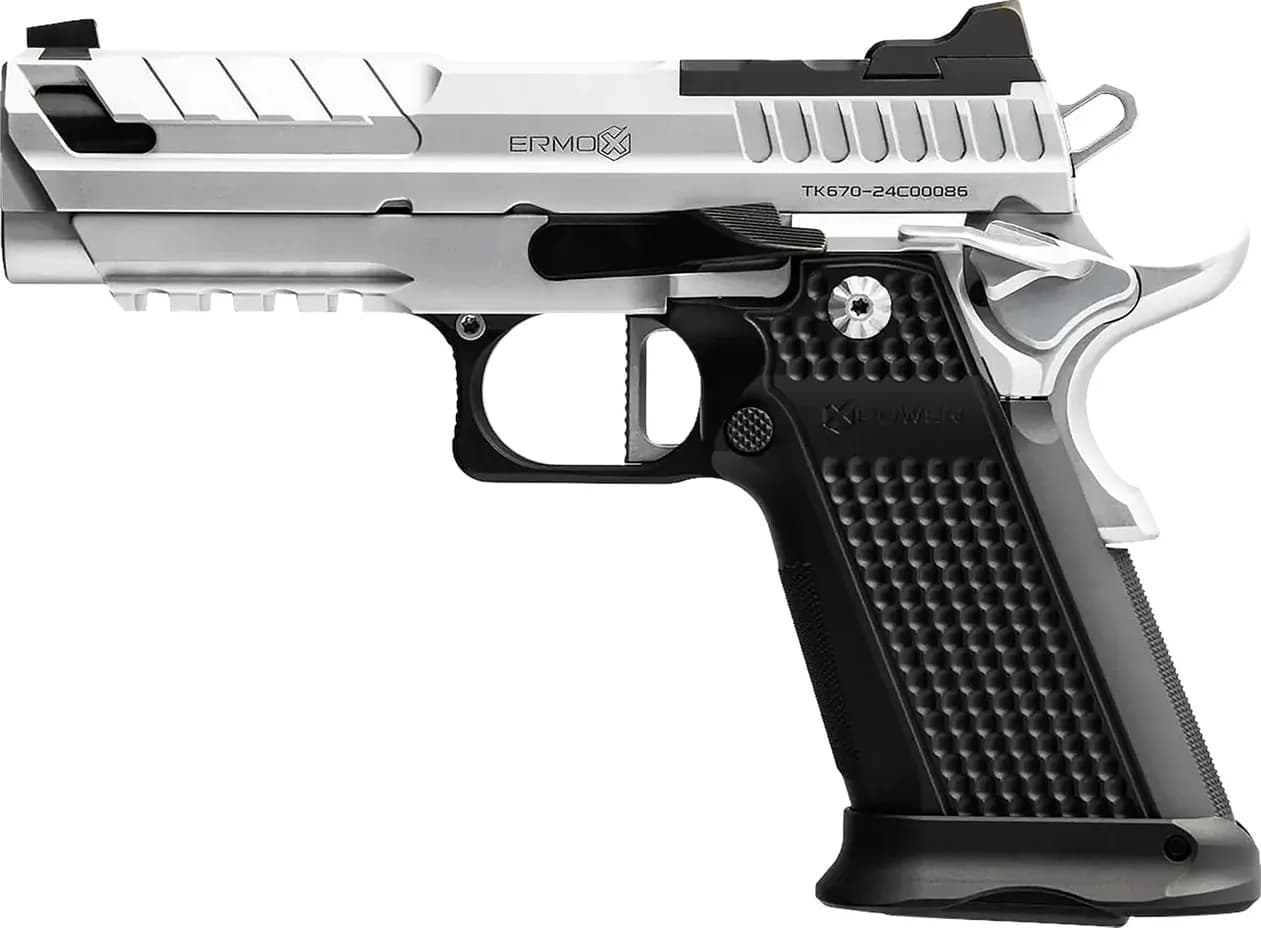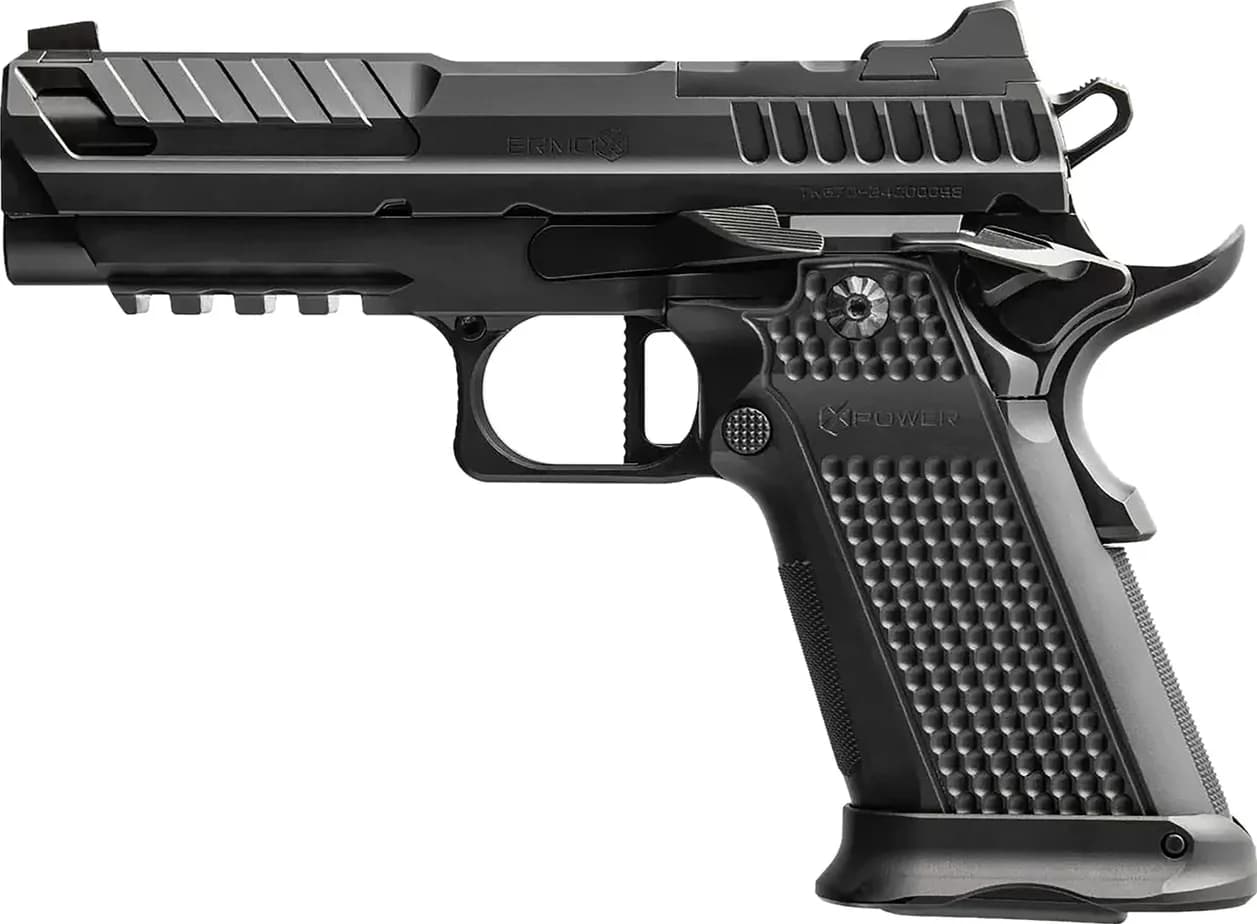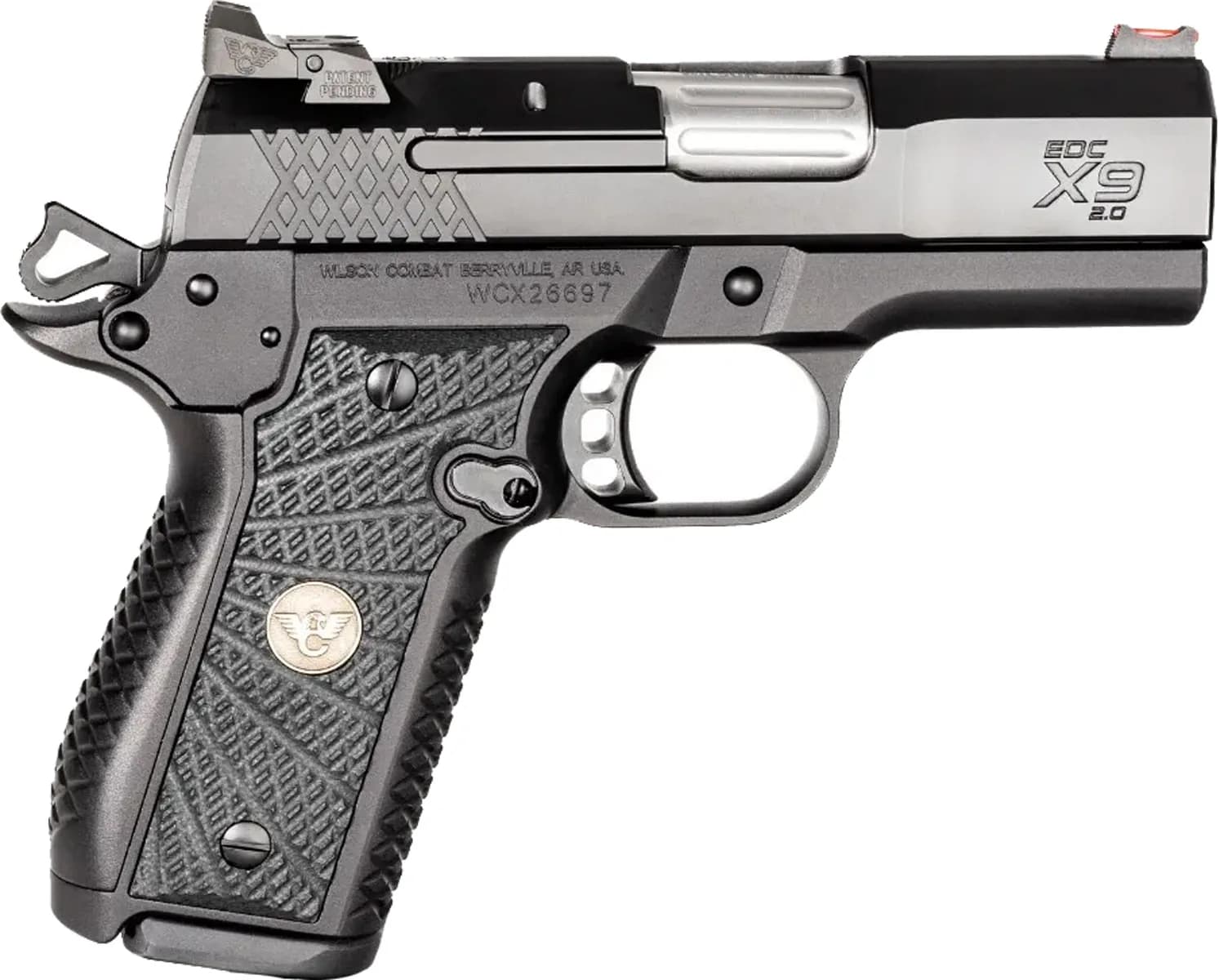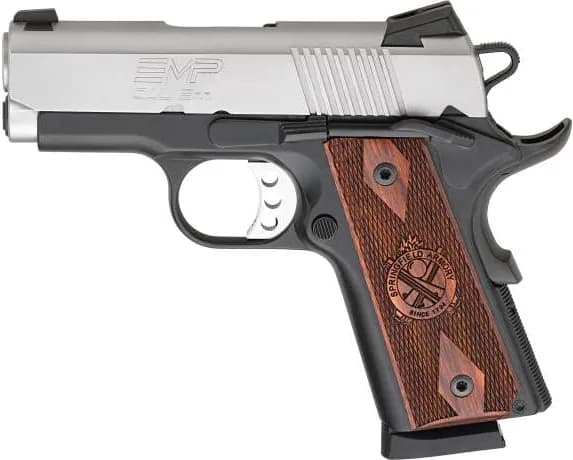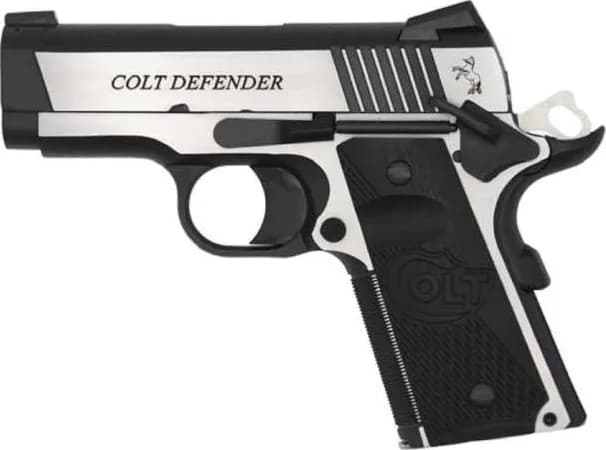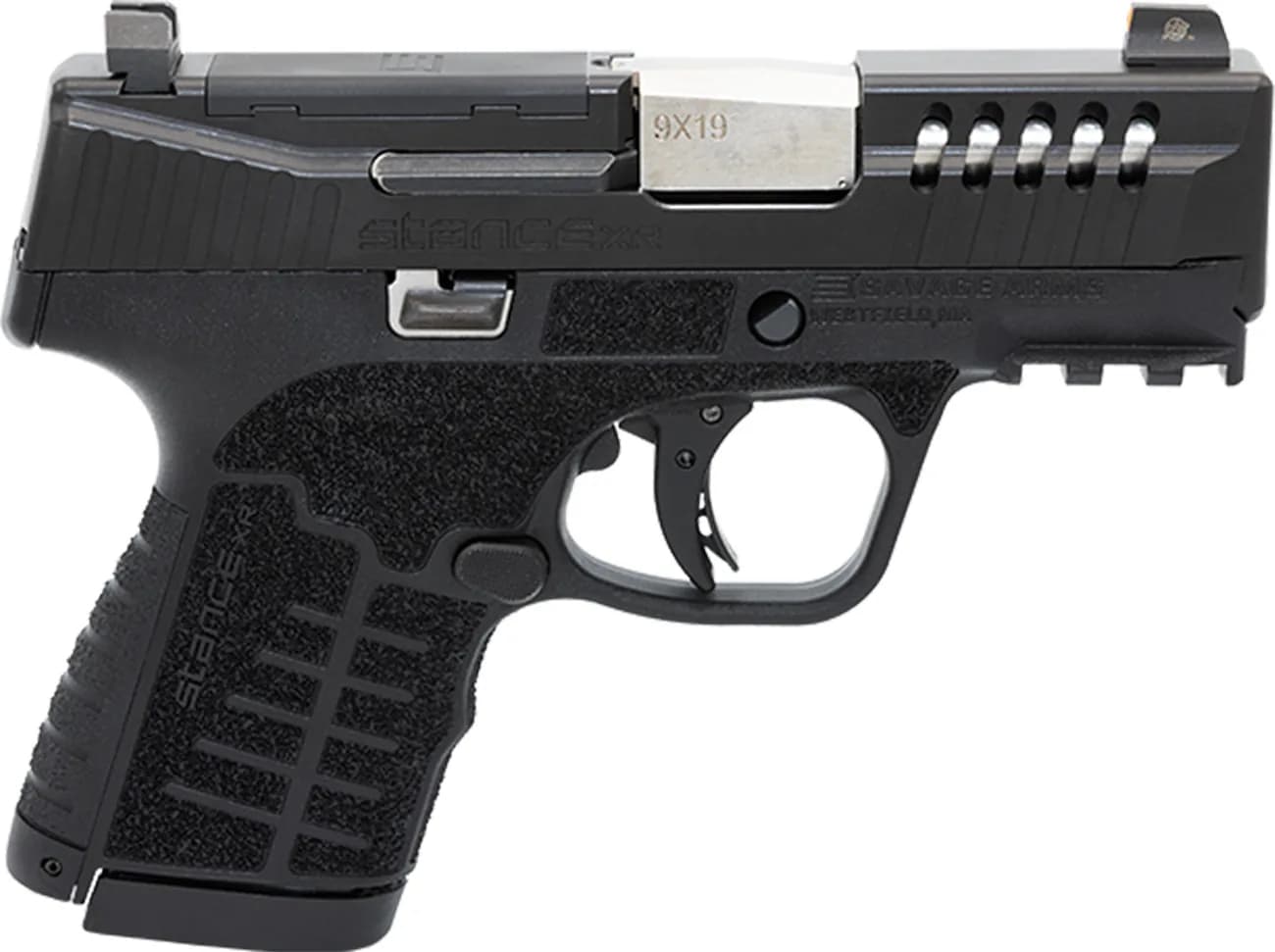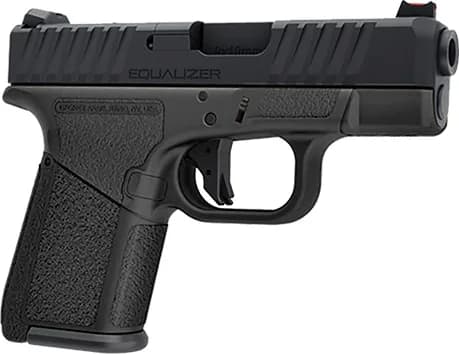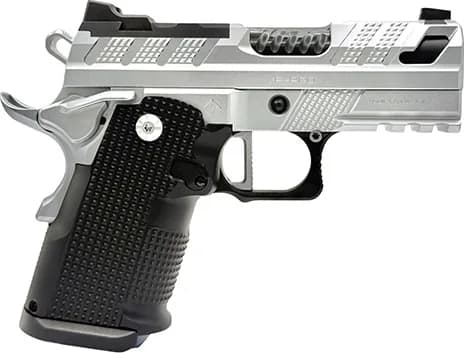
Grip Safety, Ambidextrous Safety, Aluminum Frame, RMR & RMSc Plates Included, Accepts Glock 19 Mags
The XP 3C emerged in public view in early 2026 as Fusion Firearms’ compact take on the modern double‑stack 1911/2011 idea: an officer‑sized, 9mm pistol built to combine the single‑action trigger characteristics of the 1911 family with the capacity and magazine commonality of contemporary polymer pistols. Fusion showed the 3‑inch, Glock‑magazine‑compatible package in promotional material and at industry showings early in the year, positioning it as a purpose‑built carry/EDC option for shooters who want a compact 2011 platform without abandoning Glock‑pattern magazines and optics. Contemporary industry writeups and the company’s own early messaging framed the XP 3C as an evolution of the XP line—smaller than the full‑size XP models but aimed at the same audience of shooters seeking match‑grade triggers and modern modularity.
Fusion approached the XP 3C as a short‑barrel, double‑stack 1911: the chambering and magazine interface are modern (9mm with Glock‑pattern magazine compatibility), while much of the internal geometry follows single‑action 1911 timing and lockup. Early product descriptions and industry writeups emphasize a steel chassis for slide/frame rails combined with a textured aluminum grip module—an arrangement intended to put the wear surfaces on steel while keeping overall grip weight and handfeel more manageable. The 3‑inch barrel and truncated slide make the pistol notably shorter than Fusion’s full‑size XP offerings, and the company has said the slide is textured and machined to share styling cues with the XP Comp models. Fusion’s accessory catalogue and published parts (RMR and RMR‑style base plates, dedicated red‑dot mounts) underline that the platform was engineered to accept micro‑red‑dot optics in standard footprints and to be accessory‑ready out of the box.
In practical terms that engineering philosophy translates to a few predictable handling characteristics. A steel sub‑frame gives the pistol momentum and mass at the slide/frame interface that tends to smooth recoil impulse compared with a wholly aluminum 2011, while an aluminum grip module reduces the grip‑end mass so the balance falls more toward the middle of the gun—helpful for pointing and follow‑ups. The short sight radius of a 3‑inch barrel will, of course, make iron‑sight precision a bit more challenging than a longer gun at distance, but the optic‑ready top plate addresses that by allowing a small high‑quality red dot to restore fast, practical accuracy.
Hands‑on commentary that has circulated since the announcement—early owner and forum posts about Fusion’s XP family and early XP 3C impressions—paints a picture of a pistol that can shoot flatter and feel more controllable than many compact pistols when it’s set up correctly, but that also benefits from break‑in and occasional spring tuning. Multiple users who have put extended round counts through Fusion’s XP variants praise the single‑action trigger and report a generally tame recoil impulse, especially on competition/Comp variants with additional mass or ports. At the same time, the community has documented examples where shorter 2011/1911 designs can be more sensitive to ammunition choice and spring weights during initial break‑in; several owners advise working through a short tuning process—swap spring packs, try a range of factory loads, and watch for extractor or magazine‑fit issues—before committing to the firearm as a carry piece. Those same threads also include long‑term users reporting thousands of rounds with no significant malfunctions once those initial adjustments were made.
On accuracy, the combination of a crisp single‑action trigger and an optic‑capable slide generally yields good practical groupings at typical defensive ranges; expect tighter groups with an optic than with the shortened iron‑sight geometry. Durability reports are mixed but largely positive for Fusion’s steel‑frame approach: where some lightweight 2011s sacrifice longevity, the Fusion architecture aims to keep steel‑on‑steel interface points that resist the slop that can develop under heavy use. Owners do report the need to monitor fasteners and accessory screws and to address minor fitment issues in early examples—common growing pains for a newly introduced model.
The XP 3C’s sweet spot is compact carry for shooters who want a high‑quality single‑action trigger and are comfortable with a slightly larger footprint than subcompact polymer pistols. The short slide and Glock‑magazine compatibility make it attractive to people who want to carry a more traditional‑feeling trigger and better ergonomics without giving up magazine interchangeability with Glock patterns. The optic‑ready top plate is a clear plus for defensive and competition‑style use where a red dot improves speed and accuracy.
Limitations are those you’d expect from any officer‑length 2011 derivative. The shorter barrel and sight radius mean irons are less forgiving at distance, the system may require a brief break‑in and spring tuning for flawless reliability with every factory load, and the pistol’s double‑stack ergonomics produce a larger grip circumference than single‑stack 1911s or many compact polymer pistols—considerations for both concealment and user fit. Shooters looking for totally plug‑and‑play, out‑of‑the‑box absolute reliability with every low‑energy 9mm load might prefer a simpler striker platform; conversely, those willing to tune and get acquainted with the gun’s idiosyncrasies are rewarded with a fast, accurate compact 2011 package.
Within the crowded modern 2011 market the XP 3C sits alongside compact, Glock‑magazine‑accepting competitors such as Stealth Arms’ Platypus variants and boutique compact 2011 builds from several small manufacturers. Community commentary places Fusion’s XP family as a practical value option that delivers many design touches seen on higher‑end 2011s—steel chassis, optic readiness, and competition‑grade triggers—while generally undercutting some of the most expensive boutique offerings on price. That positioning has attracted buyers and comparison shopping in forums, and early reactions highlight that Fusion has created a model that appeals to both carry‑focused shooters and 2011 enthusiasts who want a compact platform without moving away from Glock‑pattern magazines. At the same time, reputation and long‑term aftermarket support are still evolving; prospective buyers in this segment tend to weigh initial build quality and company service track record as heavily as spec sheets.
The XP 3C represents a noteworthy engineering compromise: it delivers 2011 trigger characteristics and modularity in a substantially shorter package, but it asks the owner to engage—through selection of ammunition, minor spring tuning, and routine maintenance—to fully realize its potential. For shooters who want a compact, optic‑ready 2011 that plays well with Glock magazines, it is one of the more interesting contemporary entries in that niche.
Start with a practical guide if you want a faster way to narrow the field before comparing specific models.
Learn how to choose the right 9mm handgun based on size, budget, and how you plan to use it.
Read guideCarry-focused shoppersLearn how to choose the right concealed carry handgun based on size, comfort, safety, and everyday usability.
Read guideComparison-focused shoppersA practical guide to comparing handguns the right way: what actually matters, what to ignore, and how to use comparison tools effectively.
Read guide