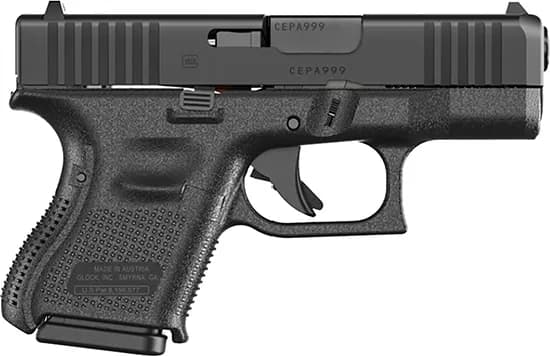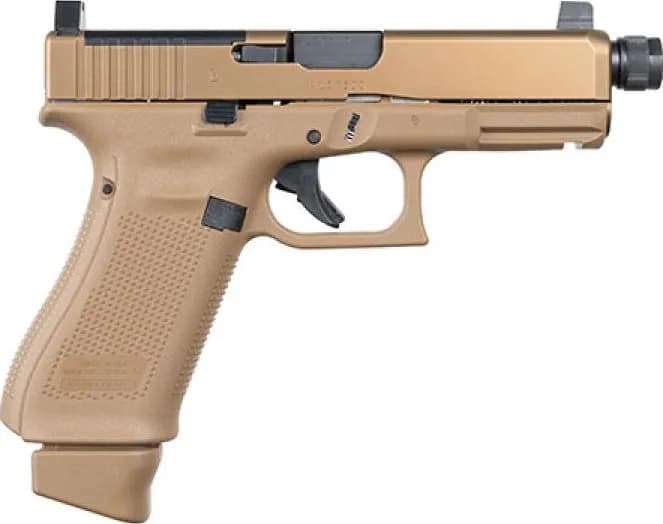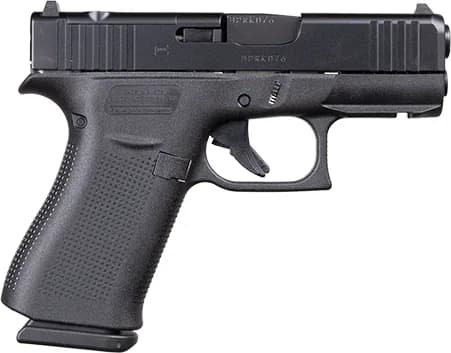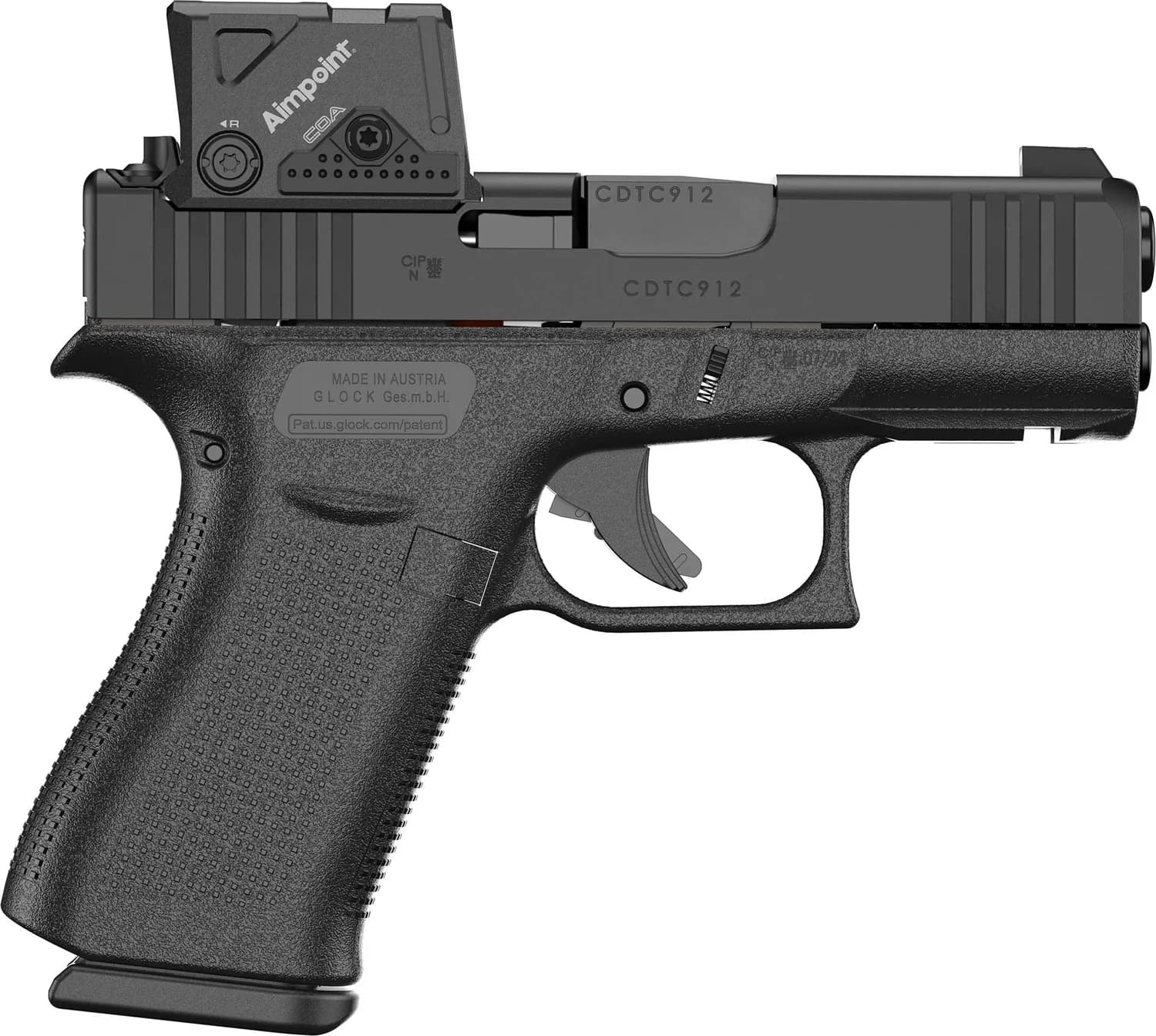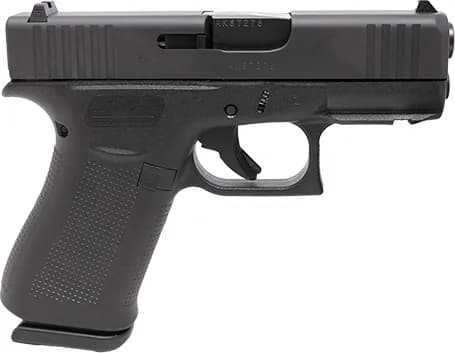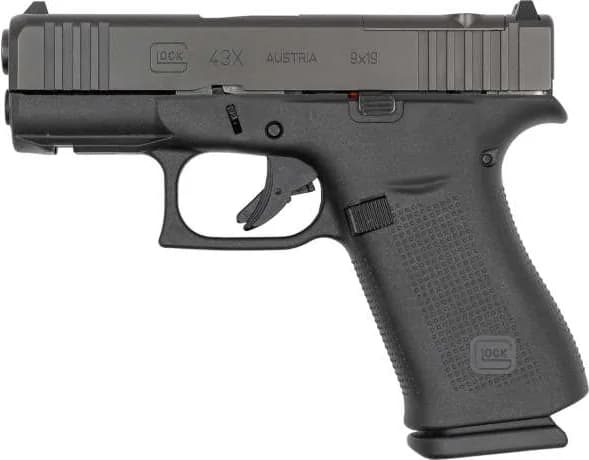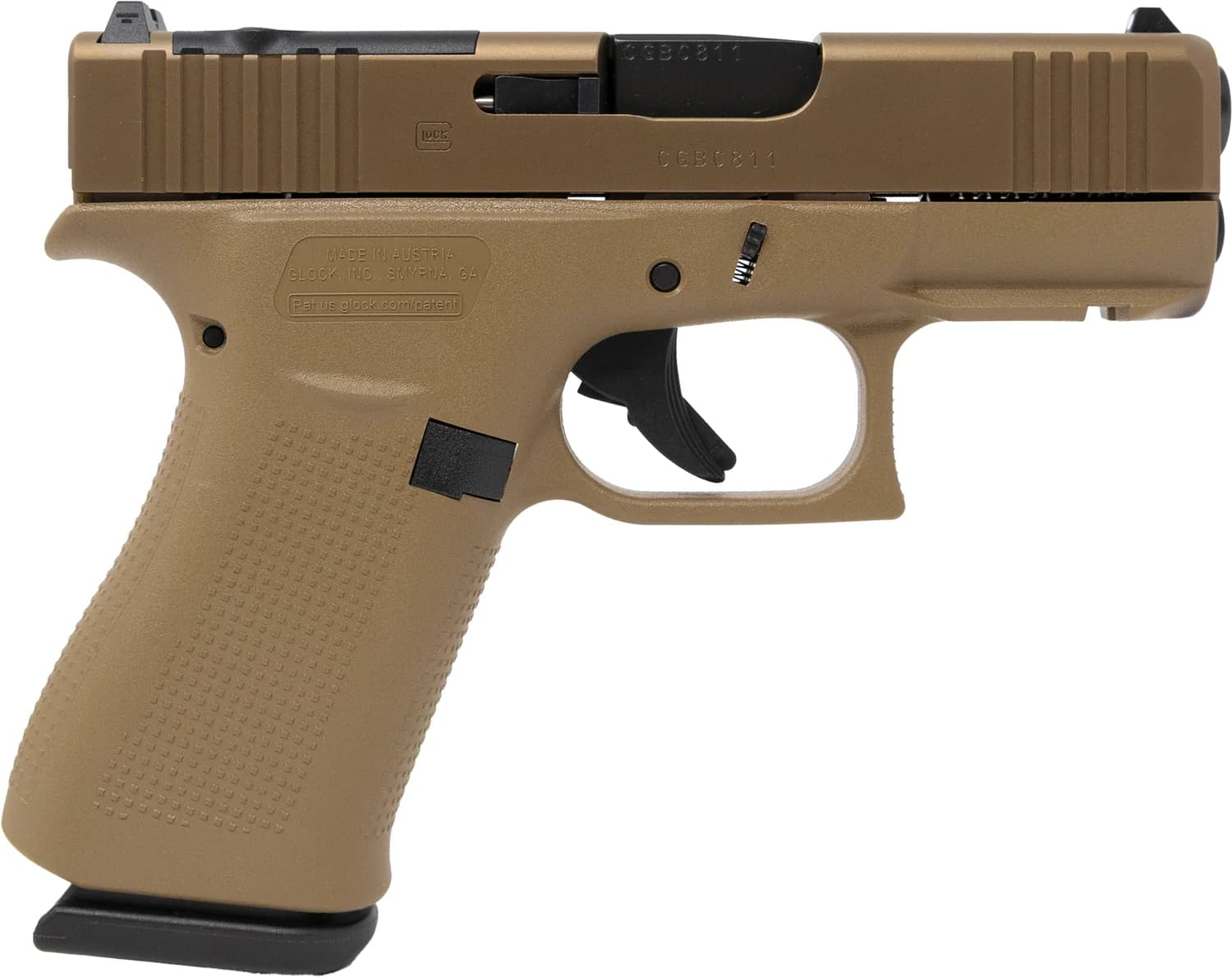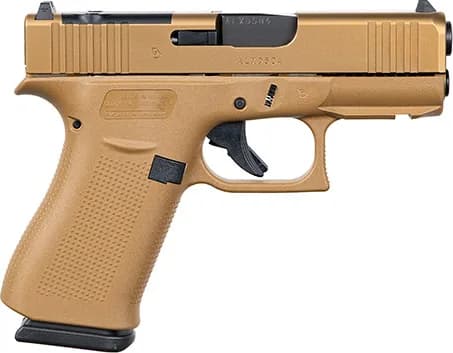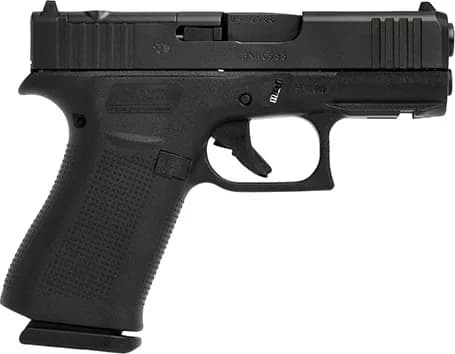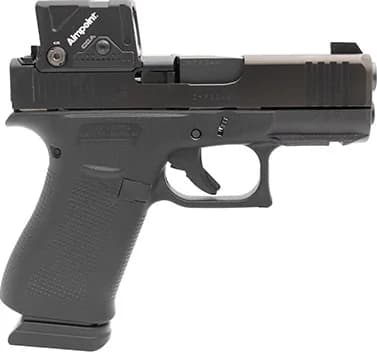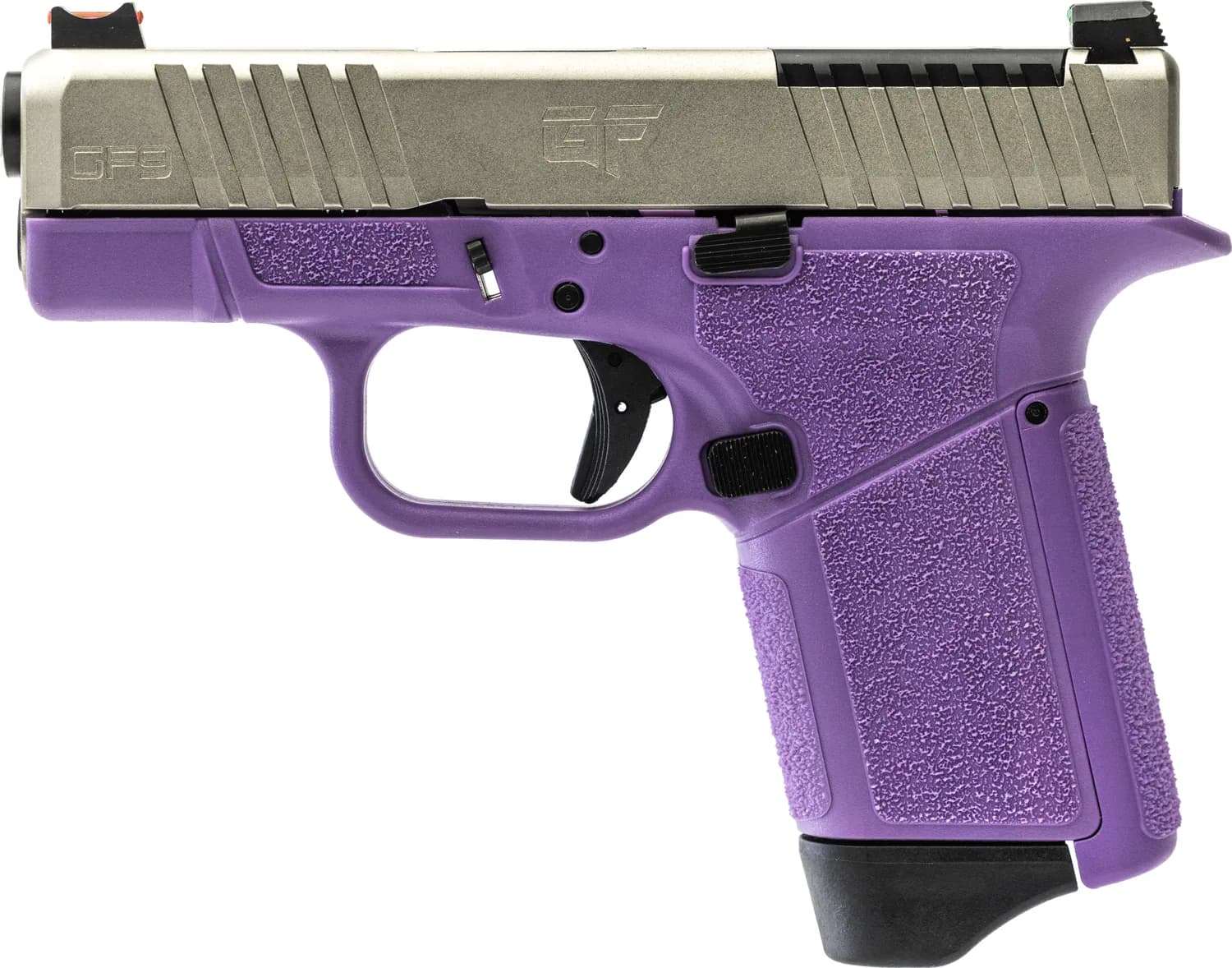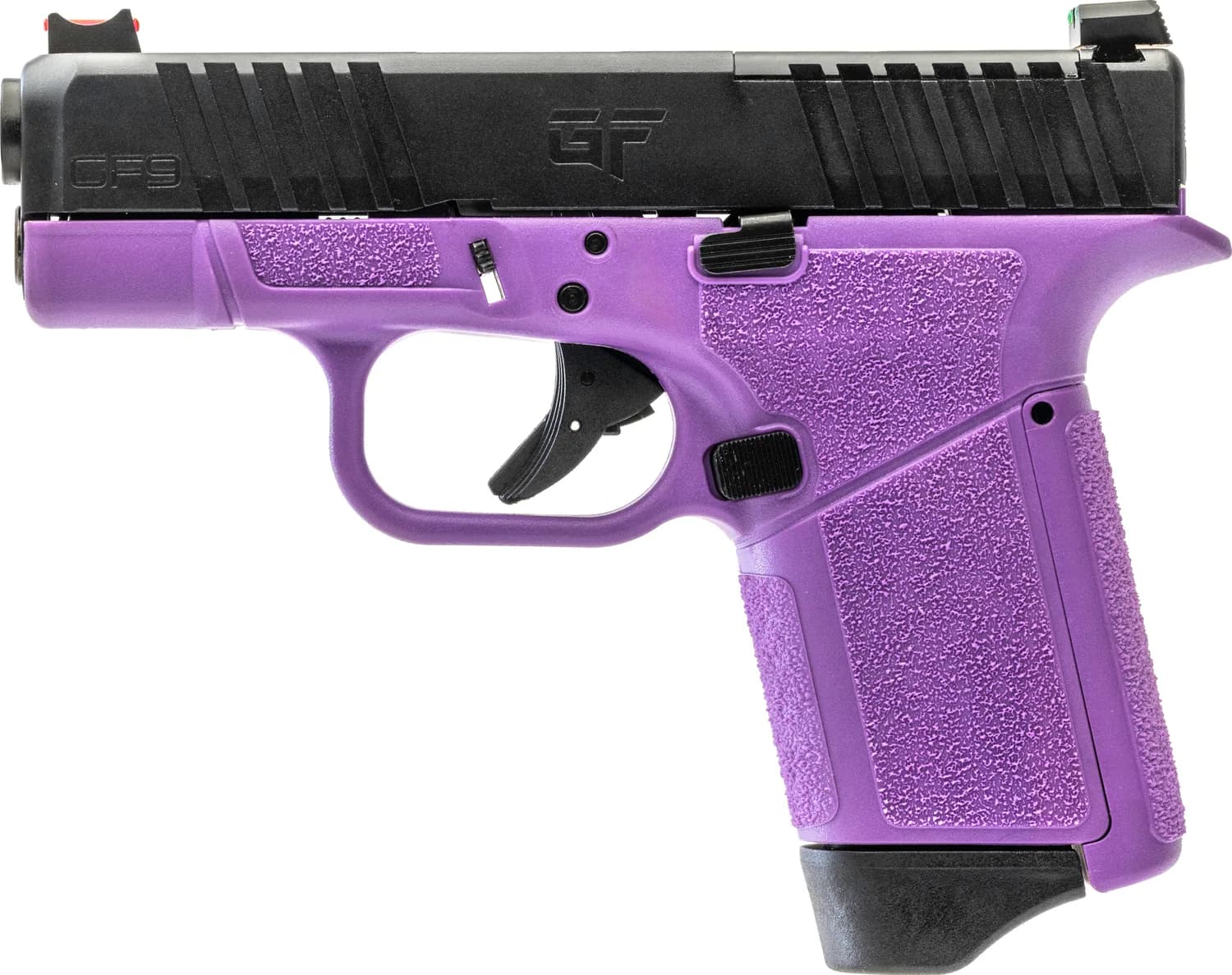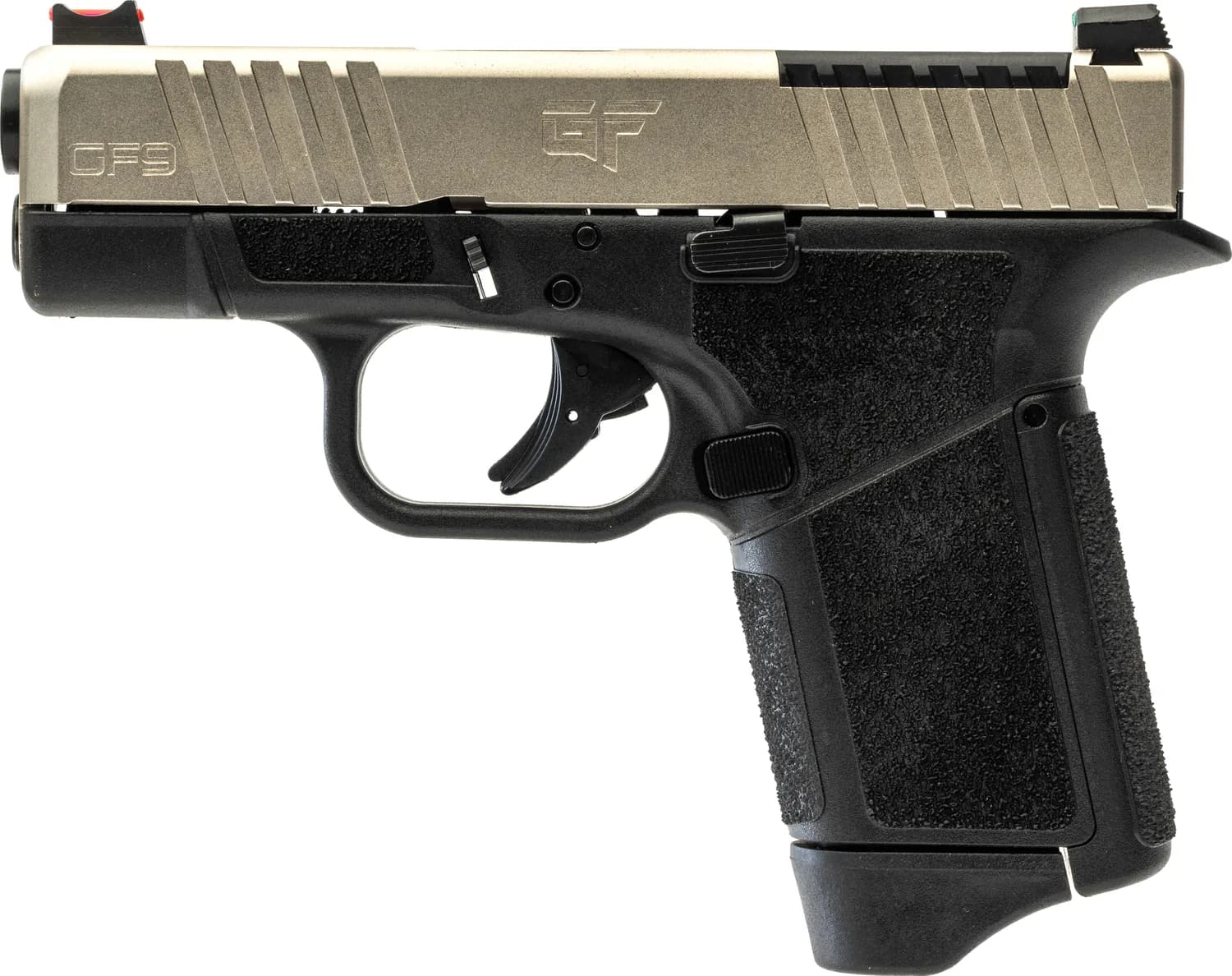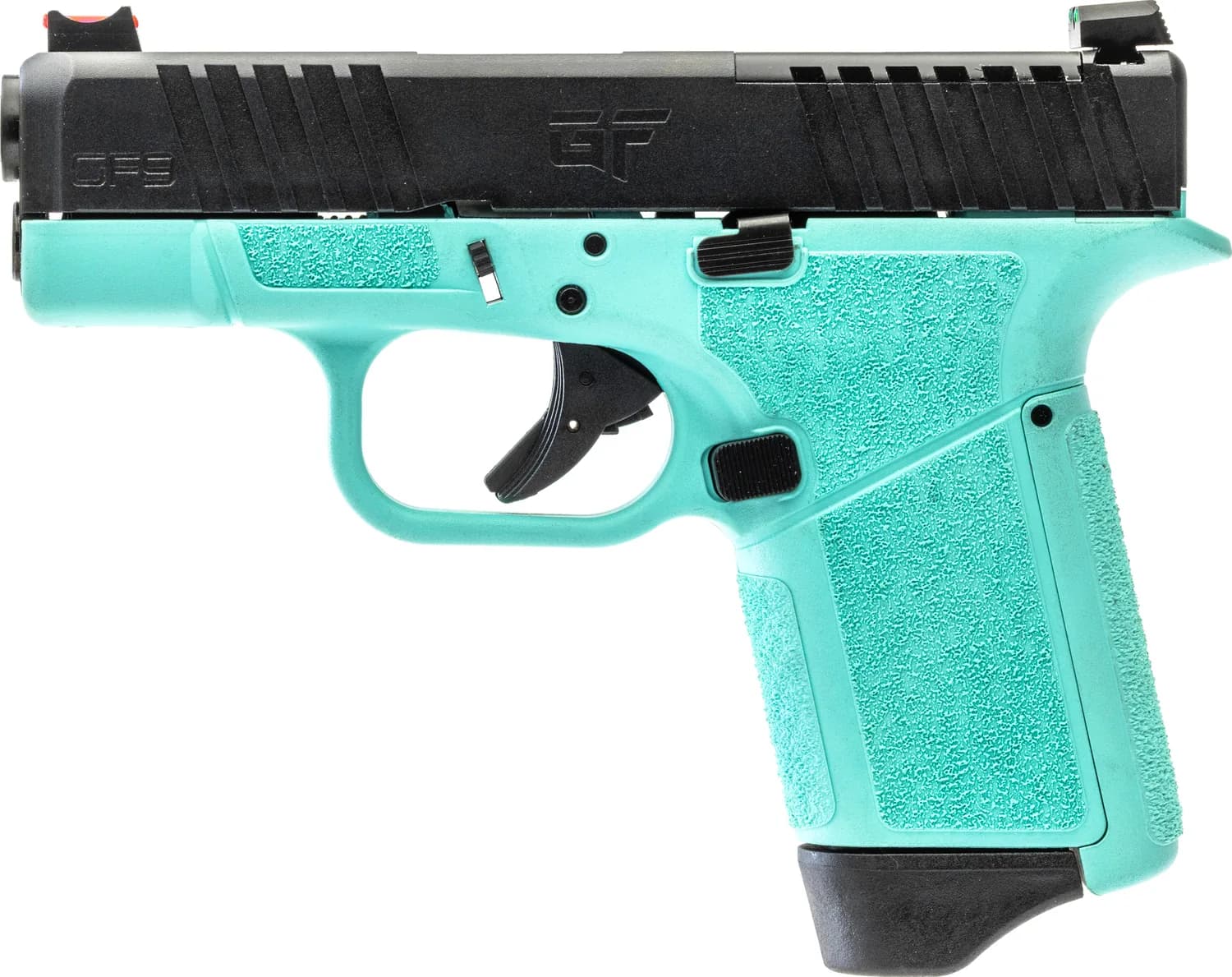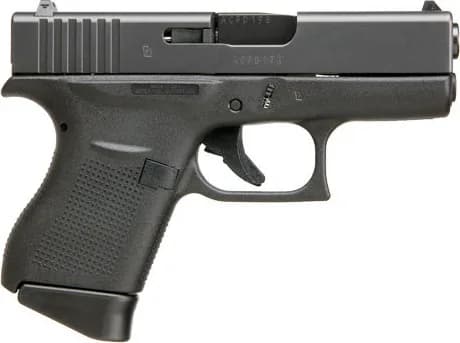
The Glock 43 arrived as Glock’s answer to growing demand for a true single‑stack 9mm pocket pistol. Introduced into the market in 2015, the G43 compressed Glock’s familiar Safe Action, striker‑fired architecture into one of the smallest 9mm pistol packages available at the time. Its mission was simple: give shooters a concealable, reliable Glock that would be comfortable for everyday carry without forcing them up to a larger grip or heavier gun. Reviewers and owners quickly positioned the 43 as the brand’s dedicated micro‑carry model alongside the wider slimline family that later included the 43X and 48.
In recent years a U.S.-assembled variant of the model has appeared in dealer inventories and product lists; those listings show the same single‑stack dimensions, fixed‑sight configuration and standard Safe Action features that define the platform. Dealer catalog entries and trade pricing sheets indicate that Glock’s single‑stack 9mm platform continues to be sold in multiple factory configurations for different markets.
At its core the pistol is straightforward: a polymer receiver, a steel slide and barrel sized for close‑quarters defensive use, and Glock’s proprietary striker‑fired Safe Action trigger system. The slim grip profile and narrow single‑stack magazine (six rounds in the flush configuration) are the design compromises that give the 43 its concealability and reduced printing. The short, roughly 3.4‑inch barrel and the short sight radius favor point shooting and quick presentation over extreme long‑range precision, which is consistent with the pistol’s defensive‑carry intent. Product listings for the fixed‑sight versions identify a matte black finish and factory polymer sights, the latter set up as a white‑dot front and a white‑outline rear on many factory examples.
Glock’s Safe Action system — three passive, automatic safeties that disengage only as the trigger is intentionally depressed — underpins the pistol’s simplicity and readiness. That internal safety architecture is a defining engineering choice that trades a manual external safety for a consistent trigger pull and minimal user steps between draw and fire. For a carry pistol intended to be carried loaded and ready, this approach is central to Glock’s overall design philosophy.
Ergonomically the 43 is compact enough to disappear on body carry while still offering a usable purchase for most shooters, especially when paired with the factory pinky‑extension magazine. The balance is biased toward a light, muzzle‑forward feel: with little mass behind the bore the gun is quick to point but notably “snappier” under recoil than larger, heavier handguns. That tradeoff—concealability versus felt recoil and capacity—is the single most important engineering reality for the platform.
Independent testers and long‑term users generally describe the pistol as perfectly adequate for its intended envelope: close‑in defensive distances. Practical groups and informal drills at personal‑defense ranges routinely show the 43 delivering acceptable shot placement inside typical self‑defense ranges (zero to seven yards), particularly in trained hands. Reviewers note that while the pistol will not deliver match‑grade groups at 50 yards, it points naturally and is more than accurate enough for the scenarios for which it was designed.
Recoil is frequently characterized as brisk. The lightweight, single‑stack frame provides little in the way of mass to absorb impulse, so shooters transitioning from larger‑framed pistols will notice quicker muzzle flip and the need for more deliberate follow‑through. That said, many owners find the recoil entirely manageable with a proper grip and consistent practice; it is a predictable, sharp impulse rather than a violent or uncontrollable one.
The factory trigger on this model is the familiar Glock‑type Safe Action trigger: a roughly mid‑weight pull with a distinct takeup and a firm wall before break, and a short, tactile reset. Most reviewers describe it as adequate and consistent rather than exceptional—reliable and easy to relearn for shooters already familiar with Glock triggers, but not the standout component for those seeking premium out‑of‑the‑box performance. Durability and reliability have been strong selling points for the platform: across reviews and user reports the 43 has a reputation for running reliably with common defensive 9mm loads when properly maintained.
The Glock single‑stack 9mm excels at defensive carry and as a backup or deep‑concealment option. Its slim profile, low weight and simple manual of arms make it a logical choice for inside‑the‑waistband carry, pocket carry for those with suitable garments, or as a secondary service pistol. Its strengths are concealability, consistency of operation, and the brand’s established reliability record—traits that matter most when the gun’s primary role is last‑resort defense and minimal daily burden on the carrier.
Limits are equally clear: capacity is low compared with modern micro‑compact designs that use double‑stack magazines. If a shooter prioritizes maximum rounds on tap at the smallest footprint, contemporary designs like the modular, higher‑capacity micro‑compacts will outpace the single‑stack Glock in raw firepower. Likewise, range‑sport shooters and anyone who values soft, low‑felt recoil above concealability will generally prefer larger models. In short, the 43 trades ammunition capacity and a tamer recoil impulse for the thinnest possible carry profile.
The 43’s reputation is rooted in confidence—Glock’s brand equity for reliability and parts commonality remains a major part of its appeal. In market comparisons the gun is often cast as the conservative, time‑tested choice against newer micro‑compacts that emphasize maximum capacity and accessory features; reviewers regularly frame the decision as one between tried‑and‑true simplicity (the single‑stack Glock) and contemporary feature sets (optics cuts, higher‑capacity magazines) offered by competitors. Pricing and availability vary over time and by region, but dealer inventory records and price trackers show the model occupies the mid‑tier of carry‑pistol pricing—affordable relative to premium boutique pistols and competitively positioned versus other mainstream carry options.
For shooters who put a premium on a minimal footprint, proven mechanics and the Glock user experience—consistent trigger feel, simple disassembly and broad aftermarket support—the single‑stack 9mm remains a defensible choice in the crowded micro‑carry market. For those whose first priority is capacity or the softest possible recoil, newer offerings with double‑stack magazines and optics‑ready slides provide compelling alternatives. The conversation around this model is therefore less about whether it is “good” and more about which set of tradeoffs a shooter is willing to accept.
The pistol’s enduring niche is clear: it is a compact, reliable tool designed to minimize everyday intrusion while delivering the ballistic performance of 9mm in a package you are likelier to carry. For many shooters, that practical advantage—getting the gun on your person, every day—remains the decisive value proposition.
Start with a practical guide if you want a faster way to narrow the field before comparing specific models.
Learn how to choose the right 9mm handgun based on size, budget, and how you plan to use it.
Read guideCarry-focused shoppersLearn how to choose the right concealed carry handgun based on size, comfort, safety, and everyday usability.
Read guideComparison-focused shoppersA practical guide to comparing handguns the right way: what actually matters, what to ignore, and how to use comparison tools effectively.
Read guide