Affiliate disclosure: HandgunCloud may earn a commission if you continue to the retailer and complete a purchase.
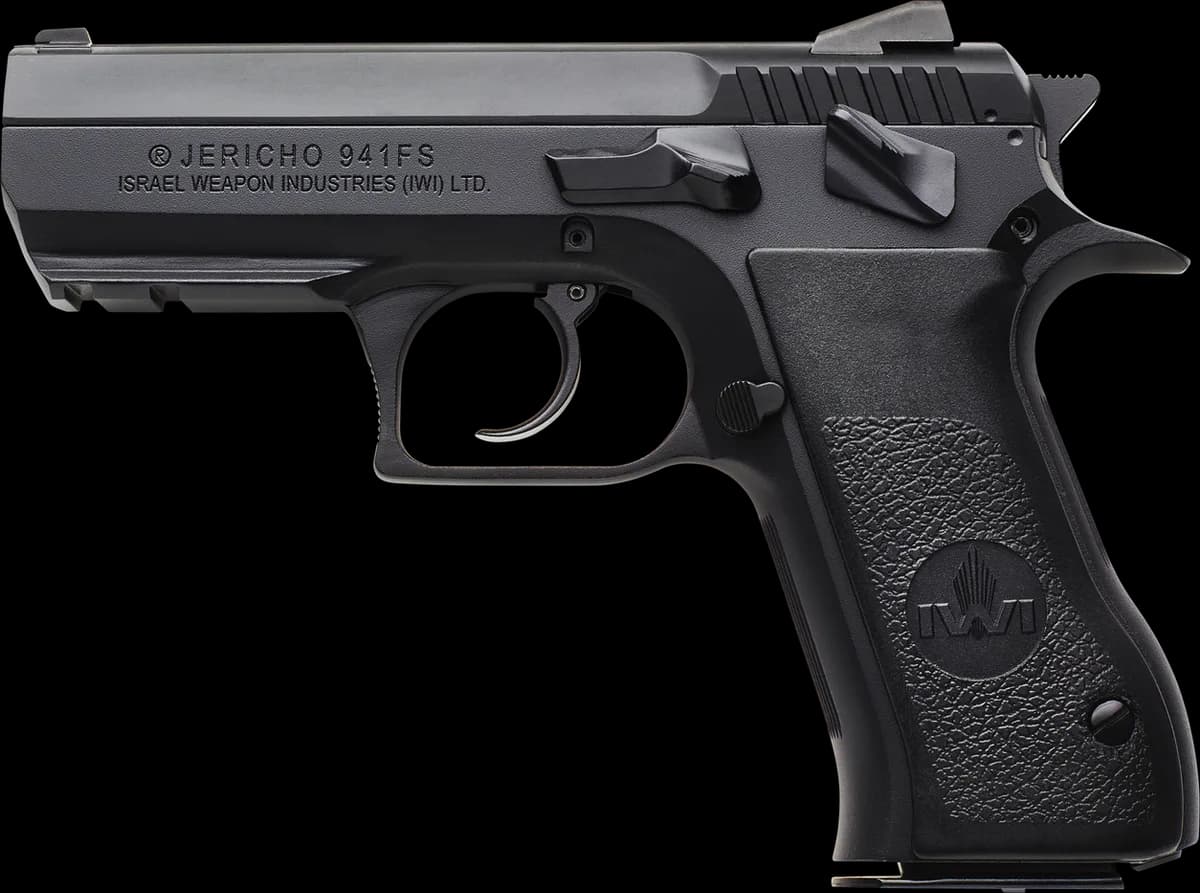
Buy from Impact GunsThe Jericho 941 traces its lineage to Israel Weapon Industries’ long-running series of pistols that began in 1990, a design that drew heavily from the CZ‑75 short‑recoil layout and cultivated a devoted following in both civilian and service circles. Over the decades the model family expanded into steel‑frame and polymer‑frame variants, and IWI periodically refreshed the line to reflect modern ergonomics and accessory standards. The “Enhanced” versions are IWI’s recent rework of that platform: updated controls, sights and an accessory rail aimed at making the pistol more familiar to contemporary American shooters while retaining the Jericho’s DA/SA operating character.
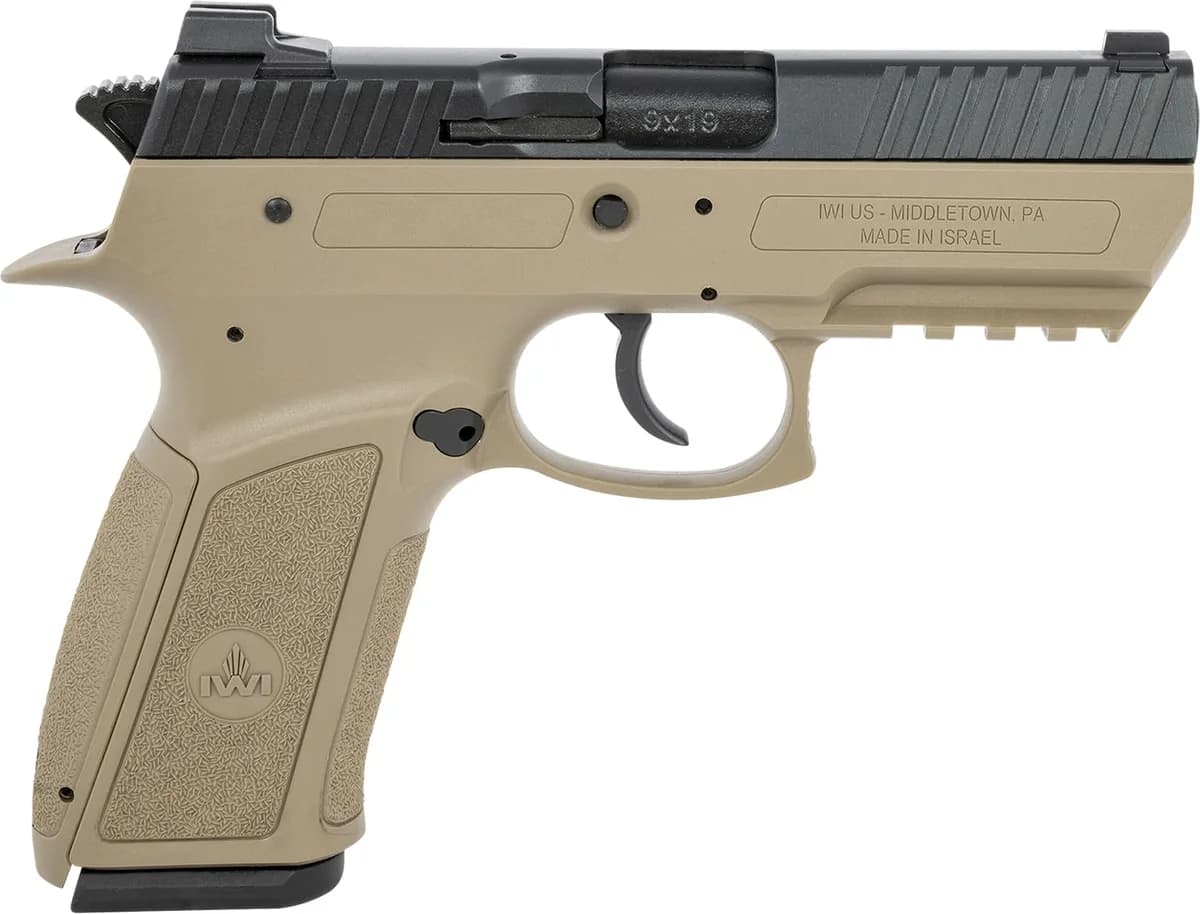
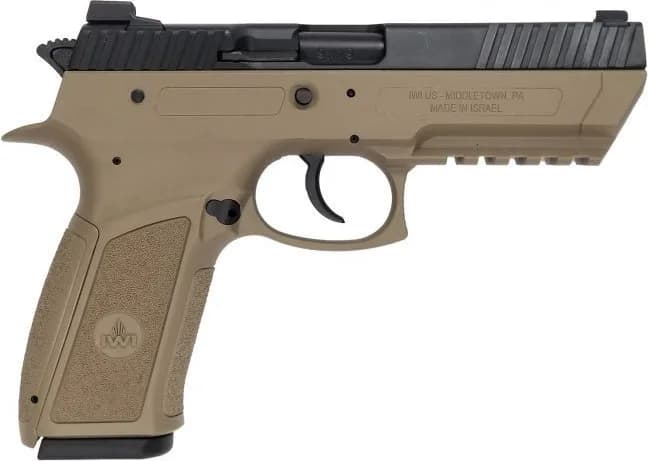
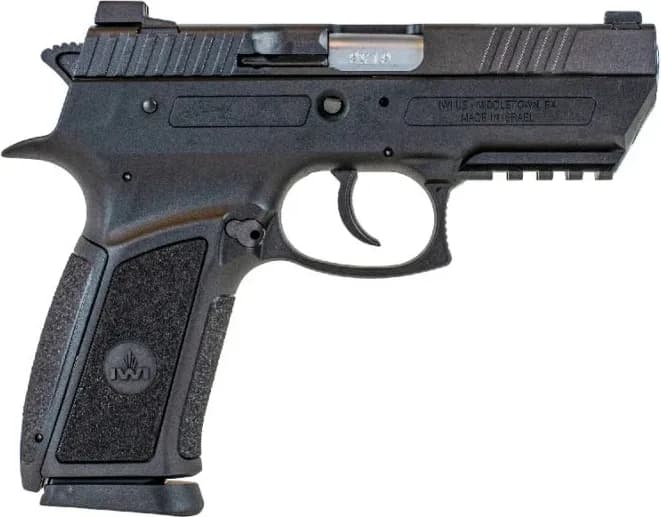
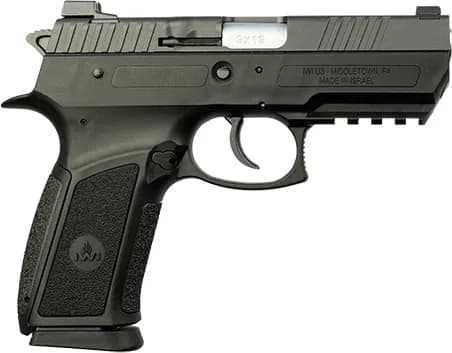
The Mid‑Size Polymer Enhanced sits in IWI‑US’s catalog as the compact‑to‑mid‑sized option intended to bridge full‑size shootability and easier carry. It was marketed alongside a full‑size Enhanced model and appears in official product literature and industry new‑product roundups as the company’s offering for defensive, duty and general‑purpose range use. State procurement and handgun roster documents that list the Jericho Mid‑Size polymer variant attest to the model’s distribution to U.S. markets and agencies.
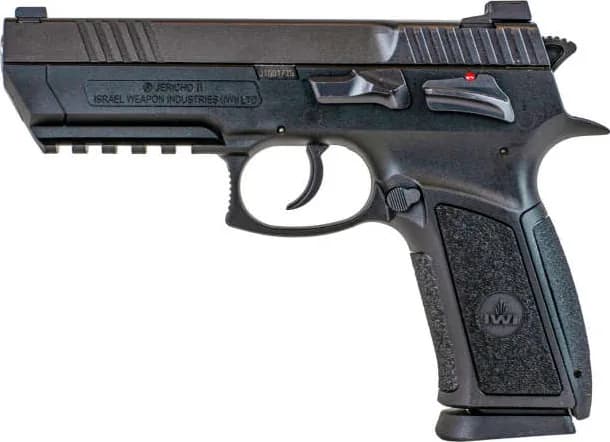
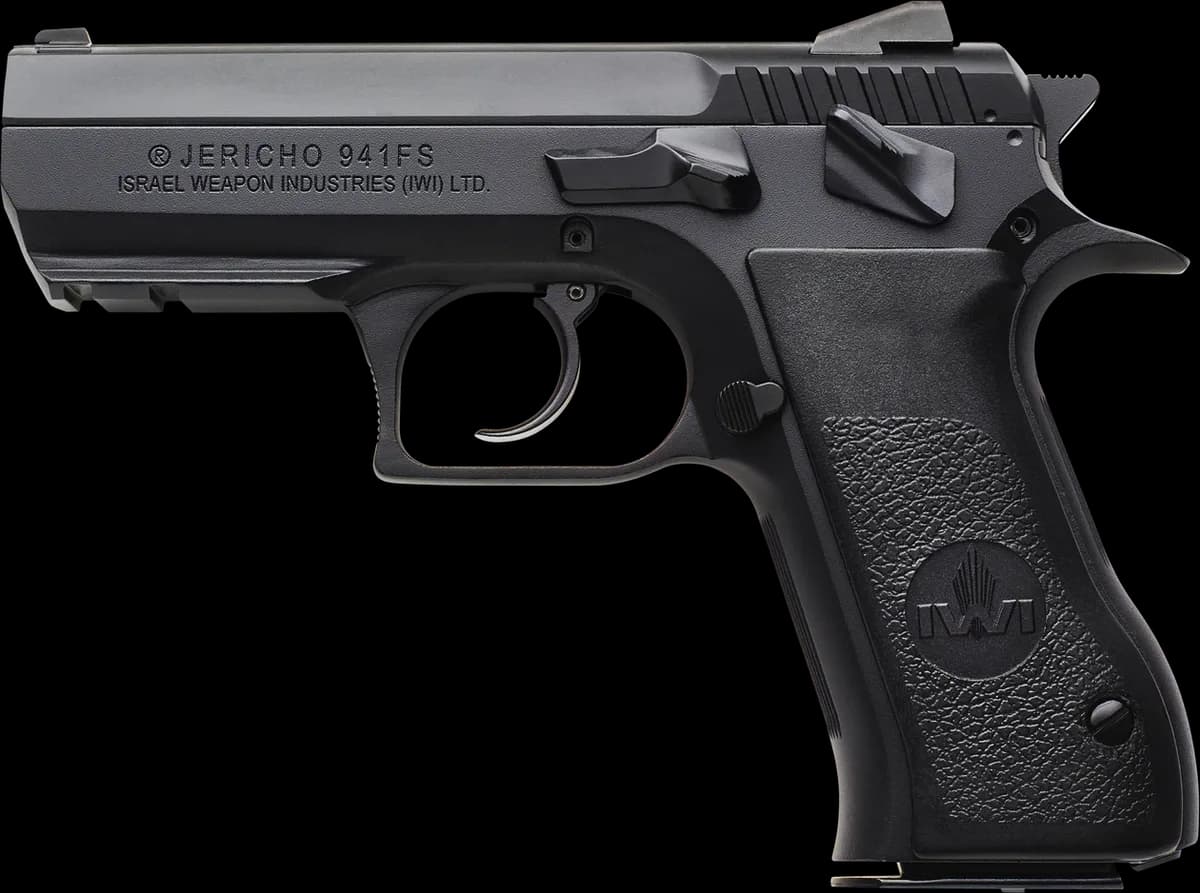
Mechanically the Mid‑Size Enhanced is a short‑recoil, tilting‑barrel pistol that preserves the frame‑mounted safety and DA/SA capability familiar to Jericho owners. IWI’s Enhanced package modernizes the ergonomics: the frame removes finger grooves, adds interchangeable/adjustable backstraps, and reprofiles the hammer, trigger and safety to suit American manual‑of‑arms preferences. The Enhanced pistols also adopt Novak‑style rear sights and an integral Picatinny rail on the dustcover for lights and lasers — changes that make the pistol easier to set up for practical defensive carry and faster to acquire at close range.
The Mid‑Size’s dimensions and mass place it between compact carry guns and full‑size service pistols. A 3.8‑inch barrel and roughly mid‑to‑high‑20‑ounce weight yield a package that feels more controllable than a subcompact but still manageable for concealed carry with the right holster. The internal slide‑in‑frame rails inherited from the CZ‑style geometry provide a low bore axis and a smooth, consistent lockup that many shooters associate with accurate, predictable recoil impulse. IWI’s published rifling specification for the Enhanced lists a 1:10‑inch, right‑hand polygonal profile for the barrel in many configurations; that bore profile typically produces good velocity and a smooth bore surface that some shooters prefer.
Field‑serviceability is conventional: the picture‑frame disassembly is familiar to anyone who has worked on CZ‑style designs. IWI’s choices — Novak sights, an external manual safety, and a firing‑pin block — signal the pistol was engineered to be carried in Condition One (cocked‑and‑locked) or used in double‑action first‑shot modes depending on user preference. The mid‑size polymer frame helps control weight while keeping a full double‑stack magazine capacity.
Early hands‑on impressions and first‑look reviews emphasize that the Enhanced Jericho remains a pleasant gun to shoot for a DA/SA double‑stack 9 mm. Range reports highlight a comfortable grip geometry, solid sight picture with the Novak‑style rear, and a trigger that — while not match‑grade — is serviceable for defensive accuracy after the reprofiled geometry. Reviewers noted the pistol’s balance and the predictable, not‑sharp recoil impulse consistent with a mid‑sized 9 mm of this weight.
Accuracy expectations for the Mid‑Size Enhanced reflect its intended role: competent practical accuracy for self‑defense distances and duty use rather than precision benchrest groups. Reviews and tests from independent outlets report adequate point‑of‑impact consistency out to typical engagement ranges with factory 9 mm loads, and reviewers commonly described the gun as “fun to shoot” and well‑suited to drills and qualification courses. Reliability in published early tests was generally positive, though community discussion has tracked isolated durability questions tied to later production changes (see below).
The Mid‑Size Polymer Enhanced’s mix of a 3.8‑inch barrel, double‑stack magazine and ergonomic improvements makes it a flexible tool. It is well suited for:
Its limitations are the tradeoffs inherent to any mid‑size double‑stack DA/SA pistol: it is larger than dedicated concealment pistols, so it will print more and require a holster and wardrobe choices that accommodate its length and height. For competitors seeking a slide‑mounted optic‑ready platform or the absolute lightest carry option, there are slimmer or optics‑ready designs that will beat it on those specialized metrics. Published reports emphasize the pistol’s strengths as a practical, all‑around handgun rather than a competition‑specialist race gun.
Among owners and online communities the Jericho Enhanced has an active following and many satisfied users; however, community reports have documented isolated durability concerns tied to a change in slide construction that introduced a two‑piece slide with a separate capture/retention lug on some production runs. A minority of owners reported failures of that component on mid‑size models in specific batches, prompting discussion and warranty returns. IWI’s official materials and many reviewers still describe the Enhanced as meeting the company’s standards for reliability, but prospective buyers and fleet purchasers commonly weigh owner reports alongside factory warranties when evaluating long‑term ownership risk. The pattern in public discussion suggests the issue is not universal but is something buyers should be aware of and confirm with a dealer or the manufacturer’s support if purchase timing or serial ranges are a concern.
The Jericho Enhanced Mid‑Size Polymer competes in the crowded field of mid‑size, double‑stack 9 mm pistols that emphasize capacity, ergonomics and an accessory rail for lights. In that class it offers the distinctive DA/SA manual‑safety operating system — a point of differentiation versus dominant striker‑fired designs — and retains the low‑bore‑axis feel associated with CZ‑type lockups. Its factory fitments (Novak‑style sights, adjustable backstraps, and a high magazine capacity in a mid‑size chassis) place it as a value‑oriented alternative for buyers who prefer a more traditional manual‑safety pistol with modern ergonomics.
Reputation among enthusiasts is mixed: many praise the Jericho lineage for sound engineering and shootability, while others prefer all‑metal Jericho variants or competing polymer offerings from established U.S. manufacturers. For someone who values the DA/SA feature set, a tactile manual safety, and a spacious grip for high capacity, the Enhanced Mid‑Size is a distinctive, reasonably priced option in its segment; for buyers seeking the broadest aftermarket support or an optics‑ready slide out of the box, rival striker‑fired designs may offer more accessories and holster choices.
Taken as a whole, the IWI Mid‑Size Enhanced is a pragmatic update of a long‑running design: it preserves the Jericho’s core mechanics while addressing ergonomics and accessory expectations of modern shooters. As with any firearm, attention to production details, component revisions and owner feedback will help determine whether a particular example matches an individual shooter’s needs and risk tolerance.
Start with a practical guide if you want a faster way to narrow the field before comparing specific models.
Learn how to choose the right 9mm handgun based on size, budget, and how you plan to use it.
Read guideCarry-focused shoppersLearn how to choose the right concealed carry handgun based on size, comfort, safety, and everyday usability.
Read guideComparison-focused shoppersA practical guide to comparing handguns the right way: what actually matters, what to ignore, and how to use comparison tools effectively.
Read guide