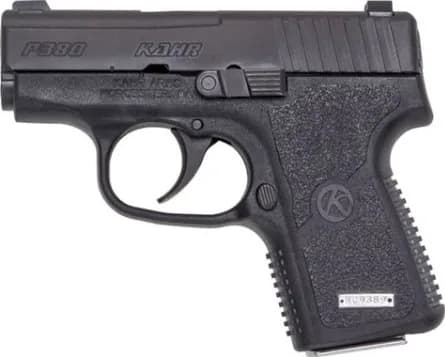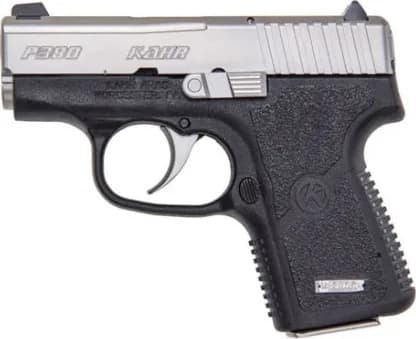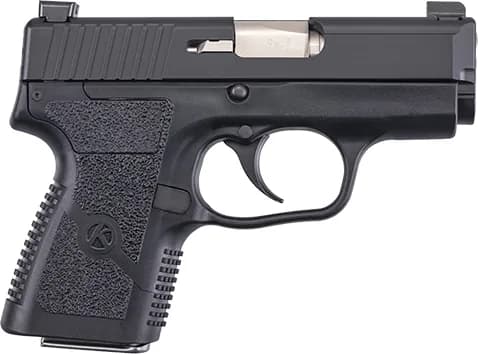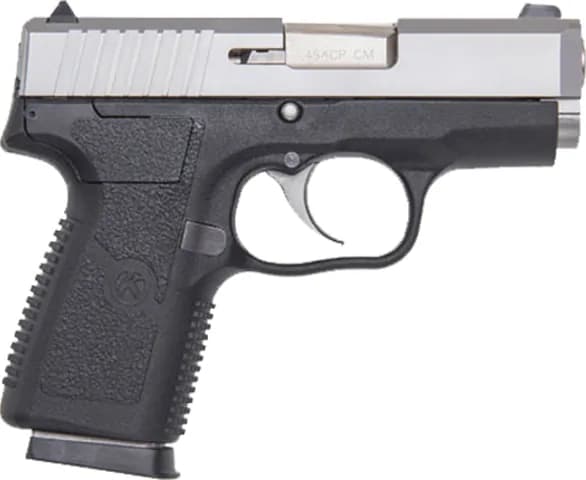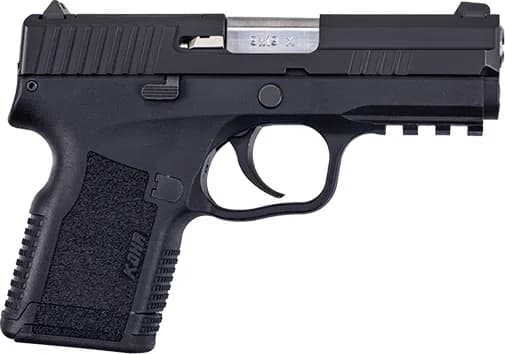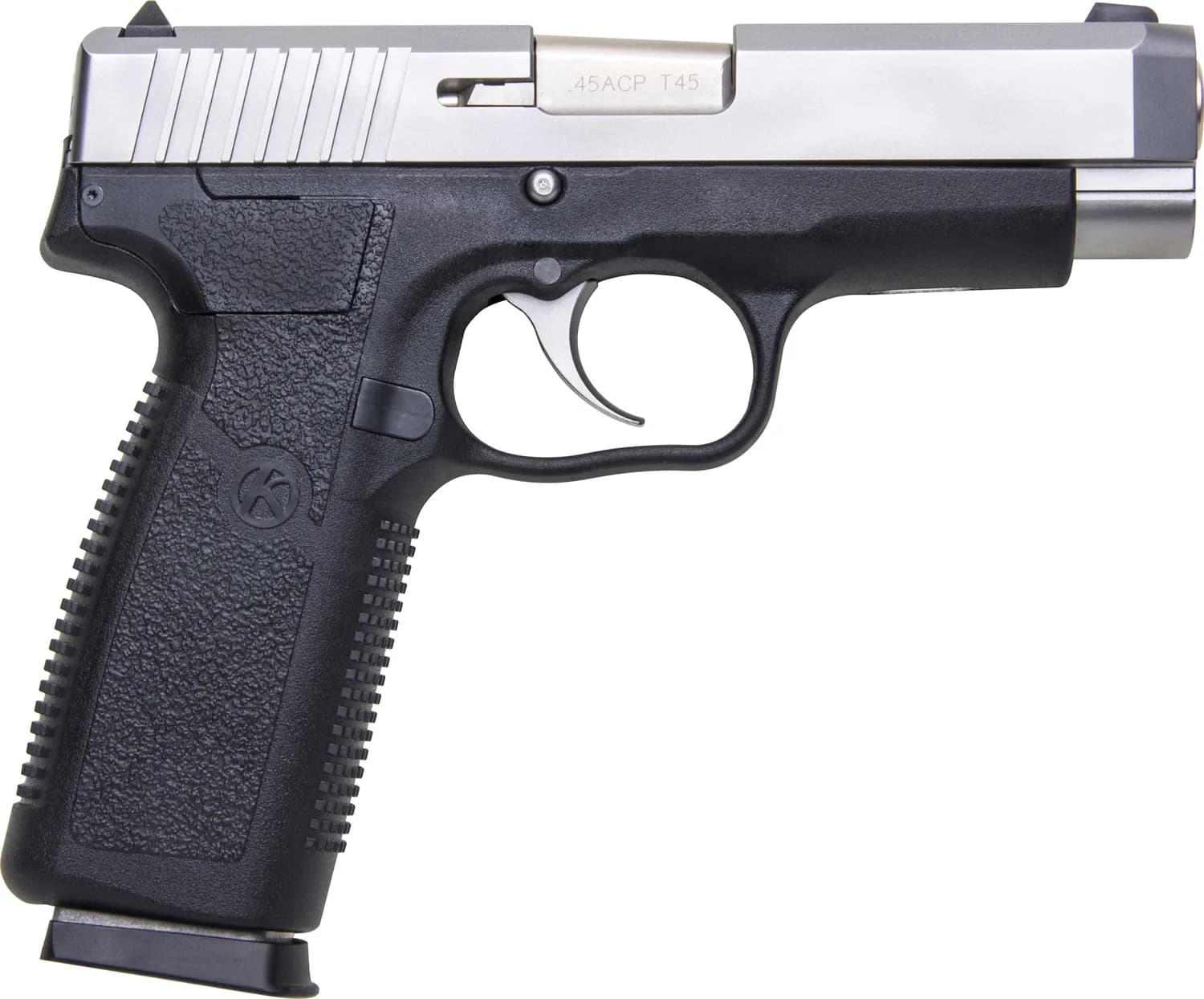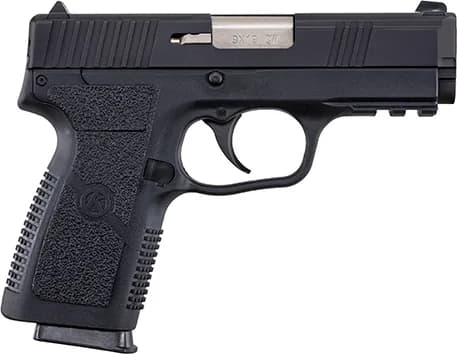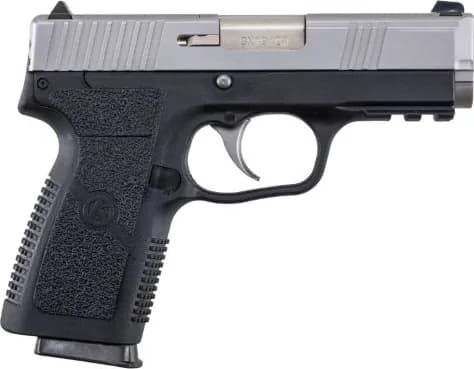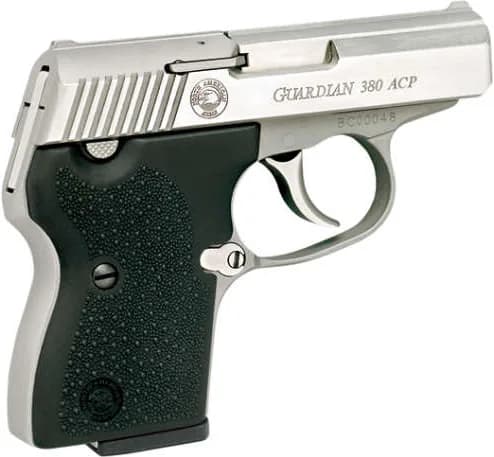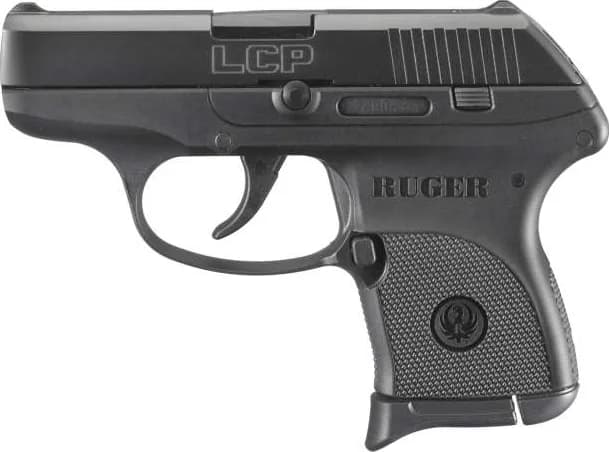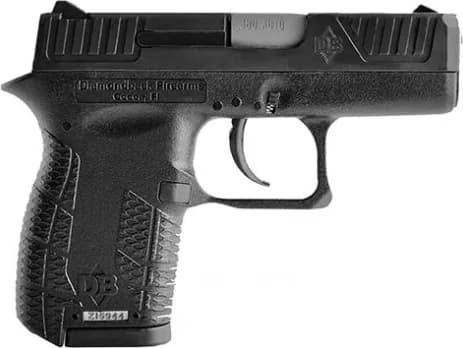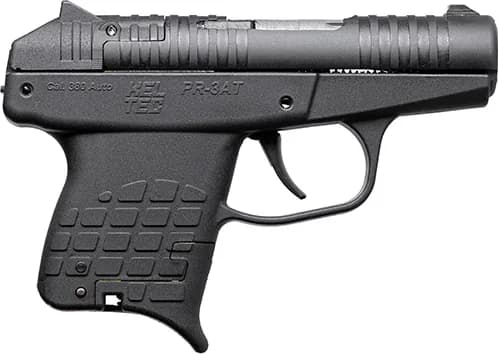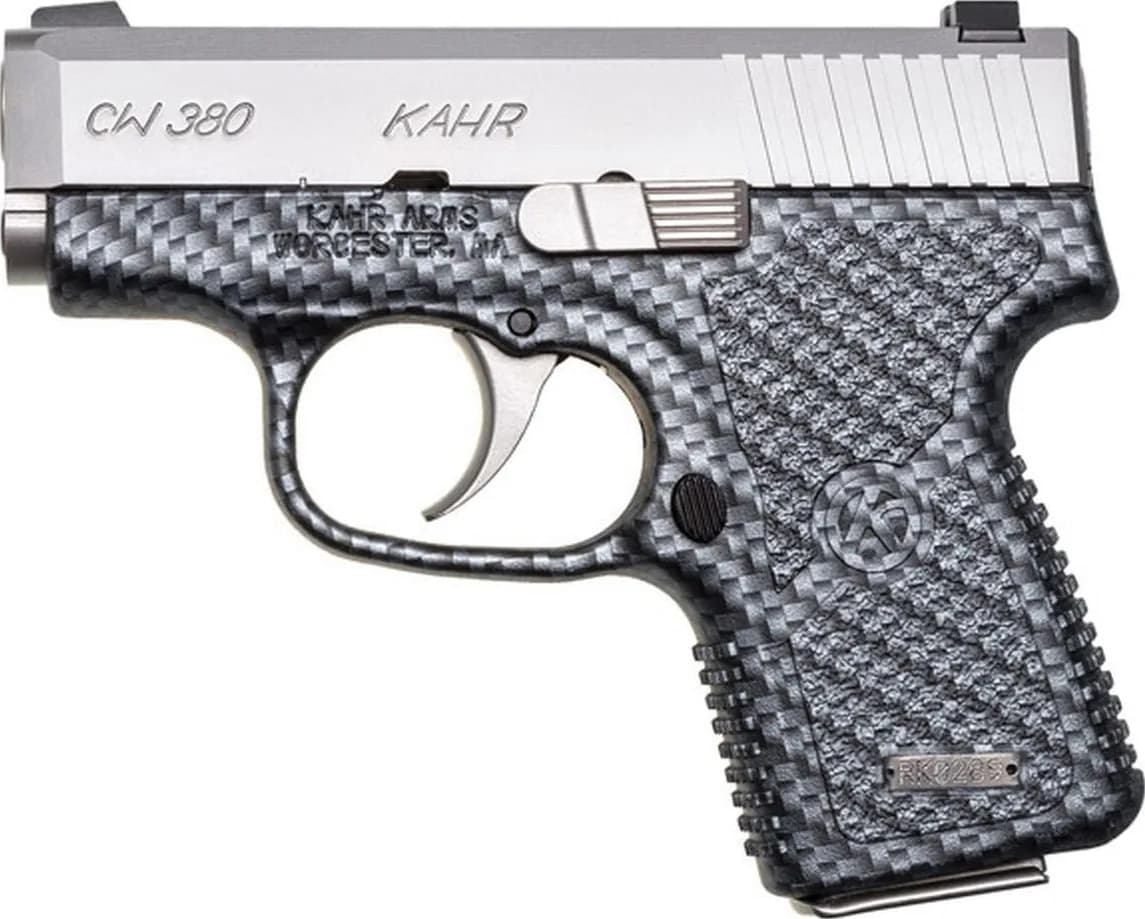
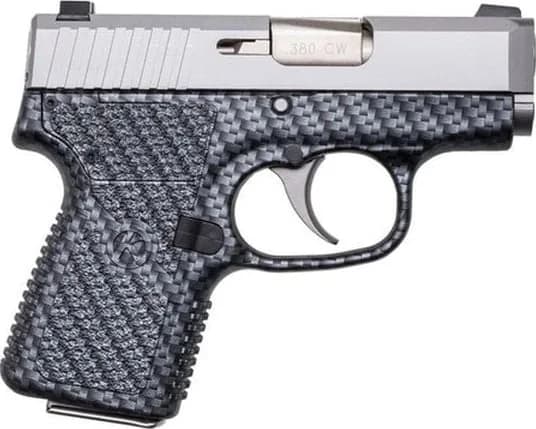
Curved and Textured Backstrap, Textured Frontstrap, Slide Locks Back on Last Round
The CW380 is Kahr Arms’ subcompact, value-line entry into the micro-.380 market. The model was unveiled at SHOT Show 2013 as Kahr’s answer to the demand for a truly pocketable, locked-breech .380 ACP that carried the company’s characteristic long, smooth double-action-only (DAO) trigger feel at a more approachable price point. The CW designation identifies the pistol as part of Kahr’s value “CW” family, which shares core design ideas with the premium P-series but uses cost-saving manufacturing choices to lower retail prices. The Black Carbon Fiber (BCF) finish — a polymer frame with a three-dimensional carbon-weave appearance and textured grip panels — was added as a cosmetic and ergonomic option several years after introduction, appearing in Kahr’s press releases in 2017 as a factory variant of the CW3833 model.
Within Kahr’s lineup the CW380 occupies the smallest, lightest niche: it is intended for deep concealment, pocket carry and as a discreet off‑duty or backup pistol. It slots below the full‑featured P380 in terms of finish and some hardware, but it preserves many of the same core design decisions (locked-breech, striker-fired DAO action, internal passive safeties) that define Kahr’s reputation for a refined trigger and compact ergonomics.
Mechanically the CW380 is a locked‑breech, recoil‑operated, striker-fired pistol rather than a simple blowback design. For a pistol of its size that choice reduces felt recoil and muzzle flip compared with many very light blowback micro‑.380s, and it also allows Kahr to keep the slide mass and overall width down. The CW380’s barrel is a conventional rifled barrel (unlike the polygonal barrels used on some P-series Kahr models), and the slide is machined from 416 stainless with a matte finish. Internally, the design includes a full‑length guide rod and dual recoil springs, a passive striker block (“safe cam”) and a Browning-style cam/lug locking system. The slide locks back on the last round — a feature often missing on competing pocket guns.
Ergonomically the CW380 is built to be minimal. Its footprint is very small, with an overall length just under five inches and an unloaded weight in the neighborhood of ten ounces. Kahr’s CW series adds polymer frame inserts and a textured pattern — in the BCF variant the carbon‑weave finish doubles as a texture for purchase — plus a curved rear backstrap and textured frontstrap to help retention. The single‑stack magazine and flush baseplate keep the grip short, so one‑ or two‑finger shooting is typical; shooters with larger hands will find the grip small but often appreciate the gun’s natural pointability. The sights are a white bar‑and‑dot combat arrangement with a drift‑adjustable rear and a pinned polymer front — practical for close defensive ranges but modest in size for precise sighting at distance.
Independent reviews and range tests consistently highlight two defining performance characteristics: an unusually smooth, long DAO trigger and manageable recoil for such a small pistol. In controlled accuracy tests the CW380 has produced tightening groups at typical defensive ranges; one magazine‑fed bench test averaged groups around an inch-and-a-half at seven yards, which is in line with expectations for a well‑built pocket pistol when fired from a rest. Reviewers commonly credit the trigger’s predictability and the locked‑breech action for the pistol’s shot recovery and pointability.
At the same time, the CW380 has a mixed reliability reputation in the owner community. Publishers and long‑term reviewers note that Kahr recommends a modest break‑in period and careful initial cleaning and lubrication; many owners report that the CW380 runs best after following Kahr’s initial maintenance and after experimenting with several defensive and practice loads to find a feed‑friendly combination. However, anecdotal reports on user forums and some owners’ accounts describe sensitivity to certain ammo types and occasional issues with slide manipulation or feeding that required factory service or aftermarket tweaks. Those experiences appear to be uneven — many examples run for thousands of rounds without trouble, while a minority of pistols exhibit persistent problems.
Durability in formal reviews is generally positive for the slide, barrel and basic mechanisms; the issues reported by some users most frequently revolve around early break‑in, extractor/ejector and feeding geometry rather than catastrophic wear. As with many micro‑compact carry pistols, ammunition selection, maintenance and realistic expectations about service life are important factors.
Where the CW380 excels is obvious: maximum concealability with a defensive‑caliber cartridge, excellent trigger feel for accurate short‑range shooting, and a finished product that feels and looks more refined than some ultra‑budget pocket pistols. It is best-suited to deep concealed carry (pocket, ankle, or minimal‑coverage holsters), as an off‑duty or plainclothes backup, and as a gun for shooters who prioritize a smooth DAO trigger and low felt recoil in the smallest possible package. Reviewers repeatedly emphasize that for defensive encounters at close range the CW380 is entirely serviceable when paired with an appropriate defensive load that functions reliably in the owner’s pistol.
Limitations follow from the same virtues. The capacity is 6+1, the grip is very short (often permitting only a one‑ or two‑finger grip), and the sight radius is brief — all of which reduce sustained controllability and rapid follow‑up precision compared with larger pistols. The pistol’s small controls and stiff‑feeling slide can make manual manipulation difficult for shooters with reduced hand strength. Finally, the historic issue of occasional ammo‑sensitivity and the need for an initial break‑in or service for some serial numbers temper its suitability as a “out‑of‑the‑box” range toy for users unwilling to hand‑select ammo or accept potential tinkering.
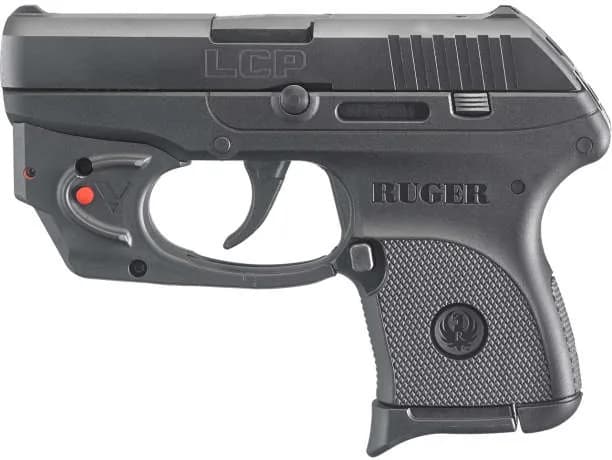
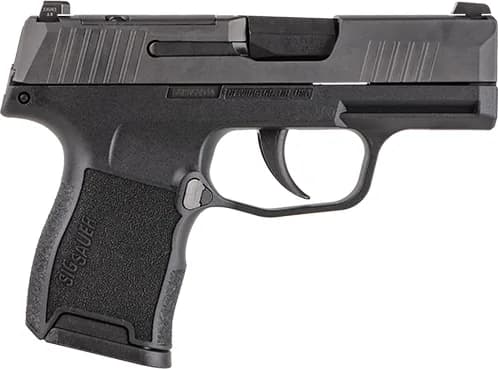
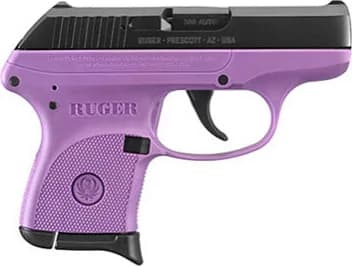
In the crowded micro‑.380 space the CW380 occupies a somewhat premium position relative to bare‑bones pocket pistols because of its locked‑breech design, machining of the slide, and the famously smooth Kahr trigger. Compared to ubiquitous competitors such as the Ruger LCP family, Smith & Wesson’s small .380 offerings, and other micro‑.380s, the CW380 is frequently praised for its shootability and fit‑and‑finish; it does not, however, match the higher magazine capacities that recent entrants (and some modern micro‑9 platforms) provide. Analysts and comparison pieces place the CW380 as a solid niche choice for buyers who value trigger quality and concealability over capacity and ultra‑easy slide manipulation. In aggregate reviews and market rankings it is often described as “one of the best feeling” micro‑.380s while simultaneously being one of the models that demands a bit more user attention to reach and maintain reliable operation.
For buyers who want the smallest possible defensive pistol with a refined trigger and locked‑breech mechanics, the CW380 — and the textured carbon‑fiber‑finish variants like the BCF — remain compelling. For those who prioritize higher capacity, ease of slide manipulation, or absolute out‑of‑the‑box reliability across a wide range of ammo without any break‑in, more modern micro‑compacts or larger micro‑9 offerings may better fit the bill.
Overall, the CW380 BCF is an example of Kahr’s approach to pocket carry: compact engineering with attention to trigger quality and concealability, balanced against the reality that the smallest guns are inevitably compromises — and that some examples require careful hand‑selection of ammunition and attention to initial break‑in to perform at their best.
Start with a practical guide if you want a faster way to narrow the field before comparing specific models.
Learn how to choose the right concealed carry handgun based on size, comfort, safety, and everyday usability.
Read guideBudget-minded buyersLearn how to find a reliable handgun under $500 without wasting money or compromising on quality.
Read guideComparison-focused shoppersA practical guide to comparing handguns the right way: what actually matters, what to ignore, and how to use comparison tools effectively.
Read guide