Affiliate disclosure: HandgunCloud may earn a commission if you continue to the retailer and complete a purchase.
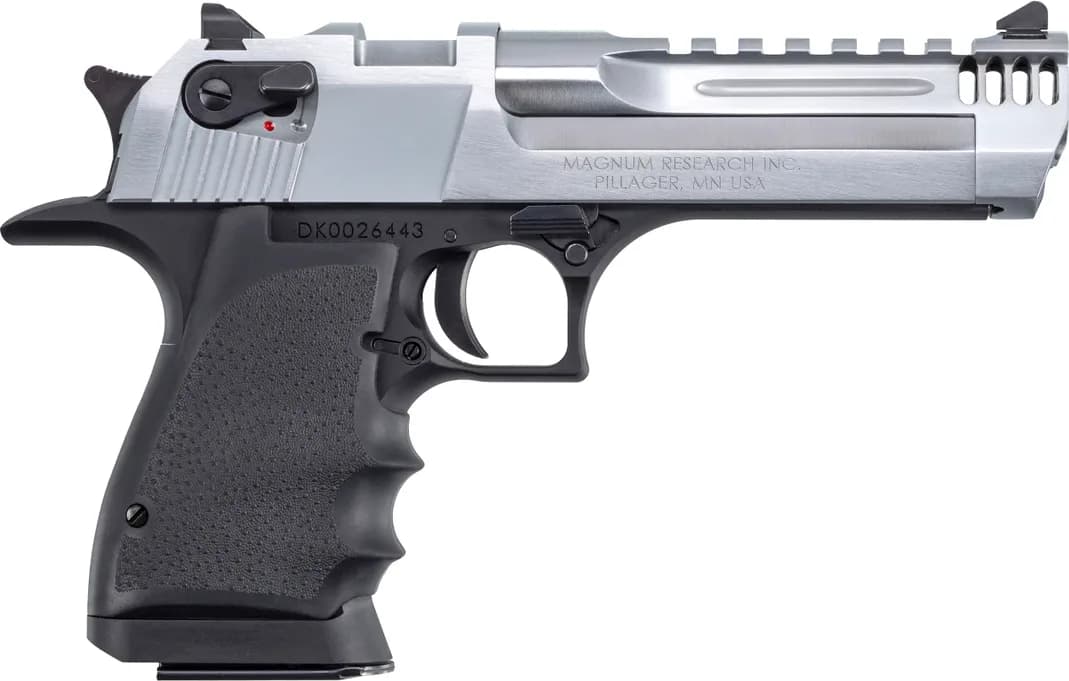
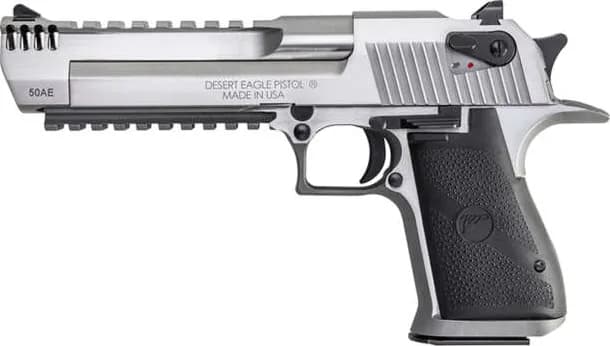
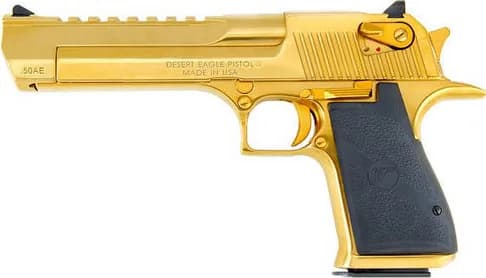
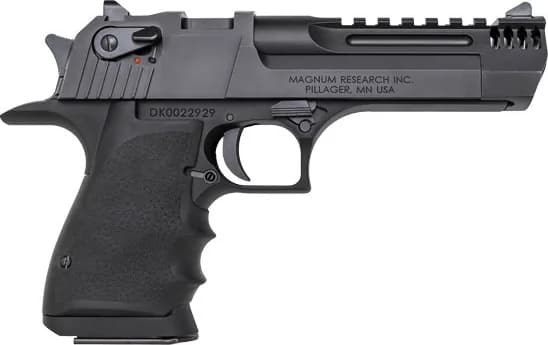
Buy from Impact GunsThe L5 is Magnum Research’s answer to a long-running request: retain the Desert Eagle’s signature big-bore presence while shaving weight and overall bulk for more manageable handling. Introduced as a “lightweight” Mark XIX variant in the mid-2010s and publicly shown at SHOT Show 2015, the L5 series reduced barrel length to 5 inches, adopted an aluminum frame and added weight-relieving cuts and an integral muzzle brake to trim mass while keeping the Desert Eagle’s operating system and bolt architecture intact. The L5 family was presented as a companion to the L6 (6-inch barrel) models and was offered across the Mark XIX calibers, including .50 Action Express, .44 Magnum and .357 Magnum.
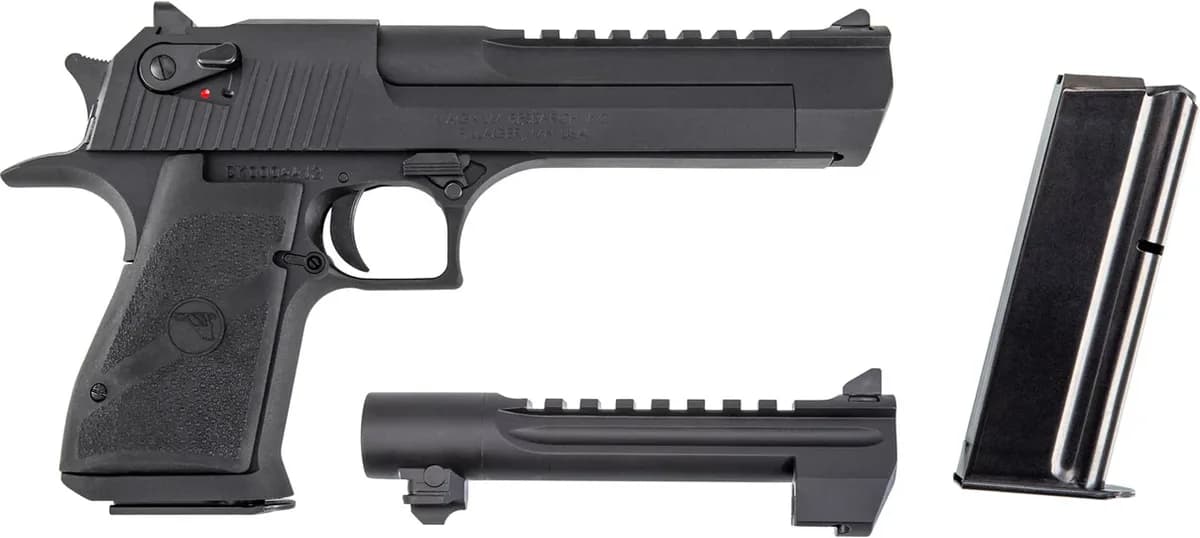
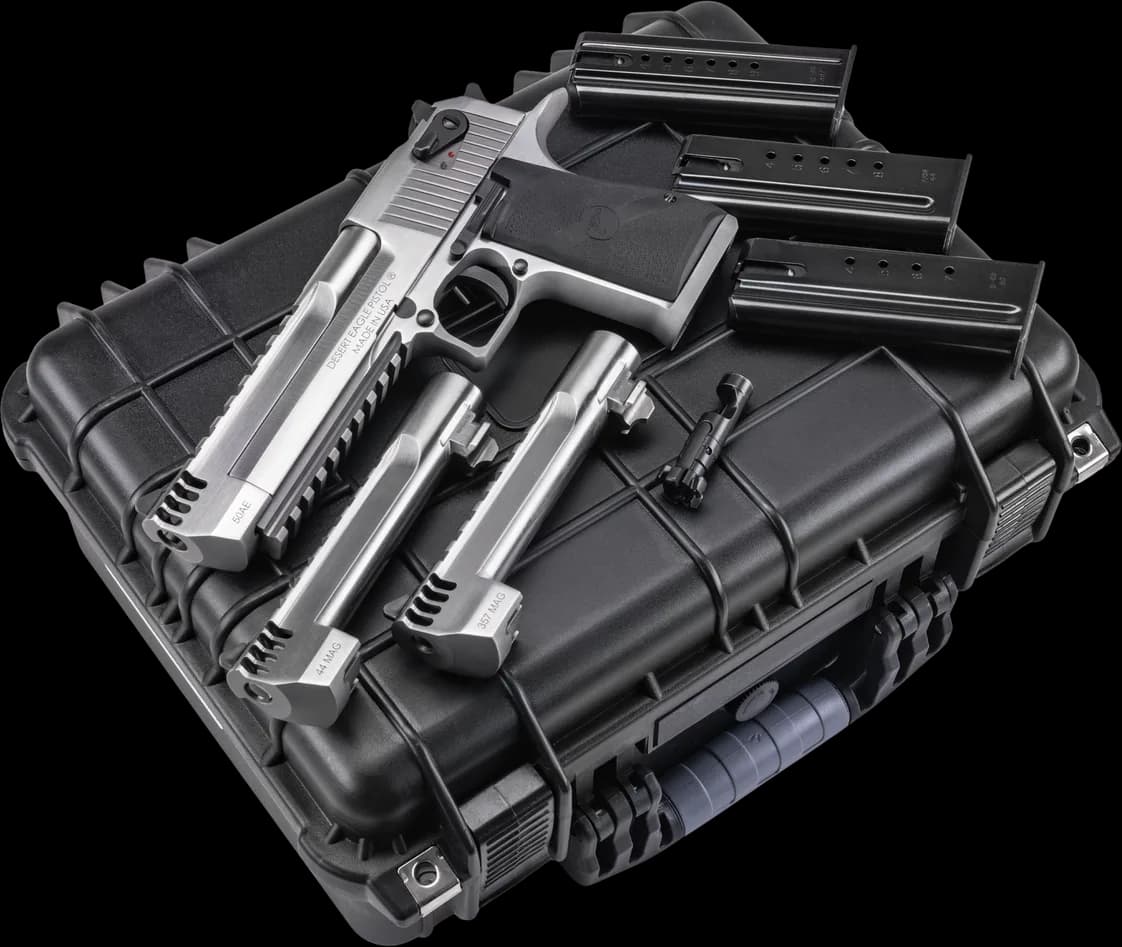
The Mark XIX lineage itself is the contemporary Desert Eagle platform, a series built around a gas-operated, rotating-bolt locking system that distinguishes the design from conventional short-recoil pistols. Magnum Research has maintained the Mark XIX as the modular heart of the line—barrels, bolts and magazines can be interchanged to change calibers or lengths within the Mark XIX family—so the L5 sits squarely in the company’s long-running big-bore product stack as the more compact, range- and field-friendly option.
Mechanically the L5 keeps the Desert Eagle’s hallmark gas-tube/piston and rotating three-lug bolt arrangement. That system vents gas from the barrel into a tube under the fore-end, driving a piston and cycling a robust rotating bolt—an architecture more akin to a gas-operated rifle than a conventional pistol slide. The fixed barrel and solid lock-up are factors in the platform’s potential for accuracy; the muzzle brake and added weight relief are intended to balance felt recoil and muzzle rise.
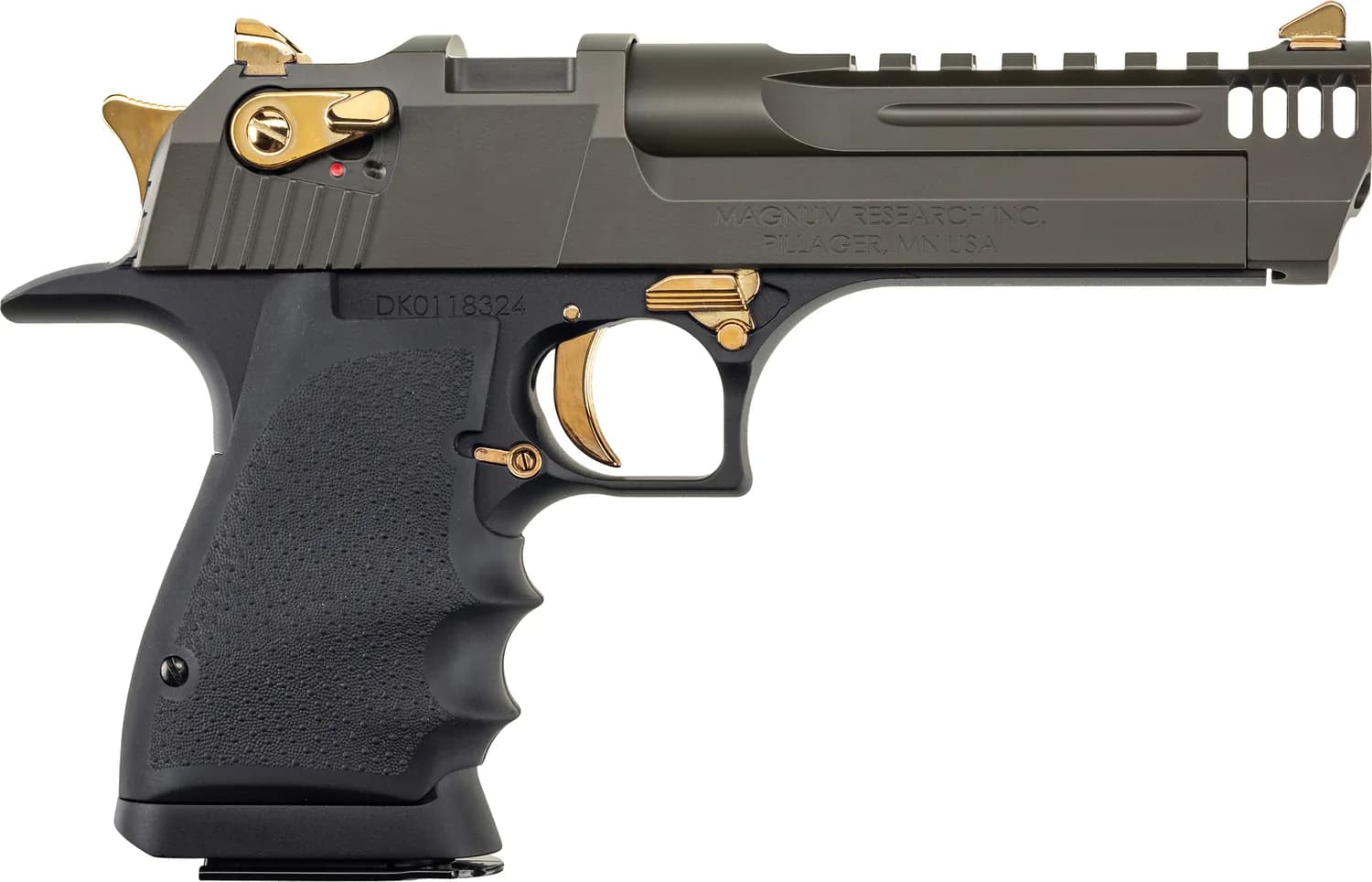
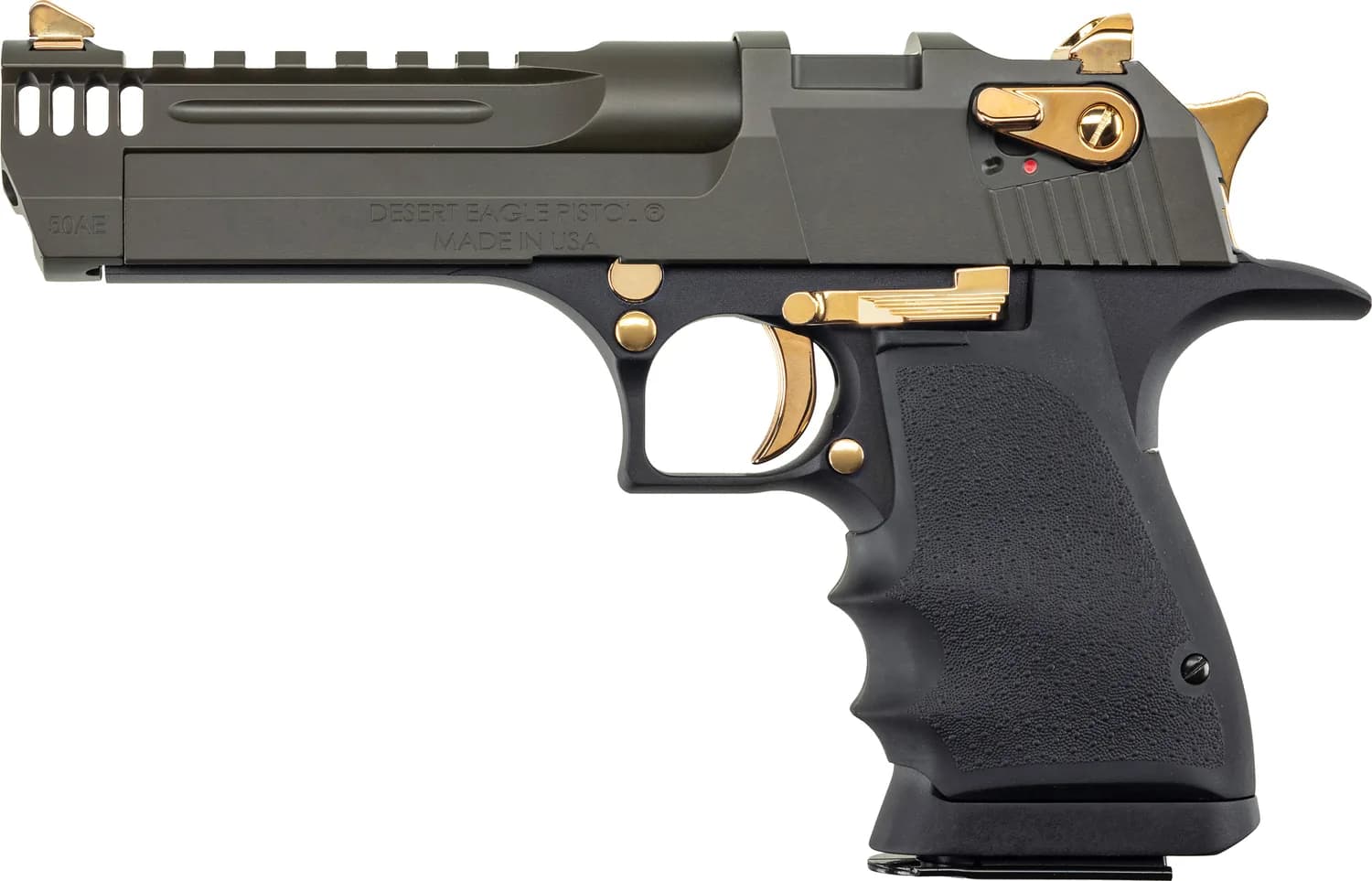
The specific .50 AE L5 finish and configuration offered in current cataloging present a hard-coat black aluminum frame with a Mil‑Spec Green Cerakote slide and barrel, a full Weaver-style accessory rail, fixed combat-type sights and an ambidextrous thumb safety. For the .50 AE configuration the factory literature lists the 5" barrel, an overall length just under 9.7–9.8 inches and a single‑stack magazine capacity designed for the cartridge the pistol is chambered in. The L5’s aluminum receiver and targeted cuts reduce unloaded mass to a point below the classic steel Mark XIX examples, producing a pistol that still carries considerable heft but is noticeably easier to manipulate on the range.
Ergonomically the L5 family departs from some older Desert Eagle variants by using wraparound rubberized grips with finger grooves and a slightly reduced grip footprint compared with the largest Mark XIX frames. Controls are large and deliberate—the blocky slide stop, frame-mounted magazine release and a slide-mounted, ambidextrous safety—so handling is straightforward for shooters accustomed to larger handguns, though the reach and trigger geometry are not aimed at small hands. The tradeoff is a pistol that balances in the hand for follow-up shots but will remain a handful to carry concealed.
Published range tests and long-form reviews of the L5 platform consistently describe manageable recoil, good inherent accuracy for large-caliber pistols, and a single-action trigger that is usable though not match-grade. Testers have credited the fixed-barrel, rotating-bolt arrangement with producing repeatable accuracy—groups under two to three inches at typical handgun distances are commonly reported from rested positions with well‑matched loads. The integral multi‑port muzzle brake does a notable job of reducing muzzle rise and perceived recoil, but it increases blast and concussion for the shooter and bystanders.
Reliability profiles in reviews show the Mark XIX/L5 family to be dependable when fed ammunition that produces sufficient gas volume for the piston system to operate cleanly; reviewers repeatedly note the platform can be somewhat ammunition-sensitive—lighter, low‑recoil rounds that don’t push enough gas may fail to cycle reliably. Reviewers also emphasize proper break‑in, clean lubrication and using magazines in good condition; when those conditions are met, the L5 has demonstrated durable operation in the hands of reviewers. Trigger pulls reported in factory materials and independent tests fall in the moderate single‑action range, with many testers measuring crisp breaks in the neighborhood of roughly 4–5 pounds depending on the sample and measurement method.
Durability expectations mirror the Mark XIX’s reputation: the gas system and rotating bolt are proven under heavy loads, and wear items (gas pistons, springs) are known, serviceable parts. Regular maintenance and attention to compatible ammunition are practical necessities for owners wanting the best long‑term reliability.
Where the L5 excels is at the range, in recreational big‑bore shooting, and as a specialized hunting sidearm. The shorter, lighter Mark XIX L5 is easier to tote afield than the heavier 6‑ and 10‑inch steel models, and its balance and recoil control make follow-up shots and accuracy-focused shooting more approachable. The fixed barrel and rail for optics also make it straightforward to mount red-dot sights for practical accuracy at moderate engagement distances. Reviewers have pointed to the L5’s suitability for handgun hunting and for shooters who want the attention‑grabbing experience of a Desert Eagle without the full mass of traditional steel models.
Conversely, the L5 remains large, heavy and loud compared with typical defensive handguns, and it is not a practical daily‑carry choice for most people. Ammunition sensitivity and the need for proper break‑in/maintenance mean the L5 is best treated as a purpose‑built recreational or field pistol rather than a lightweight general‑purpose sidearm. The muzzle blast from the brake and the power of .50 AE also make indoor range shooting more taxing unless proper protections and spacing are used.
The Desert Eagle L5 occupies a distinctive niche: there are few direct competitors that combine the same caliber options (.50 AE among them), rotating‑bolt gas operation, and the cultural recognition of the Desert Eagle silhouette. In value terms the L5 is positioned as a premium, specialty handgun—priced and marketed toward enthusiasts, collectors and hunters rather than entry‑level buyers. When judged on the metrics that matter to its buyers—big‑bore performance, accuracy potential for a semi‑auto pistol, and that unmistakable presence at the range—the L5 compares favorably with other high‑end magnum handguns, with the caveat that operating costs (ammo, maintenance) and practical limitations (size, noise, ammo sensitivity) factor heavily into its perceived value.
For shooters who want a Desert Eagle that is easier to handle while preserving most of the family’s characteristics, the L5 represents a meaningful evolution of the Mark XIX platform: it trims unwieldy mass, keeps the platform’s modularity and pedigree, and concentrates the experience of shooting a legendary magnum pistol into a form that is far more tractable on the range or in the field.
Start with a practical guide if you want a faster way to narrow the field before comparing specific models.
Learn how to choose the right concealed carry handgun based on size, comfort, safety, and everyday usability.
Read guideHome-focused buyersLearn how to choose the right handgun for home defense based on safety, ease of use, and practical everyday considerations.
Read guideComparison-focused shoppersA practical guide to comparing handguns the right way: what actually matters, what to ignore, and how to use comparison tools effectively.
Read guide