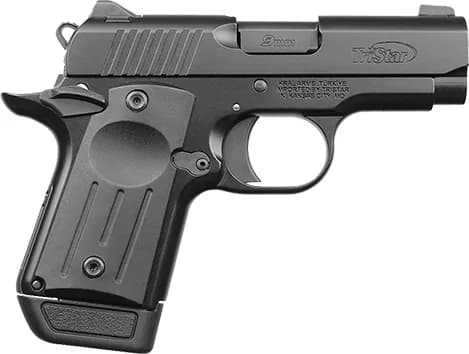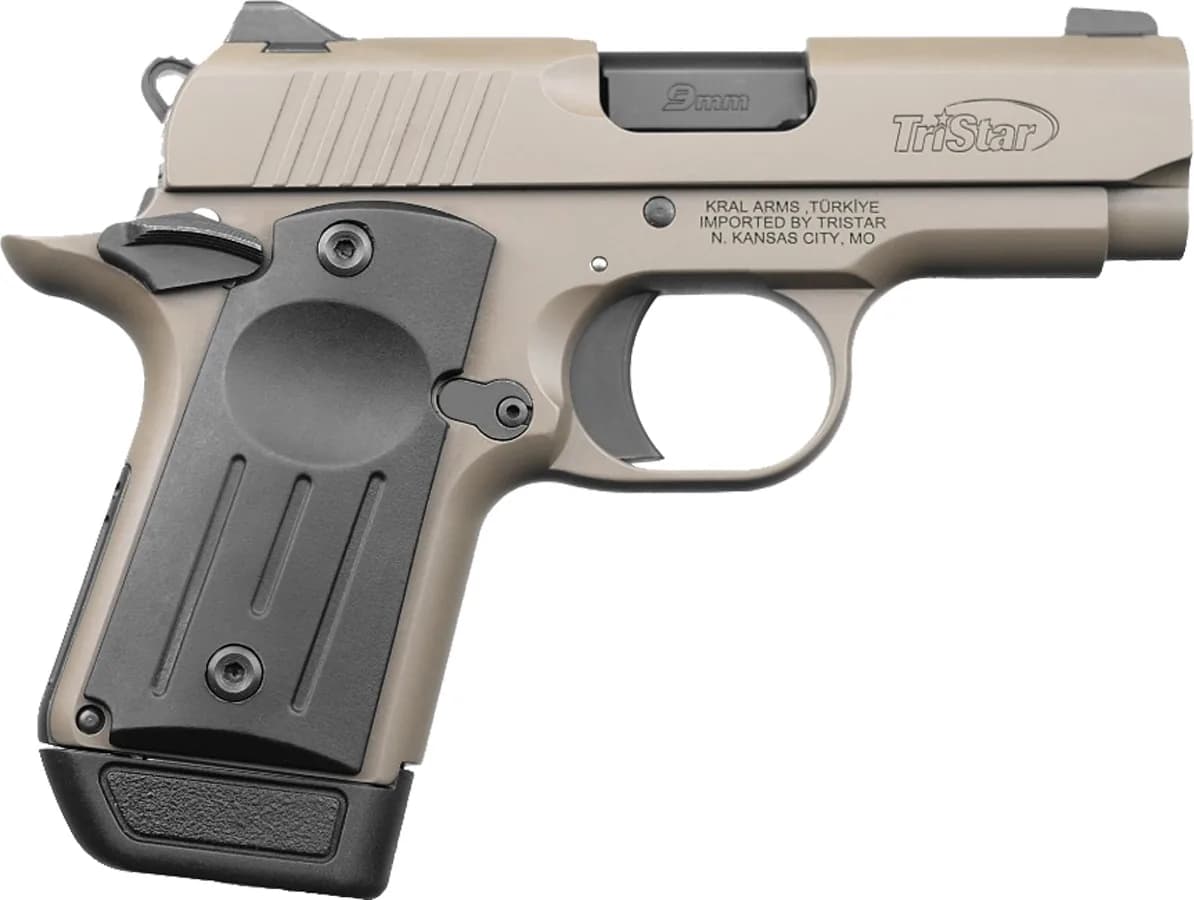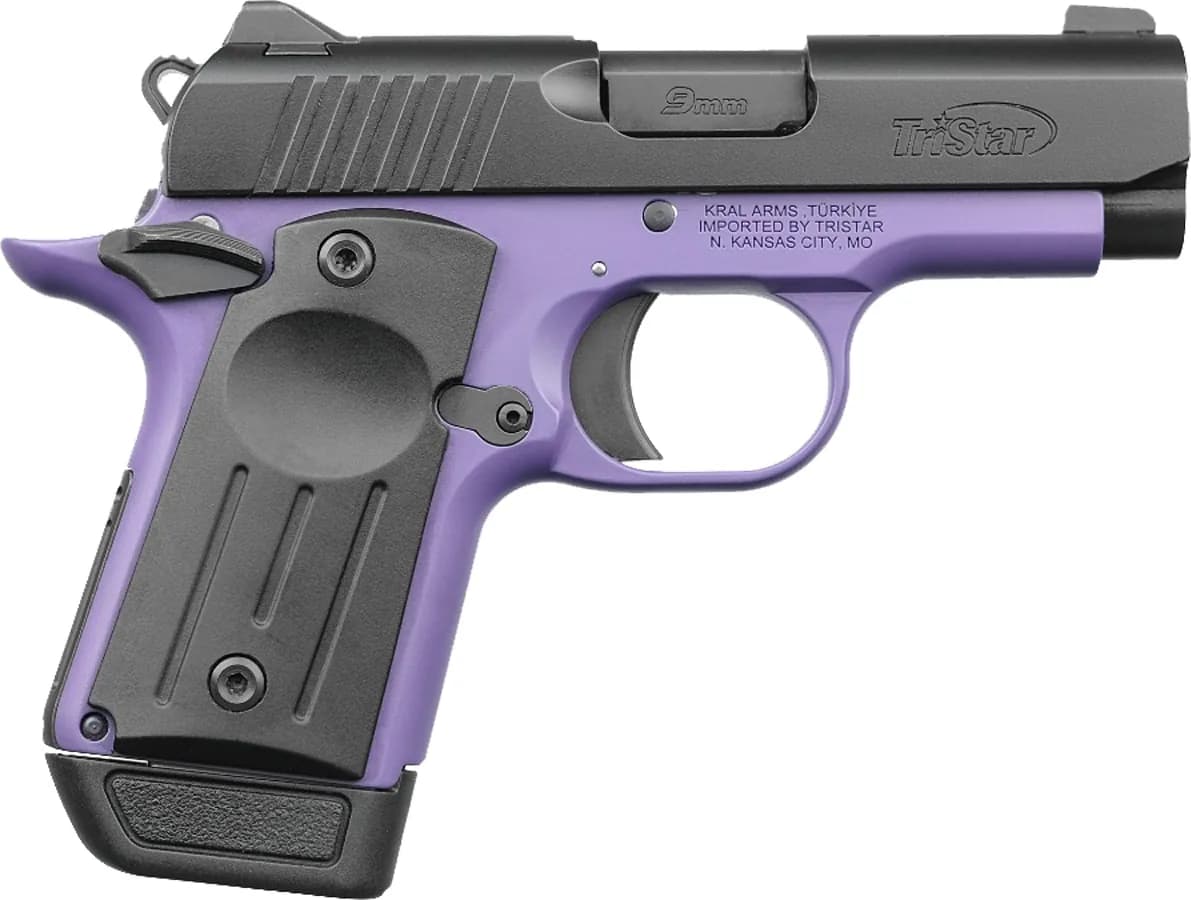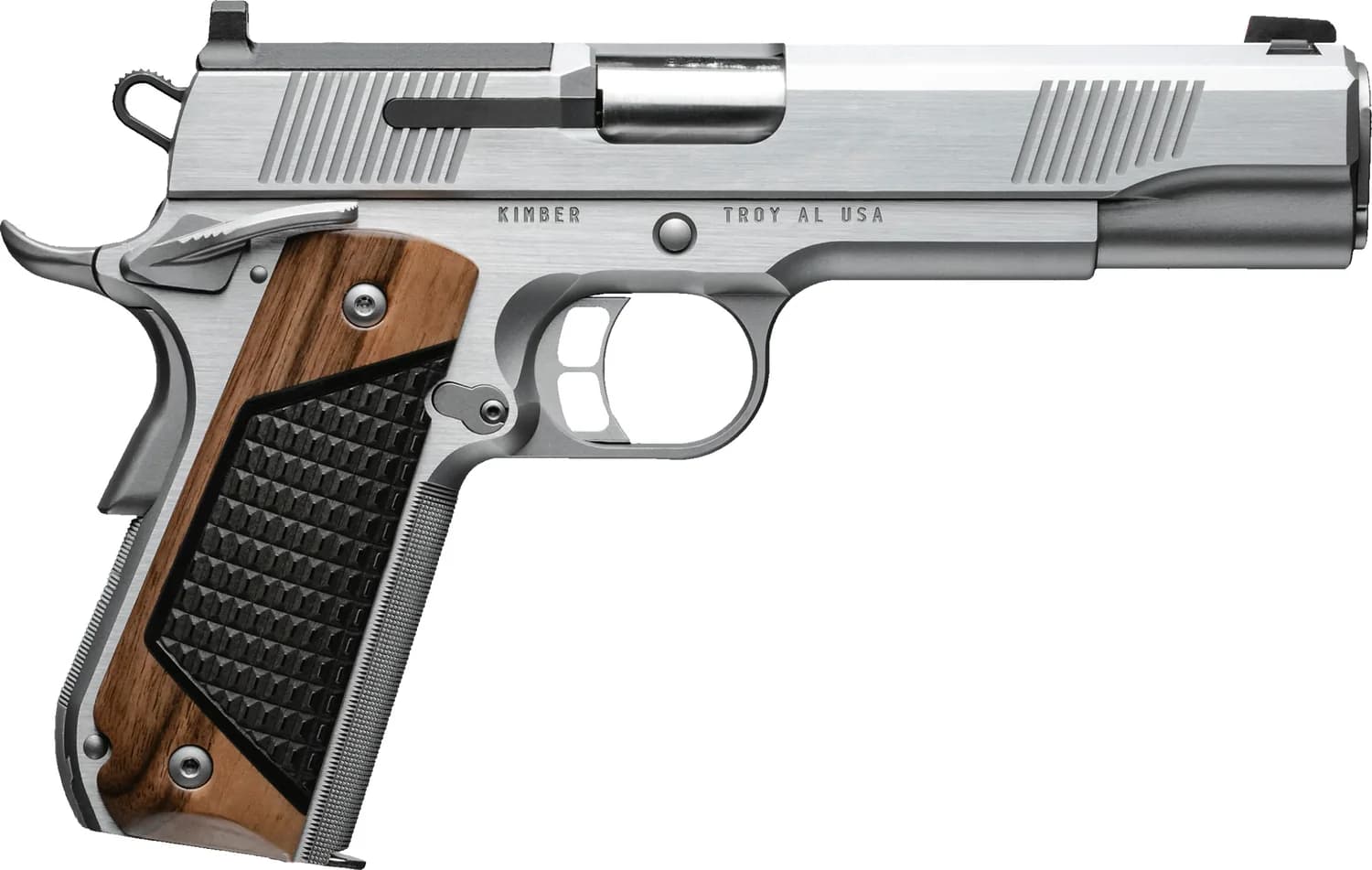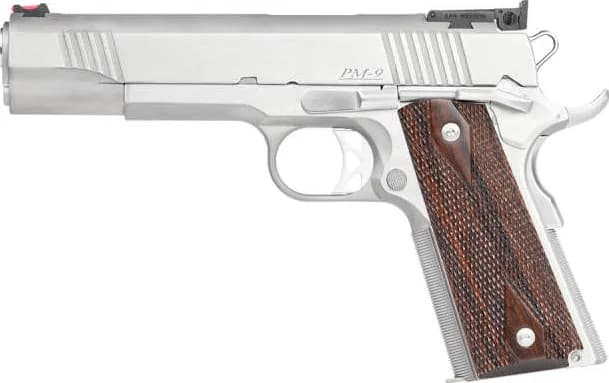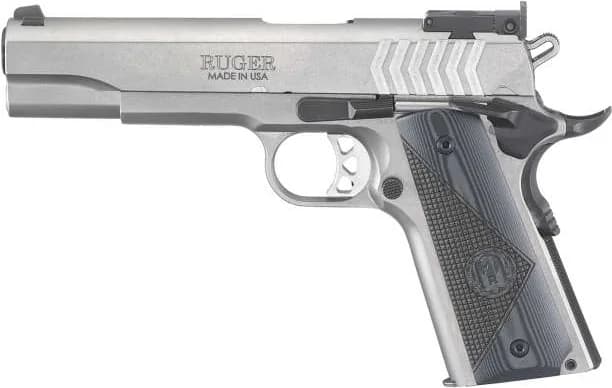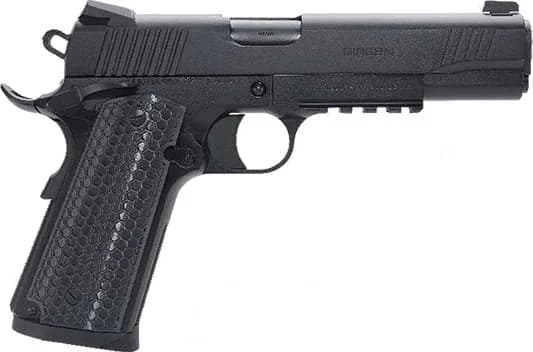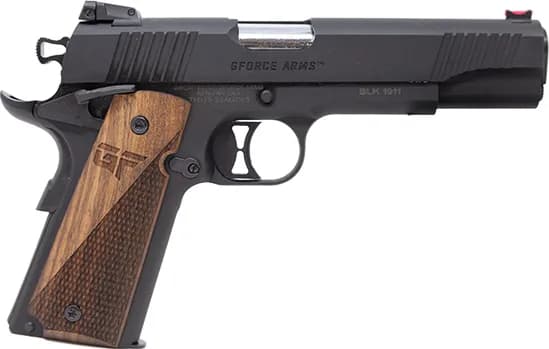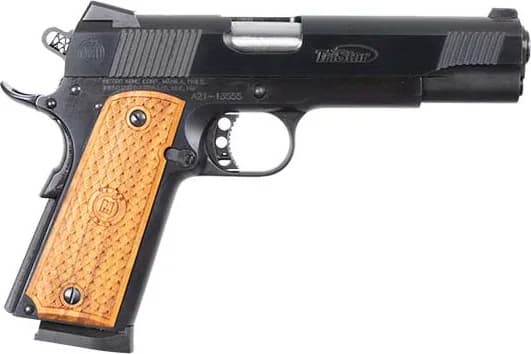
Flared Ejection Port, Combat Hammer & Trigger, Extended Slide Stop
The American Classic II is TriStar’s modernized take on the full‑size 1911, introduced as an upgraded follow‑on to the company’s more basic American Classic line. TriStar markets the Classic II as a feature‑rich Government‑length 1911 offered in 9 mm, .45 ACP and 10 mm; the 9 mm Government variant is the full‑size, five‑inch‑barrel model intended to bridge the gap between traditional 1911 ergonomics and a package with contemporary carry and competition conveniences. The model was publicized in mainstream gun press coverage in 2022 and appears in TriStar’s product catalogs as the company’s higher‑trim 1911 offering, positioned alongside simpler mil‑spec variants and a Trophy/competition series.
TriStar imports and distributes the American Classic II; press coverage and product literature for this model also identify Philippine manufacturing on samples tested by reviewers. The Classic II is therefore part of a long lineage of Filipino‑made 1911s that supply the U.S. market with mid‑priced, feature‑forward pistols.
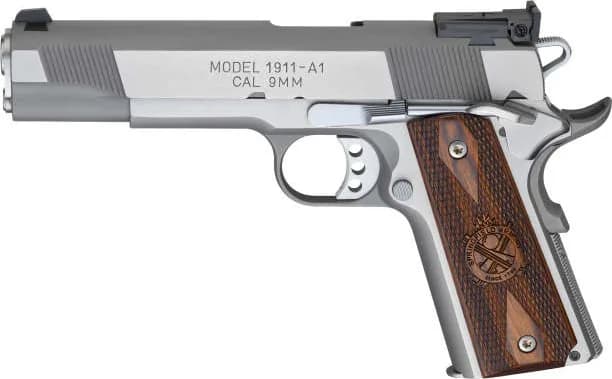
On paper the Classic II is a straightforward, steel‑framed Government 1911: a five‑inch barrel, steel slide and frame, single‑action operation and a capacity of nine rounds in 9 mm. TriStar’s published spec sheet lists a 5.0" barrel, dovetail front and Novak‑style rear sight, extended beavertail and thumb safety, skeletonized hammer and a three‑hole combat trigger — a configuration intended to give the classic silhouette a more modern, shooter‑friendly control set. The company’s materials show an overall length in the mid‑8‑inch range and a substantial all‑steel weight that keeps muzzle flip modest in full‑power loads.
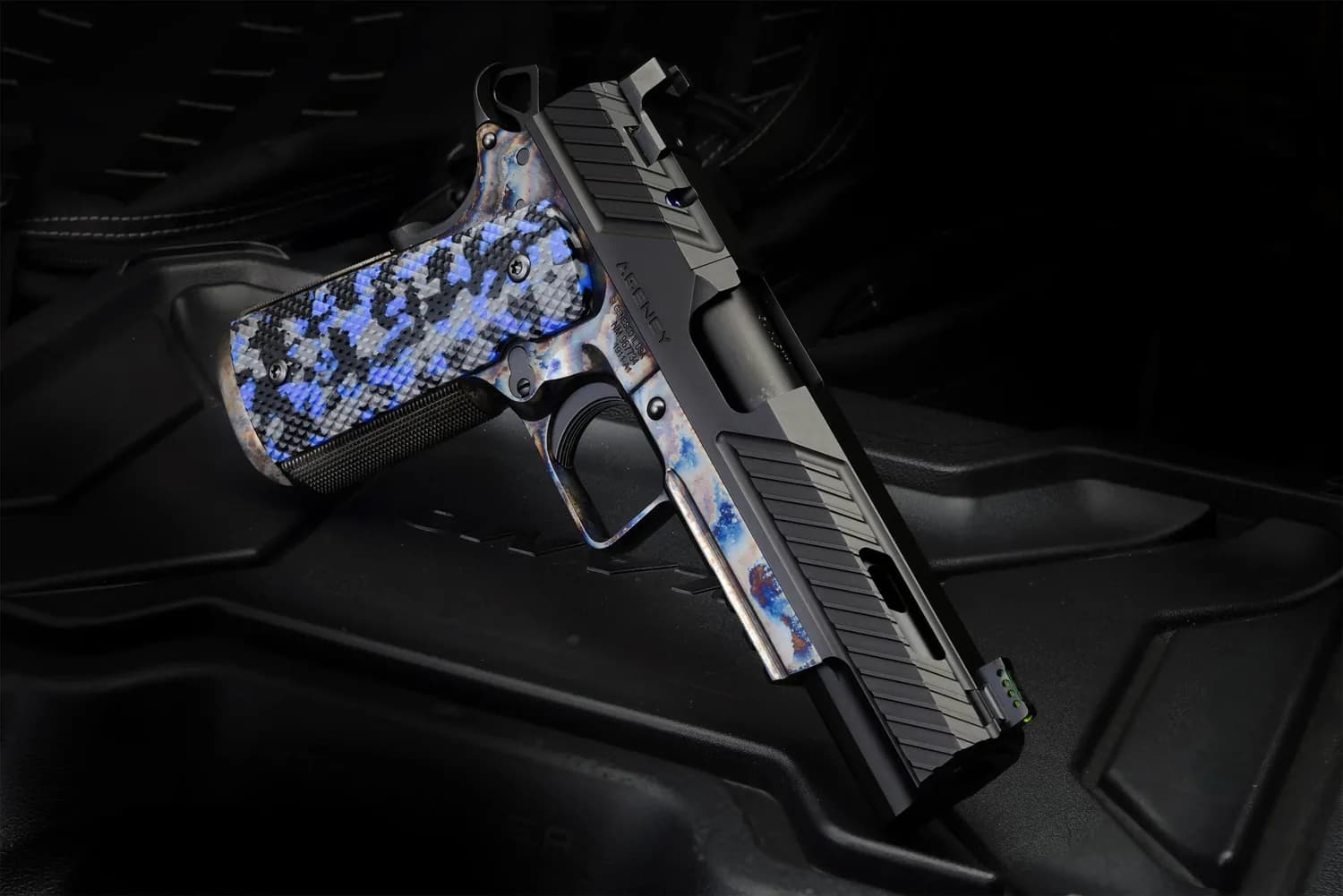
Where the Classic II departs from bare‑bones mil‑spec pistols is in several small but meaningful user‑facing details: an enlarged, flared ejection port and lowered port are intended to improve extraction and ejection reliability; forward slide serrations make press checks and slide manipulation easier; and the extended slide‑stop and thumb safety speed administrative manipulations. The grips are checkered hardwood with a decorative pattern, and the mainspring housing is flat and serrated — conservative styling choices that favor tradition and serviceability over radical ergonomics. Independent hands‑on reporting praises the part fit and finish on inspected samples, noting tight slide‑to‑frame fit and smooth action, a sign of consistent CNC machining and a deliberate parts fit program.
Ergonomically, the Classic II follows the familiar 1911 recipe: a low bore axis, single‑stack handfeel (in the case of 9 mm the nine‑round magazine remains single‑stack width), and controls laid out for a right‑hand shooter’s thumb‑high grip. The extended beavertail and raised grip safety reduce the chance of “hammer bite” and allow a higher, more natural hold; combined with the three‑hole trigger and skeletonized hammer, the gun is set up to deliver a crisp, quick reset conducive to accurate follow‑ups. That said, reviewers have noted the frontstrap is smooth on some production units, which may prompt owners to fit aftermarket frontstrap stippling or grip tape if aggressive purchase is desired.
Range testing published in mainstream reviews found the Classic II to be reliable out of the box under moderate test conditions. One extended hands‑on evaluation reported firing roughly 200 rounds through a sample without feed or ejection failures across a mix of FMJ and hollow‑point loads, and accuracy at typical defensive ranges was described as “respectable” for a five‑inch 1911 — consistent with the platform’s reputation for good first‑shot accuracy due to its light single‑action trigger. Trigger pull and lockup on reviewed samples were generally praised as crisp and favorable to precision shooting.
Independent commentary on fit and finish has been positive as well: reviewers who inspected hard‑chrome and blued examples highlighted clean machining, well‑finished edges and consistent slide/frame fit, and noted that the ejection port work and polished feed ramps improved reliability and feeding in tested samples. That said, like many value‑priced 1911s, long‑term durability assessments rely on broader owner experience: enthusiast forums include both owners who report thousands of trouble‑free rounds and occasional reports of early break‑in issues on older production runs. The sample‑based published reviews for the TriStar Classic II sample the model well but do not substitute for multi‑thousand‑round longevity studies.
The Classic II’s feature set — full‑size frame, five‑inch barrel, all‑steel construction, and upgraded controls — makes it best suited to range and duty/competition‑style applications where accuracy and trigger quality are prized. Its balance and low bore axis help tame recoil, so it is a comfortable target and plinking pistol. For those who prefer the 1911’s single‑action trigger for personal defense, the Classic II offers modernized ergonomics (beavertail, Novak rear, extended controls) that make it a viable defensive‑use pistol for users comfortable carrying a full‑size steel 1911 with a nine‑round 9 mm magazine.
Limitations are inherent to the platform: the full‑size all‑steel Government 1911 is heavier and larger than modern compact polymer pistols, and a five‑inch steel 1911 requires an appropriate belt and holster setup for comfortable day‑carry. Capacity, while competitive for single‑stack 1911s in 9 mm, remains lower than many double‑stack‑framed service pistols. Finally, some owners will want to fit an extra magazine or two and potentially address frontstrap purchase for high‑roundcount competition or training.
TriStar’s American Classic II occupies the middle tier of the 1911 market: it is more feature‑rich than bare‑bones imported mil‑spec 1911s, offering upgrades often found on more expensive models, yet it is priced and marketed against other budget‑to‑mid‑range 1911s that trade premium brand prestige for solid hardware and modern conveniences. Buyers shopping for a visually traditional 1911 that shoots and feels like a higher‑end pistol will find the Classic II’s mix of Novak sights, extended controls, flared ejection port and skeletonized internal parts an attractive value proposition compared with similarly priced alternatives. Industry roundups of “best budget 1911s” place the Classic II among the stronger mid‑market options because of its fit, finish and feature set.
In short, the TriStar American Classic II is a conservative but practical modernization of the Government‑length 1911. It leans on traditional lines and contemporary ergonomics to deliver a pistol that, in published hands‑on testing and product literature, shoots reliably, feels balanced, and brings many formerly high‑end 1911 touches to a price point that appeals to shooters who want a ready‑to‑shoot classic without an extensive gunsmithing bill.
Start with a practical guide if you want a faster way to narrow the field before comparing specific models.
Learn how to choose the right 9mm handgun based on size, budget, and how you plan to use it.
Read guideCarry-focused shoppersLearn how to choose the right concealed carry handgun based on size, comfort, safety, and everyday usability.
Read guideHome-focused buyersLearn how to choose the right handgun for home defense based on safety, ease of use, and practical everyday considerations.
Read guide