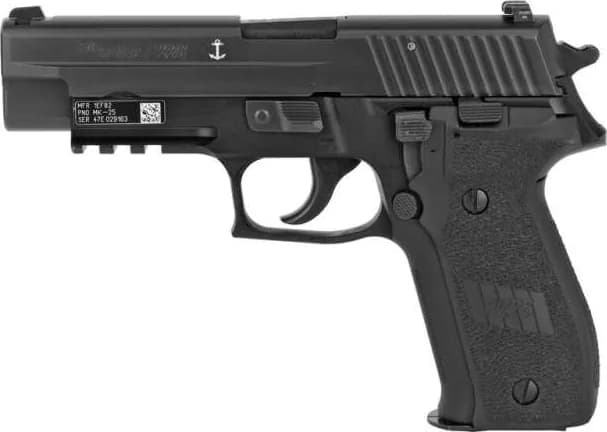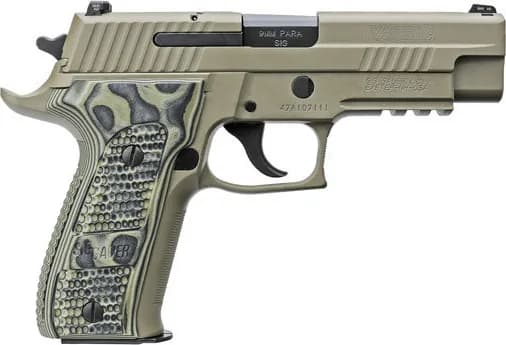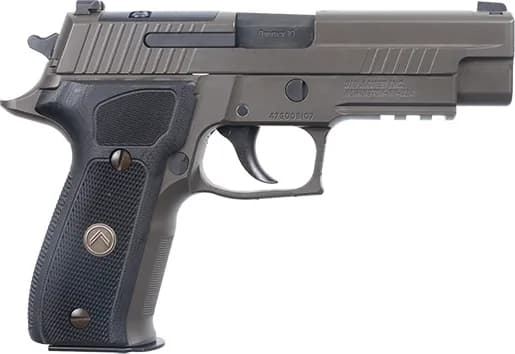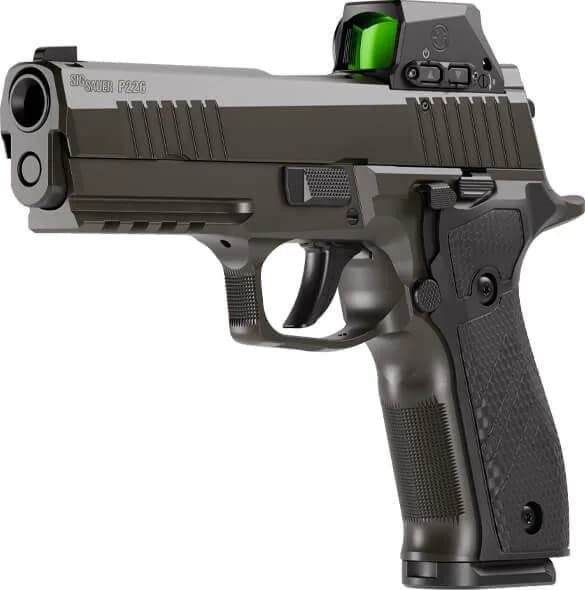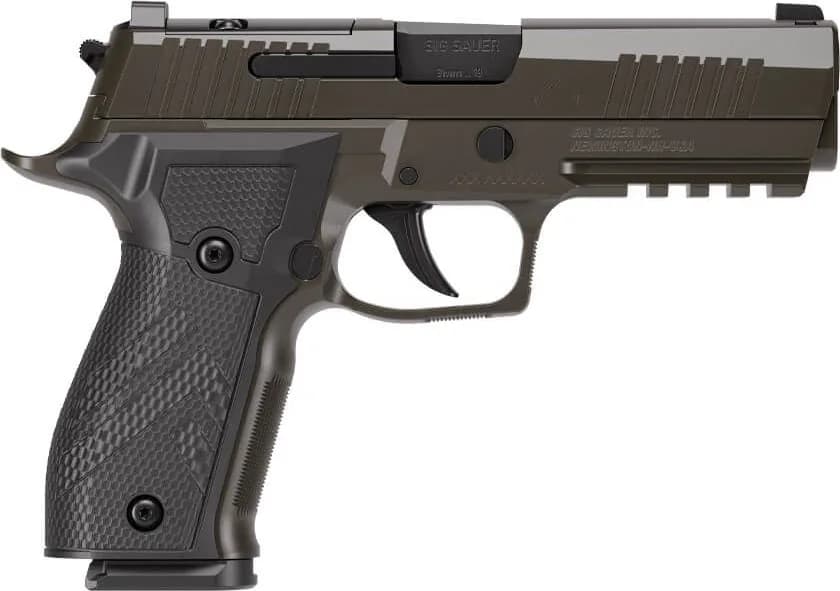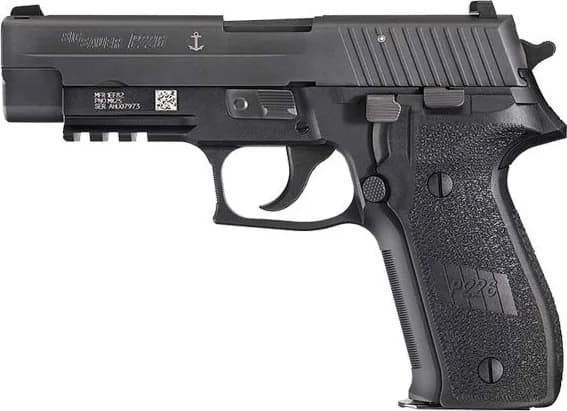
Phosphate Components, Mil-Std Rail, USN Anchor Engraving, UID
The P226 MK-25 Full Size is the commercial descendent of a service pistol with a long, documented lineage in U.S. special operations. The P226 platform was developed in the 1980s as a high-capacity, double-stack evolution of the P220 for the U.S. XM9 trials; a P226 variant was adopted by U.S. Naval Special Warfare forces in the late 1980s and later designated Mk 25 for Navy use. The MK-25 marketed to civilians was presented as a version built to the same corrosion-resistant and identification standards as the pistols supplied to Naval Special Warfare, and SIG made the commercial MK-25 widely available beginning in the early 2010s. The manufacturer’s current catalog descriptions identify the MK-25 as a full‑size, 9mm DA/SA pistol with corrosion-resistant internal treatment, SIGLITE night sights, a true Mil‑Std (Picatinny) rail, and the Naval anchor marking and UID tag that visually distinguish the model.
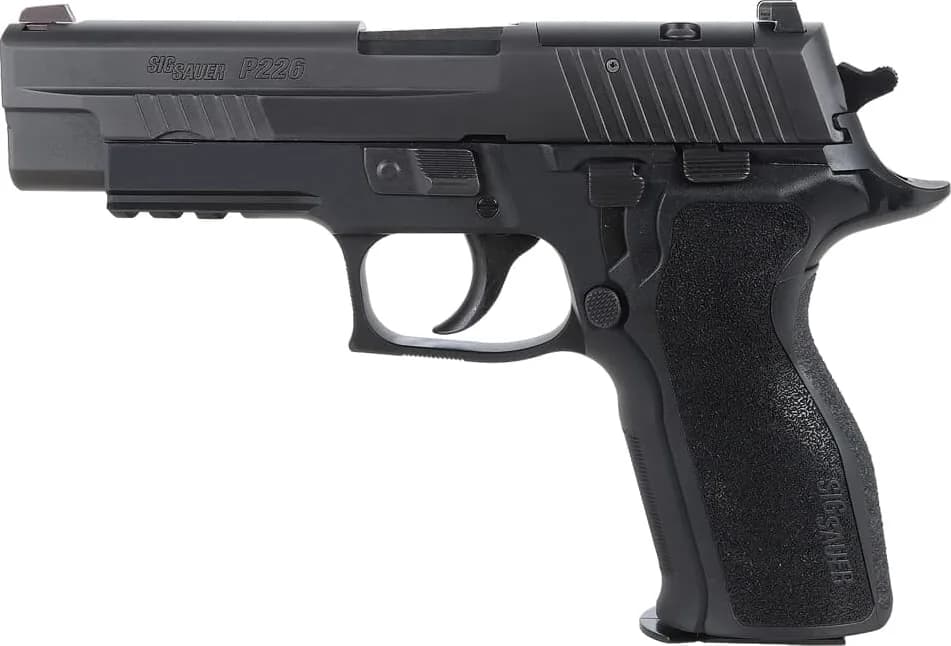
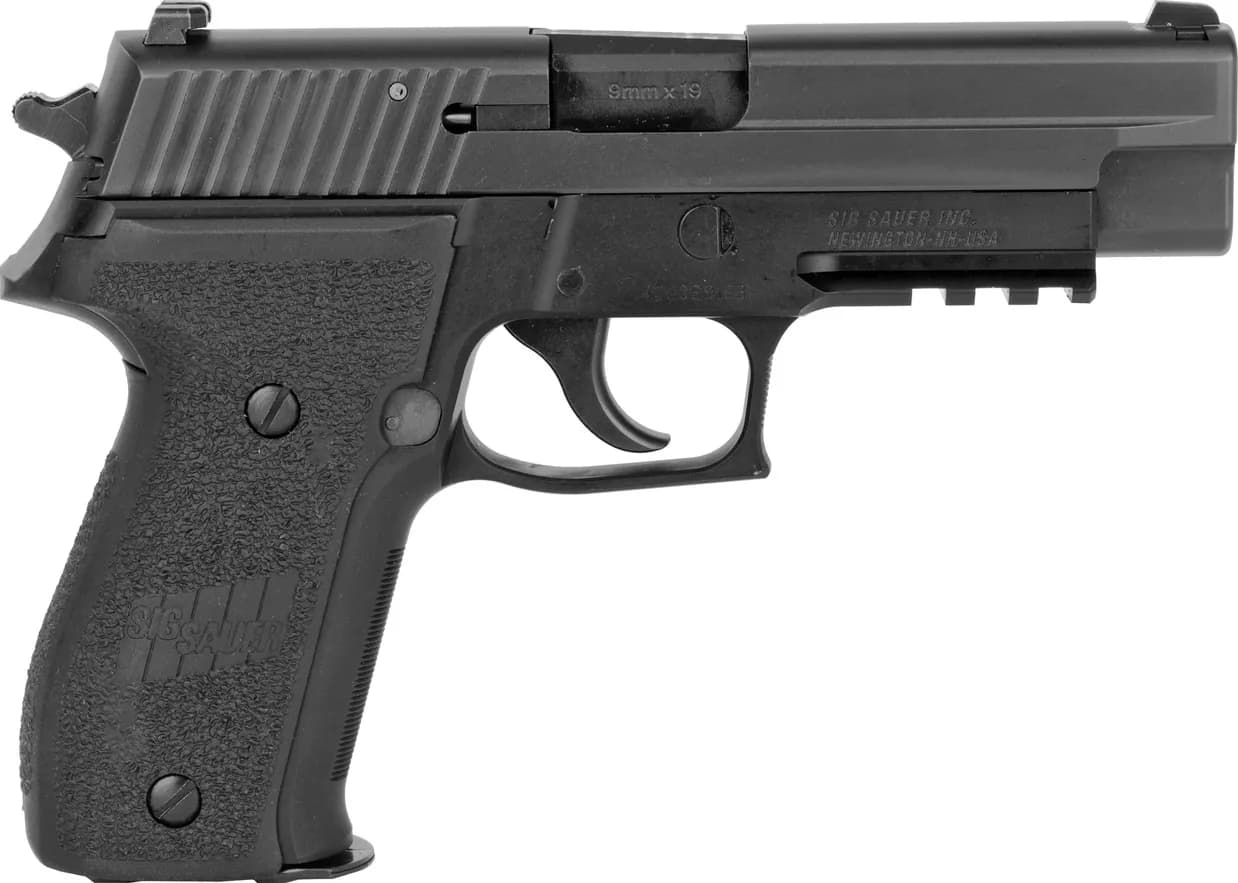
Mechanically the MK-25 is a P226: an aluminum-alloy‑framed, hammer‑fired, mechanically locked, short‑recoil pistol with a 4.4‑inch barrel, overall length near 7.7 inches, and a factory capacity of 15+1 in 9×19mm. The MK-25 specific build adds external and internal corrosion protection to suit maritime and austere environments, and the frame’s under‑barrel rail on MK‑25 examples conforms to a Mil‑Std (M1913/Picatinny) footprint rather than the slightly rounded accessory rail found on some other P226 variants. Factory fittings on the MK‑25 typically include SIGLITE tritium front and rear sights and black polymer grip panels, while internal parts are phosphate‑treated to resist corrosion. These attributes are listed in manufacturer product and parts literature for the MK‑25 configuration.
Those specifications translate into an immediately perceptible, old‑school all‑metal handgun feel. The aluminum frame gives the pistol a moderate mass—listed weight for the full‑size P226 sits in the mid‑30 ounce range—which helps reduce perceived recoil and contributes to stable follow‑up shots. The slide and frame geometry yield a relatively high bore axis compared with many modern polymer pistols, and the grip dimensions are generous by contemporary standards. That combination produces a balance that many shooters describe as steady on target, though it requires a more deliberate two‑handed hold for quickest sight‑to‑sight transitions. The MK‑25’s Mil‑Std rail also simplifies mounting of lights and lasers intended for duty or maritime work.
Across professional reviews and user writeups the P226 family is repeatedly praised for reliability and longevity; the MK‑25 variant inherits that reputation while adding the corrosion resistance and night‑sight package prized by maritime operators. Evaluators commonly note the platform’s smooth cycling and solid durability after sustained shooting. Published testing and long‑term reports describe the P226’s single‑action trigger as crisp and favorable for precision work, while the double‑action first pull is longer and heavier—characteristics intrinsic to the DA/SA system that demand some training but provide a deliberate, two‑stage safety margin out of holster. Reported factory DA weights have varied over production runs, and many owners accept or tune the DA/SA transition to suit their preferences.
Accuracy from a rested position is competitive for a service‑type, full‑size 9mm; reviewers and experienced shooters consistently report the P226 platform grouping at practical defensive distances with service loads. The pistol’s mass and 4.4‑inch barrel length contribute to tame recoil and quick follow‑ups, particularly with 115–124 grain 9mm ammunition. Night‑sight-equipped MK‑25s enhance low‑light target acquisition, a practical advantage for duty or home‑defense scenarios. Durability reports emphasize corrosion treatments and phosphate internals on MK‑25 examples as meaningful positives for users who expose pistols to saltwater, humidity, or rough handling.
The MK‑25’s pedigree and feature set position it squarely as a duty and defensive handgun rather than a lightweight concealed‑carry piece. Its strengths are most pronounced where reliability, night‑sight capability, and accessory compatibility matter: law enforcement, security details, value‑oriented competition in production divisions, and home‑defense roles where ease of handling and sighted accuracy are priorities. The full‑size frame and 15‑round standard capacity make it well suited to range work and deliberate precision shooting at typical pistol distances.
Limitations are straightforward: the MK‑25 is relatively heavy and large for daily concealed carry compared with modern compact polymer carry pistols, and the DA/SA trigger system represents a learning curve for shooters accustomed to striker‑fired platforms and consistent single‑stage triggers. Shooters who prioritize the lowest possible weight, the shortest sight radius, or out‑of‑the‑box optics‑ready slides will find other models that address those needs more directly than the MK‑25’s more traditional configuration.
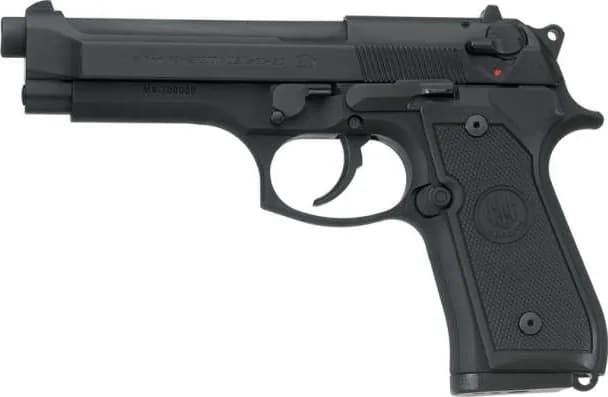
In the market the MK‑25 sits as a heritage, premium all‑metal service pistol: it trades some of the modern conveniences of polymer striker guns for proven engineering, a hammer‑fired DA/SA system, and the service‑grade finish and markings tied to the Navy SEAL association. That history confers both cachet and resale strength among buyers who value traditional controls and metal frames. Against contemporaries it competes most directly with other full‑size, hammer‑fired pistols such as the Beretta 92/M9 family and CZ‑75 variants in terms of ergonomics, weight, and control layout, while its perceived strengths—fit, finish, corrosion resistance, and night sights—differentiate it from base‑model service pistols. Compared to polymer striker designs (Glock, certain modern SIGs, and others), the MK‑25 is often viewed as a premium, duty‑oriented alternative rather than a direct competitor on price or minimalist carry convenience.
For shooters who want an all‑metal, duty-capable 9mm with a documented operational history and a service‑grade feature set—true Picatinny rail, phosphated internals, tritium night sights, and the naval markings—the MK‑25 remains a clear, defensible choice. Its tradeoffs—size, weight, and DA/SA ergonomics—are the same ones that have defined the P226 family for decades, and they continue to be decisive factors for buyers who value traditional design and combat‑proven durability.
Start with a practical guide if you want a faster way to narrow the field before comparing specific models.
Learn how to choose the right 9mm handgun based on size, budget, and how you plan to use it.
Read guideCarry-focused shoppersLearn how to choose the right concealed carry handgun based on size, comfort, safety, and everyday usability.
Read guideHome-focused buyersLearn how to choose the right handgun for home defense based on safety, ease of use, and practical everyday considerations.
Read guide