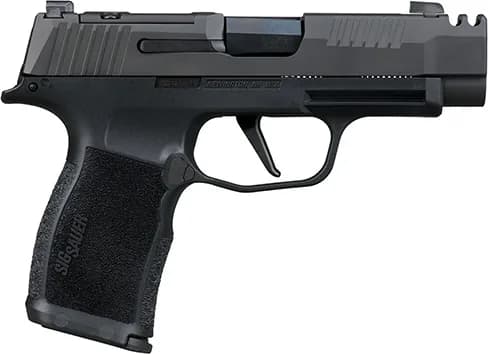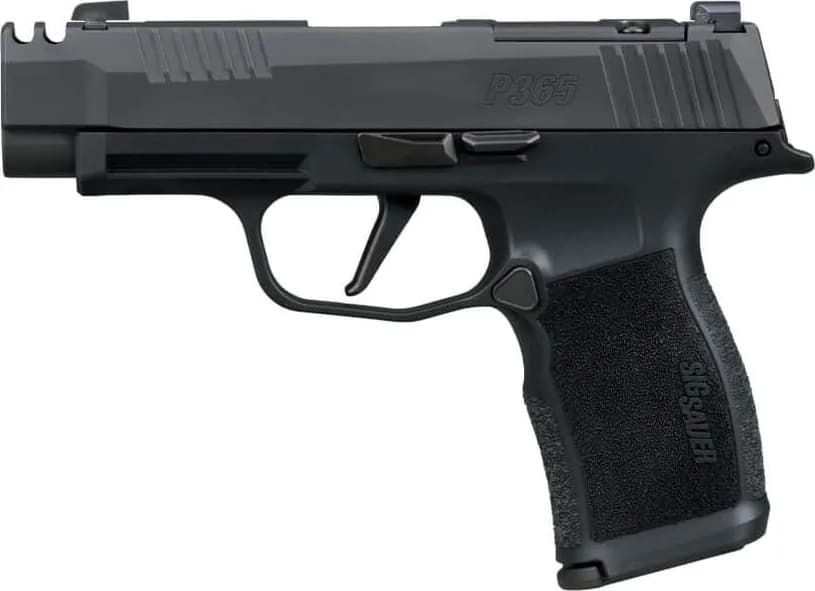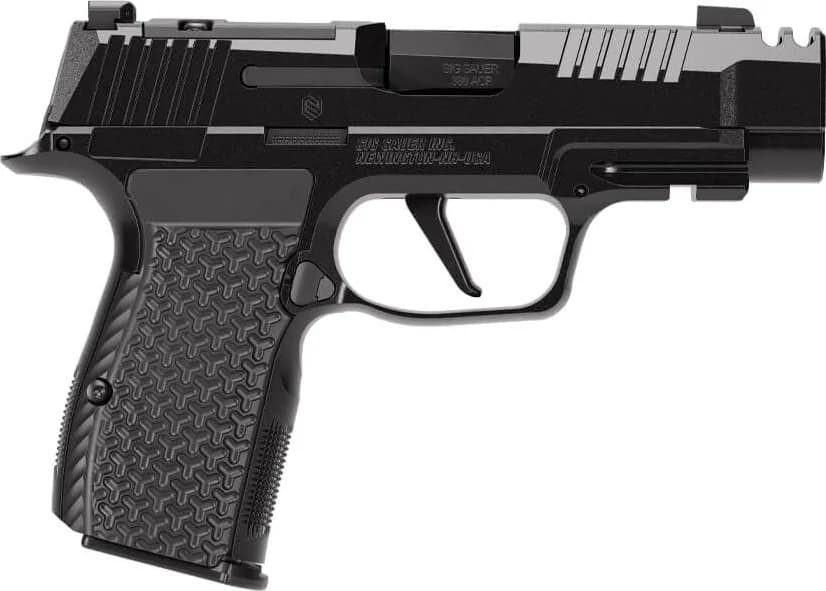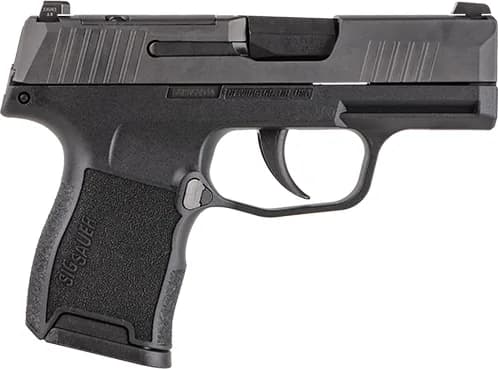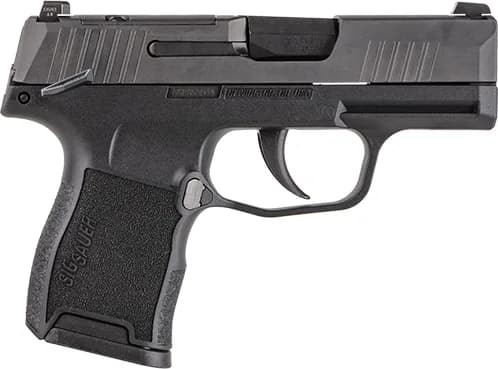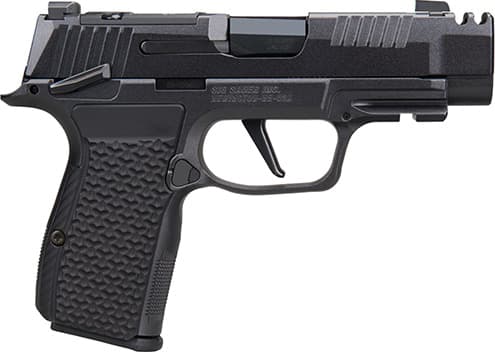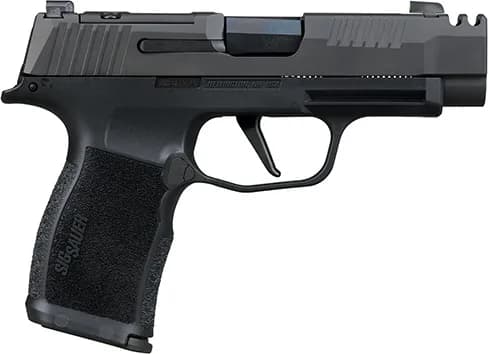
SIG-LOC Optic Ready Slide, X-Series Grip Module, X-Series Flat Blade Tirgger
The P365 XL Comp is a deliberate evolution of the P365 family—Sig Sauer’s defining micro‑compact platform that first disrupted the carry market in the late 2010s by offering unusually high capacity in a very small footprint. The original P365 spawned a wide family of upsized, optics‑ready, and competition‑oriented variants over several years, and Sig folded the compensator‑style slide and XL ergonomics into the “Comp” designation to produce a pistol that aims to combine carry practicality with flatter, more controllable follow‑up shots. The P365‑380 variants and related XL/Comp offerings arrived as part of that ongoing lineup expansion, with Sig positioning the XL Comp as a micro‑compact optimized for everyday carry shooters who want improved shootability without stepping up to a full‑size pistol.
At its core the P365 XL Comp uses the proven P365 architecture but with several deliberate tweaks: a 3.1‑inch barrel in a 6.6‑inch overall package, an XSERIES modular polymer grip module, an optics‑ready SIG‑LOC slide, X‑RAY 3 day/night sights, and a two‑port integrated expansion chamber cut into the slide intended to reduce muzzle rise. The gun ships with two steel magazines (12‑round in typical configurations) and carries a listed weight around 18.4 ounces with a magazine installed. Those specifications translate to a pistol that sits between the smaller P365 and the larger XMacro in terms of hand fit and sight radius while retaining a slim enough profile for comfortable concealed carry.
Mechanically, the XL Comp retains the striker‑fired architecture common to the series, but borrows several ergonomic features from Sig’s X‑Series parts: an extended slide stop for easier manipulation, enhanced slide serrations, and a flat blade XSERIES trigger that many shooters find more positive for rapid, repeatable press inputs. The signature engineering touch on the Comp is the integrated expansion chamber (sometimes described as compensator‑style milling). Because it is a slide‑milled feature rather than a barrel‑mounted compensator, it does not require a threaded barrel and avoids the maintenance concerns associated with attached compensators, while still shifting some gas upward and reducing reciprocating mass to help keep muzzle flip in check. That design choice keeps the pistol compact and balanced while giving a measurable reduction in climb compared to an unported slide of equal length.
Range reports and editorial tests of the P365 family and its .380 variants emphasize shootability as a principal strength. Reviewers who tested the P365‑380 lineage frequently describe it as among the more pleasant small‑frame pistols to shoot in .380, noting lighter perceived recoil and a more manageable muzzle impulse compared with many pocket .380 designs. The P365 family’s trigger character—commonly described in professional reviews as a relatively light pull with a long, rolling break and a distinct reset—remains consistent across variants; that trigger profile rewards deliberate practice and can be rapid once a shooter adapts to it, but demands trigger discipline for precise, unsupported shots at extended ranges.
The Comp’s slide cuts and expansion chamber add a real‑world benefit: testers reported flatter strings and quicker recovery for fast follow‑ups compared to non‑Comp XL models, especially useful when shooting defensively or running time‑sensitive drills. In practice the combination of the slightly longer XL grip geometry (relative to the base P365), the extra mass and surface area of the optics‑ready slide, and the ported expansion chamber create a balanced feel that reduces the snappy sensation many associate with very small pistols. As with any micro‑compact, extreme accuracy claims should be tempered—the platform is brutally competent inside typical defensive distances (7–15 yards), while group sizes at bench distances reflect the limitations of short sight radius and small barrel length.
Durability and reliability reports for P365 family pistols have generally been favorable when the firearms are used and maintained as designed. The XL Comp’s simplified compensator approach (no added threaded components) avoids a common wear point, and Sig’s use of familiar materials and construction—Nitron finish, stainless slides, polymer grip modules—aligns it with established P365 service life expectations. As always, longevity depends on ammunition selection, maintenance, and the operational tempo to which the pistol is subjected.
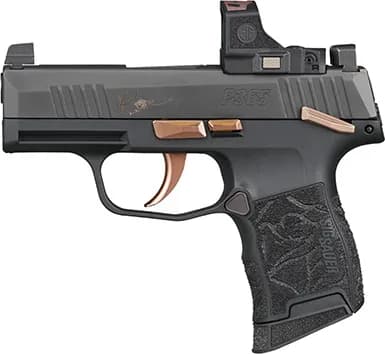
The P365 XL Comp is squarely aimed at the concealed‑carry market for shooters who want a carry pistol that is easier to shoot rapidly than smaller pocket‑sized .380s, but who do not want the bulk of a compact/full‑size 9mm. Its advantages are most apparent for defensive carry: improved grip purchase, a flatter‑shooting slide profile, capacity that is competitive for a micro‑compact, and sighting options that support fast target acquisition both day and night. The optics‑ready slide also lets users add a small reflex sight, which further speeds aim and can make one‑handed presentation and rapid follow‑ups easier in stress scenarios.
Limitations are pragmatic rather than technical. As a .380‑chambered, micro‑compact pistol it trades ballistic performance for shootability and concealability; some shooters prefer 9mm for terminal performance and broader ammunition choices. The short sight radius and 3.1‑inch barrel impose natural accuracy limits at long distances, and while the Comp features reduce muzzle rise, they don’t eliminate it—the pistol still benefits from a firm two‑handed grip and practice. Finally, the platform’s value is tied to the broader P365 ecosystem: magazines, holsters, and aftermarket parts are widely available, but compatibility nuances between various P365 models and grip modules mean owners should verify fit before swapping components.
Within Sig’s own family the XL Comp occupies a middle ground: more shootable than the smallest P365 variants and slimmer than an XMacro, while offering the modern features many buyers expect—optics‑ready slide, improved controls, and day/night sights. In the broader market the P365 XL Comp competes with premium micro‑compact offerings that balance capacity, ergonomics, and advanced features. Its strongest selling points are build quality, a mature platform with broad accessory support, and the Comp’s attempt to deliver compensator‑like benefits without attaching additional hardware. For buyers prioritizing the softest possible recoil and the simplest carry solution, purpose‑built pocket .380s remain alternatives; for those prioritizing shot‑to‑shot control and sighting options in a concealment‑friendly package, the XL Comp presents a compelling compromise.
The P365 XL Comp is not a reinvention of the micro‑compact wheel so much as a refinement: it applies targeted engineering changes to address the common practical complaint of small pistols—snappy recoil—while preserving the features that made the P365 series influential. For shooters who want a small, modern carry pistol that’s easier to control out of the box and ready for a red‑dot sight, the XL Comp is a noteworthy member of Sig’s P365 family.
Start with a practical guide if you want a faster way to narrow the field before comparing specific models.
Learn how to choose the right concealed carry handgun based on size, comfort, safety, and everyday usability.
Read guideComparison-focused shoppersA practical guide to comparing handguns the right way: what actually matters, what to ignore, and how to use comparison tools effectively.
Read guideFirst-time buyersLearn how to choose your first handgun by focusing on size, comfort, ease of use, and budget instead of getting lost in unnecessary details.
Read guide