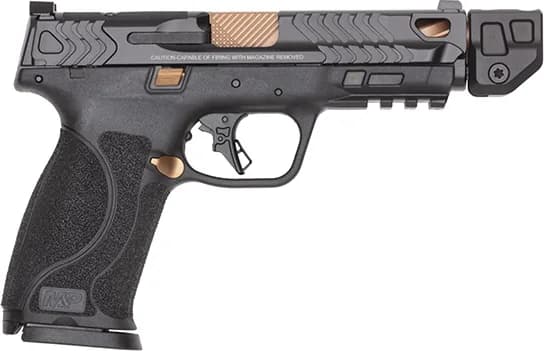
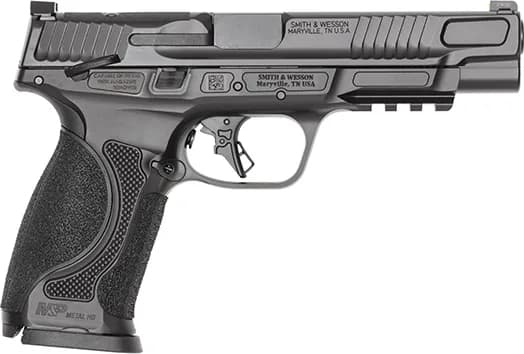
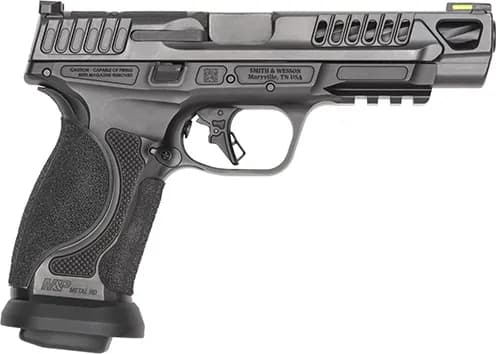
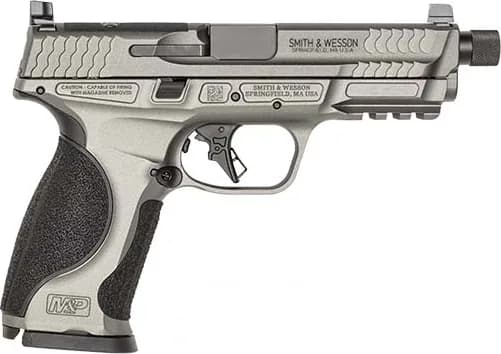
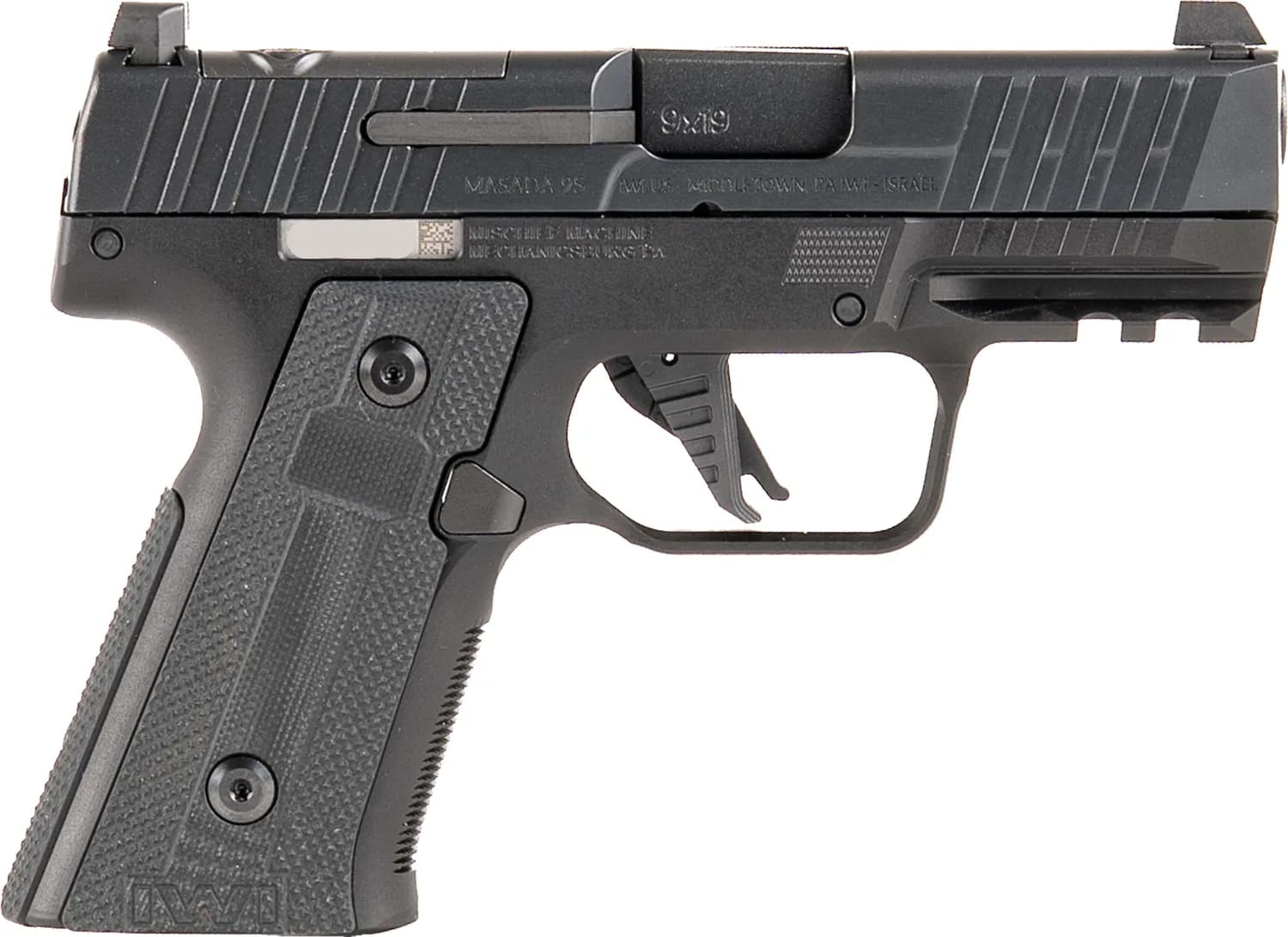
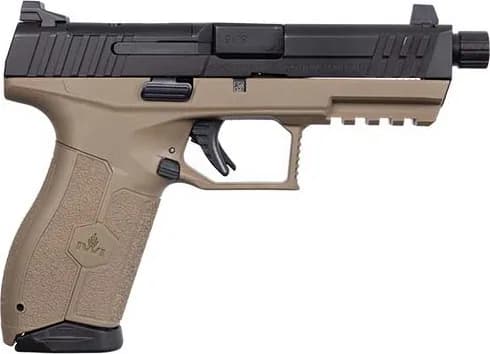
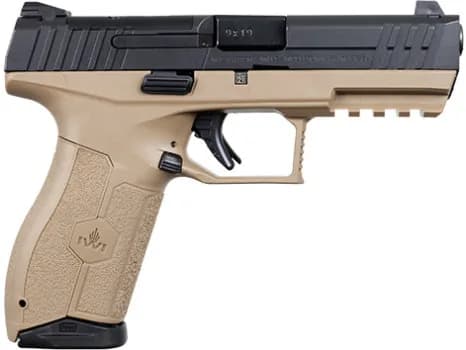
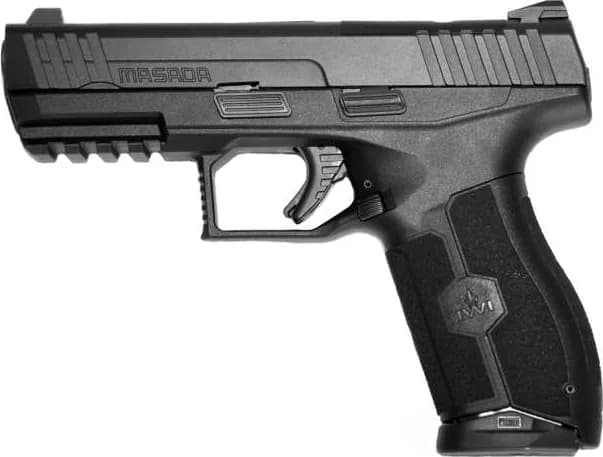
Compensated, Optic Ready, Spec Series Folding Knife, Spec Series Challenge Coin, Limited Production
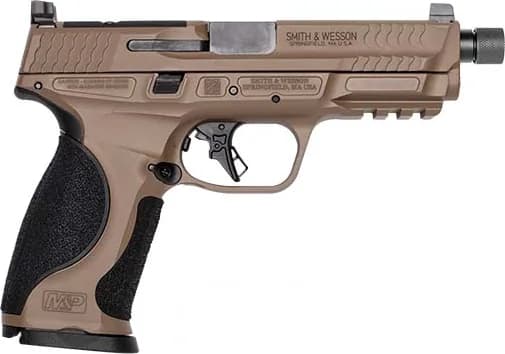
Smith & Wesson’s Spec Series V — formally branded the Spec Series V M&P®9 Metal HD — represents a deliberate pivot in the company’s long-running M&P family: an all-metal, heavier-frame, competition-oriented iteration of the M&P M2.0 platform introduced as a limited-production Spec Series kit. The Performance Center announcement for the Metal M2.0 Spec Series first appeared in late 2023, and the Spec Series V was publicly promoted through Smith & Wesson channels and industry coverage as the line’s first steel‑frame M&P offering, packaging a compensated, optics‑ready full‑size pistol with accessory extras intended for enthusiasts and collectors. The gun sits at the intersection of the standard M&P M2.0 family (known for ergonomics and reliability) and Smith & Wesson’s higher‑end Performance Center work, positioning it as a purpose‑built tool for shooters who want a race‑oriented full‑size 9 mm out of the box.
The Spec Series V is built around an all‑metal frame that adds mass to the platform and shifts the handling characteristics compared with polymer‑frame M&P pistols. That greater weight helps tame felt recoil and muzzle flip, particularly when paired with the model’s threaded, ported barrel and an attached compensator developed in collaboration with parts partners. The slide carries Smith & Wesson’s C.O.R.E. optics cut (with a metal coverplate on some SKUs) and suppressor‑height sights to allow co‑witnessing with a red dot. Internally it remains a striker‑fired M2.0 design with Performance Center enhancements — lightened sear engagement and an upgraded trigger geometry intended to deliver a crisper break and faster reset compared with base M2.0 pistols. The Spec Series kit is rounded out with a steel magwell and reinforced steel small parts (ambidextrous slide release, mag release and takedown components) that emphasize durability and a premium fit‑and‑finish.
These engineering choices translate into a gun that points similarly to other M&P designs (the familiar neutral grip angle and interchangeable backstraps are retained) but tracks flatter through recoil because of the increased mass and compensator. The Spec Series V’s ergonomics are conservative rather than extreme: granular frontstrap texture and multiple palmswell inserts let shooters tune purchase, while the flat‑face trigger offers consistent finger placement for repeatable trigger pulls. The packaging approach — a hard case with multiple magazines and collector items — underscores that Smith & Wesson intended this as both a performance pistol and a premium, limited‑run product.
Early long‑form reviews and range tests for the Spec Series V paint a consistent picture: excellent controllability, good accuracy for a full‑size 9 mm, and a trigger that benefits from Performance Center refinements. Testers report that the compensator markedly reduces muzzle rise, enabling quicker follow‑ups and tighter rapid strings, while the added frame mass reduces perceived recoil compared with polymer M&P variants. Accuracy groups from review ranges generally fall into the practical‑precision category for defensive and competition distances, with the gun performing best when fed quality 9 mm ammunition and allowed time to break in — a common note with heavier, tight‑tolerance metal M&P models.
Reliability in published hands‑on reviews has been strong: reviewers who ran extended strings and mixed brands of factory ammunition reported minimal stoppages, and the gun’s robust metal parts are singled out as contributing to consistent feeding and extraction in demanding use. Trigger feel is usually described as crisper and lighter than stock M2.0 polymer triggers, though not identical to single‑action pistol triggers; competitors seeking a match‑level trigger will still find room for aftermarket refinement. Durability observations focus on the solid construction and the corrosion‑resistant finishes used on critical components, though reviewers advise standard maintenance and torque checks on compensator set screws after heavy use.
The Spec Series V’s strengths are a natural fit for competition, action pistol disciplines, and range use where low muzzle rise, long strings of fire, and a high magazine capacity are advantages. Its heavy frame and compensator combination make it especially well suited to Postal and local USPSA/IDPA‑style stages where rapid, controlled fire is rewarded. Because the pistol ships optics‑ready and includes suppressor‑height sights, it is also a convenient baseline for shooters who plan to mount a red dot or add a suppressor (subject to legal and practical considerations).
For defensive use, the Spec Series V offers a high capacity and manageable recoil, but its size and weight make it less ideal as a primary concealed‑carry option for daily, discreet carry. The factory compensator and magwell lengthen the slide profile and increase printing; some owners will remove the compensator when seeking a more compact footprint, which is possible thanks to the threaded barrel. In short, it’s a strong choice for range‑centric and competition shooters and for users who value a capable home‑defense handgun kept at a range or in a vehicle, but it’s not optimized as a light, deep‑concealment CCW pistol.
Within the crowded full‑size 9 mm market, the Spec Series V positions itself as a premium, limited‑production proposition: it blends the familiar ergonomics and reliability of the M&P family with metal‑frame mass, Performance Center tuning, and out‑of‑the‑box competition features. Compared with purpose‑built competition pistols and branded match guns, the Spec Series V emphasizes an accessible factory package — compensator, optics‑ready slide and Performance Center internals — rather than requiring the buyer to retrofit a base pistol. That makes it attractive to shooters who want a turnkey performance gun without chasing parts, though it comes at a higher price than base M&P M2.0 models.
Against similarly equipped competitor models (both domestic and international), the Spec Series V’s selling points are its all‑metal construction, factory compensator and Performance Center pedigree. Potential buyers weigh those attributes against lighter, polymer‑framed competition options and against dedicated race guns that carry heavier match‑oriented ergonomics and triggers from the factory. For many enthusiasts, the Spec Series V represents a balanced middle ground: a factory‑finished, durable, and capable performance pistol that leverages Smith & Wesson’s broad parts and support ecosystem while offering immediate out‑of‑the‑box utility for competition and serious range work.
The Spec Series V is not a reinvention of the M&P line so much as a premium iteration of it — a steel‑frame, compensated, optics‑ready M2.0 aimed at shooters who want performance and durability without assembling a custom gun from parts. For those buyers, it delivers a coherent package; for others seeking the lightest, smallest or cheapest option for carry, the standard polymer M&P variants still hold the advantage.
Start with a practical guide if you want a faster way to narrow the field before comparing specific models.
Learn how to choose the right 9mm handgun based on size, budget, and how you plan to use it.
Read guideHome-focused buyersLearn how to choose the right handgun for home defense based on safety, ease of use, and practical everyday considerations.
Read guideComparison-focused shoppersA practical guide to comparing handguns the right way: what actually matters, what to ignore, and how to use comparison tools effectively.
Read guide