Affiliate disclosure: HandgunCloud may earn a commission if you continue to the retailer and complete a purchase.
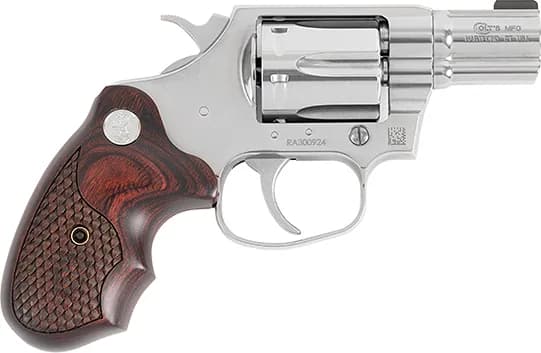
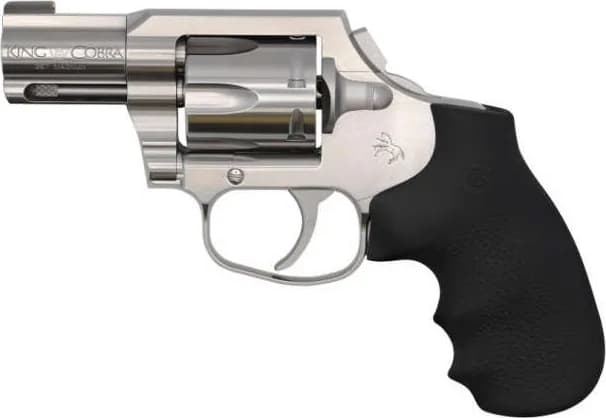
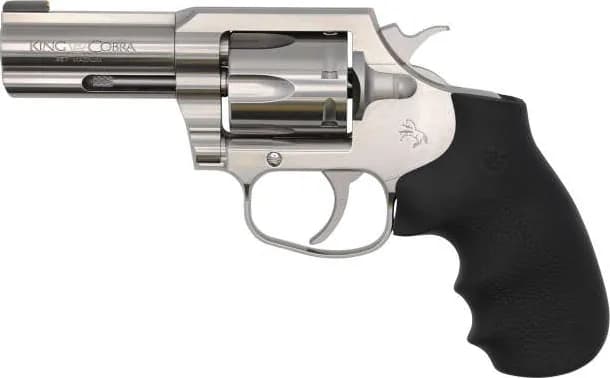
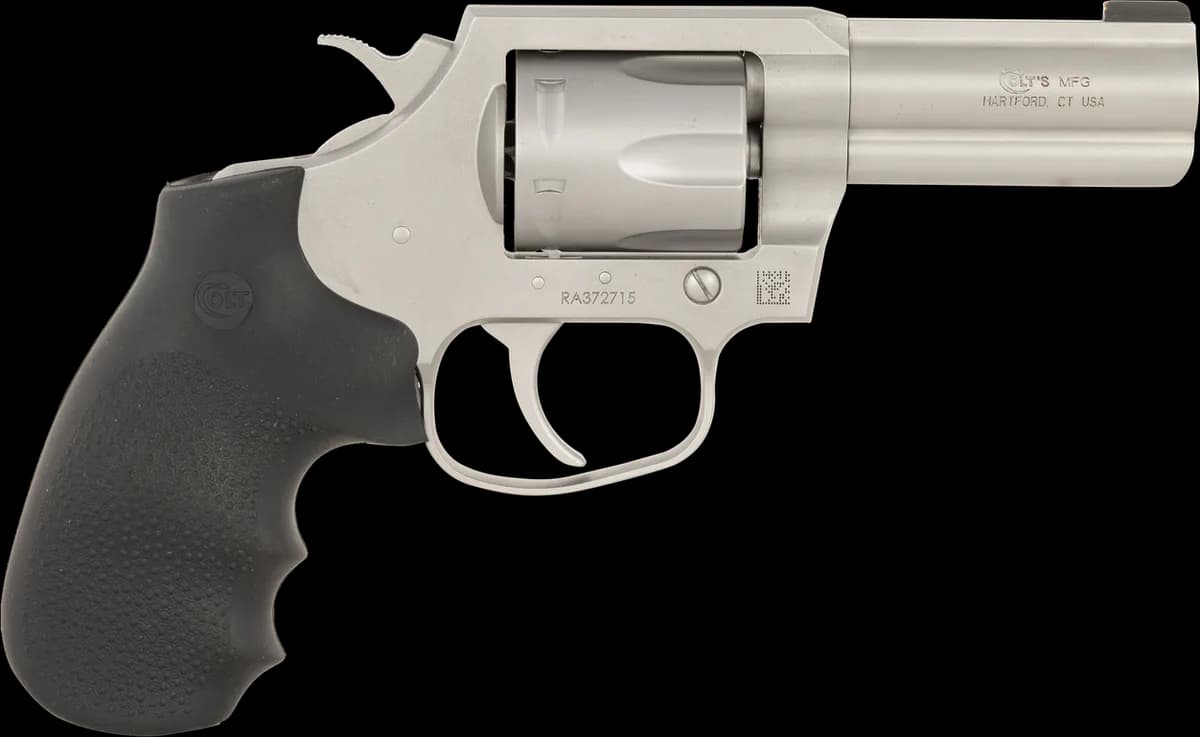
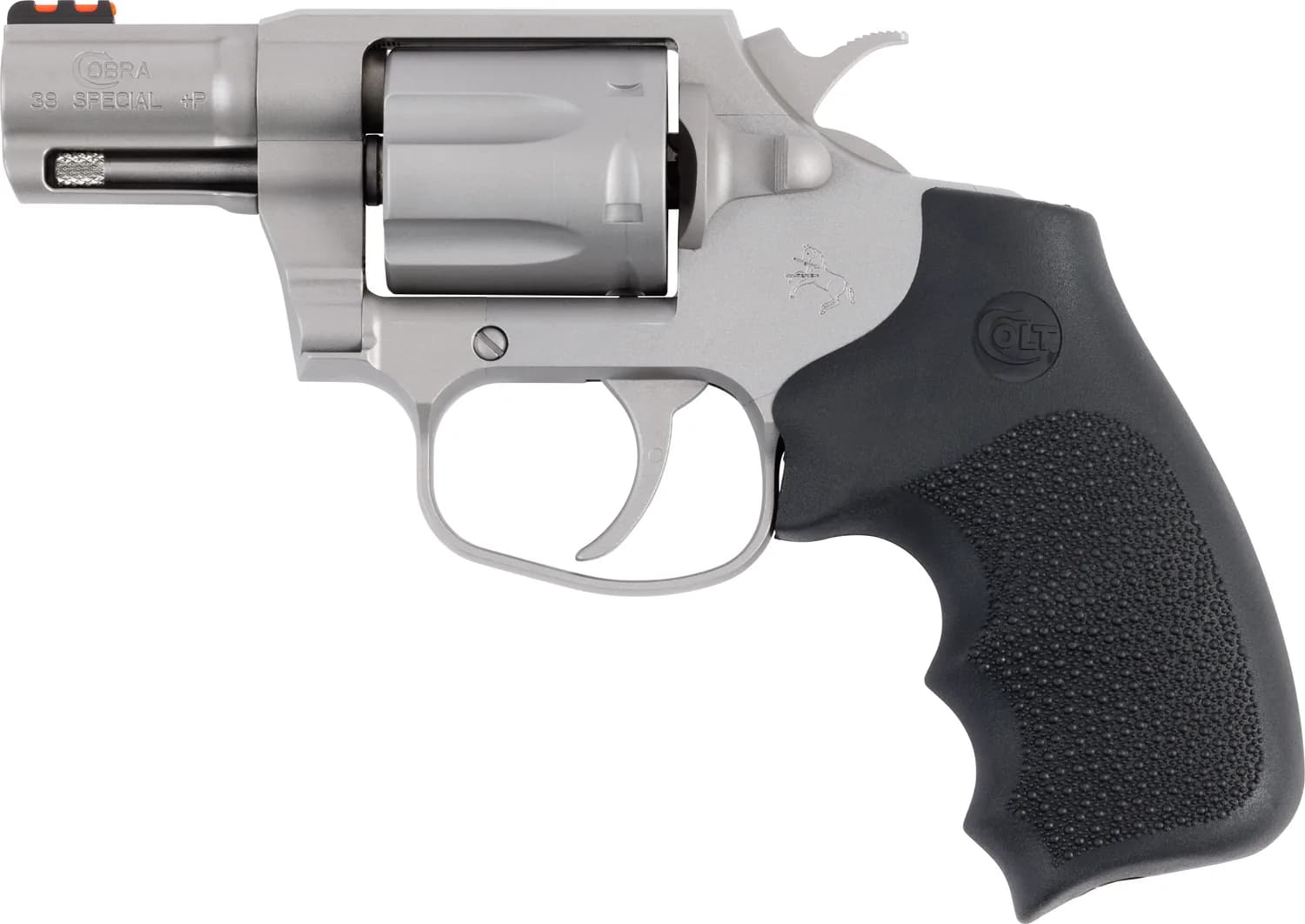
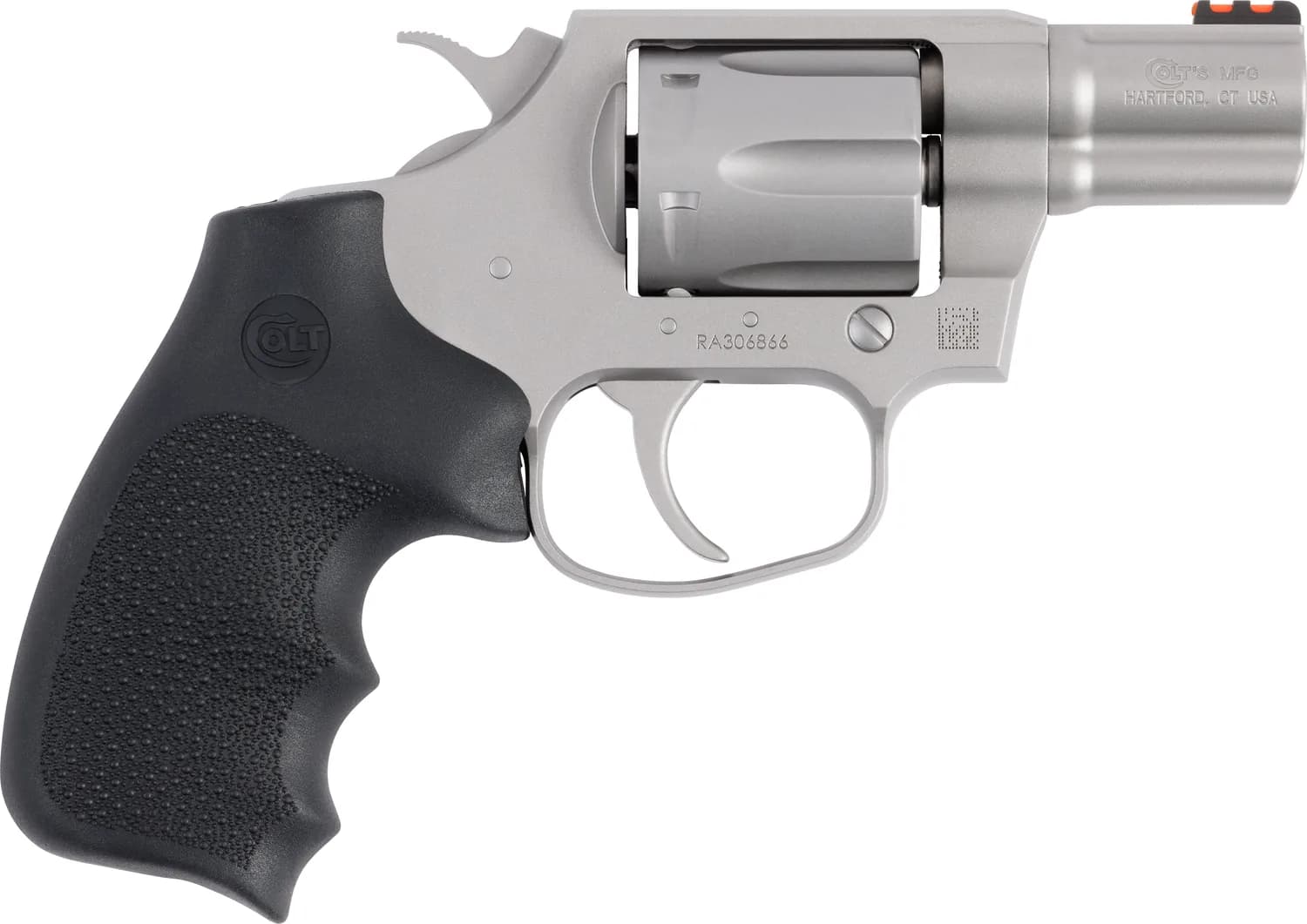
Buy from Impact GunsThe modern Colt Cobra is a deliberate revival of a storied mid‑century pocket revolver. Colt announced the re‑introduction of the Cobra in 2017 as an all‑stainless‑steel, six‑shot small‑frame revolver built around a 2‑inch barrel and intended for concealed carry and short‑range defensive use. That relaunch trades the original Cobra’s ultra‑light alloy frame for a heavier steel construction and modernized ergonomics and sights—an effort Colt described as bringing classic Colt double‑action character into a form more suited to contemporary defensive ammunition and everyday‑carry expectations.
Colt backed the reissue with an operator’s manual and production documentation that list the platform as a six‑shot, single/double‑action revolver chambered for .38 Special and .38 Special +P with a shrouded ejector rod, interchangeable front sight (factory fiber‑optic in many configurations), and a fixed notch rear cut in the topstrap. Those factory materials are the authoritative source for the Cobra’s modern dimensions and ratings.
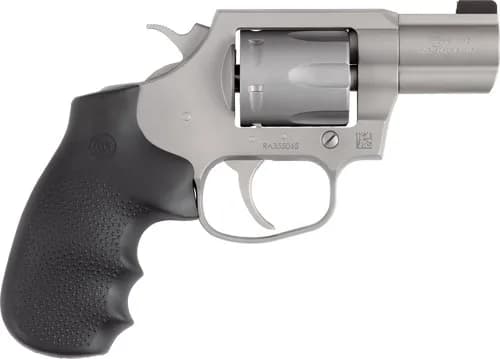
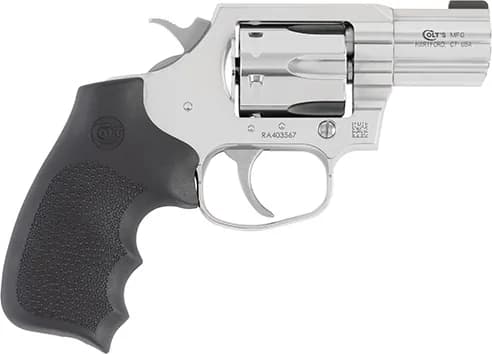
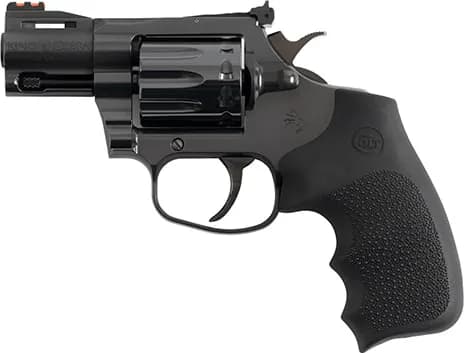
Where the original Cobras were lightweight and aimed at deepest concealment, the modern Cobra emphasizes shootability. The new model is built on an all‑stainless steel small frame with a 2.1‑inch rifled barrel (1:14 left‑hand twist) and an overall length in the 7‑inch range; Colt lists unloaded weight around 1.55 lb (approximately 25 ounces). The extra mass relative to alloy “snubbies” reduces felt recoil and aids rapid follow‑up shots while still keeping the revolver compact enough for many concealed‑carry roles. The factory configuration pairs a replaceable red fiber‑optic front blade with a simple integral rear notch cut into the topstrap—an intentionally snag‑free sighting system that favors fast target acquisition at close ranges.
Mechanically the Cobra’s headline innovation is Colt’s LL2 (Linear Leaf, version 2) mainspring/trigger system. Colt designed the LL2 to provide a smooth, relatively flat double‑action pull and a clean single‑action break without the hand‑fitting older Colts sometimes required. The action also incorporates a transfer‑bar safety and conventional rearward‑activated cylinder latch typical of Colt double‑actions. The factory grip is an overmolded rubber profile (Hogue‑style on most retail configurations), moved slightly rearward on the frame to improve trigger finger alignment and to let the shooter get more purchase on the gun—an ergonomics change reviewers and Colt alike cite as significant to control and handling.
The manufacturing choices—stainless steel receiver, shrouded ejector, user‑swappable front sight, and robust trigger train—are aimed at giving buyers a durable, low‑maintenance small revolver that accepts modern defensive ammunition, including +P loads that the earlier alloy Cobras were not rated to handle. The operator’s manual explicitly lists +P compatibility and provides the manufacturer’s loading and maintenance guidance.
Hands‑on testing and early reviews emphasized how those design decisions translate to the range. Observers consistently praise the Cobra’s trigger: reviewers describe the double‑action pull as unusually smooth for a compact revolver and the single‑action break as short and clean—qualities that help on‑target accuracy under stress. One longform test at a training academy reported the trigger graph showed pressure rising to roughly the mid‑single‑digit pounds early in travel, then increasing modestly before break, and the reviewer characterized the overall feel as “superb.”
Accuracy from a 2‑inch barrel is, predictably, limited by sight radius and short rifling length, but practical accuracy for defensive distances is strong. Range reports show consistent, usable groups at 10–25 yards with defensive and quality target loads; some testers favored mid‑velocity .38 loads that produced quick, controllable performance in the heavier steel frame. The Hogue‑style overmolded grip and the gun’s mass combine to tame recoil much better than the lightweight alloy snubs it replaces, making fast, accurate follow‑ups easier for a wide range of shooters. Reviewers who ran several hundred rounds through samples found no functional malfunctions and praised the Cobra’s timing and lockup.
On the practical side, the Cobra’s shrouded ejector rod protects the component but limits ejector travel—standard for snubnose revolvers—so speed loaders and practiced technique are important if fast reloads are anticipated. The replaceable fiber‑optic front sight is bright and easy to pick up in daylight, but the fixed rear notch is narrow; reviewers note it’s an excellent short‑range sighting solution but trade off some precision and windage adjustment capability.
The modern Cobra excels as a short‑range defensive revolver and an accessible training gun for shooters who prefer revolver simplicity. It is particularly well suited as a belt‑ or jacket‑carried defensive piece, a reliable home or vehicle backup, or for shooters who want a six‑shot wheelgun that accepts contemporary defensive +P ammunition without the concerns associated with older alloy frames. The ergonomics and trigger make it attractive for new shooters and for experienced revolver fans who want a compact, shootable package.
Limitations are straightforward: the 2‑inch barrel and fixed rear notch constrain long‑range precision, and the steel frame makes the Cobra heavier than the lightest pocket revolvers—so deep pocket carry is less practical for many users. Those who prioritize the absolute lightest everyday carry or who need a five‑shot ultra‑compact pocket revolver for specific wardrobe constraints may prefer alternatives, but they will trade away the Cobra’s enhanced control and six‑round capacity. Additionally, while the Cobra is +P rated in its current form, owners should follow Colt’s maintenance and ammunition guidance in the manual.
In the market the Cobra occupies a distinct niche: a modern, steel‑framed six‑shot snub that blends Colt heritage with contemporary ergonomics. Compared with five‑shot alloy J‑frames and polymer‑framed snubbies, the Cobra’s extra mass and sixth round are its selling points—yielding less felt recoil and better controllability at the cost of additional weight. Reviewers and the trade press positioned it as Colt’s answer to shooters who wanted a classic wheelgun experience without the fragility or reduced performance of vintage lightweight Cobras. That placement is reflected in Colt’s documentation and in retailer/manufacturer catalogs that list matte stainless, fiber‑optic sighting, and rubber overmolded grips as standard options on many configurations.
Reputation among enthusiasts has been generally positive: the Cobra’s modern engineering and predictable shootability earned favorable showings at SHOT and in subsequent range reviews, and many owners report high reliability and ease of use. For buyers who value a solid, straightforward revolver with a smooth trigger, six‑round capacity, and the ability to use +P defensive loads, the Cobra presents a compelling package—particularly for those who prize the tactile and mechanical simplicity of a wheelgun.
The modern Colt Cobra is, in short, a pragmatic reinvention: not a collector’s reproduction of the 1950s alloy snub, but a contemporary small revolver that prioritizes controllability, a refined trigger feel, and everyday defensive usefulness.
Start with a practical guide if you want a faster way to narrow the field before comparing specific models.
A practical guide to comparing handguns the right way: what actually matters, what to ignore, and how to use comparison tools effectively.
Read guideFirst-time buyersLearn how to choose your first handgun by focusing on size, comfort, ease of use, and budget instead of getting lost in unnecessary details.
Read guide