Affiliate disclosure: HandgunCloud may earn a commission if you continue to the retailer and complete a purchase.
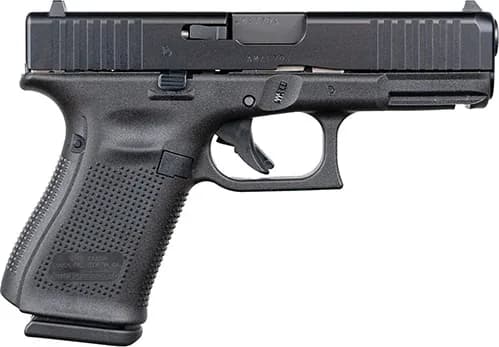
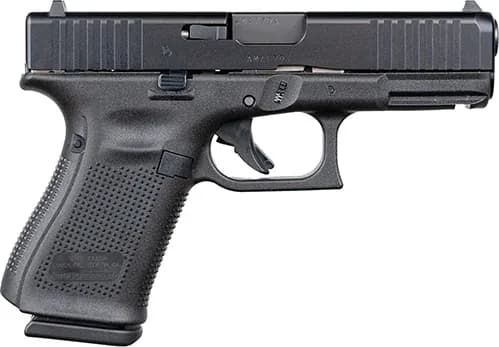
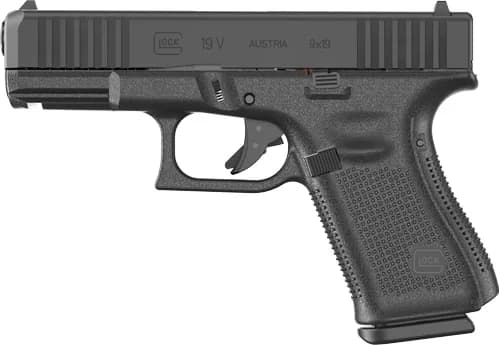
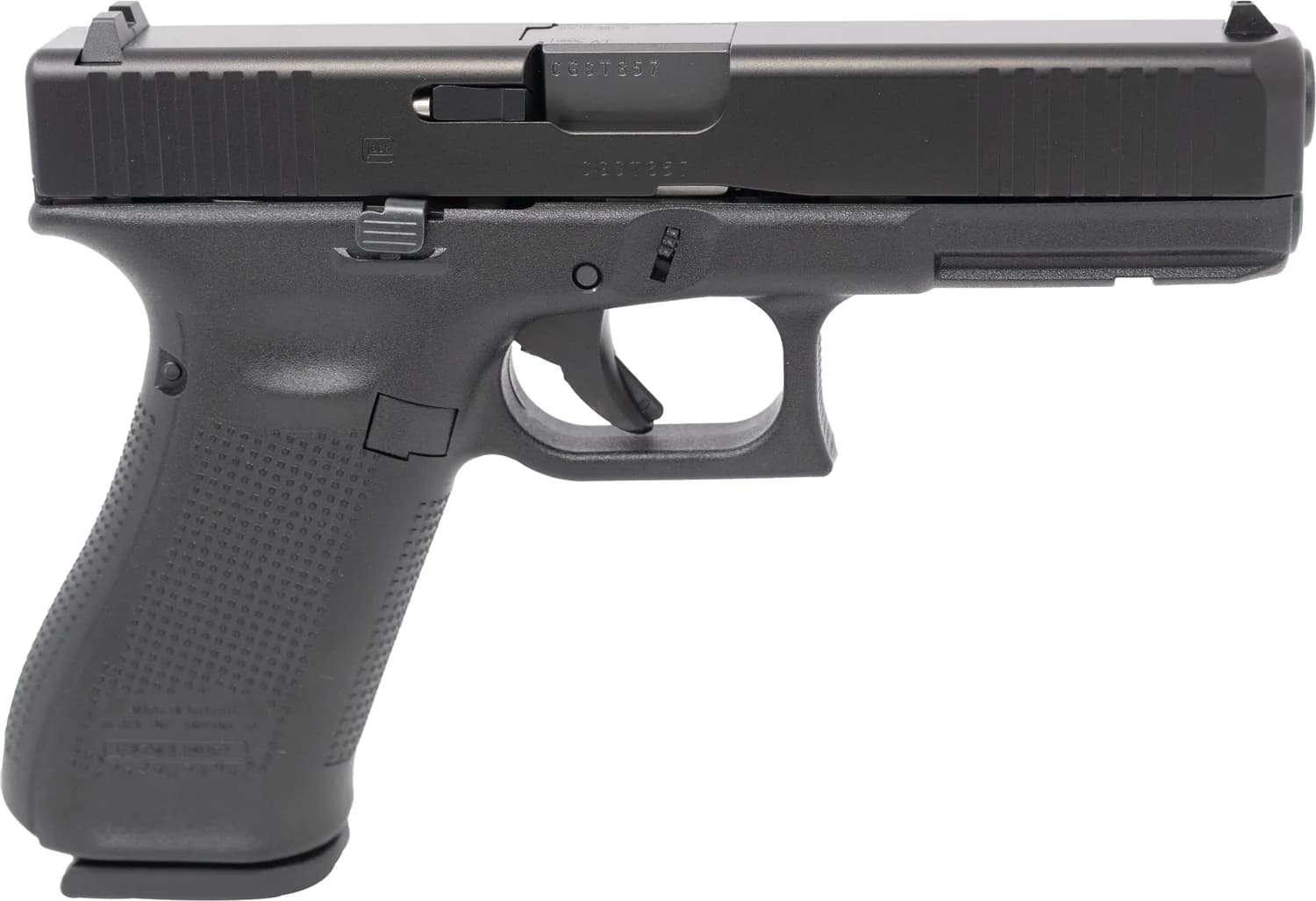
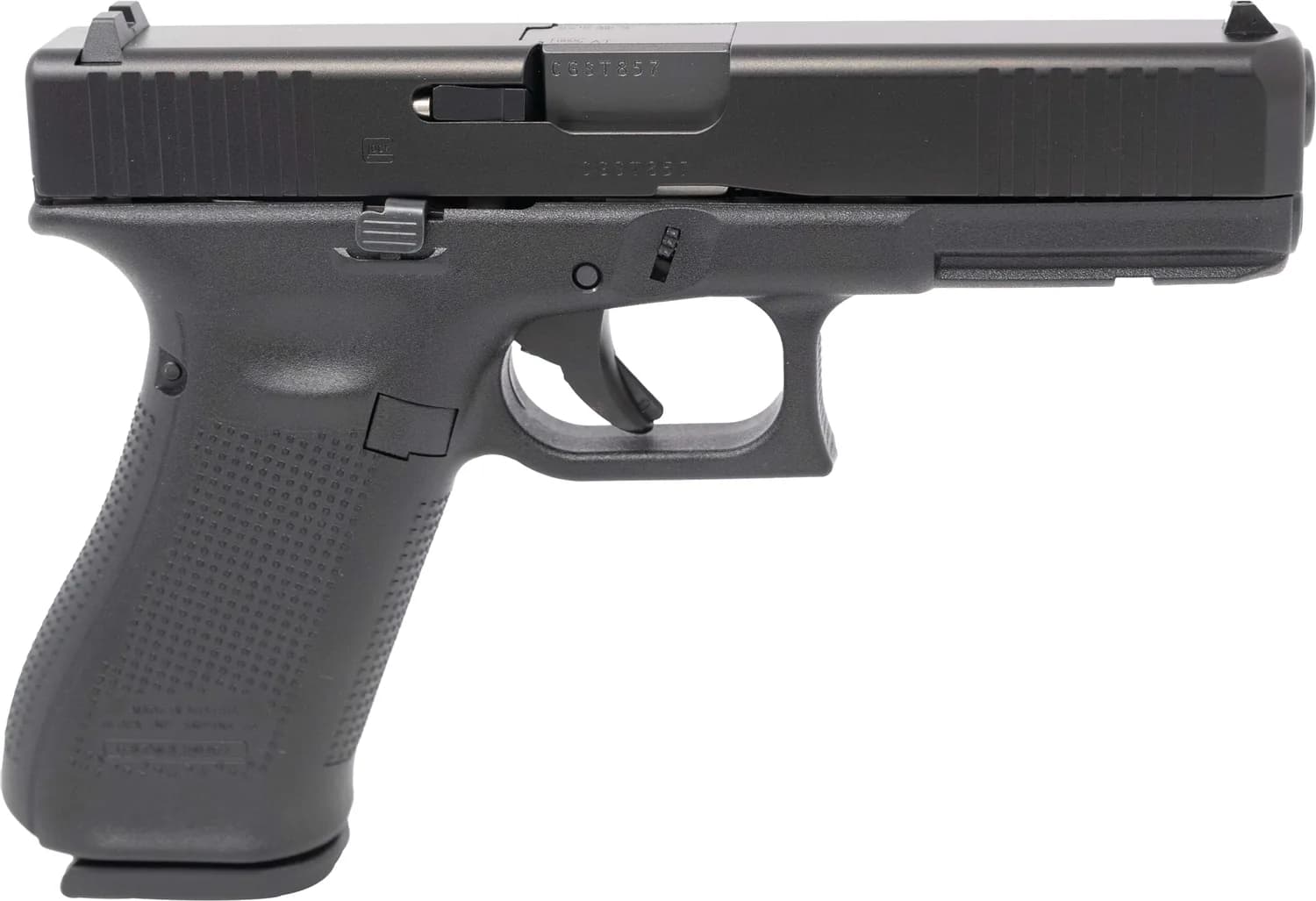
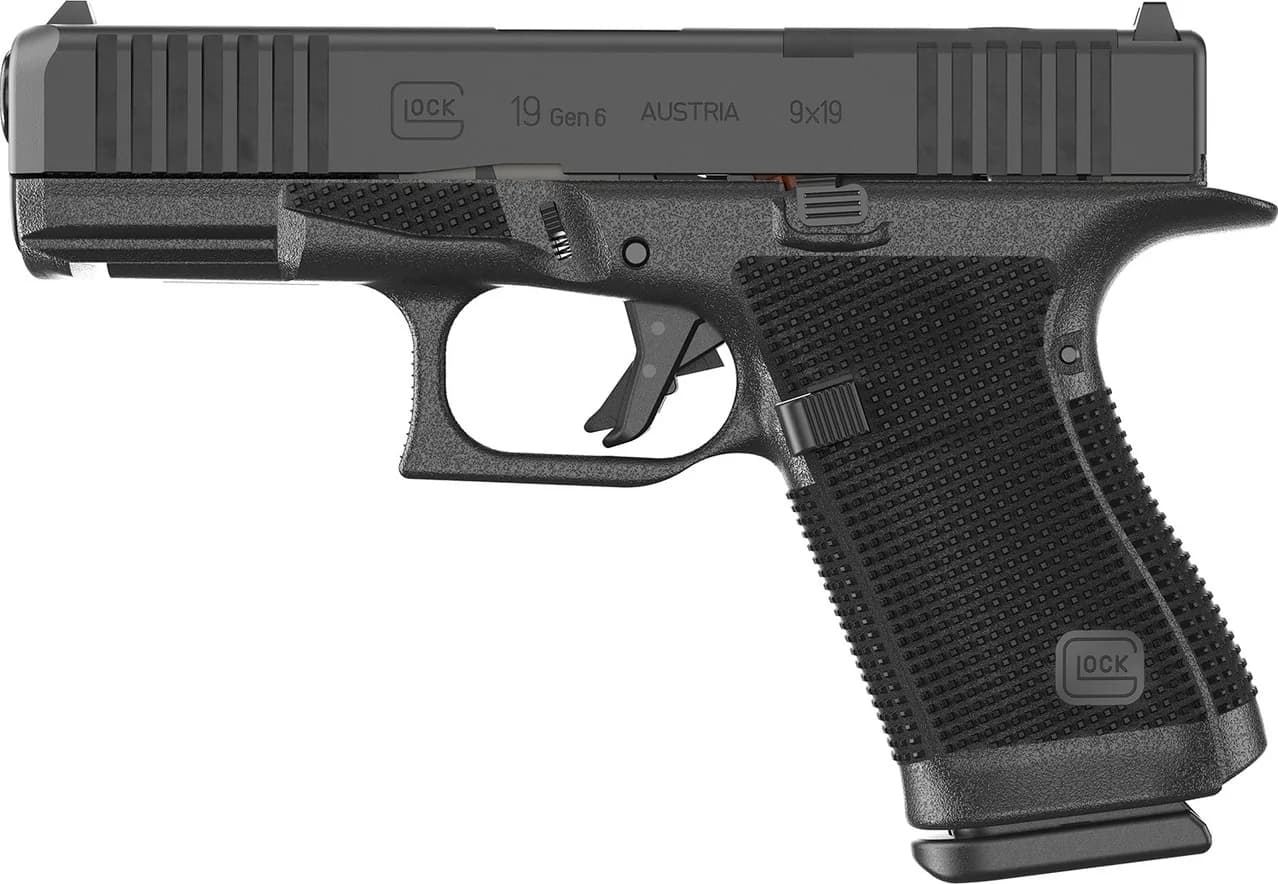
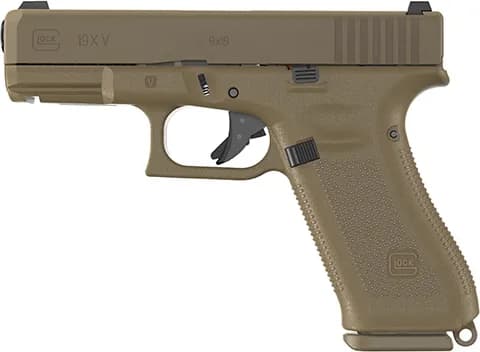
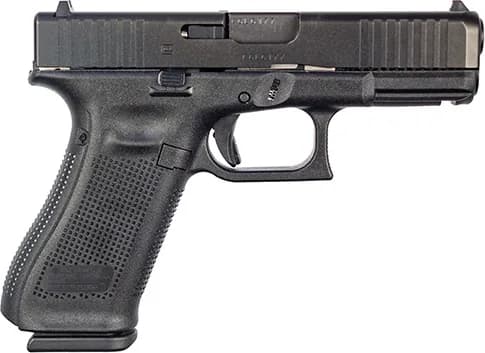
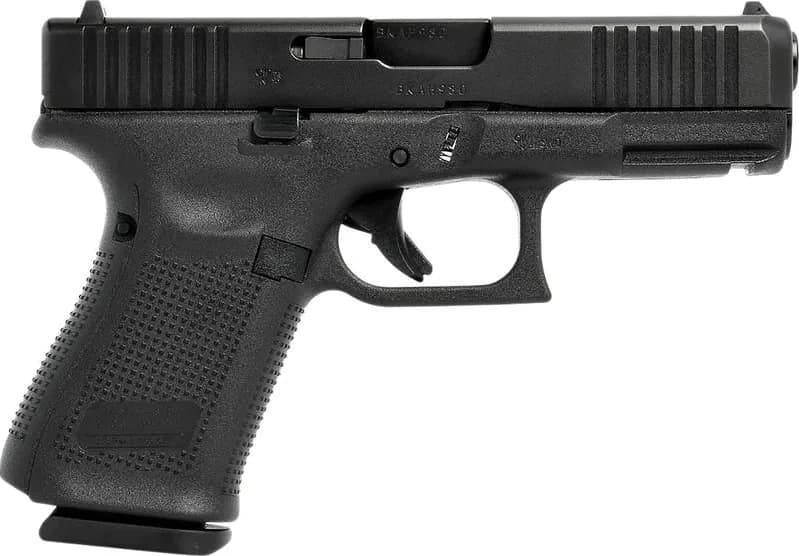
Buy from Impact GunsThe Glock 19 V Front Serrations is Glock’s compact V‑series entry built on the company’s long‑running 9mm compact platform. The V series was rolled out as a consolidated, modernized product family in late 2025; Glock positioned those new V models as the successor baseline to several legacy Gen‑4 and Gen‑5 pistols while keeping the basic Safe Action manual of arms familiar to long‑time users. The G19 V keeps the compact footprint and 15‑round standard capacity that made the 19 a commercial and law‑enforcement staple, but adds a small set of factory refinements—most visibly, front slide serrations—alongside Glock’s Marksman Barrel and nDLC slide finish.
On paper the 19 V reads like the current Glock compact refined rather than reinvented. Glock’s product material lists the pistol as a 9×19 mm, short‑recoil, tilting‑barrel, striker‑fired design with a 102 mm (4.02 inch) barrel and a slide length of roughly 174 mm (6.85 inches). The G19 V ships without finger grooves, includes Glock’s Marksman Barrel (GMB), a flared magazine well, ambidextrous slide stop levers and an nDLC finish—details that combine to alter handling and durability while preserving the platform’s modularity for common magazines and holsters. Glock’s published trigger spec for the V models is about 26 N, consistent with the family’s duty‑style trigger feel.
Those choices have predictable real‑world effects. The lack of finger grooves broadens usable hand positions and reduces the “one‑size” feel that some shooters found restrictive on earlier generations; the flared magwell helps fast reloads in high‑stress drills; and the front serrations add a positive, tactile purchase for press checks or slide manipulation with a weak hand. The nDLC surface is a hard, corrosion‑resistant coating Glock now uses broadly on premium models; in practice that finish resists wear and scratching better than older nitride coatings. The GMB is Glock’s factory match‑oriented barrel profile, intended to tighten group dispersion compared with legacy factory barrels while remaining durable for high round counts.
Measured shooting performance for the G19 V follows the pattern established by its Gen‑5 predecessors: reliable, predictable recoil impulse, and accuracy that is “combat‑accurate” out of the box. Glock’s Marksman Barrel has been credited by independent testers with a measurable improvement in group sizes versus older factory barrels; experienced shops and small‑magazines testing have shown more consistent 25‑yard performance when the GMB is paired with a good sighting system. At the same time, shooters consistently describe the GLOCK trigger as a service‑grade pull with a distinct wall and a positive reset rather than a light, match‑style trigger; Glock’s published trigger force reflects that tradeoff.
Recoil is mild for a double‑stack 9mm compact; the pistol’s weight‑to‑size ratio and the low bore axis common to Glock designs make follow‑up shots fast and controllable for a broad range of shooters. Durability and reliability remain strong selling points: early field reports and manufacturer testing emphasize consistent function through routine duty‑cycle use. Where commentary diverges is on how much the V series’ internal changes affect aftermarket compatibility—some owners and shops note that certain back‑of‑frame and slide plate differences complicate swap‑in parts developed for Gen‑5 pistols, a practical limitation for users who rely heavily on aftermarket upgrades.
The 19 V’s size, capacity and controls make it a very versatile handgun. It remains a top choice for general‑purpose concealed carry, plainclothes duty, and training because it balances concealability with a usable grip and a 15‑round baseline magazine. For many defensive shooters it is an ideal “do‑everything” gun: compact enough for daily carry, substantial enough for longer range practice and defensive drills. The inclusion of a flared magwell and front serrations gives the G19 V a slight edge for fast competition or action shooting where reload speed and positive slide purchase matter.
Limitations are familiar to anyone who’s considered the Glock 19 family: it is not the lightest micro‑compact for deep concealment, and those who prize a very light, match trigger will likely pursue trigger work or an aftermarket replacement. Additionally, buyers who planned to reuse a wide swath of Gen‑5‑era replacement parts should verify compatibility; the V series policy changes and some internal geometry differences mean not every older upgrade drops straight in.
The G19 V sits squarely where the original Glock 19 has always lived—near the top of the compact‑9 category by reputation, reliability and aftermarket/holster support. In head‑to‑head comparisons with modern compact competitors—Sig Sauer’s P320 family, Smith & Wesson’s M&P line, and CZ’s P‑10 series—the Glock is still commonly praised for its ecosystem (holsters, magazines, service parts) and conservative, well‑proven design philosophy. Review and buying guides place the 19 classically among the most ubiquitous “safe bets” for duty and carry; the V series aims to continue that legacy while addressing specific legal and engineering pressures the company faced in the mid‑2020s.
That position does carry tradeoffs. Some competing pistols undercut Glock on initial ergonomics or offer lighter triggers from the factory, and the market has grown crowded with capable alternatives that sometimes price aggressively. The 19 V’s strengths are reliability, familiarity to users and agencies, and the depth of accessory support; its relative weakness is that a shooter who prioritizes an out‑of‑the‑box, match‑grade trigger or the absolute lightest concealment footprint can find better single‑attribute fits elsewhere. Early buyer sentiment about the V rollout was mixed—many welcome the refinements, while a vocal subset expressed frustration about parts compatibility and the product‑line consolidation that accompanied the V series introduction.
The Glock 19 V Front Serrations is less a radical reinvention and more a contemporary, defensive‑minded iteration of an established concept: a compact, serviceable 9mm that shoots like a Glock, with a few factory upgrades aimed at accuracy, handling and long‑term survivability. For shooters who value proven function and a deep support network, the 19 V will feel familiar and capable; for those chasing highly specialized ergonomics or universal aftermarket interchangeability, the tradeoffs are worth weighing before purchase.
Start with a practical guide if you want a faster way to narrow the field before comparing specific models.
Learn how to choose the right 9mm handgun based on size, budget, and how you plan to use it.
Read guideCarry-focused shoppersLearn how to choose the right concealed carry handgun based on size, comfort, safety, and everyday usability.
Read guideHome-focused buyersLearn how to choose the right handgun for home defense based on safety, ease of use, and practical everyday considerations.
Read guide