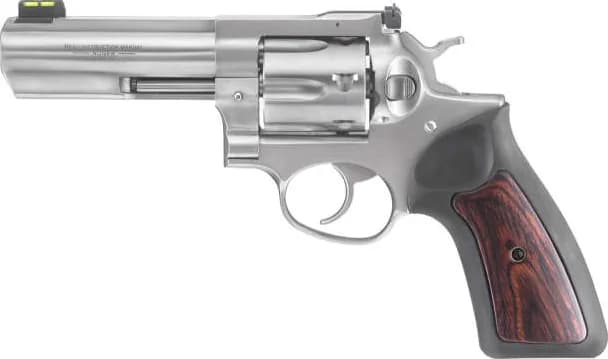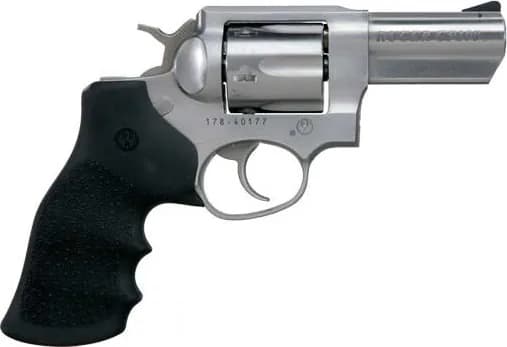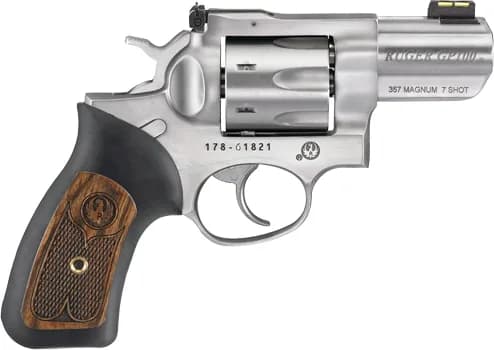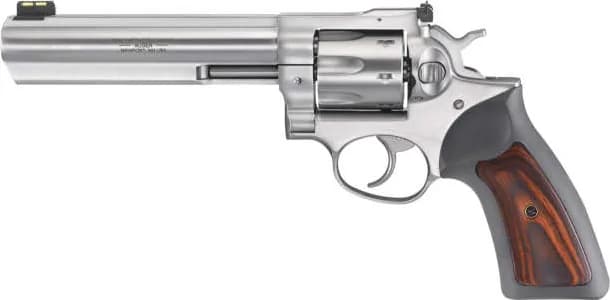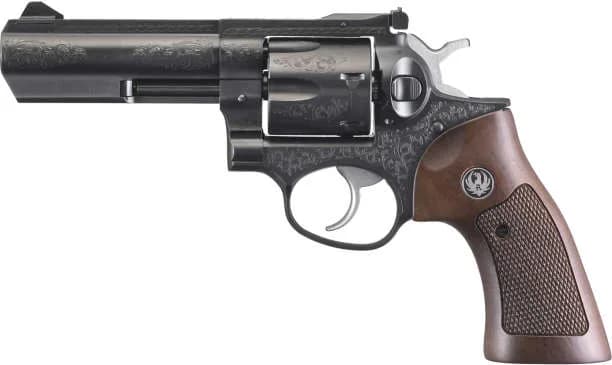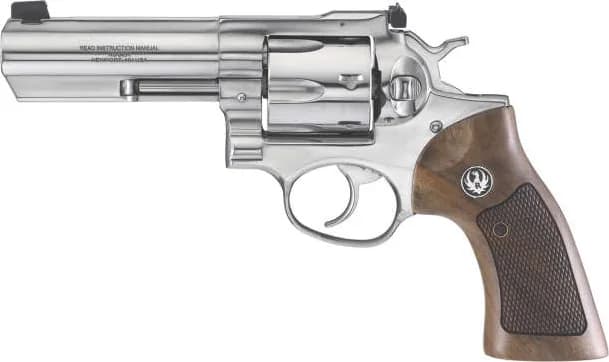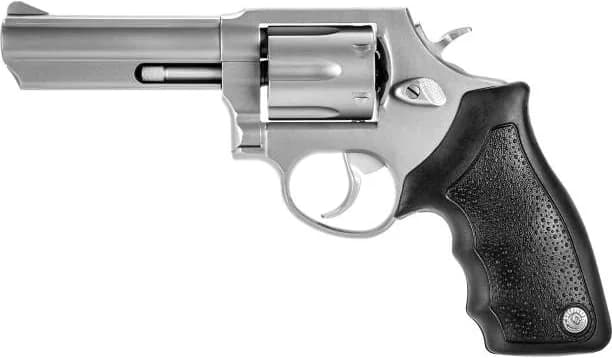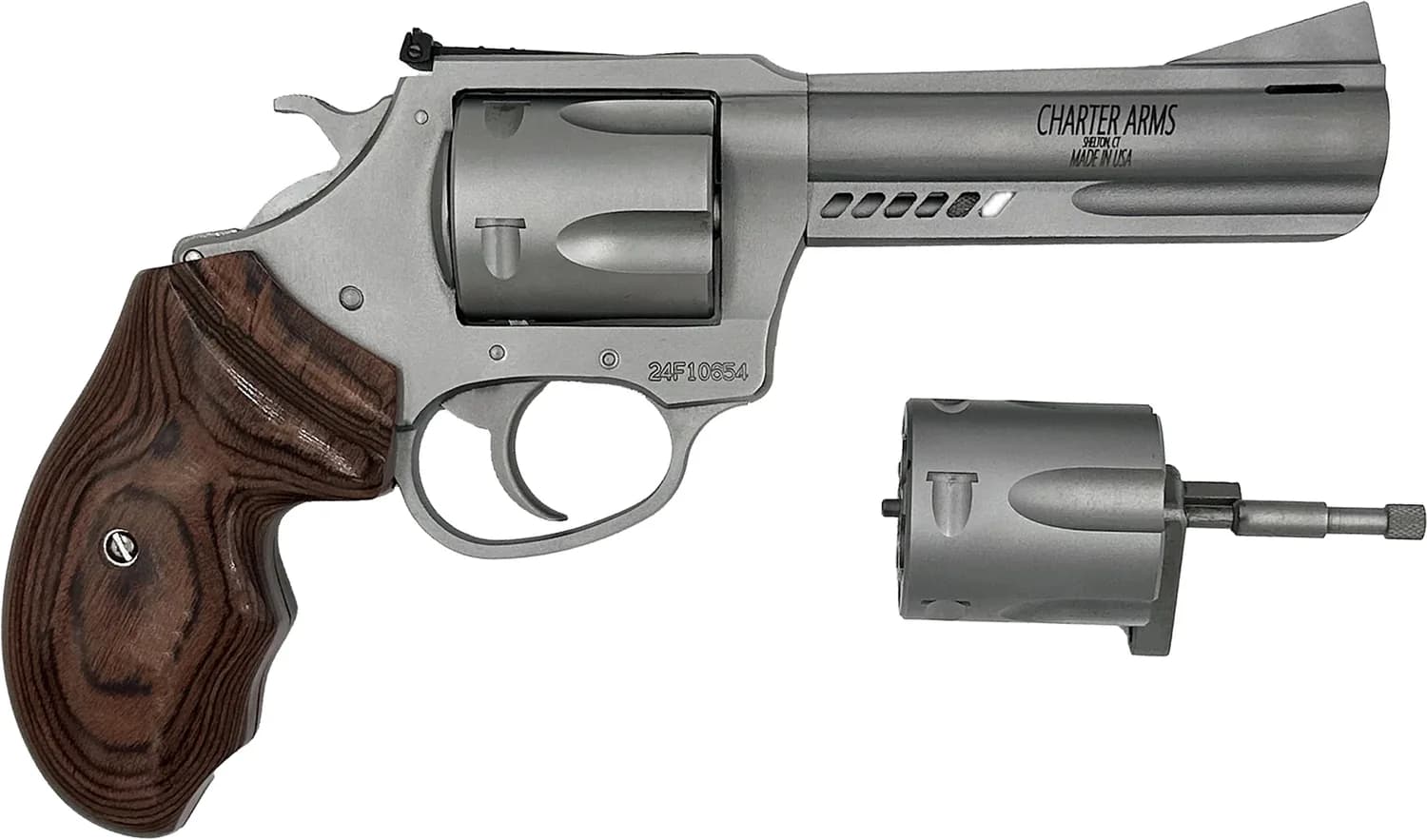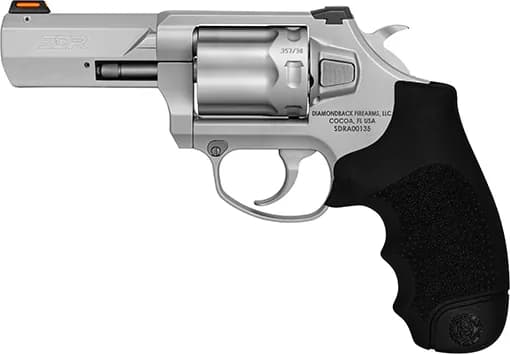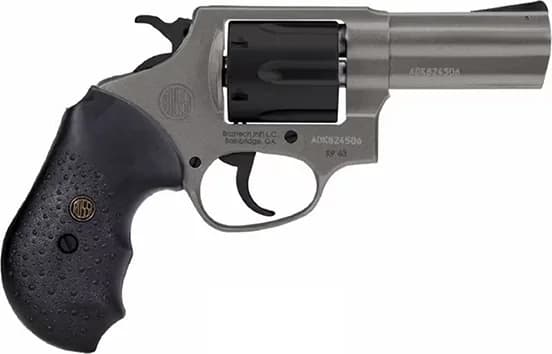
Introduced in the mid‑1980s, the GP100 was Ruger’s answer to the need for a medium‑frame revolver that could reliably digest full‑power .357 Magnum ammunition without the fragility some earlier designs exhibited. Built on an evolution of Ruger’s heavy‑duty revolver architecture, the GP100 established itself as a production revolver intended for demanding users — law enforcement, outdoorsmen, and shooters who wanted a durable, shootable .357 rather than a fragile showpiece. The model family has remained in production in many configurations since its debut, with a long list of barrel lengths, finishes, and special editions available over time.
At the core of the GP100’s reputation is a deliberately rugged approach to construction. Ruger uses a solid, thick frame with extra material in high‑stress areas rather than a removable sideplate; the design also incorporates a robust crane and a multi‑locking cylinder system that eliminates cylinder play and increases service life under heavy magnum use. The GP100 employs Ruger’s transfer‑bar firing system that prevents the hammer from contacting the firing pin unless the trigger is intentionally pulled, a safety feature that supports safe carry and dry‑fire practice. These structural choices make the GP100 a workhorse rather than a trimmed‑down competition piece.
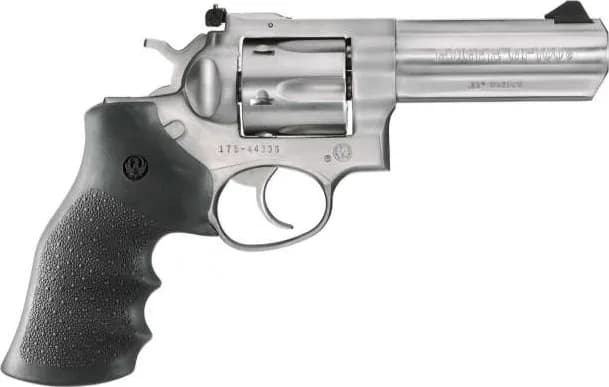
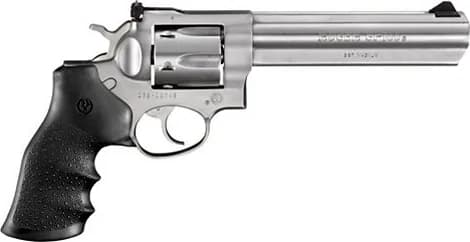
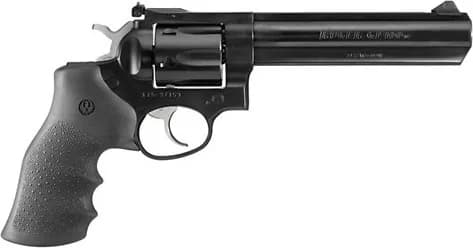
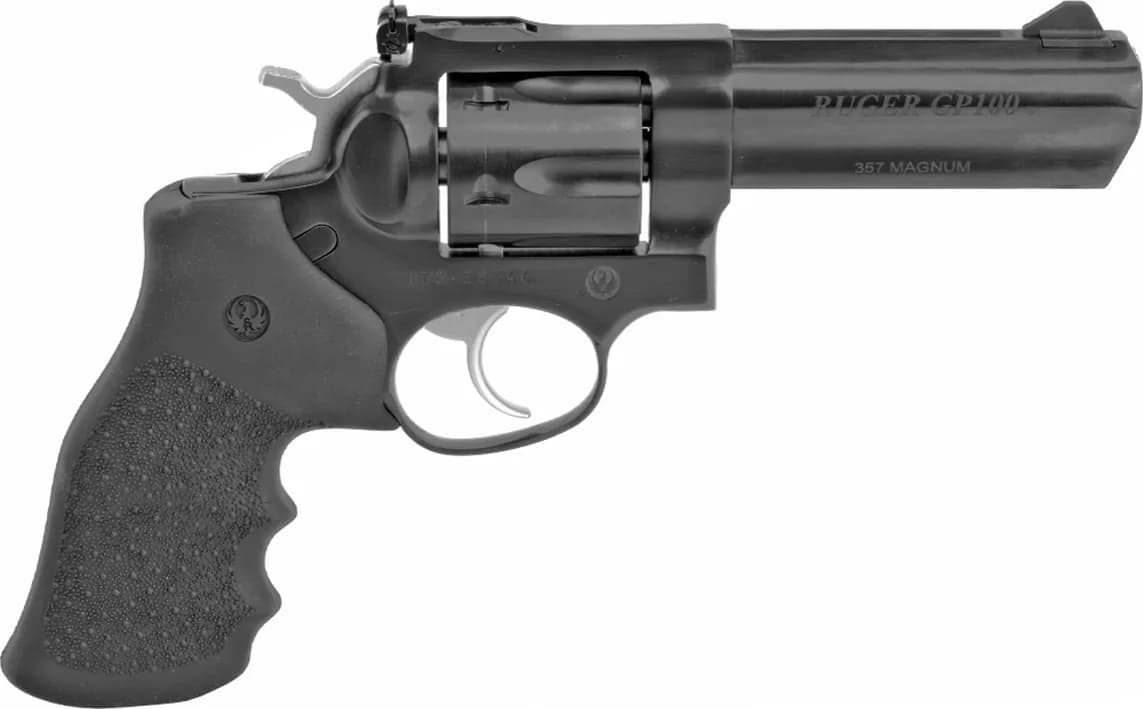
The 4.2‑inch blued model equipped with the black Hogue Monogrip carries approximately 40 ounces and measures about 9.5 inches overall in the factory configuration. The full‑length underlug on many 4.2‑inch GP100s adds forward weight to reduce muzzle flip, which together with the Hogue grip’s soft overmold helps make sustained .357 shooting more manageable. The factory adjustable rear sight and ramp‑style front sight give a useful sight picture for defensive and range work without the expense or fragility of an optics setup.
On the range, the GP100’s engineering choices translate to a pistol that feels solid and predictable. The weight and underlug tame recoil and allow reasonably fast follow‑up shots for a magnum revolver; many reviewers note that a 4.2‑inch GP100 is pleasant to shoot with full‑power loads relative to its size because the mass and grip mitigate felt recoil. The Hogue Monogrip is often singled out: it is not elegant, but it absorbs recoil and makes long strings of magnum practice much less punishing than a thin, hard grip would. Controls are straightforward and big enough to manipulate under stress; Ruger’s cylinder release and exposed hammer are familiar to most revolver shooters.
Durability is a recurring theme. The triple/dual locking points on the cylinder crane and Ruger’s heavy frame construction result in very little cylinder play even after thousands of rounds, and solid‑frame construction simplifies field stripping and maintenance. Independent long‑term tests and many owner reports show the GP100 tolerates aggressive use with minimal wear.
Accuracy from a 4.2‑inch GP100 is respectable for a production service revolver. Bench‑tested groups with premium .357 loads typically run in the low‑ to mid‑inch range at 25 yards in single‑action, and well‑set adjustable sights allow useful point‑of‑aim/point‑of‑impact control for defensive‑distance shooting. For most shooters the GP100 will outshoot their skill level with standard factory ammo; handloads and match ammunition improve groups further.
The most commonly noted compromise is the factory double‑action trigger. Out of the box, many GP100s exhibit a heavy, somewhat gritty DA pull and a serviceable but not light single‑action break. This is a predictable tradeoff for a revolver designed for durability; it is also one of the easier factory complaints to address — simple spring replacements or a modest gunsmith trigger job substantially improve DA pull weight and smoothness. After break‑in or a spring kit, reviewers report noticeably better grouping in double‑action strings. Reliability remains excellent through such adjustments, and extreme longevity is part of the model’s reputation.
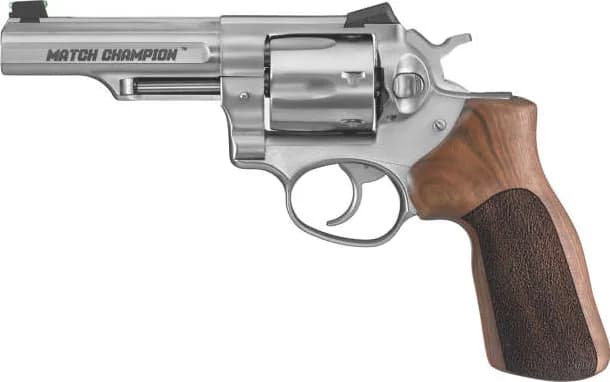
The GP100’s strengths make it versatile: its robustness and ability to handle full‑power .357 loads suit it to home defense, wilderness carry for those who accept the weight, and general range duty for shooters who prefer revolvers. The Match Champion and other target‑oriented GP100 variants underscore the platform’s adaptability for precision work when configured accordingly. For hunting or bush use, a 4.2‑inch GP100 is a fine compromise between portability and ballistic performance; for serious handgun hunting a longer barrel or dedicated hunting iron may be preferred.
Limitations are largely physical and ergonomic: the GP100 is heavier and chunkier than many comparable pistols, which makes it less appealing for concealed everyday carry. The factory Hogue rubber grip, while excellent at soaking up recoil, is polarizing for shooters who prefer slimmer, wooden grips for presentation or draw comfort; aftermarket grip options are plentiful. Finally, out‑of‑the‑box trigger feel is commonly criticized — not because it prevents accurate shooting but because it is unsophisticated compared with higher‑end revolvers and some contemporary S&W offerings.
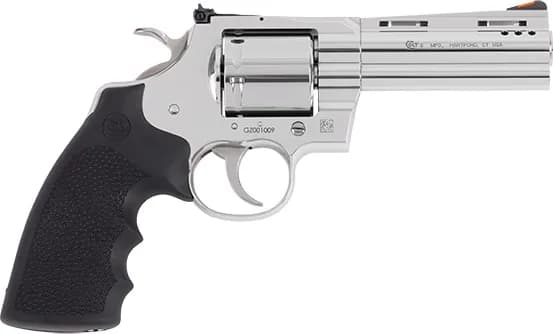
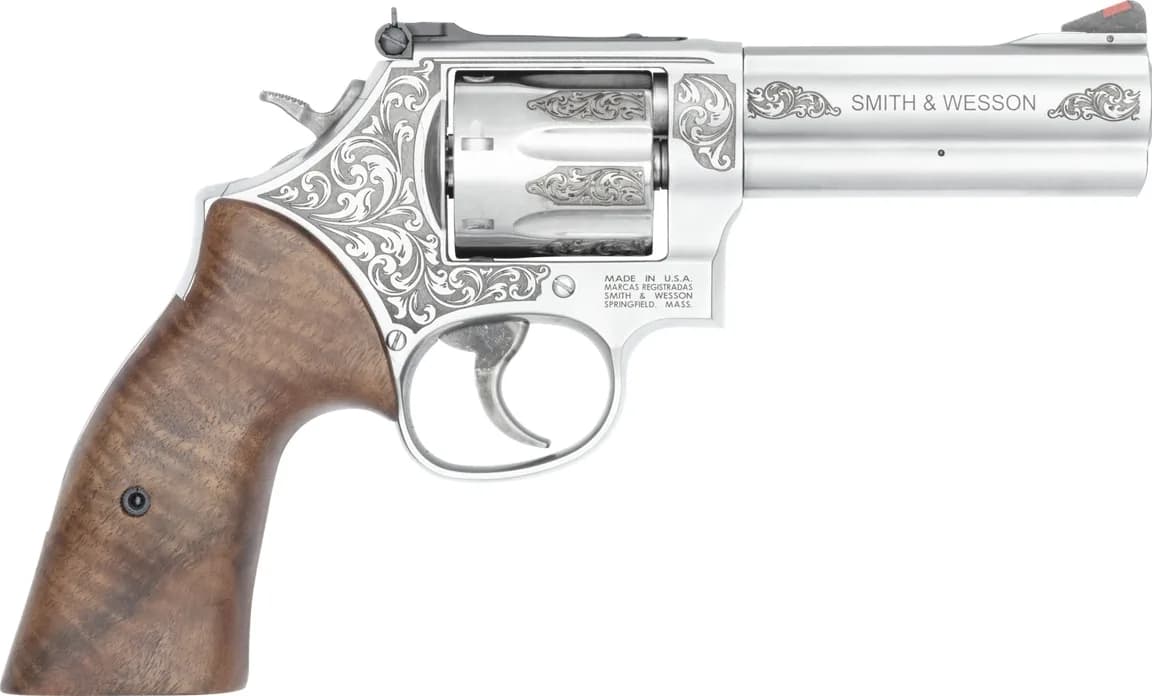
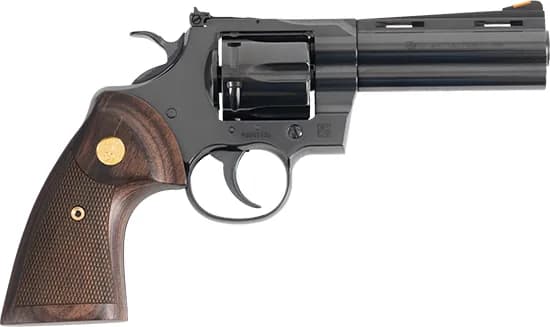
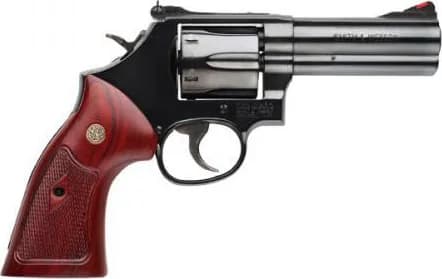
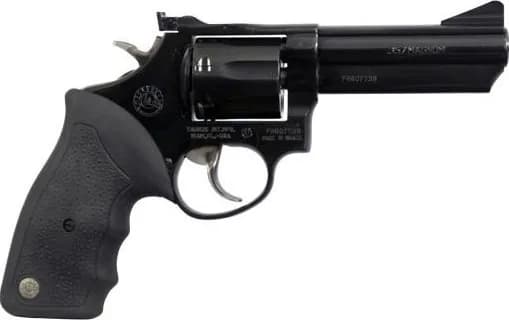
Within the medium‑frame magnum revolver market, the GP100 sits as a value‑oriented, overbuilt option. Compared with Smith & Wesson’s L‑frame series and Colt’s historic offerings, the GP100 trades some refinement and cosmetic finish for robustness, repeatable function, and a lower acquisition cost. Reviewers and buyer guides consistently position the GP100 as one of the best “bang‑for‑the‑buck” full‑size .357 revolvers: it won’t win beauty contests against a Python, but it will outlast a casual‑use service revolver and still deliver competitive accuracy and function for most practical tasks. For shooters who want a revolver they can shoot hard without babying, the GP100 often represents the smarter long‑term value.
In short, the 4.2‑inch blued GP100 with black Hogue Monogrip is a pragmatic, hard‑working revolver: deliberately heavy and plainly finished, but engineered to do the core jobs of defense, range work, and light hunting with uncommon durability. Its compromises are obvious and correctable; its advantages are enduring.
Start with a practical guide if you want a faster way to narrow the field before comparing specific models.
A practical guide to comparing handguns the right way: what actually matters, what to ignore, and how to use comparison tools effectively.
Read guideFirst-time buyersLearn how to choose your first handgun by focusing on size, comfort, ease of use, and budget instead of getting lost in unnecessary details.
Read guide