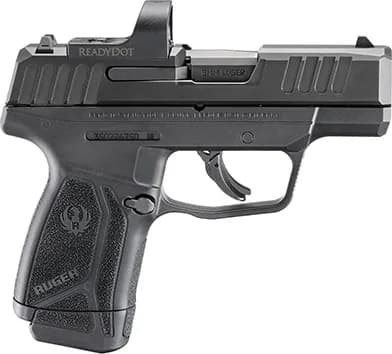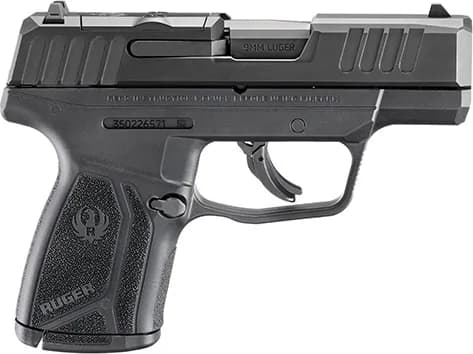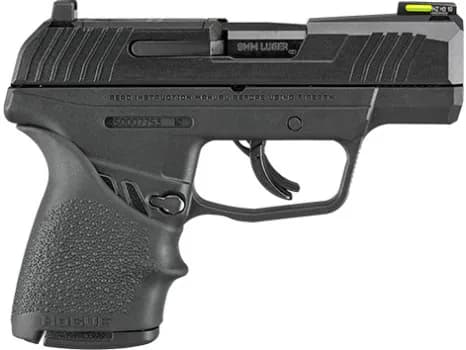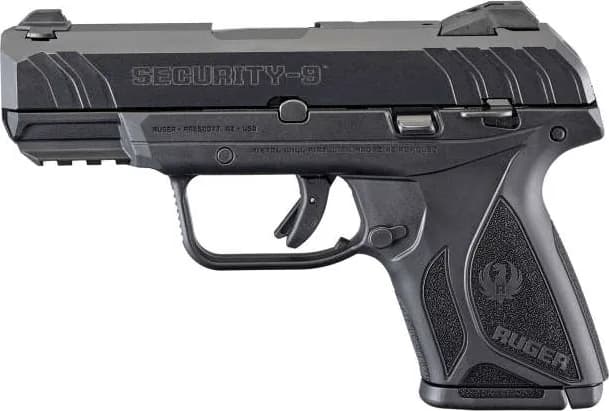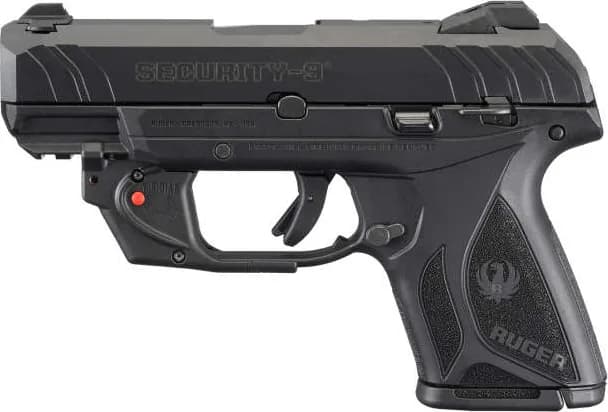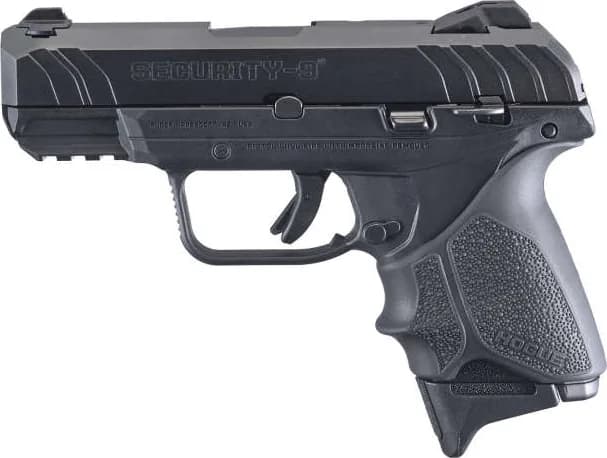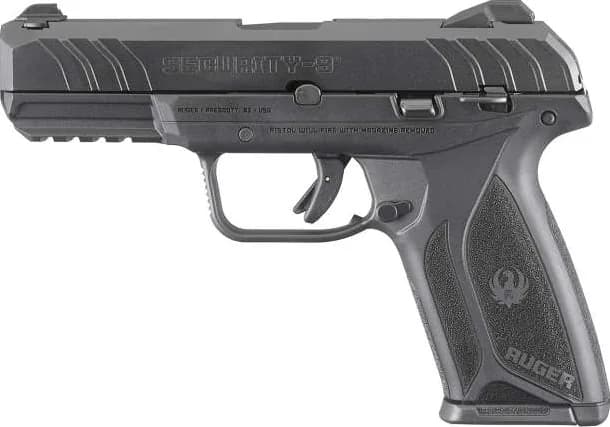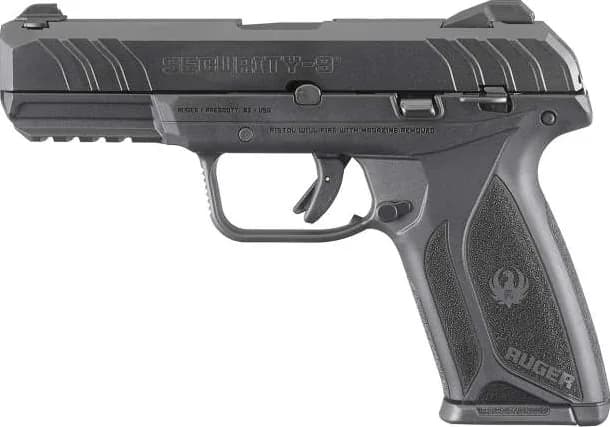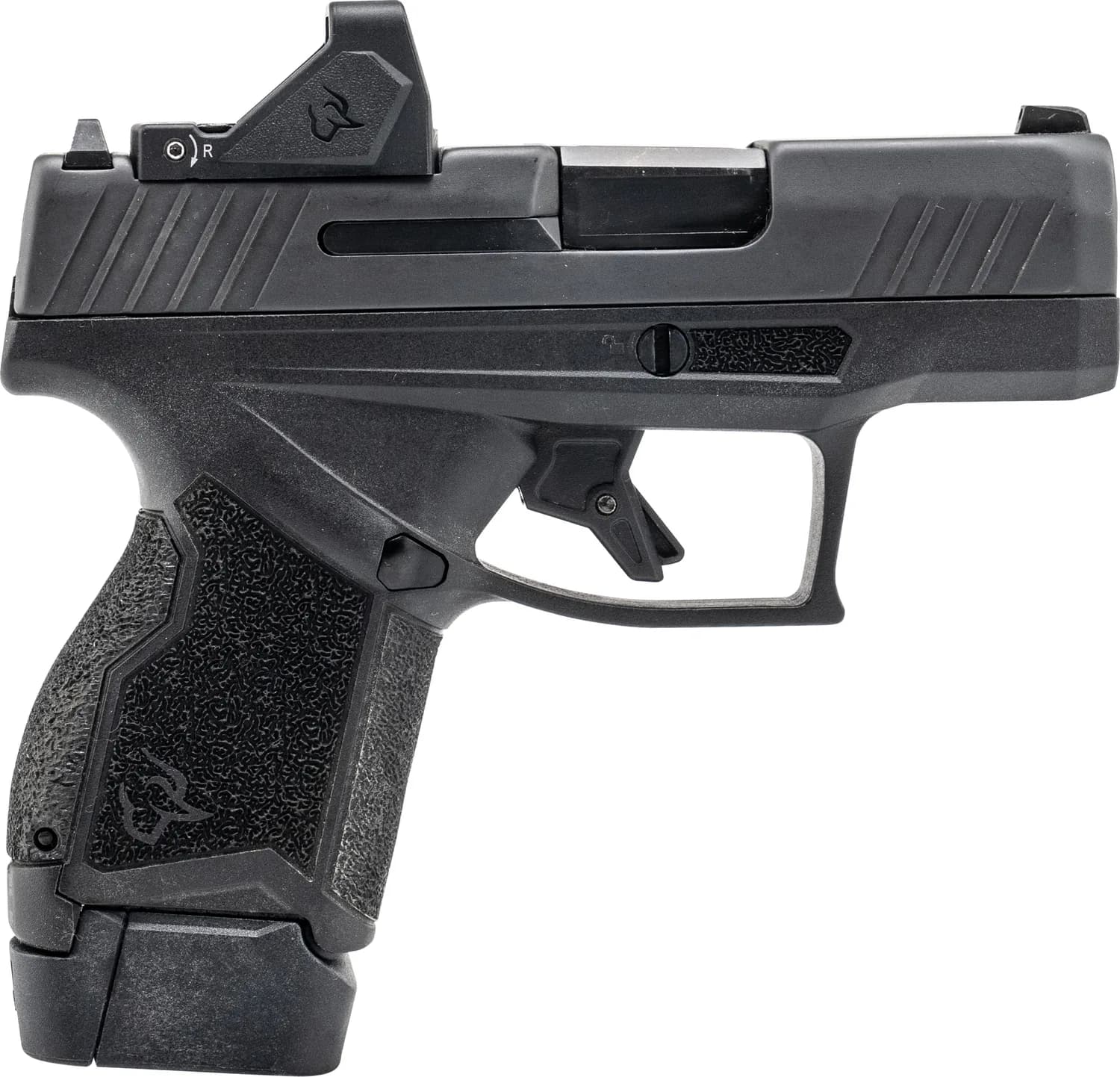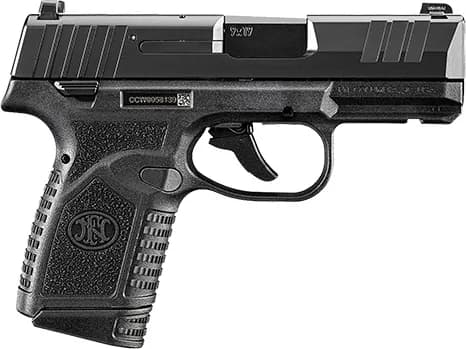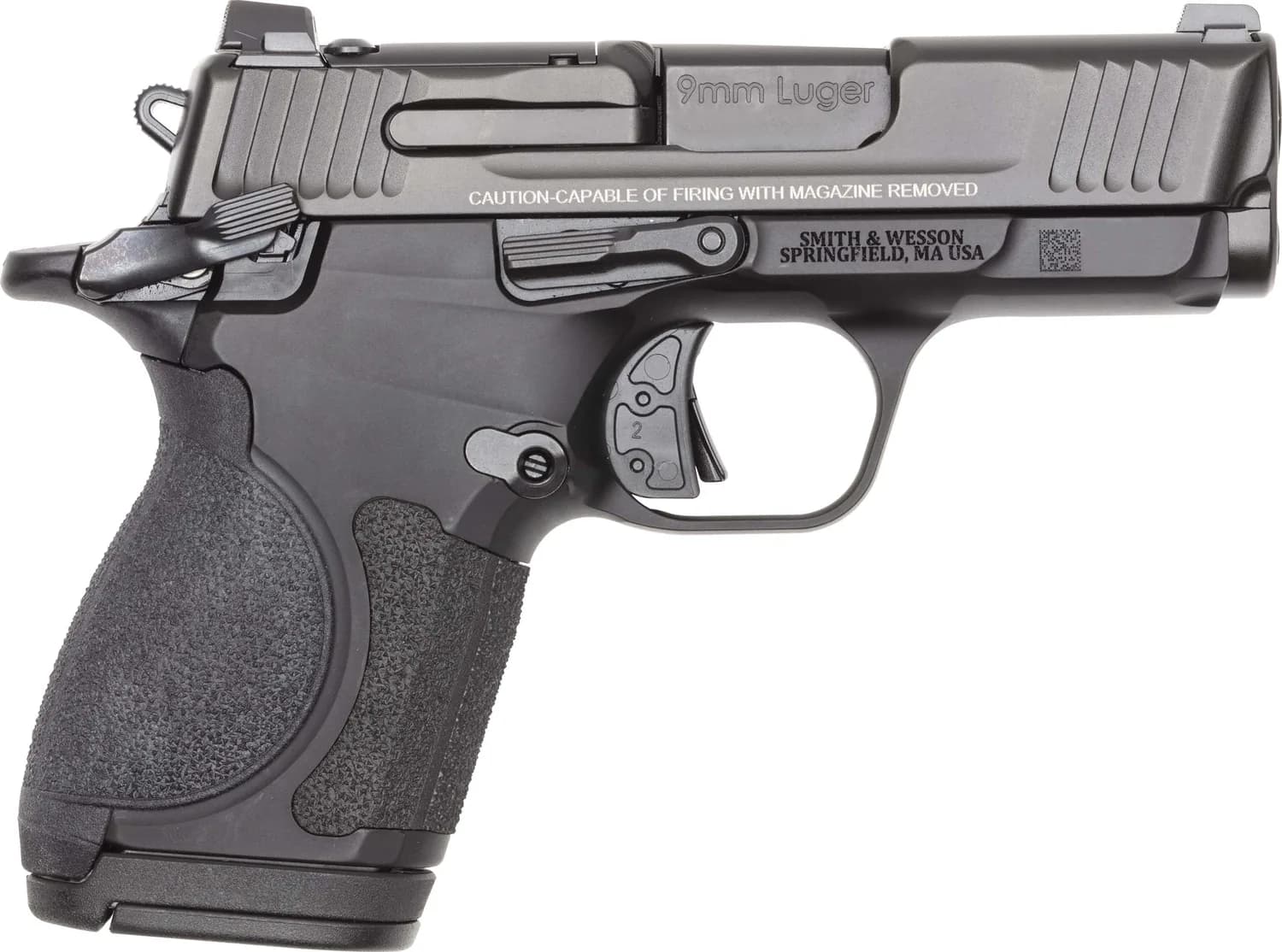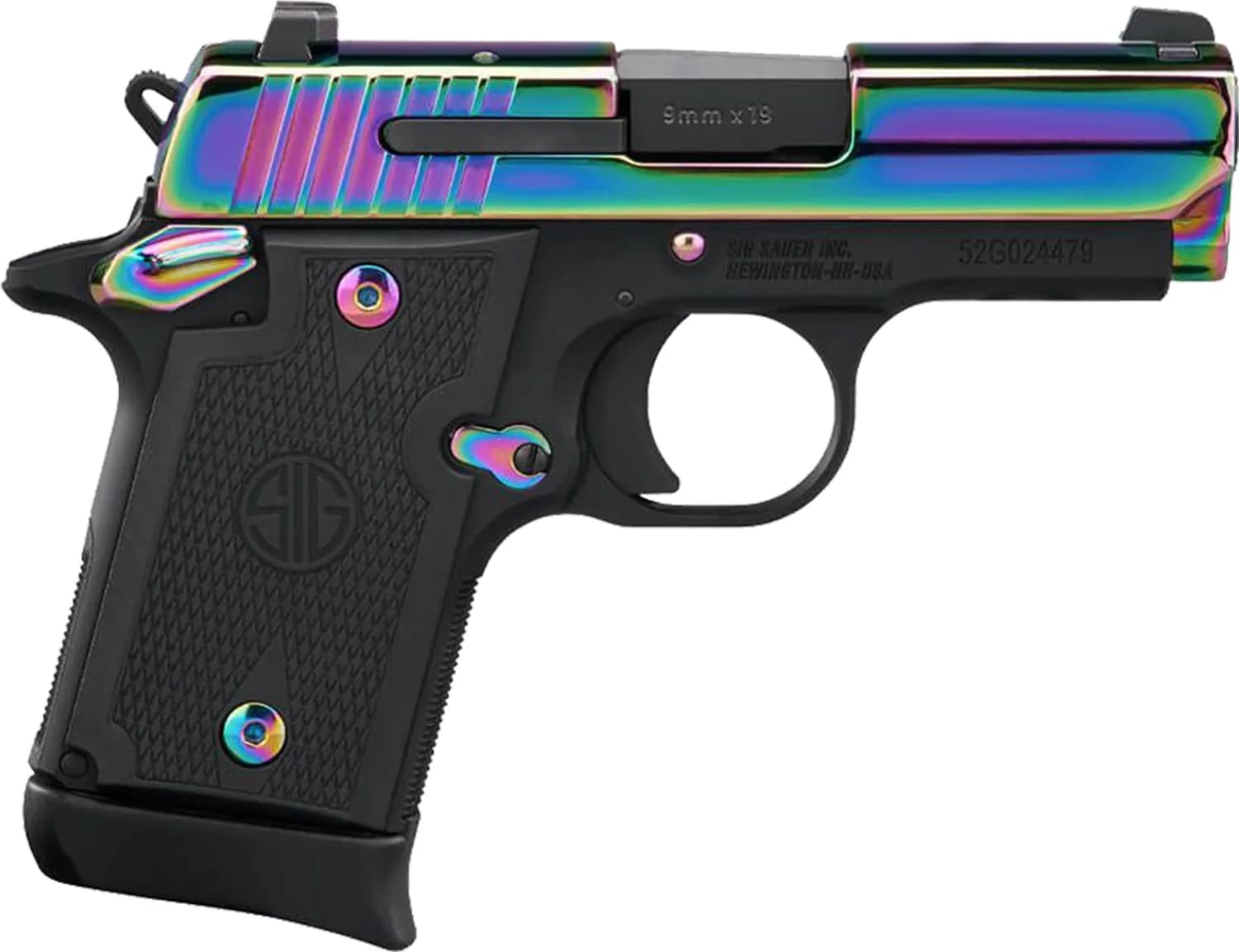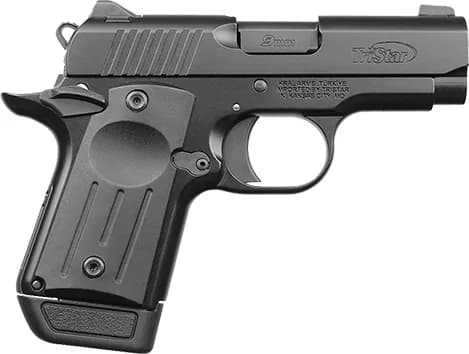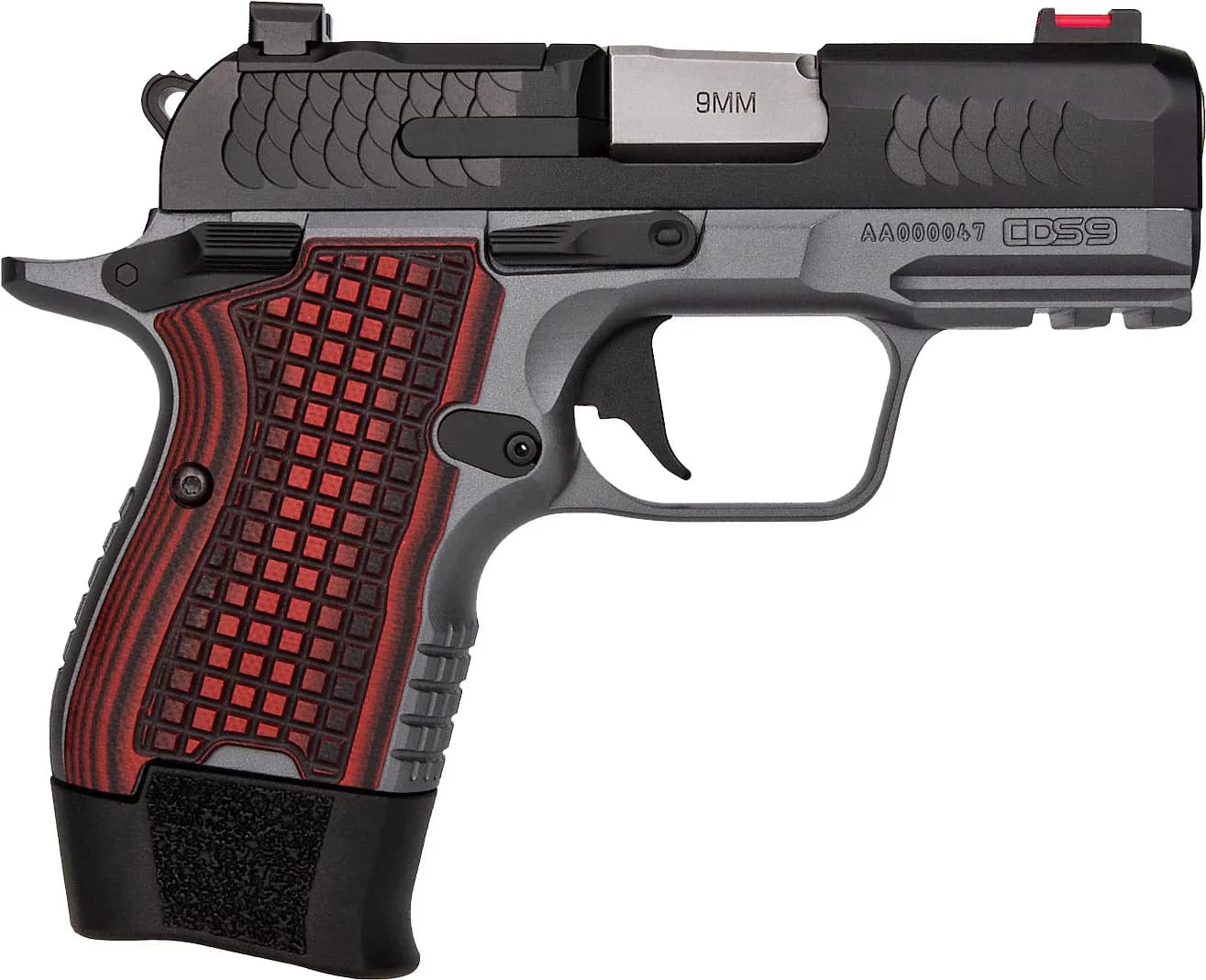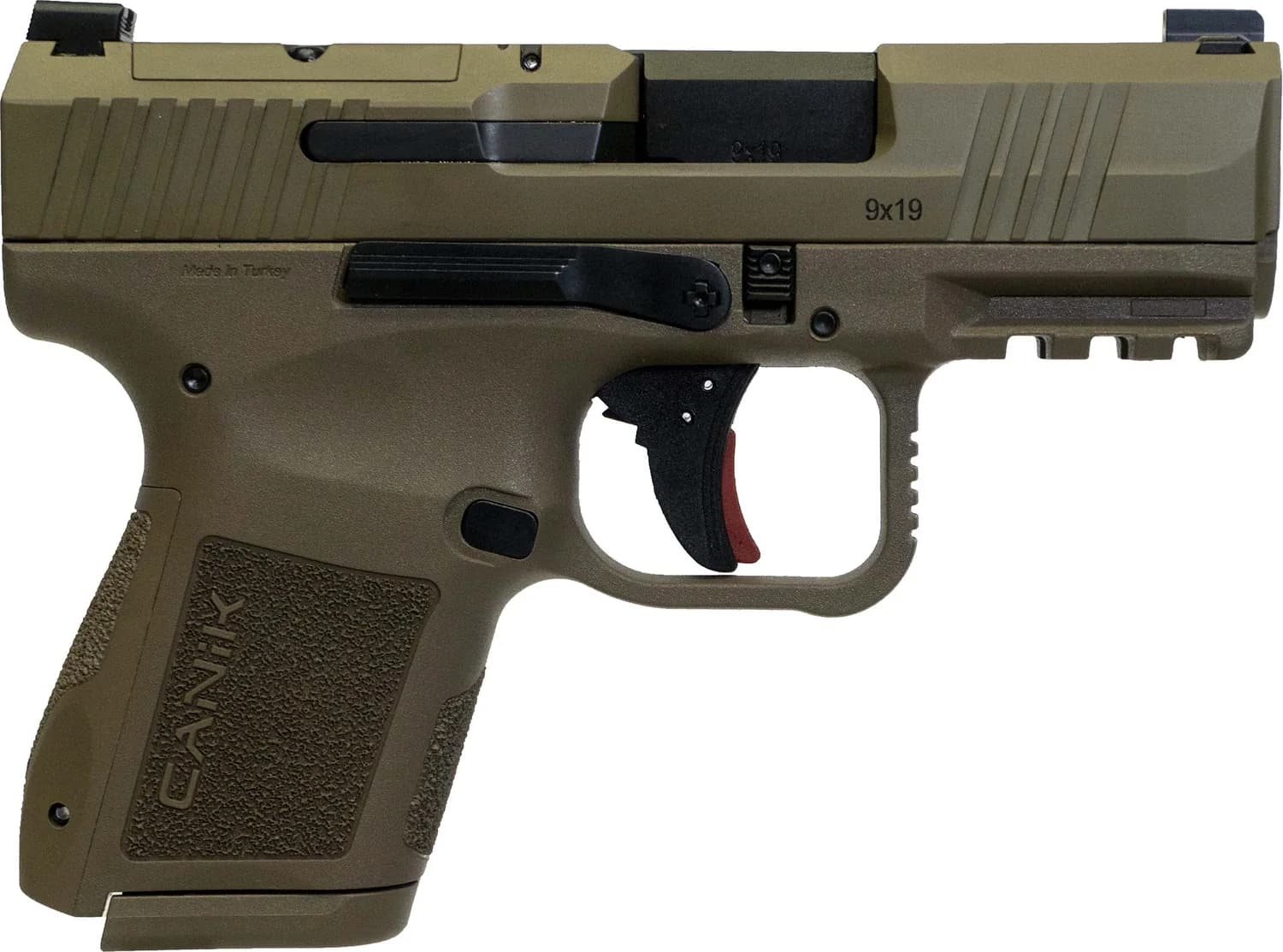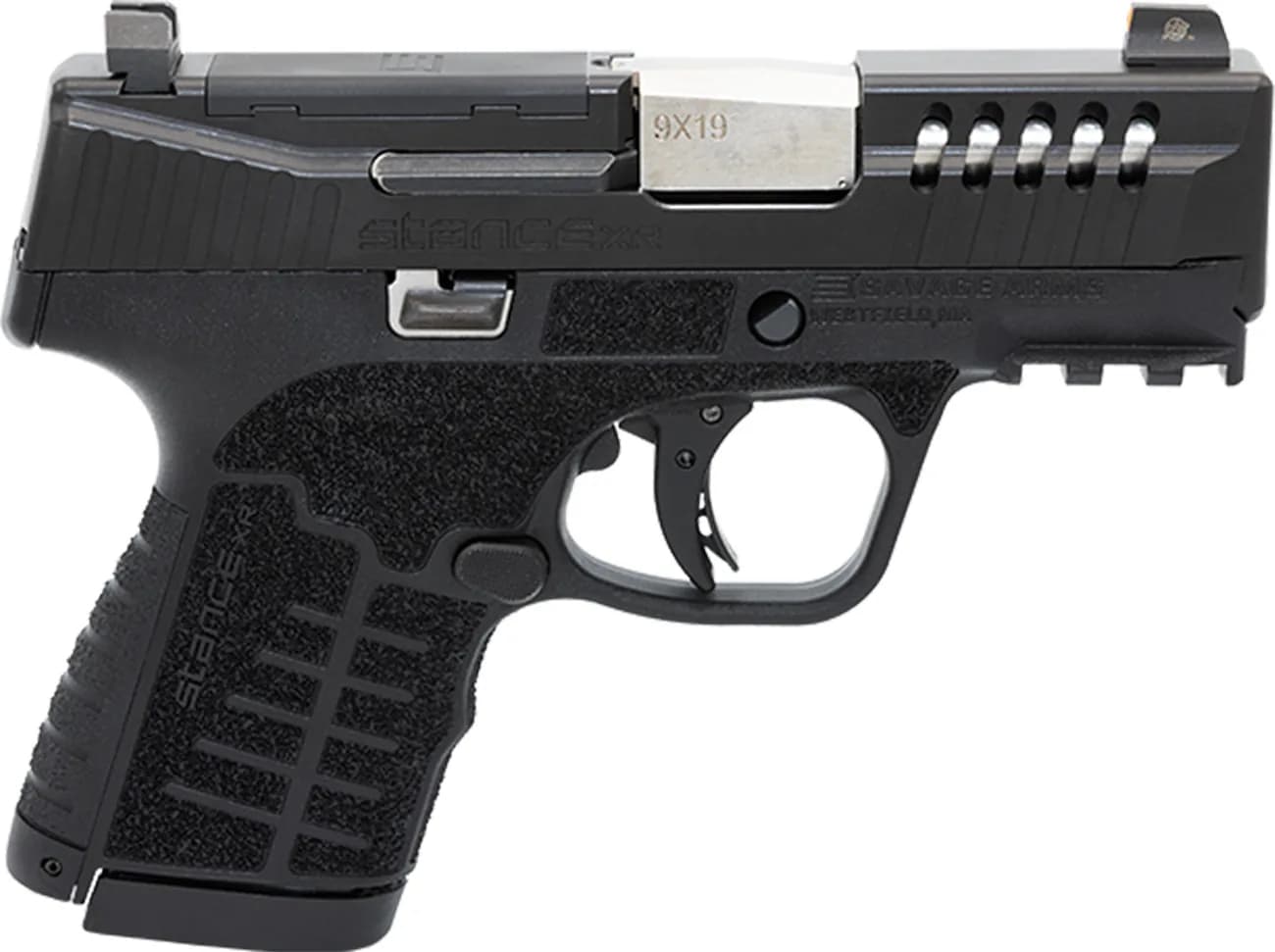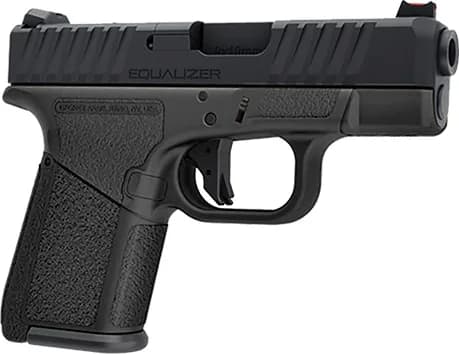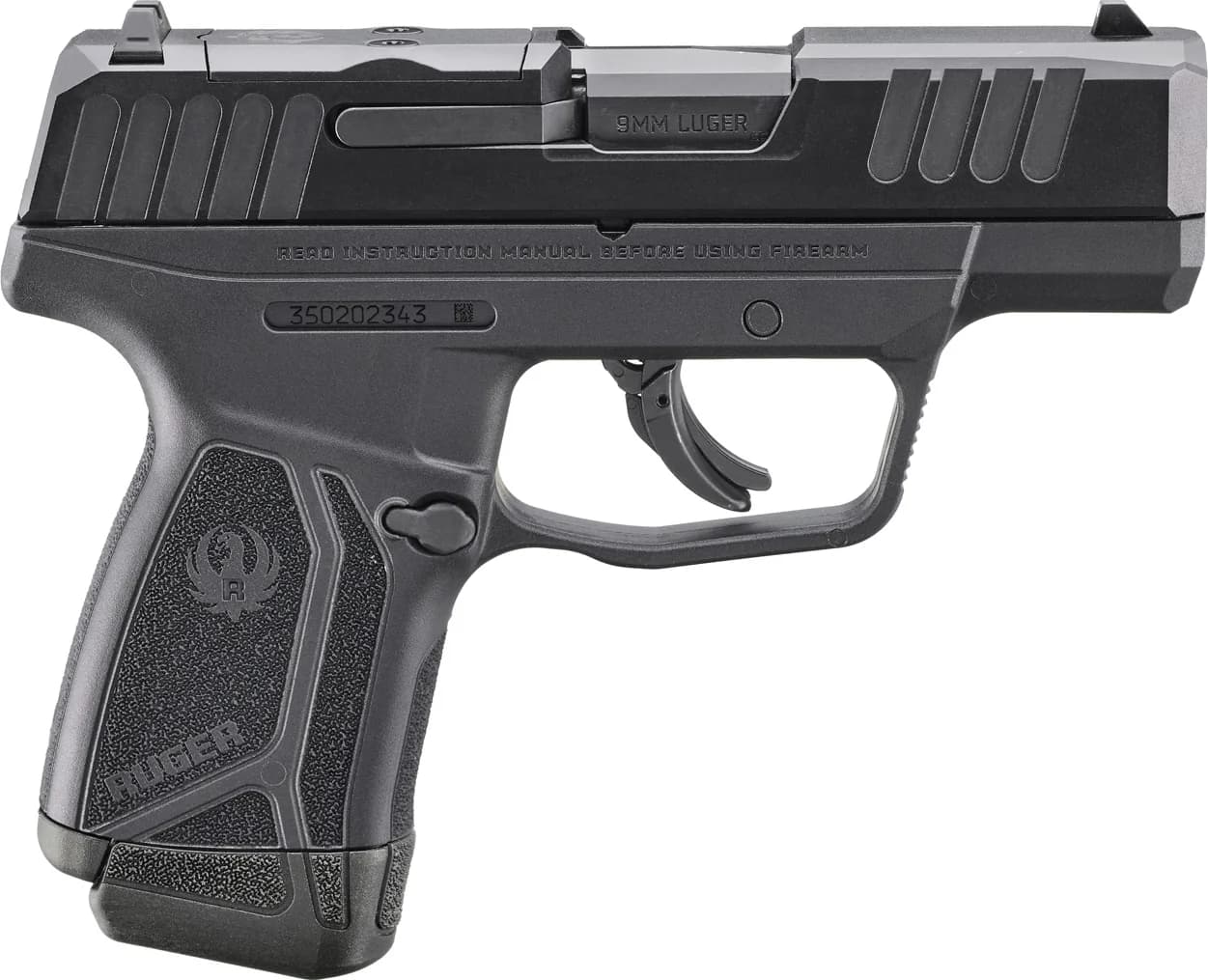
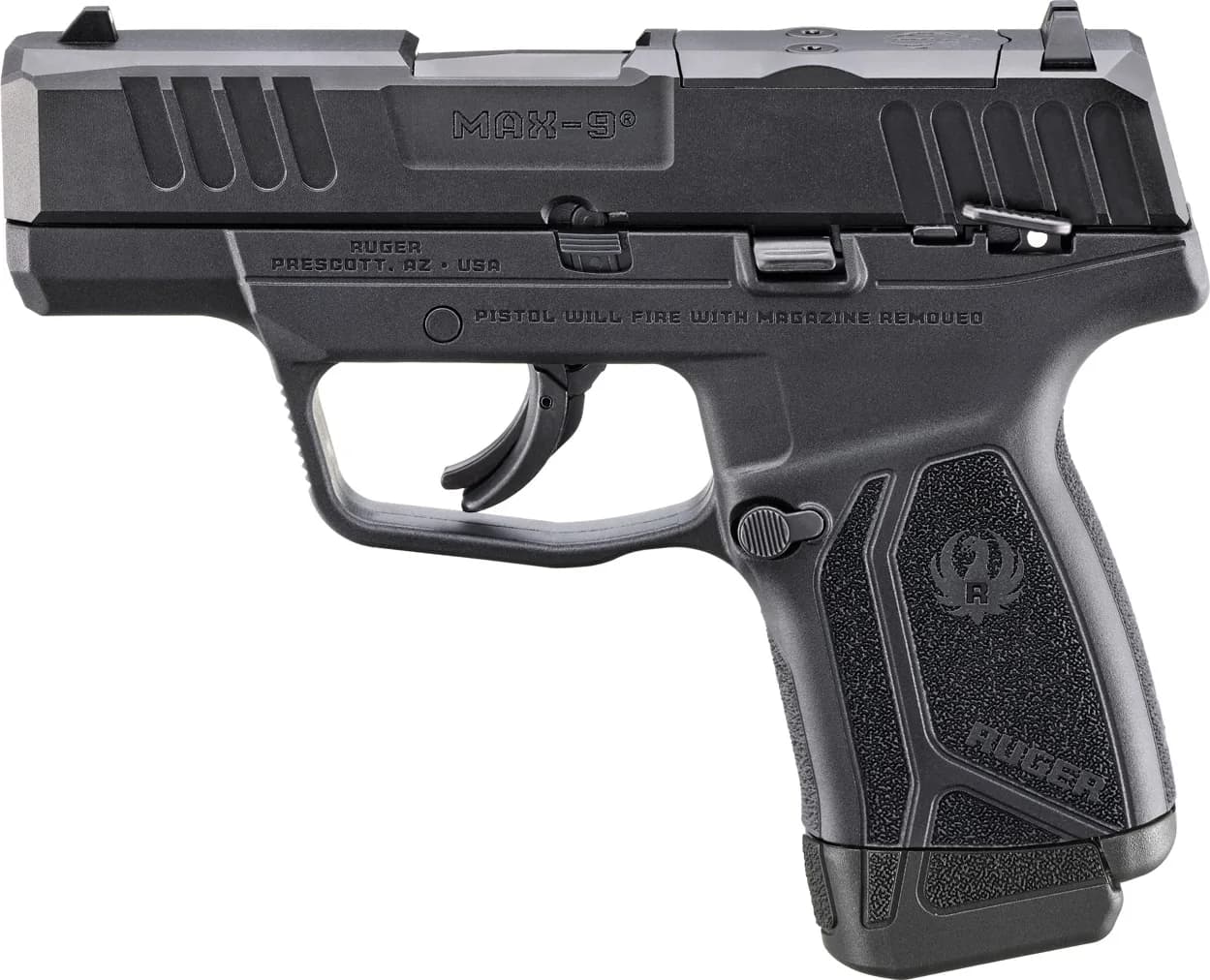
Reversible Magazine Release, Loaded Chamber, E-Nickel Teflon Coated Mag, Integrated Trig Safety
Ruger introduced the MAX‑9 in March 2021 as its entry into the high‑capacity micro‑compact 9mm market, positioning the pistol to compete with offerings such as the SIG P365 and Springfield Hellcat. From the factory the MAX‑9 was marketed as a carry‑centric design: a striker‑fired, optics‑ready pistol with a short 3.2‑inch barrel, sub‑one‑inch slide width and a light unloaded weight—dimensions aimed at daily concealed carry and pocket‑carry use. Ruger later expanded the MAX‑9 family, including pairing certain MAX‑9s with a factory reflex optic and updating the platform in subsequent production runs.
At its core the MAX‑9 is a modern micro‑compact built around a rigid aluminum fire‑control chassis and a polymer grip module. Early reviewer breakdowns highlighted that Ruger’s approach—mating a through‑hardened steel slide and hammer‑forged barrel to a one‑piece aluminum chassis—was intended to preserve feeding geometry and trigger feel while keeping the frame light and durable. The slide is cut for micro red‑dot footprints (Shield RMS and similar patterns noted by Ruger), and most production runs include a loaded‑chamber view and an integrated trigger safety with, on many versions, an external manual thumb safety.
More recently Ruger has refreshed the MAX‑9 with a production variant that traders and retailers identify as a newer model. That update brought an optics‑ready slide, revised slide serrations and lower‑profile iron sights while retaining the compact 3.2‑inch barrel, 6‑inch overall length and the double‑stack 10/12‑round magazine approach. Early press coverage and retailer specification sheets for the updated model show the same overall dimensions and most of the same functional features—an arrangement that keeps the pistol highly compact and light for carry.
On paper the MAX‑9’s 3.2‑inch barrel and 18‑ounce unloaded weight make for a pistol that’s easy to conceal but inevitably more snappy than larger‑framed 9mm handguns. Ruger engineers used a dual recoil‑spring arrangement and radiused frame edges to tame felt recoil and muzzle rise; reviewers noted that these measures, combined with the grip geometry, result in controllable follow‑up shots for a gun of this size. The aluminum chassis contributes to a crisp, consistent trigger reset and reduces frame flex compared with some all‑polymer designs, which can positively affect perceived shot‑to‑shot consistency. Sights are generally co‑witnessable with the factory optics footprint, and many users find the slim, slightly textured glass‑filled nylon grip comfortable for medium to large hands while still minimizing printing for concealed carry.
Ergonomics are conservative: the reach to the trigger and the somewhat short sight radius are trade‑offs of the compact footprint. Controls are functional—magazine release is reversible for left‑handed users—but reviewers flagged that controls (slide stop and release) can feel a bit firm straight out of the box and may break in with use. The MAX‑9’s manual‑safety versions will be preferred by those who want that extra external control; Ruger has offered both safety and Pro (no‑thumb‑safety) models.
Independent testing and long‑term reviews have generally been favorable on reliability and basic accuracy. American Rifleman reported extensive endurance testing—several hundred rounds across multiple guns and mixed ammunition types—with no malfunctions and acceptable grouped‑accuracy at typical defensive distances. Shooting Times likewise praised the MAX‑9’s smooth, consistent trigger and manageable recoil for a sub‑one‑pound 9mm. These early tests suggest the MAX‑9 is robustly engineered for its intended role.
That said, forum and owner reports reflect a range of experiences: most owners report reliable function with common 9mm defensive and range loads, while a minority have described break‑in quirks or control stiffness that required mild hand‑fitting or service. As with many micro‑compacts, ammunition selection and magazine maintenance can influence reliability, and owners planning heavy carry use commonly recommend testing a chosen self‑defense load thoroughly in their specific gun and ensuring adequate training.
The MAX‑9 is squarely aimed at everyday concealed carry: its compact size, relatively high magazine capacity for the footprint and optics‑ready slide make it attractive for carry‑focused users who want a modern micro‑compact that can accept a red dot. With factory sights and the option of a small reflex sight, it handles short‑range defensive shooting well and is intuitive for both new and experienced shooters who train for close‑quarters encounters.
Limitations are those common to the class: the short sight radius and compact grip mean that longer‑range precision work is not its strength, and recoil impulse will be sharper than full‑sized 9mm pistols. It is not optimized for competition beyond casual defensive‑style matches where micro‑compacts are allowed, nor is it designed as a dedicated range trainer for long strings of rapid fire without regard to shooter comfort. In short: strong for EDC/defensive carry and occasional range use, less suited for tasks where full‑size ergonomics and reduced recoil are priorities.
When the MAX‑9 debuted, Ruger pitched it aggressively against similar micro‑compacts by balancing capacity, optics readiness and construction quality at a competitive price point; contemporary reviews noted that this made it a value proposition in the class. Subsequent production runs and updated variants have leaned into that value equation, with some newer model runs being positioned as more budget‑friendly while still offering the optics‑ready slide and core carrying features. That combination—Ruger’s reputation for serviceability and an optics‑ready small 9mm—keeps the MAX‑9 relevant among buyers who want a practical, modern EDC platform without premium pricing. Comparisons with the P365, Hellcat, and other compact 9mms often come down to individual priorities: ergonomics, aftermarket support, sight/optic compatibility and which controls a shooter prefers.
Across reviews and owner communities, the MAX‑9’s strengths are its shootability relative to size, the optics‑ready flexibility and Ruger’s factory chassis approach; its trade‑offs are the expected ones for the micro‑compact segment. For shooters prioritizing a small, high‑capacity 9mm that can accept a miniature reflex sight and still live comfortably on the belt or in a pocket holster, the MAX‑9 remains a noteworthy option.
Start with a practical guide if you want a faster way to narrow the field before comparing specific models.
Learn how to choose the right 9mm handgun based on size, budget, and how you plan to use it.
Read guideCarry-focused shoppersLearn how to choose the right concealed carry handgun based on size, comfort, safety, and everyday usability.
Read guideBudget-minded buyersLearn how to find a reliable handgun under $500 without wasting money or compromising on quality.
Read guide