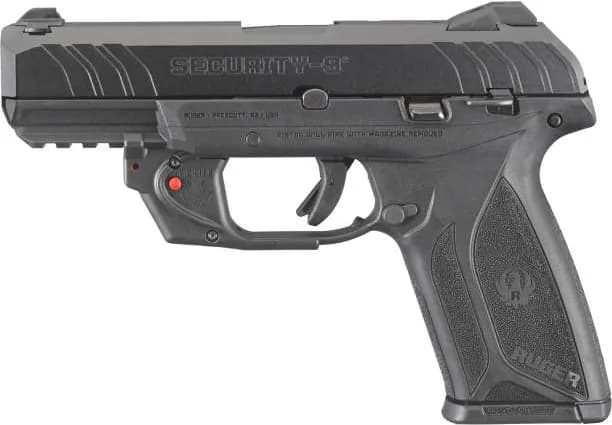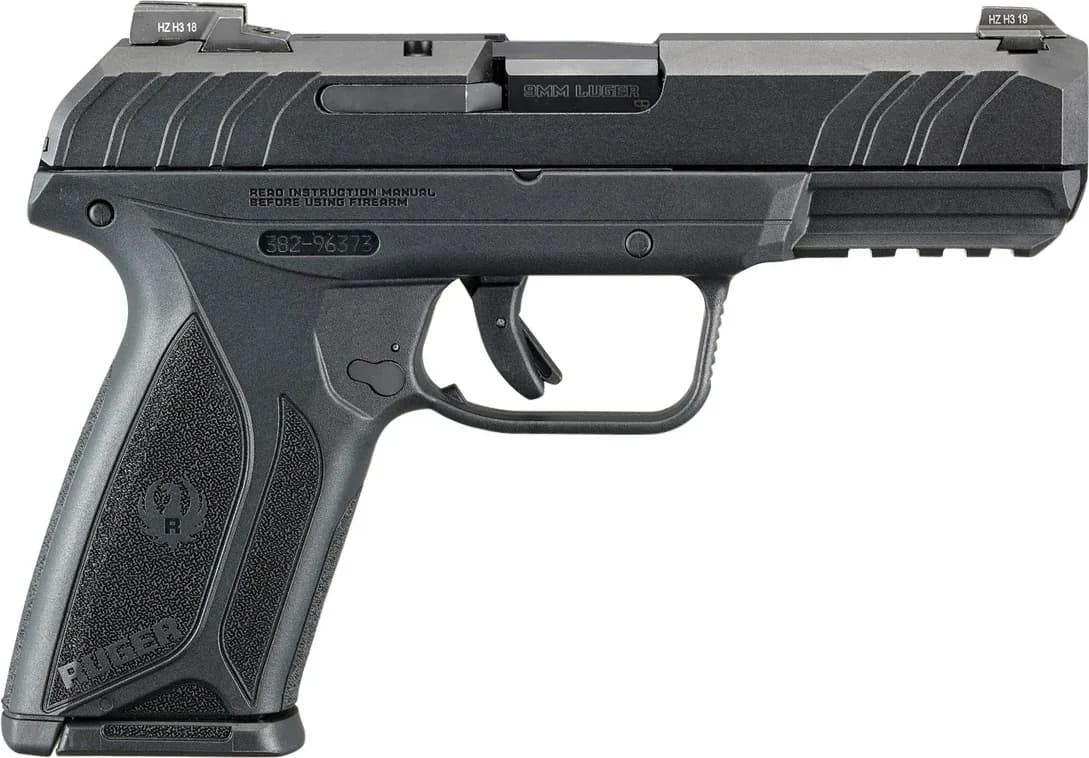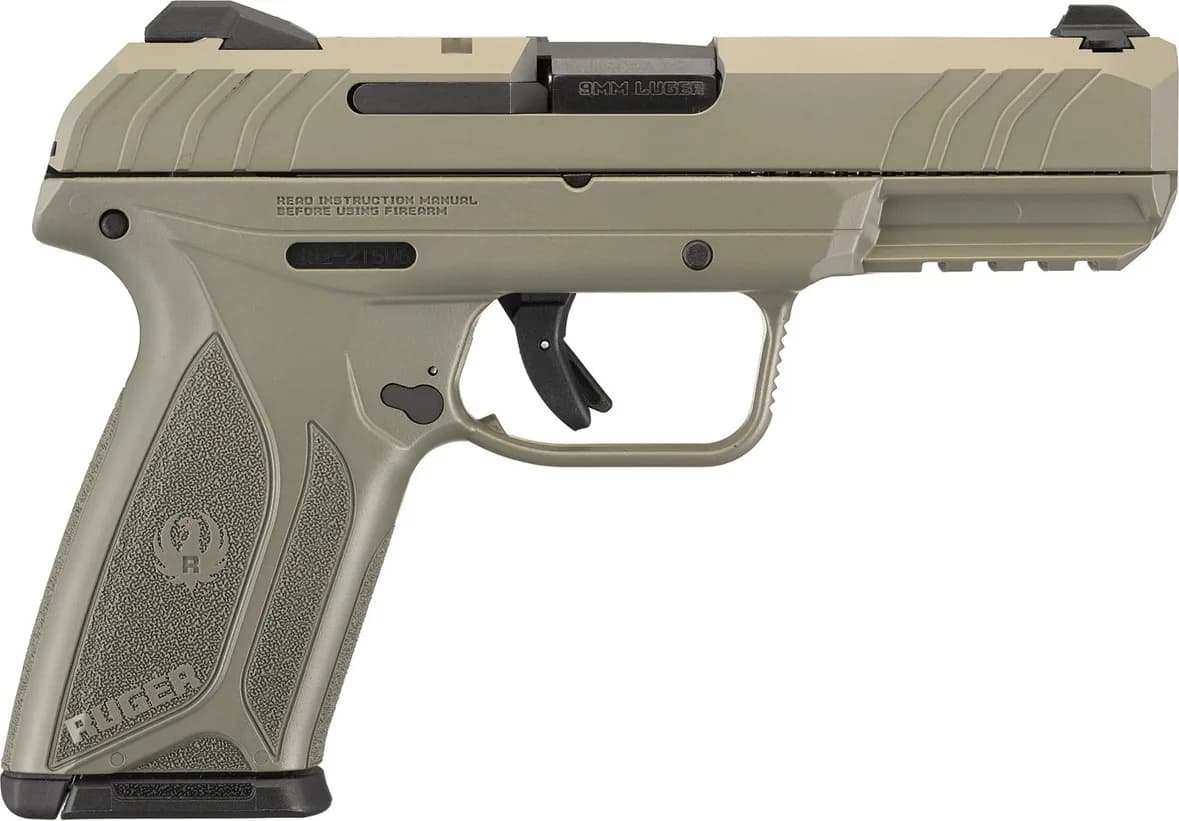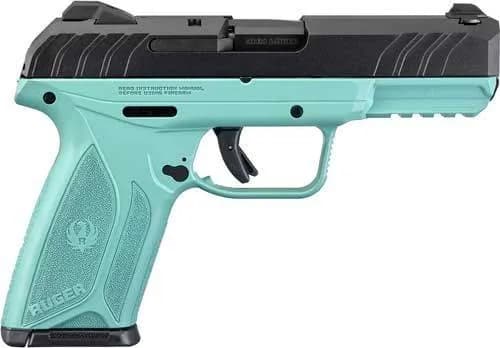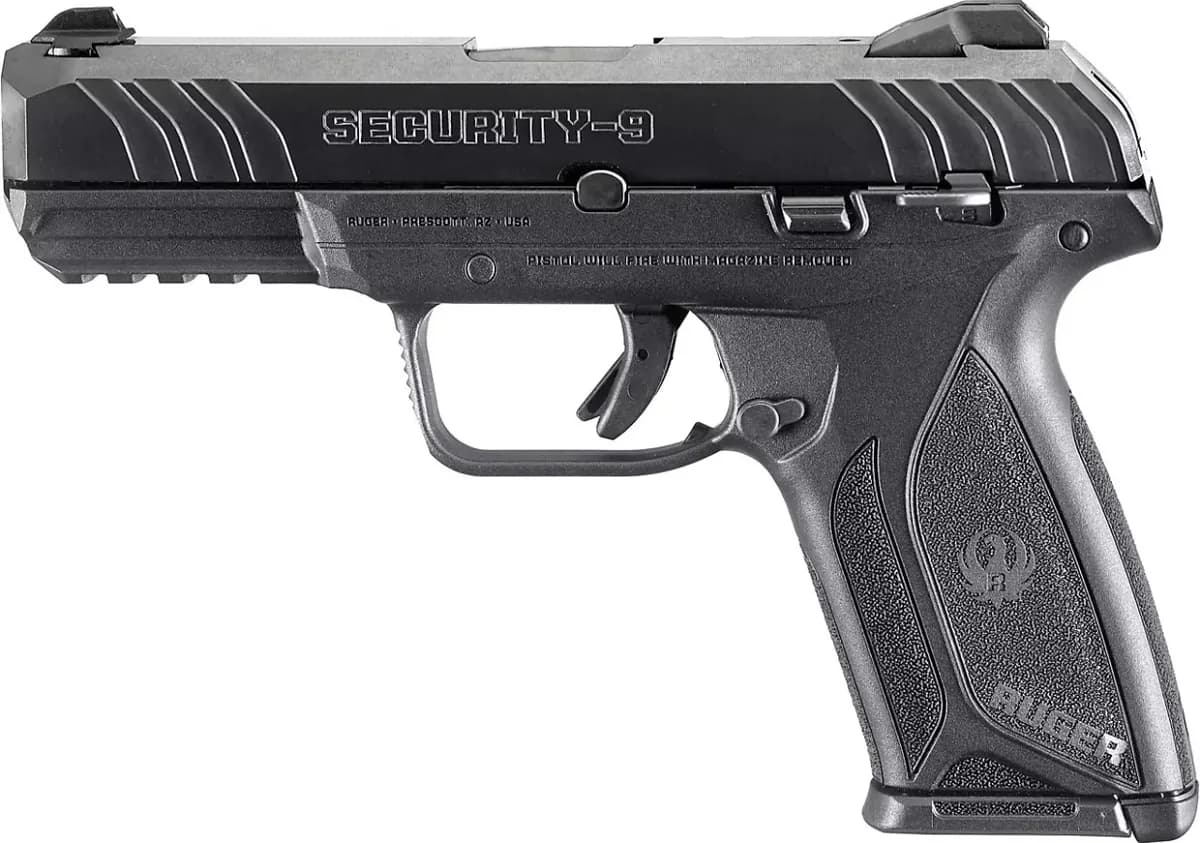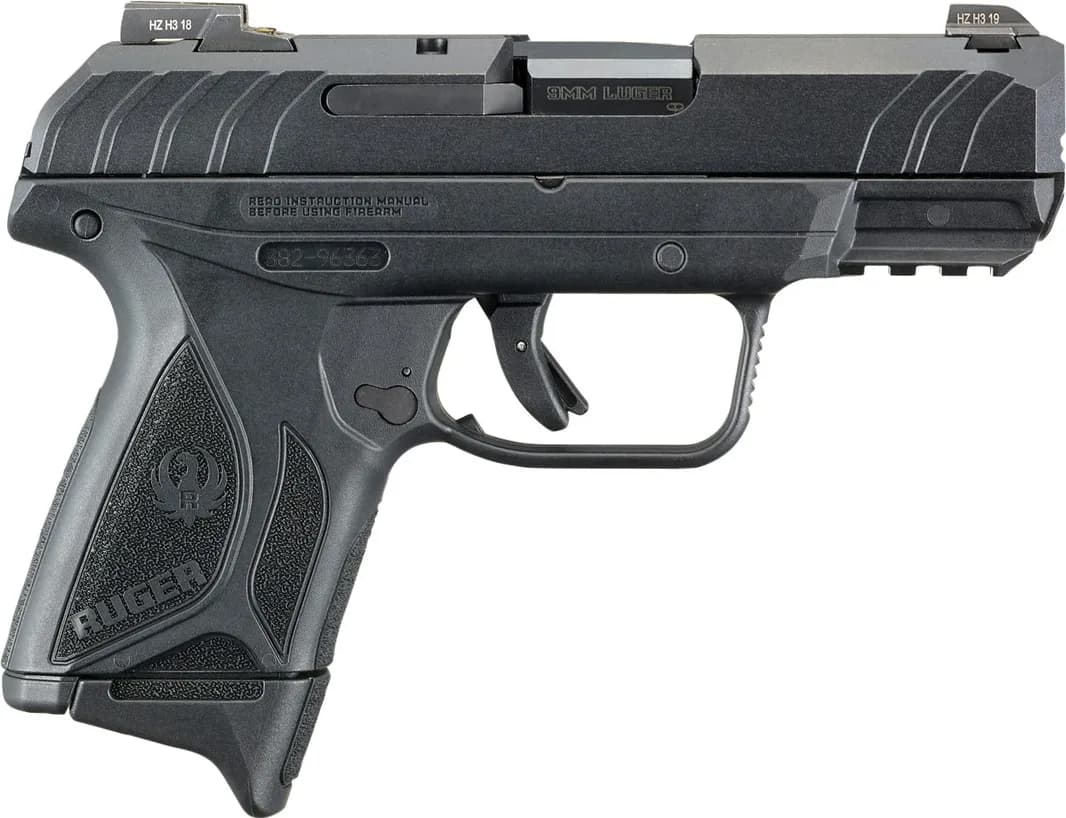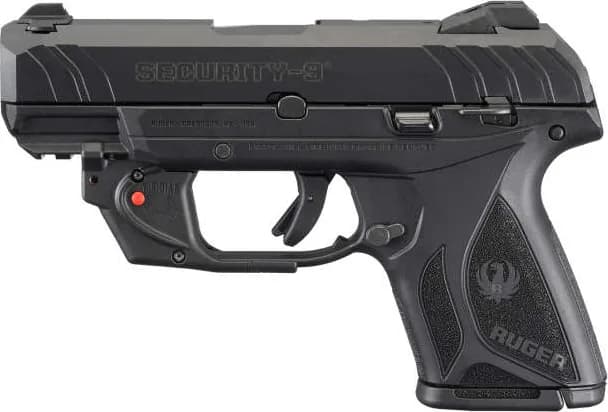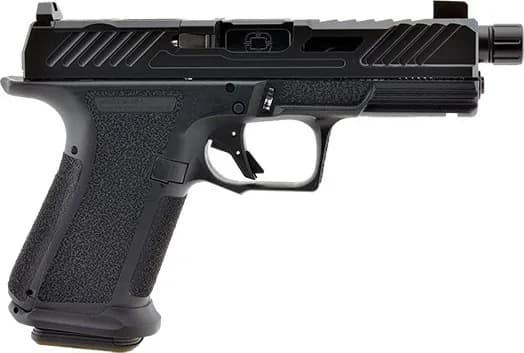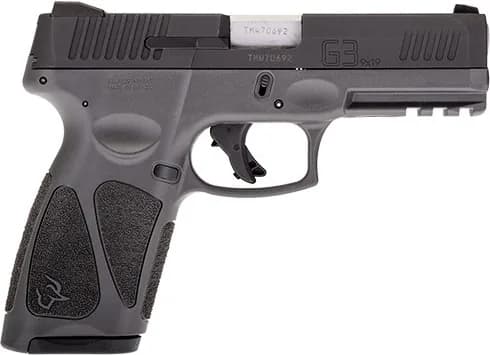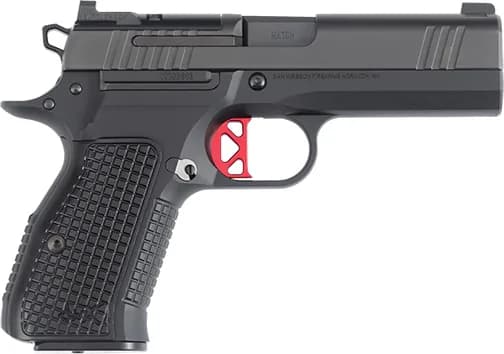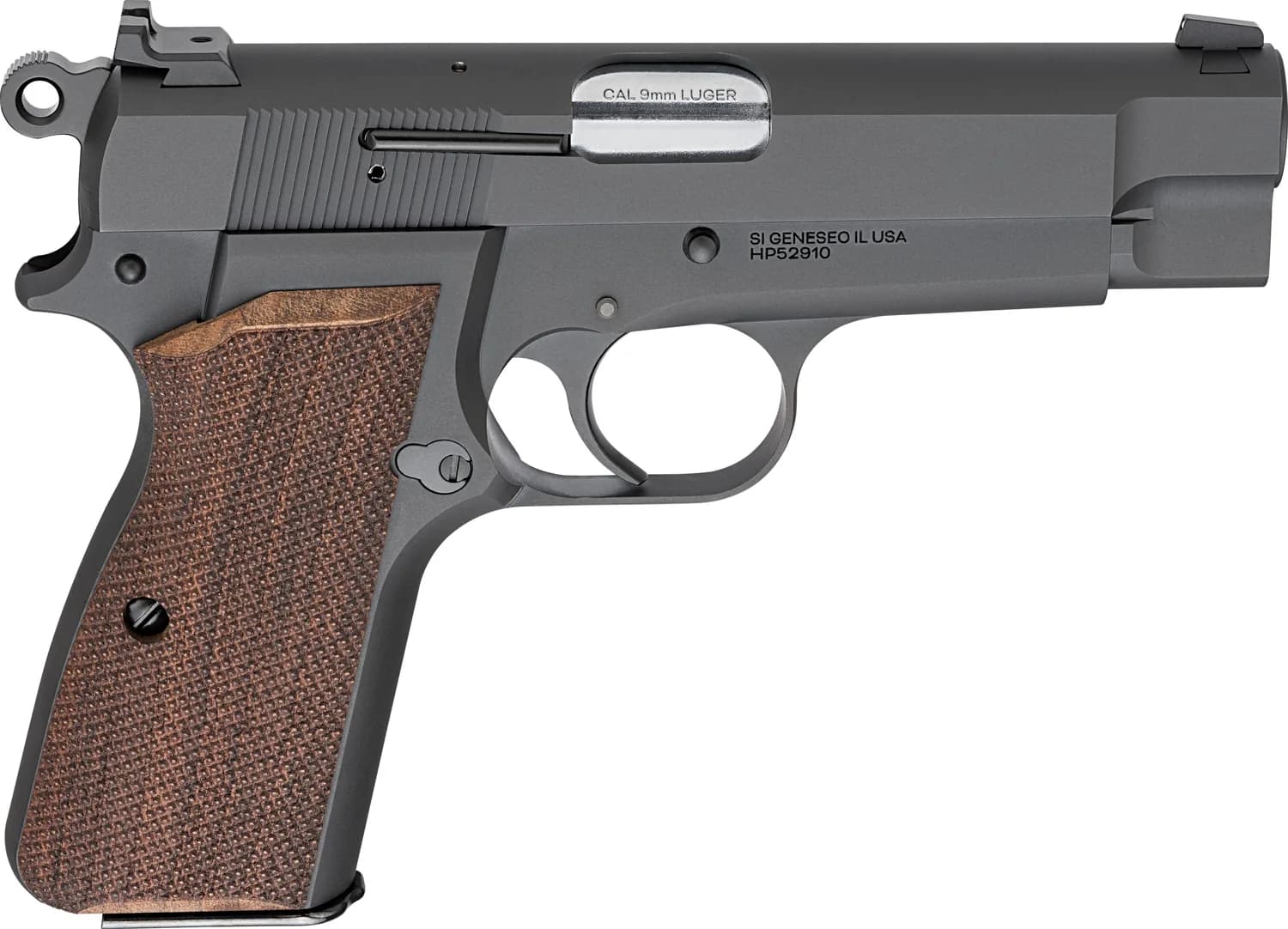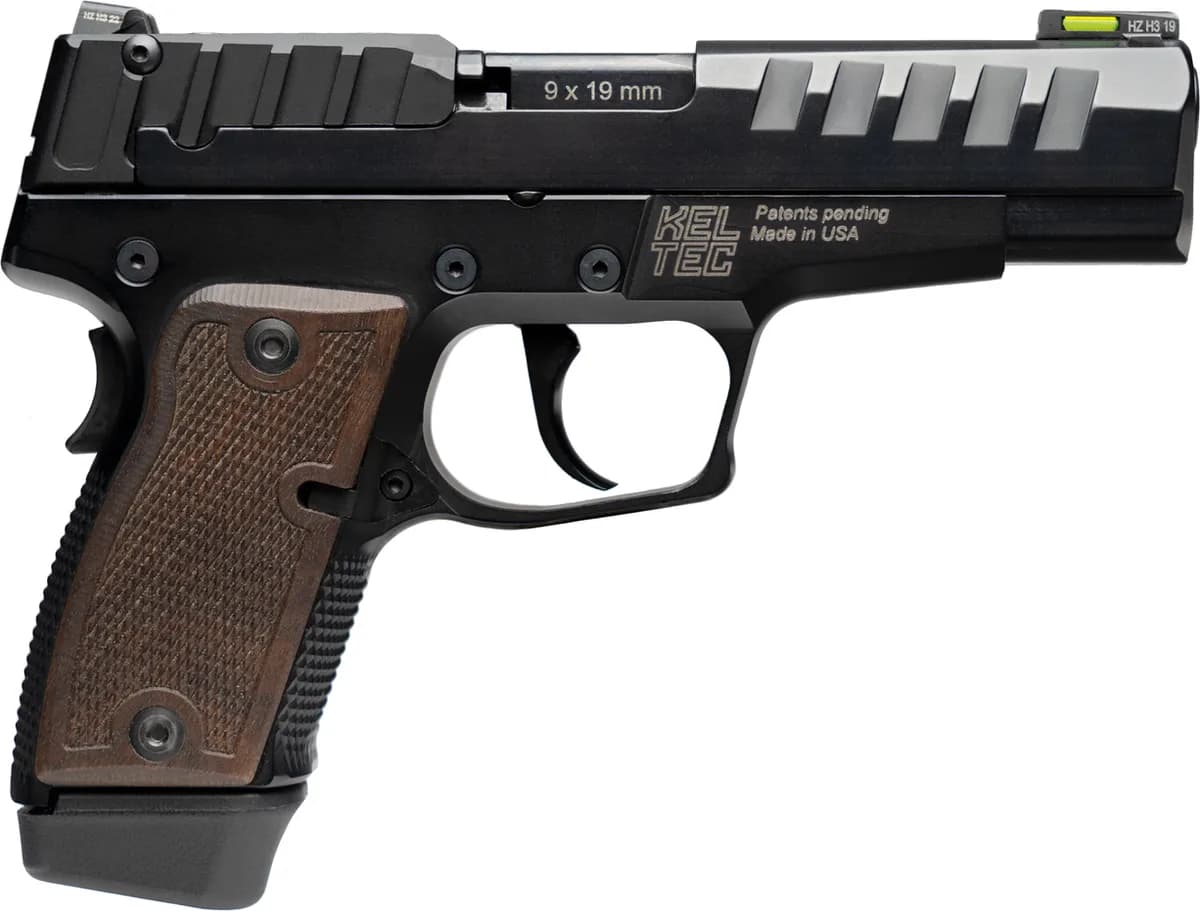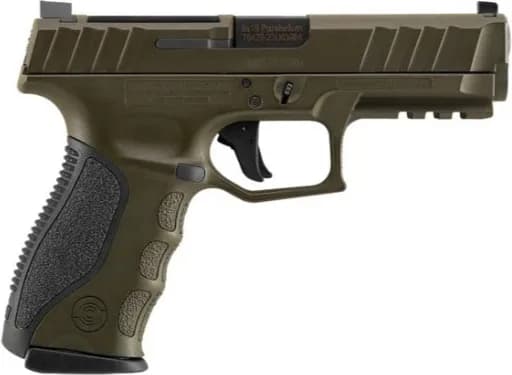
Front Cocking Serrations, Textured Grip Frame, Bladed Trigger Safety
Ruger introduced the Security‑9 as a mid‑sized, value‑oriented 9mm pistol in late 2017, marketing it as an affordable everyday‑carry and self‑defense option that bridged the gap between subcompact carry guns and full‑size service pistols. The model was launched with the stated goal of delivering a comfortable, easy‑to‑shoot package built around Ruger’s “Secure Action” hammer system and a machined aluminum chassis, and it has remained in production with a number of distributor and limited‑edition variants since its debut.
Within Ruger’s lineup the Security‑9 sits below the American‑series and higher‑end duty pistols in price but above the micro pocket pistols; Ruger positioned it to replace older polymer 9mm designs and to offer a high‑capacity 9mm in a compactish footprint for shooters who want capacity and controllability without a premium price tag. The factory catalog lists the full‑size Security‑9 with a 4.0" barrel, drift‑adjustable rear sight, manual thumb safety, and a 15+1 magazine capacity.
Mechanically the Security‑9 uses Ruger’s Secure Action system — an internal, partially pre‑cocked hammer arrangement that Ruger derived from the LCP II — paired with a bladed trigger safety and a user‑operable manual thumb safety on many standard models. The pistol is built around a precision‑machined aluminum chassis that runs the full length of the polymer frame and provides full‑length guide rails, while the slide and barrel are through‑hardened alloy steel finished in a blued/black treatment on standard models. The grip is a high‑performance, glass‑filled nylon insert, and the slide features front cocking serrations to aid manipulation. These design choices emphasize a balance between strength, low weight and cost‑effective manufacture.
On paper the Security‑9’s 4" barrel and roughly Glock‑19–sized footprint give it a familiar handling profile for shooters used to compact duty pistols; Ruger lists overall length near 7.24" and an unloaded weight in the mid‑20 ounce range on full‑size models. That geometry, paired with a double‑stack 15‑round magazine, produces a handgun that is easy to get two hands on, tracks flat in recoil and offers a full‑length grip for positive purchase — traits that translate into predictable real‑world recoil and control for most shooters. The Secure Action system is designed to provide a relatively short, smooth trigger pull and a positive reset while preserving the safety characteristics of a hammer‑based system.
There are some ergonomic tradeoffs that stem from Ruger’s cost‑targeted choices. Controls such as the slide stop and magazine release are intentionally simple and compact; reviewers have repeatedly noted that the slide stop in particular can be stiff on new pistols and is not sized like premium tactical pistols, which makes some manipulations less intuitive until the shooter adapts. Sights are dovetailed and drift‑adjustable, but the factory three‑dot style is basic and many owners elect to replace or upgrade them.
Independent range tests and published reviews paint a consistent picture: the Security‑9 is reliable for its class, comfortable to shoot, and offers serviceable accuracy, but it is not a precision target pistol. Long‑form tests that put hundreds of rounds through the pistol report robust function with a wide range of factory 9mm loads; a multi‑session 500‑round evaluation found zero or very few malfunctions when the pistol was properly maintained and run on recommended ammunition. At the same time, reviewers commonly describe the trigger as good for a budget hammer‑fired design — short and crisp relative to heavy double‑action designs — but lacking the refinement and tactile feedback of higher‑end triggers.
Accuracy at defensive distances is consistently adequate: reviewers typically record magazine‑sized groups suitable for 7–25 yard self‑defense scenarios, with occasional shooters getting better groups when using heavier match or defensive projectiles. Several tests measured best groups in the 1.5–3.5" range at 15 yards from a rest, which is entirely reasonable for a mid‑priced 4" 9mm intended for carry and general use. Sights and trigger feel are the main limiting factors for tighter precision.
Durability has been commended: the Security‑9’s alloy slide and barrel construction combined with Ruger’s aluminum chassis have shown good longevity in buyer and reviewer testing. A small minority of owners have reported early‑run feeding or extraction anomalies; Ruger’s service and parts policy and customer support responses documented in manuals and company resources indicate they handle warranty and parts replacement on isolated production issues. As with most pistols, careful break‑in, appropriate maintenance and using quality defensive ammunition minimize most problems.
Where the Security‑9 excels is predictable: it makes a solid bedside or vehicle gun, an economical range trainer that won’t flinch at mixed practice loads, and a competent everyday‑carry firearm for owners who value capacity over minimal footprint or optics‑ready slides. Its grip length, capacity and controllable recoil make it a natural fit for defensive use under stress and for shooters who want a familiar compact‑service silhouette without a higher price.
Notable limitations include its non‑optics‑ready slide on standard models, modest factory sights, and the presence of a frame‑mounted manual safety on many variants — a feature some users prefer for carry while others see it as an unnecessary manipulation under stress. Additionally, shooters who expect a match‑grade trigger or out‑of‑the‑box sub‑inch groups at distance will find the Security‑9’s performance moderate rather than exceptional. For competitive shooting, duty use with agency match requirements, or optics‑centric builds, other platforms may be better suited without aftermarket modification.
In the crowded compact/full‑size 9mm market the Security‑9’s defining attribute is value: it undercuts many mainstream service pistols while offering a familiar, hard‑used design, solid capacity and Ruger’s manufacturing and service infrastructure. Reviewers and market analyses frequently compare its footprint and handling to a Glock‑sized pistol, but note that the Security‑9’s lower price point and different working internals (internal hammer Secure Action versus striker) make it a distinct option rather than a direct replacement. Competing value offerings from Canik, Taurus and some Smith & Wesson models occupy similar ground, while premium platforms from Glock, SIG and Walther target buyers seeking more refined triggers, optics compatibility and broader aftermarket support.
For buyers prioritizing a reliable, American‑made 9mm with good capacity and manageable recoil at a budget‑friendly price, the Security‑9 represents a compelling value proposition. It is not a luxury or competition‑grade pistol out of the box, but for defensive carry and regular range use it delivers the fundamentals well; buyers who want upgrades (sights, trigger work, slide cuts) can obtain them, but doing so narrows the cost advantage that makes the Security‑9 attractive in the first place.
Start with a practical guide if you want a faster way to narrow the field before comparing specific models.
Learn how to choose the right 9mm handgun based on size, budget, and how you plan to use it.
Read guideCarry-focused shoppersLearn how to choose the right concealed carry handgun based on size, comfort, safety, and everyday usability.
Read guideBudget-minded buyersLearn how to find a reliable handgun under $500 without wasting money or compromising on quality.
Read guide