Affiliate disclosure: HandgunCloud may earn a commission if you continue to the retailer and complete a purchase.
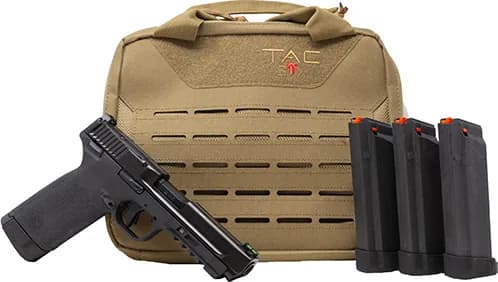
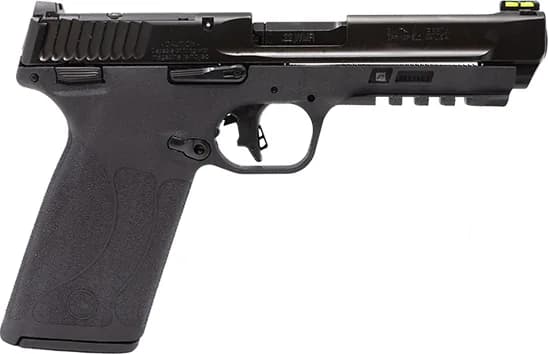
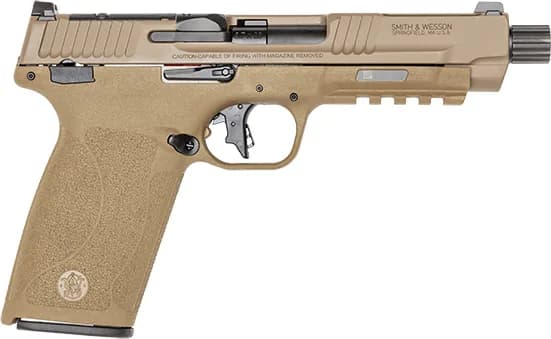
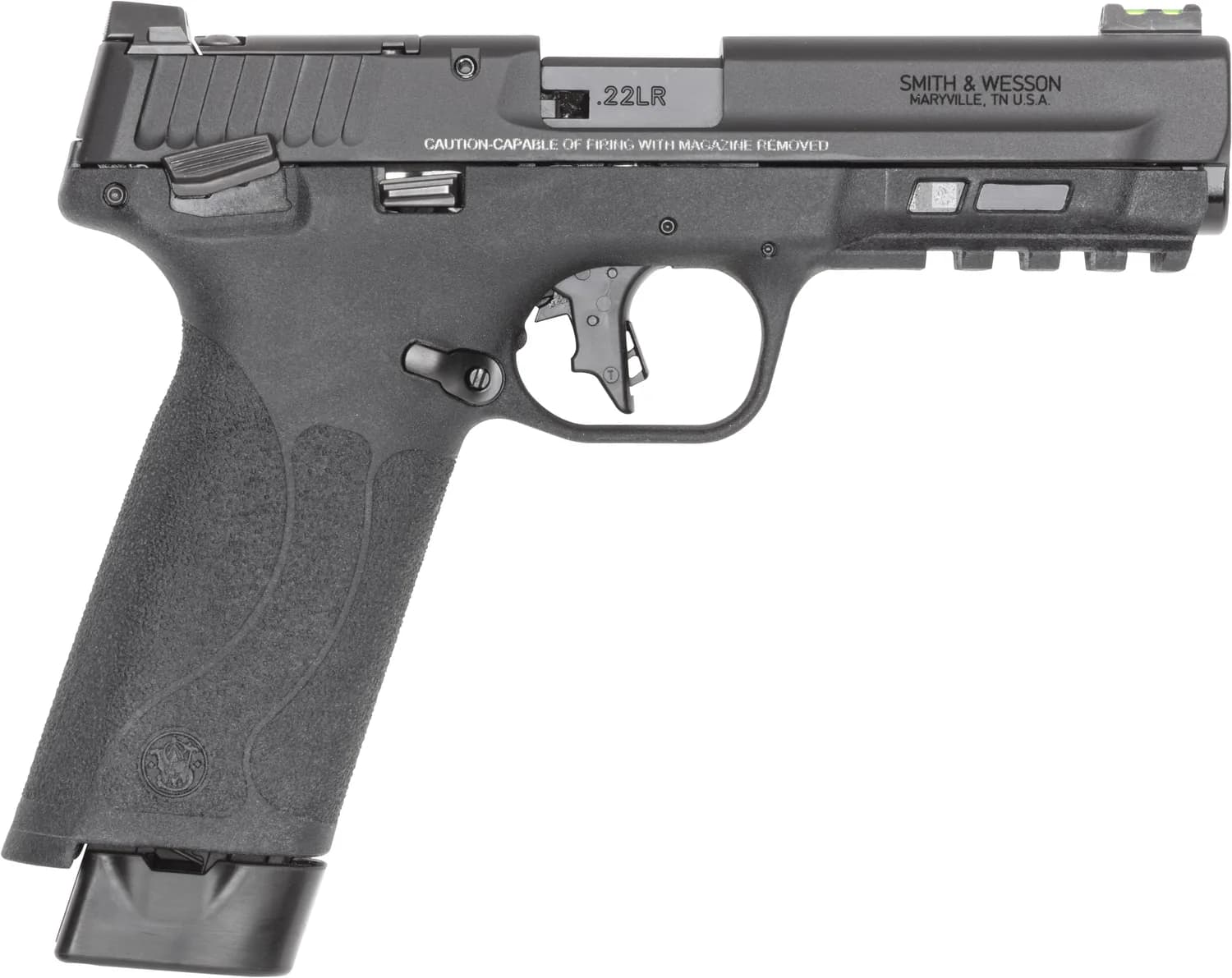
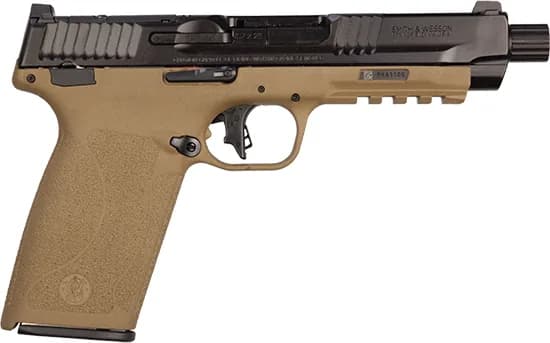
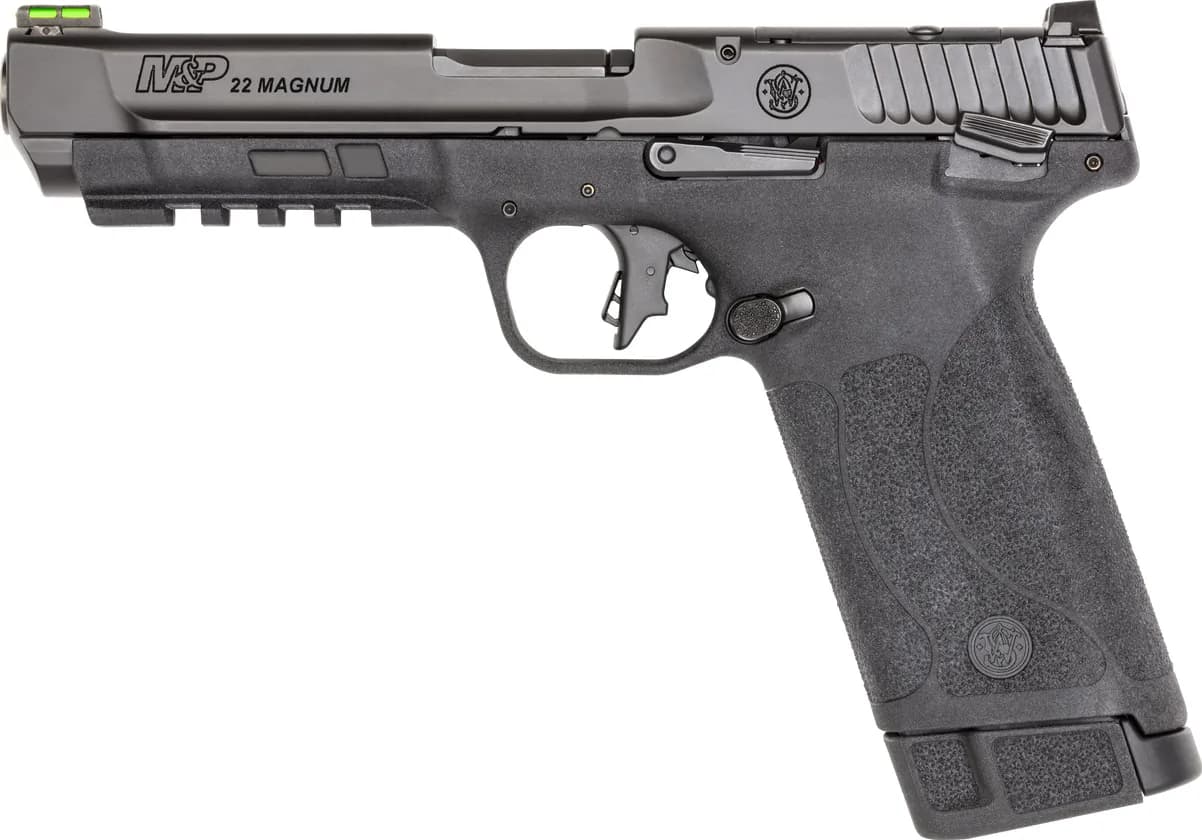
Buy from Impact GunsWhen Smith & Wesson introduced the optics-ready M&P22 Magnum in mid‑2023 it represented a deliberate expansion of the M&P family into a cartridge class that few other modern polymer pistols address: the .22 Winchester Magnum Rimfire (22 WMR). The pistol is a full‑size, internal hammer‑fired design built on a polymer frame and shipped from the factory with two 30‑round magazines and an optics‑cut slide. The company positioned the model as a fun, high‑capacity rimfire that also borrows the family ergonomics and controls familiar to M&P users.
The M&P22 Magnum’s headline engineering feature is Smith & Wesson’s TEMPO barrel system — a gas‑assisted, locked‑breech arrangement developed to make a lightweight polymer‑framed pistol function reliably with the hotter, higher‑pressure rimfire Magnum cartridge. The TEMPO layout uses a separate barrel and shroud with a gas port near the muzzle; gas caught between the two pieces delays slide separation until after the bullet exits the bore, allowing a slim, low‑mass slide and lighter overall weight than a conventional blowback rimfire pistol of comparable chambering. That design choice is central to the pistol’s handling: it reduces reciprocating mass (and therefore perceived recoil and slide snappy‑ness) while also supporting a direct‑mount optics cut.
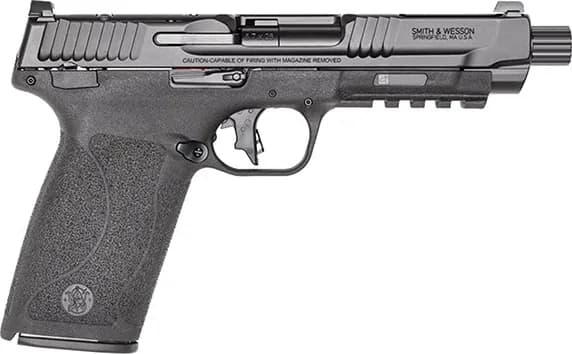
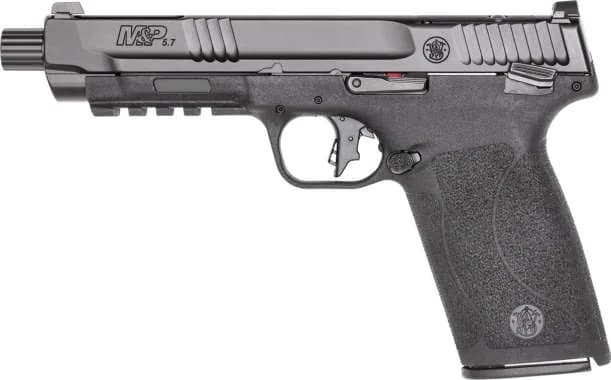
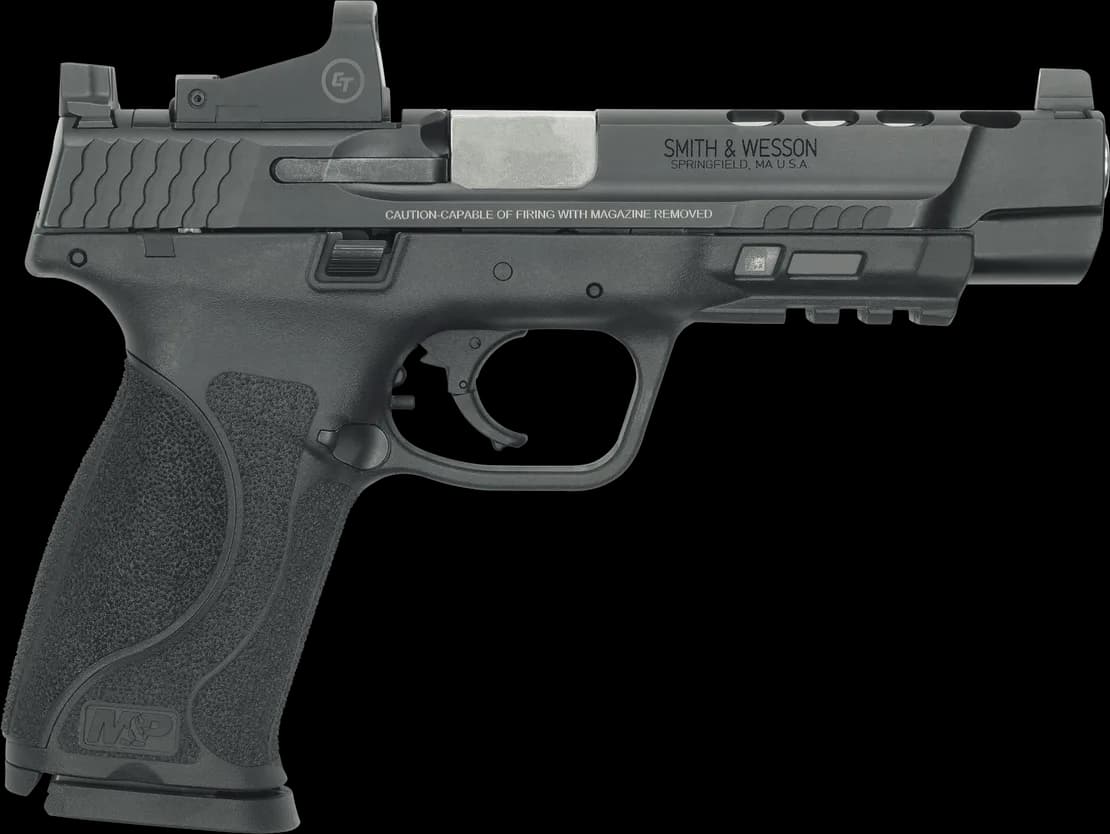
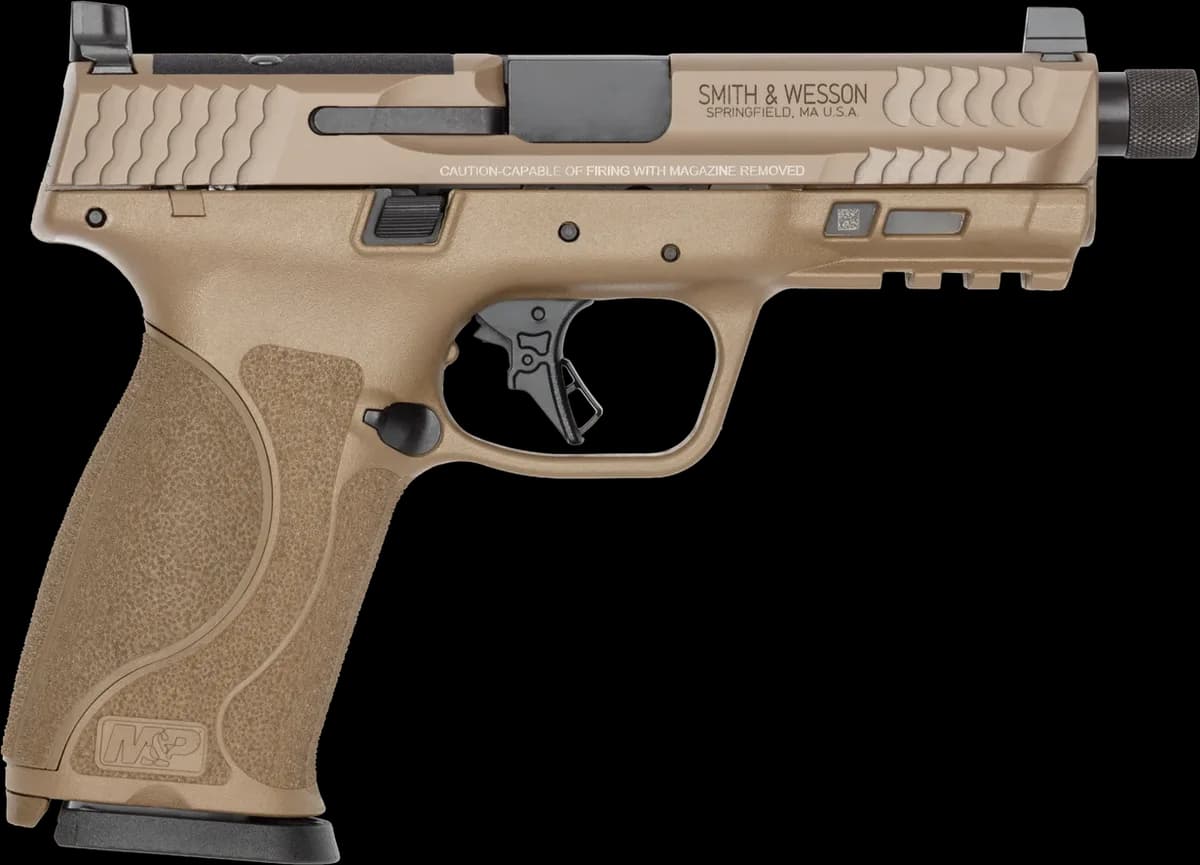
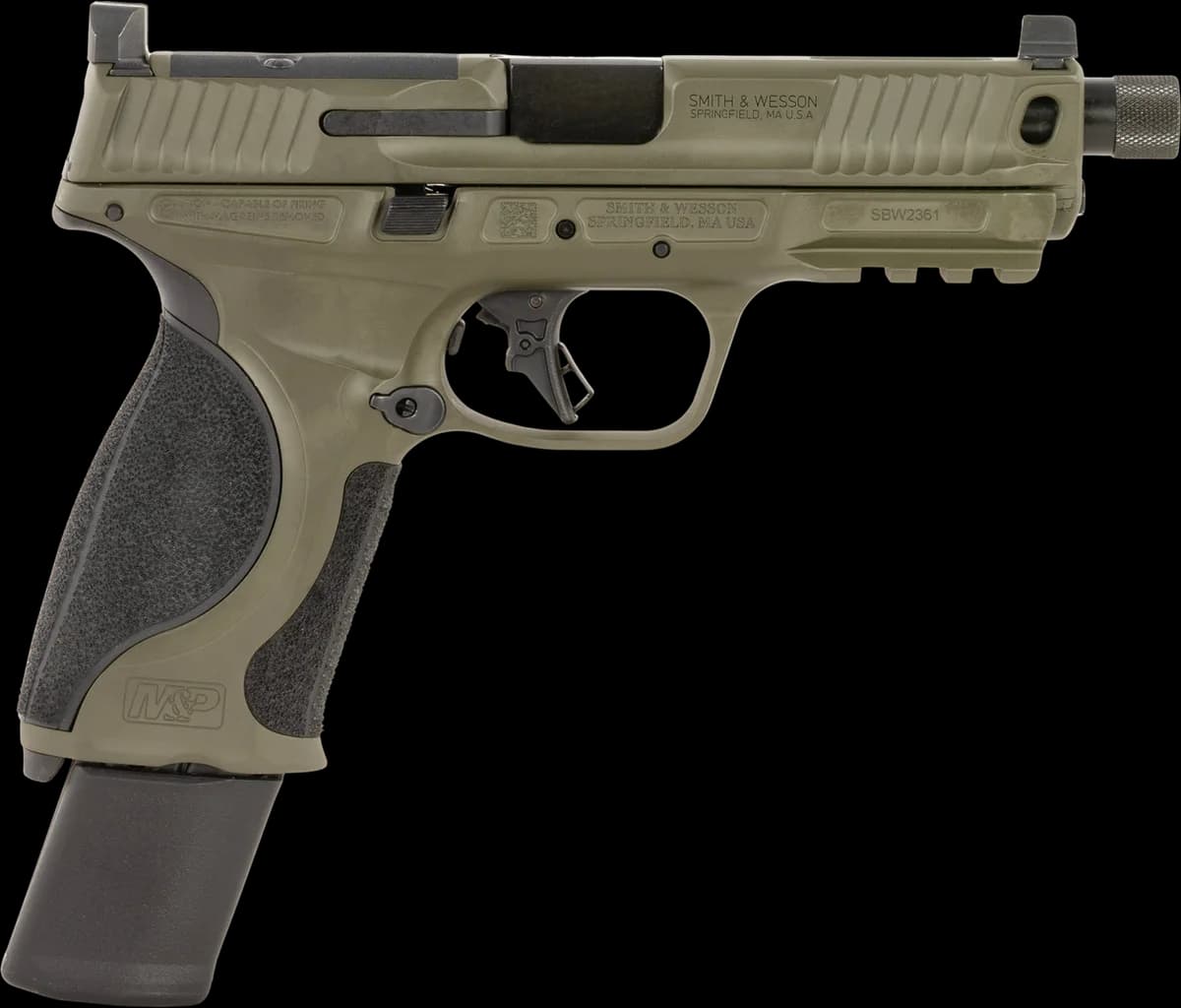
The pistol is physically large for a rimfire: the 4.35‑inch stainless barrel and 8.4‑inch overall length sit on a full‑size M&P frame. At roughly 22 ounces unloaded the gun feels light for its footprint, and S&W matched that package to a slim polymer grip with micro‑texture and a gentle undercut at the beavertail. Controls are straightforward and largely ambidextrous — reversible magazine catch, bilateral slide stop and thumb safety — and the slide is milled for common micro‑dot footprints (Shield RMSc‑style) so shooters can fit a reflex sight without plates. The trigger is a flat‑face single‑action hammer design with a passive blade safety; published trigger pull measurements from independent tests place break weight in the mid‑to‑low‑4‑pound range, with a perceptible take‑up followed by a crisp break.
On the range the M&P22 Magnum’s combination of a long sight radius, low mass and minimal recoil produces a pleasant, fast‑shooting experience. The fiber‑optic front and notched rear sight gather the eye quickly, and the optics cut lets shooters move to a dot for still faster target acquisition. Because the slide is intentionally light, manipulation is easy for shooters with diminished hand strength, and the pistol’s slimness across the controls keeps it comfortable for sustained strings of fire. That said, the full‑size frame and height make it less suitable for concealed daily carry compared with dedicated compact handguns.
Balance is aided by the TEMPO system: with less slide mass the pistol’s center of gravity stays lower and the muzzle impulse is reduced compared with what a heavier blowback slide would produce. The tradeoffs are engineering complexity and additional maintenance attention to the gas port and barrel/shroud interface during cleaning — reviewers consistently advise inspecting and wiping the port and shroud to avoid build‑up that can affect function.
Accuracy from the factory 1:10‑twist 4.35‑inch barrel is generally good for a handgun in this category. Independent 25‑yard groups reported in range tests cluster in the 2–3‑inch area with several loads showing sub‑2‑inch five‑shot groups at that distance — more than adequate for pest control, plinking and precision‑oriented range work with an optic. Recoil is minimal in practical terms; the pistol exhibits a noticeable muzzle flash and report because many 22 WMR powders are slower‑burning in a short pistol barrel, but the perceived recoil impulse is soft and controllable. Trigger feel is described as having a longer take‑up but then a clean, light break, which many testers found well‑suited to rapid strings and beginner training.
Reliability has been the most discussed caveat in reviews and extended testing. The magazine and feed geometry, plus the rimmed nature of 22 WMR cartridges, require careful magazine seating and, according to the manufacturer and testers, selectivity in ammunition choice. Several test teams logged occasional failures‑to‑feed or failures‑to‑go‑into‑battery with specific loads — particularly with some defensive‑type cartridges — and advised trying a range of factory ammunition to find loads that function consistently in a given pistol. When shooters stick to recommended or well‑tested 30–40‑grain loads the platform has proven dependable in many hands, but reviewers have rated the pistol lower on reliability than some rival rimfire designs because of that sensitivity.
The M&P22 Magnum is at its best as a high‑capacity range gun, plinker and small‑game or pest‑control sidearm. Its low recoil and high magazine capacity make it an excellent trainer for teaching sight‑and‑trigger fundamentals using a platform that rewards fast follow‑up shots. The optics cut and accessory rail broaden its utility for rapid‑acquisition shooting and night‑time predator work where a light or dot is useful.
As a primary self‑defense tool the pistol occupies an arguable middle ground. The cartridge offers more performance than .22 LR, and the 30‑round capacity is attractive, but terminal performance of rimfire magnum bullets remains below that of common defensive centerfire cartridges; experts tend to recommend conventional centerfire pistols for everyday carry and definitive stopping power. Furthermore, if a shooter intends to use the pistol for protection, they must confirm which defensive ammo the particular pistol runs reliably — a step more critical with the M&P22 Magnum than with many centerfire designs.
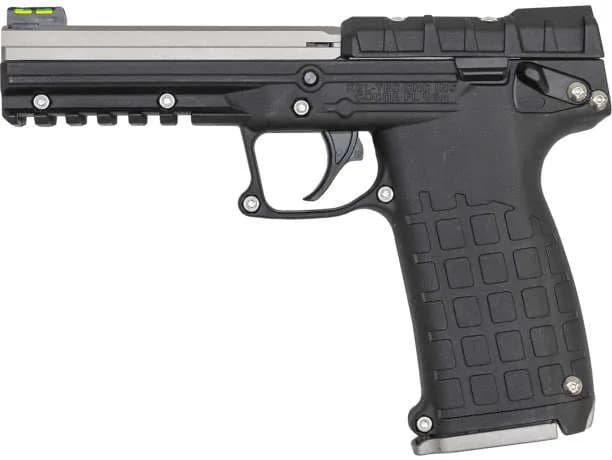
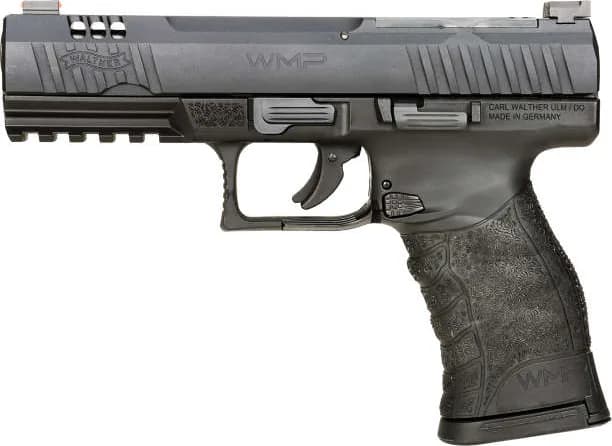
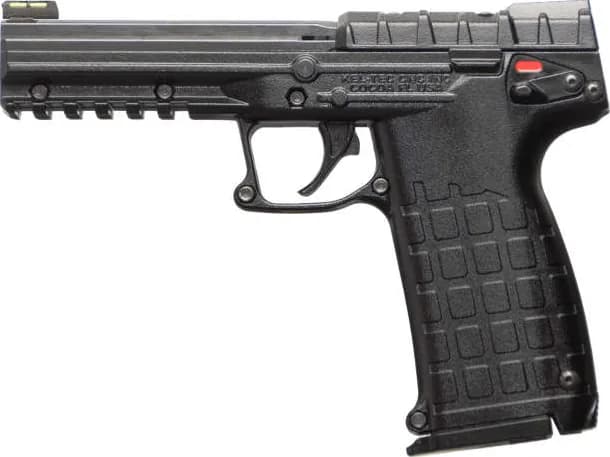
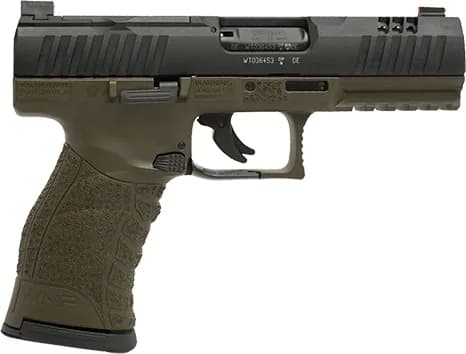
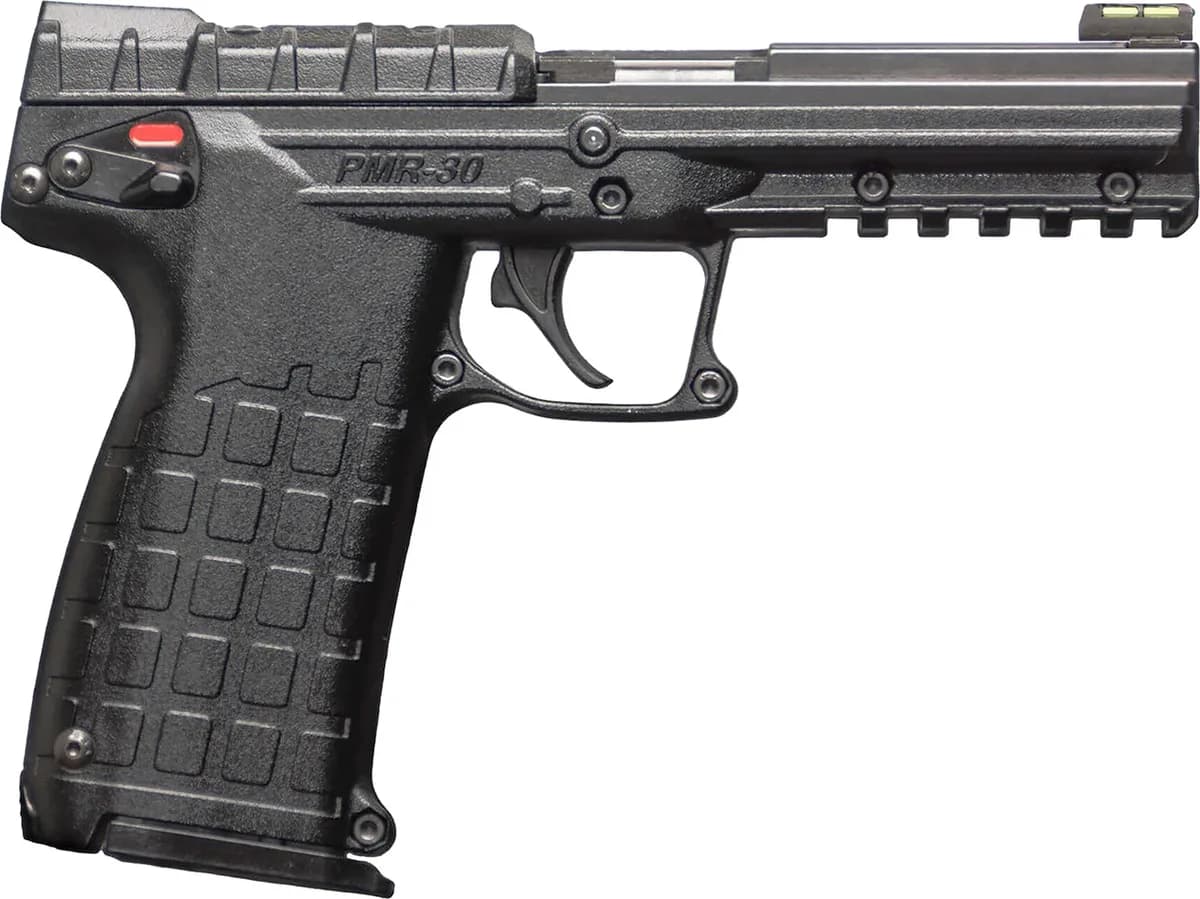
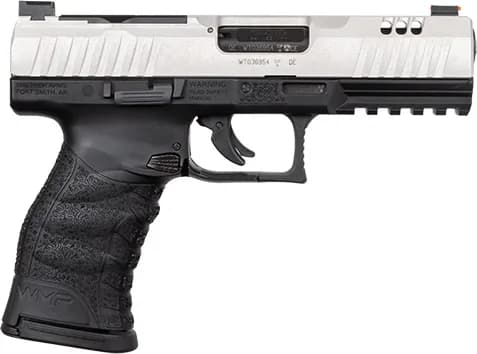
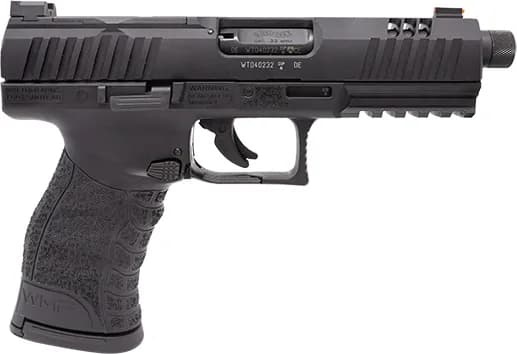
Smith & Wesson entered a small but growing niche with the M&P22 Magnum. Its most direct historical competitor is the Kel‑Tec PMR‑30, another 30‑round .22 WMR semi‑auto that established the market for high‑capacity magnum rimfire pistols. More recent entries include Walther’s WMP (with smaller magazine counts in some configurations) and a handful of alternative designs from smaller manufacturers. S&W’s advantages are a modern optics‑ready slide, the proven TEMPO operating system shared with other M&P variants, familiar controls and broad dealer support; those factors give it a stronger mainstream reputation and easier optics/accessory integration than some rivals. On the other hand, Kel‑Tec’s long presence in the segment and the WMP’s established ergonomics are meaningful competitive points, and reviewers have noted that S&W’s pistol must overcome ammunition sensitivity questions to claim unequivocal supremacy.
Overall, the M&P22 Magnum is a thoughtfully engineered and entertaining rimfire platform that brings modern features — a direct‑mount optic cut, double‑stack 30‑round magazines, and a slim polymer M&P chassis — to the 22‑magnum field. For shooters after a high‑capacity, low‑recoil range gun or a capable small‑game tool with contemporary ergonomics and optics readiness, it is an attractive option; those seeking an unambiguous defensive primary will want to weigh terminal performance and ammunition compatibility carefully before committing it to that role.
Start with a practical guide if you want a faster way to narrow the field before comparing specific models.
Learn how to choose the right handgun for home defense based on safety, ease of use, and practical everyday considerations.
Read guideBudget-minded buyersLearn how to find a reliable handgun under $500 without wasting money or compromising on quality.
Read guideComparison-focused shoppersA practical guide to comparing handguns the right way: what actually matters, what to ignore, and how to use comparison tools effectively.
Read guide