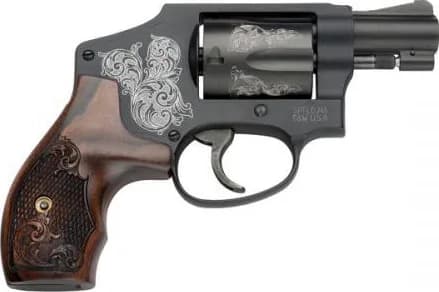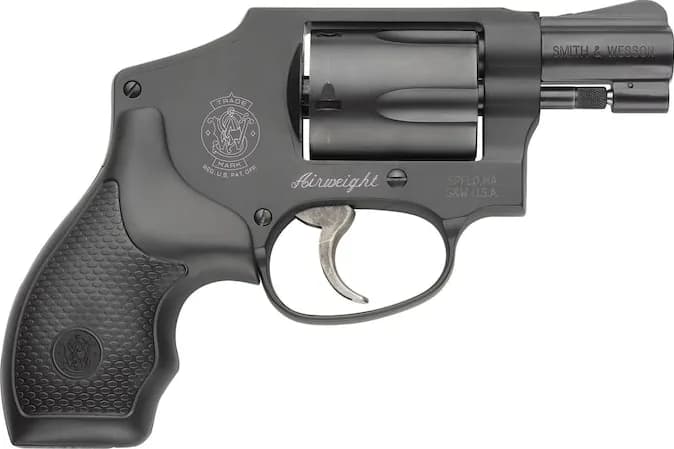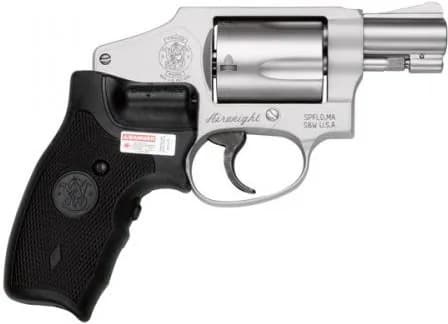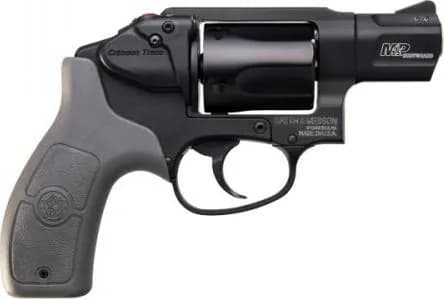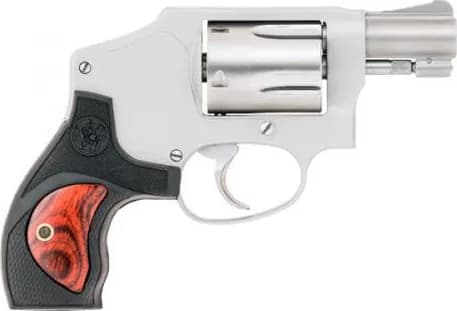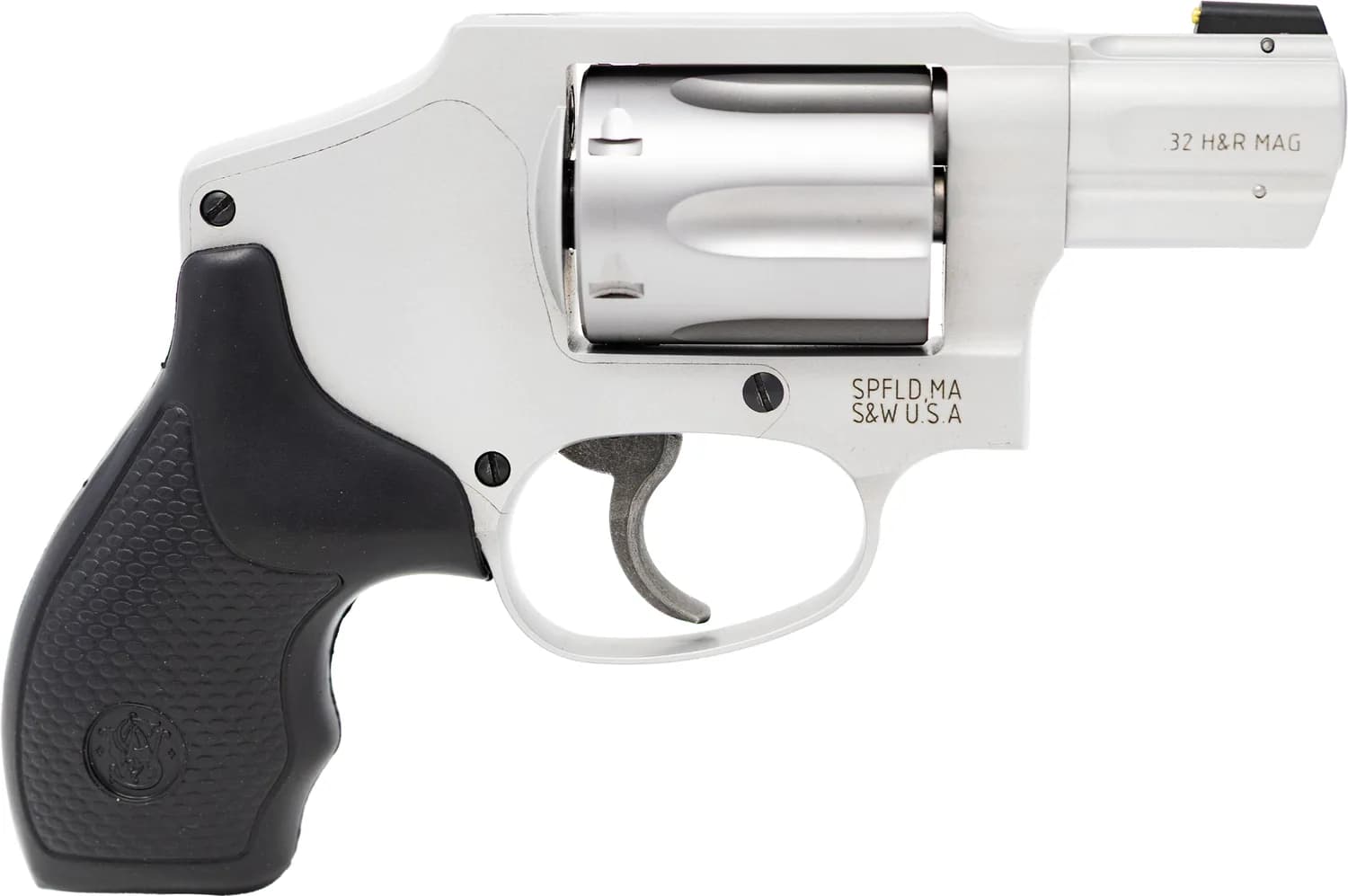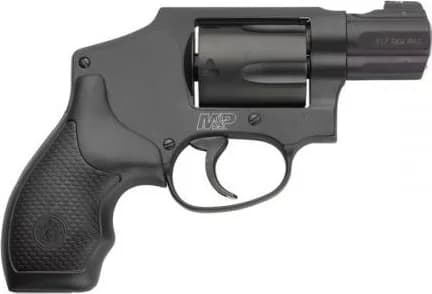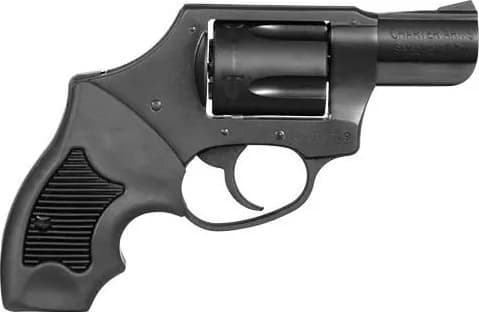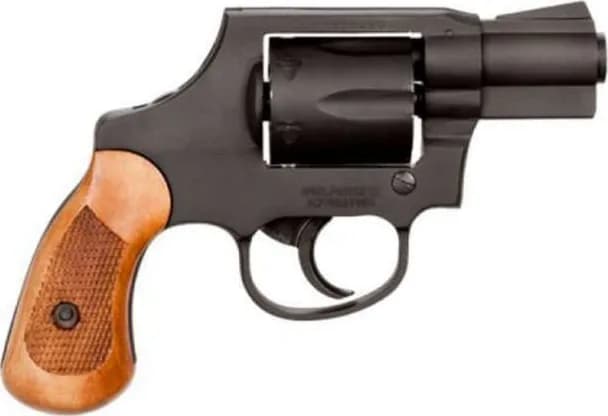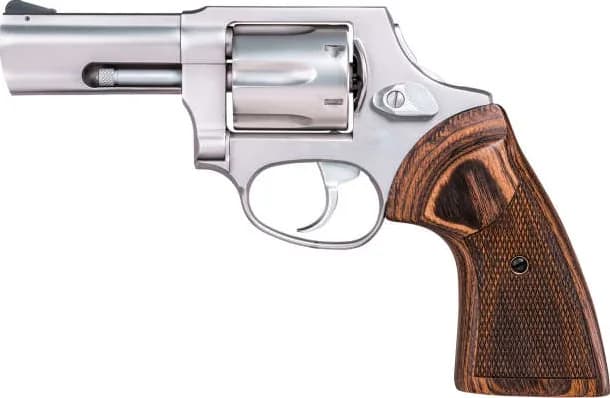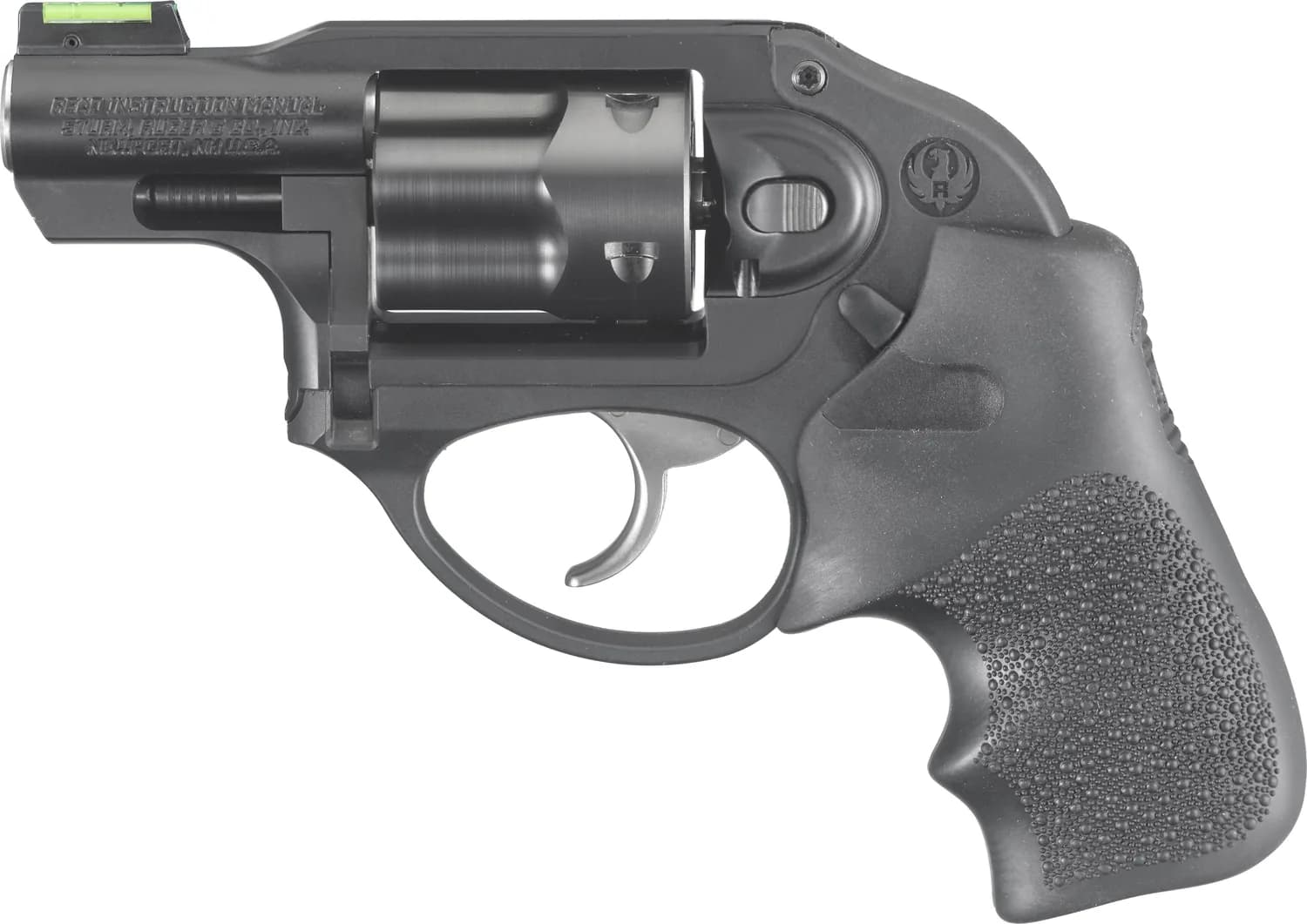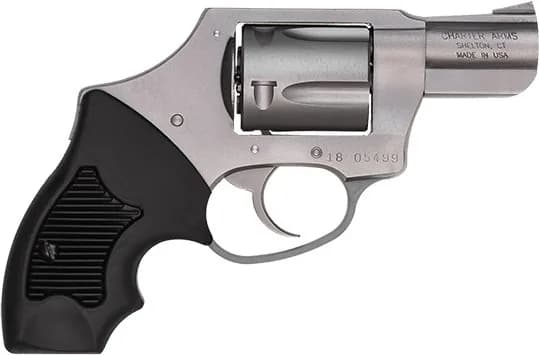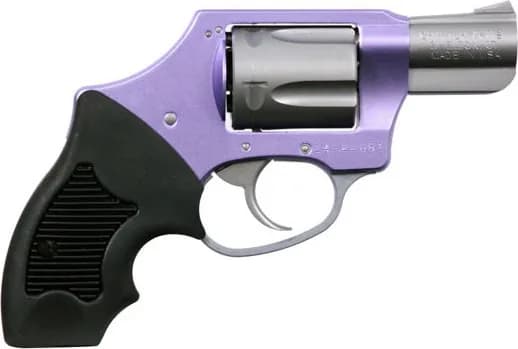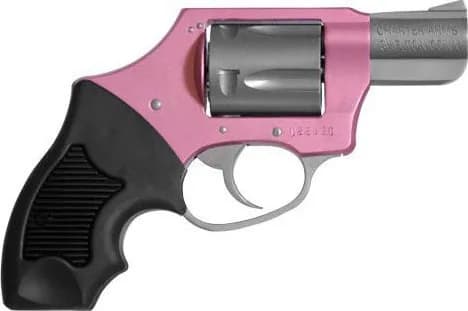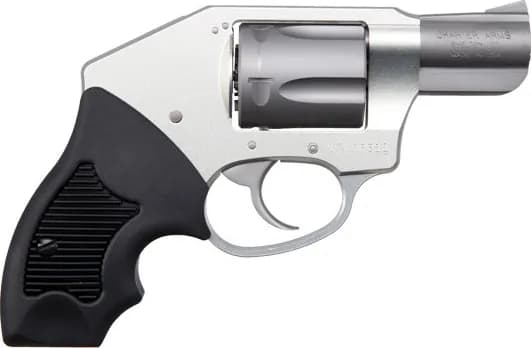
Round Butt, Internal Hammer, Smooth Target Trigger, Aluminum Alloy & Stainless Construction
The Smith & Wesson Model 642 is the modern descendant of the company’s long-running “Centennial” line of hammer‑concealed J‑frame snubnose revolvers. The Centennial concept dates to the early 1950s and the compact, snag‑free profile has been updated and reissued in various alloys and finishes over the decades; the Model 642 in its Airweight (aluminum‑frame, stainless‑cylinder) form first appeared in the 1990s and returned to regular production in the mid‑1990s on the then‑current J‑frame platform. Smith & Wesson has offered the 642 in multiple production subvariants; the specific Airweight “No Internal Lock” configuration is cataloged under the current SKU that identifies the hammer‑concealed, five‑shot .38 Special snub as a lightweight concealed‑carry option.
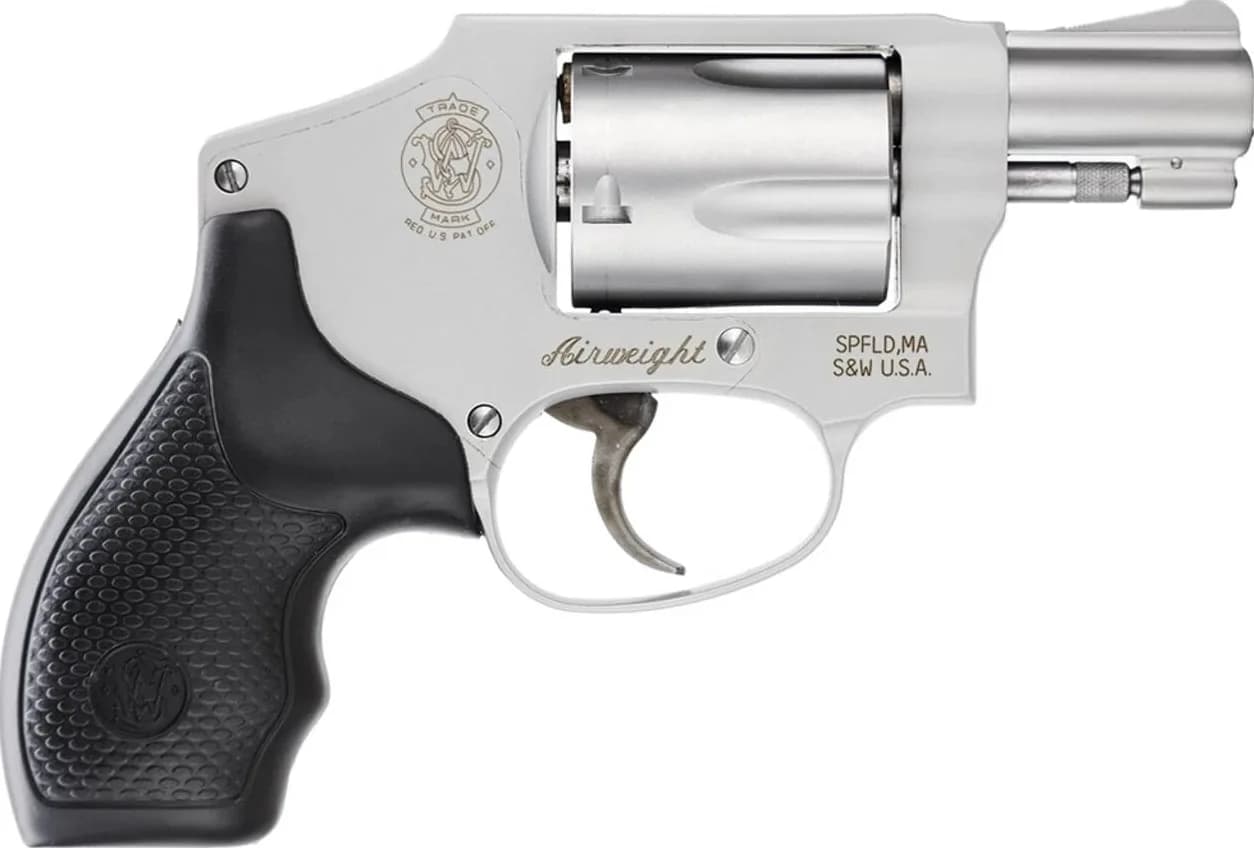
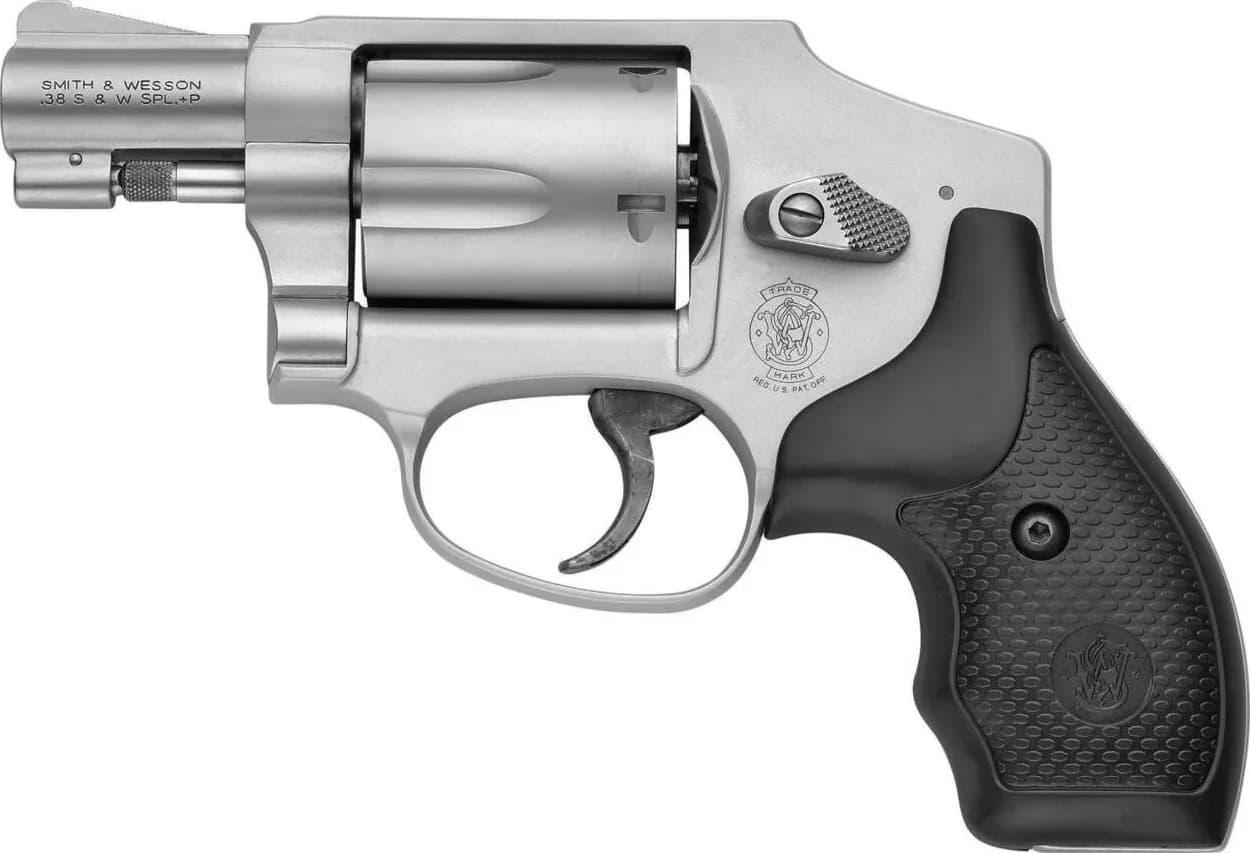
The Model 642 is a true J‑frame snub — a five‑shot revolver built around an aluminum alloy frame with a stainless steel cylinder and barrel assembly. That construction yields a dry weight in the neighborhood of 15 ounces and an overall length of a little over six inches, with a 1.875‑inch barrel and an internal (enclosed) hammer that leaves the profile snag‑free for pocket or deep‑concealment carry. The factory grips are compact rubberized/synthetic panels intended to help control recoil while preserving concealability, and the fixed integral front sight with a simple U‑notch rear keeps the sight picture minimal but durable. The Model 642 is double‑action‑only (DAO); the concealed hammer prohibits single‑action cocking, which simplifies the external interface at the cost of a heavier, longer trigger pull. These specifications and the “no internal lock” production option are reflected in Smith & Wesson’s current small‑frame cataloging and in retailer spec sheets for the SKU.
Because the 642’s mass is low and its grip surface small, the gun’s handling is a study in tradeoffs. The light weight and compact footprint make it easy to carry discreetly — pocket, purse, ankle or deep‑waistband — and the internal hammer eliminates snagging when drawing from cloth. However, the combination of a short sight radius and the DAO trigger means that rapid, precise aiming at distance is not the 642’s strength; it’s optimized for close‑quarters presentation and instinctive point shooting. On the positive side, contemporary owners and longform testers consistently report that the platform is mechanically reliable; the J‑frame’s simple, well‑proven swing‑out cylinder and locking geometry contribute to solid function even after extensive carry and use.
Reviewers and experienced shooters generally characterize the 642 as “accurate enough” for the self‑defense role it is intended to fill. At typical defensive distances (inside 7–10 yards), many testers obtain acceptable rapid‑fire patterns and are able to place first‑round hits consistently; longer shots tend to open into larger groups due to sight radius and the short barrel. The revolver’s DAO trigger is widely described as stiff and long out of the box — a safety feature in the hands of many carry users but a nuisance to those seeking a light, crisp pull. Practical workarounds reported by reviewers include extensive dry‑fire break‑in, aftermarket tuning or a professional gunsmith trigger job if a lighter pull is desired. Recoil with full‑power .38 Special +P loads is brisk in such a light gun; recoil impulse is sharp but returns quickly to target for many practiced shooters, while novices frequently find it uncomfortable for extended practice without larger grips or mitigation. On durability, seasoned reviewers note the traditional metallurgy (aluminum frame with stainless cylinder) and simple internals yield long service life when the revolver is used and maintained within its intended parameters.
The 642’s clearest strength is concealed carry: its small dimensions, low weight and snag‑free profile make it an obvious pocket or appendix‑carry candidate for those who prioritize concealment. It is also a solid backup or off‑duty gun — compact enough to be carried in a purse or vehicle compartment where a larger pistol would be impractical. Conversely, it is not well suited to competition or precision target work beyond short distances, and it is a poor choice for shooters who expect to run high volumes of practice with heavy +P loads without adding larger grips or a heavier primary holster carry gun for training. The five‑round capacity and formidable felt recoil with defensive ammunition are practical limits to consider: the 642 trades controllability and ammunition capacity for concealability and simplicity.
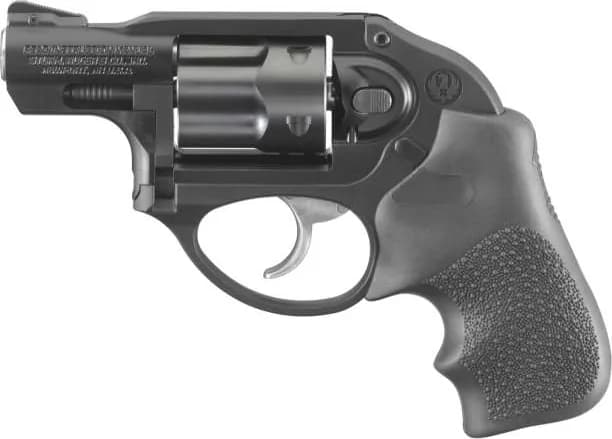
Within the compact snub revolver market the Model 642 occupies a long‑standing niche: a traditional, all‑metal J‑frame built to a familiar, conservative spec. It competes with similarly configured snubbies from other manufacturers — for example the polymer‑framed and titanium‑pin offerings that target even lighter carry weight — and with slightly heavier steel‑framed snubs that trade concealability for reduced felt recoil. Compared with newer lightweight revolvers made from advanced alloys or polymers, the 642’s value is found in its simple, time‑tested mechanical architecture and the extensive aftermarket of grips and holsters. That combination makes it attractive to buyers who want an orthodox, proven snub without exotic materials or radical ergonomics. Reviewers routinely cite the 642 as a benchmark “classic” pocket revolver: deceptively capable at short range, rugged, and widely supported in the used market — qualities that have kept the 642 in steady production and ownership cycles over decades.
The Model 642 is not a universal answer — it is a purpose‑built tool. For those who accept its tradeoffs, it remains one of the most recognizable and practical small‑frame revolvers for concealed carry, combining a minimal snag profile, a simple five‑round cylinder and an established track record of reliability.
Start with a practical guide if you want a faster way to narrow the field before comparing specific models.
A practical guide to comparing handguns the right way: what actually matters, what to ignore, and how to use comparison tools effectively.
Read guideFirst-time buyersLearn how to choose your first handgun by focusing on size, comfort, ease of use, and budget instead of getting lost in unnecessary details.
Read guide