Affiliate disclosure: HandgunCloud may earn a commission if you continue to the retailer and complete a purchase.
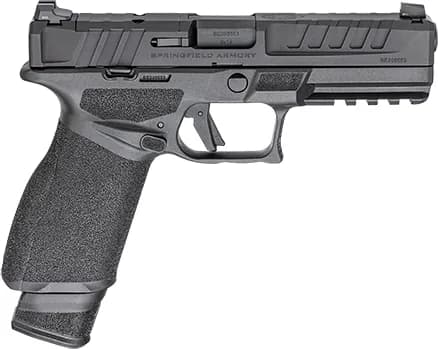
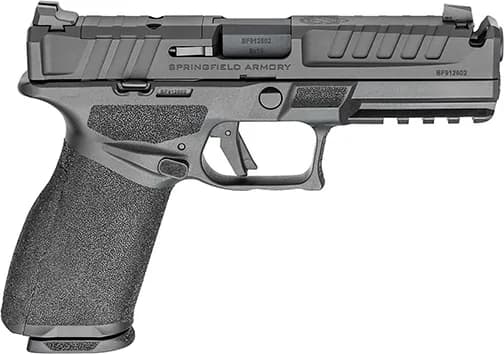
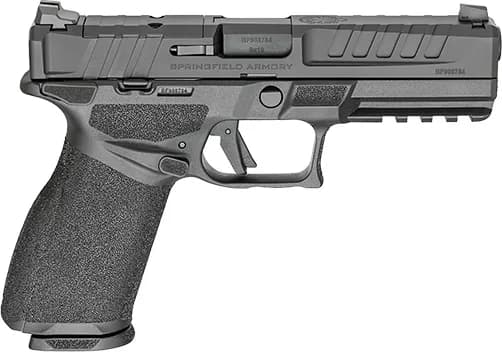
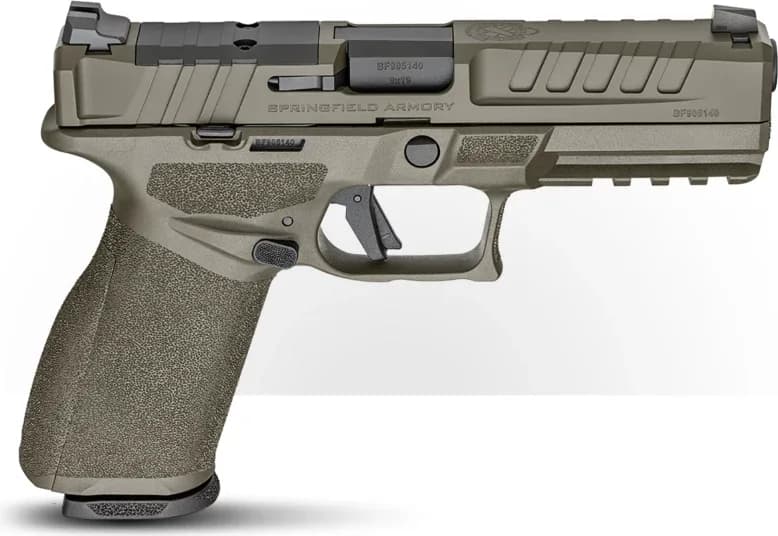
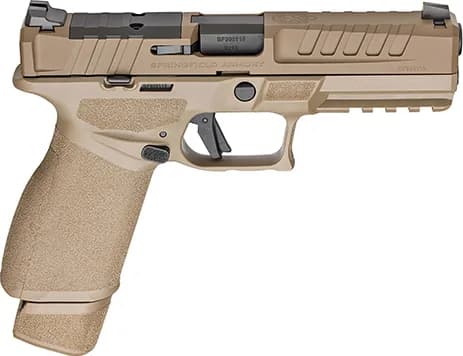
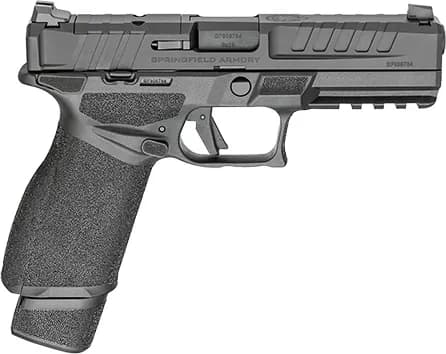
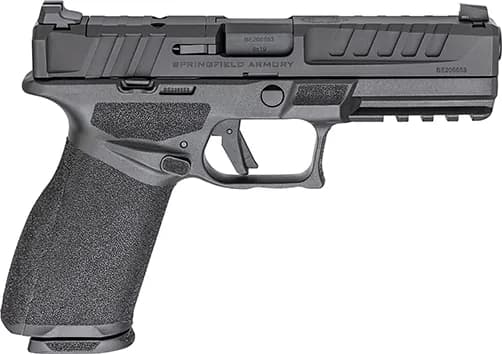
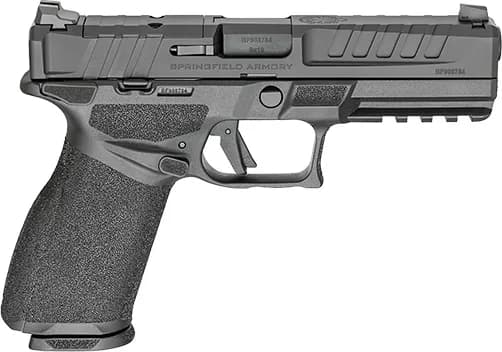
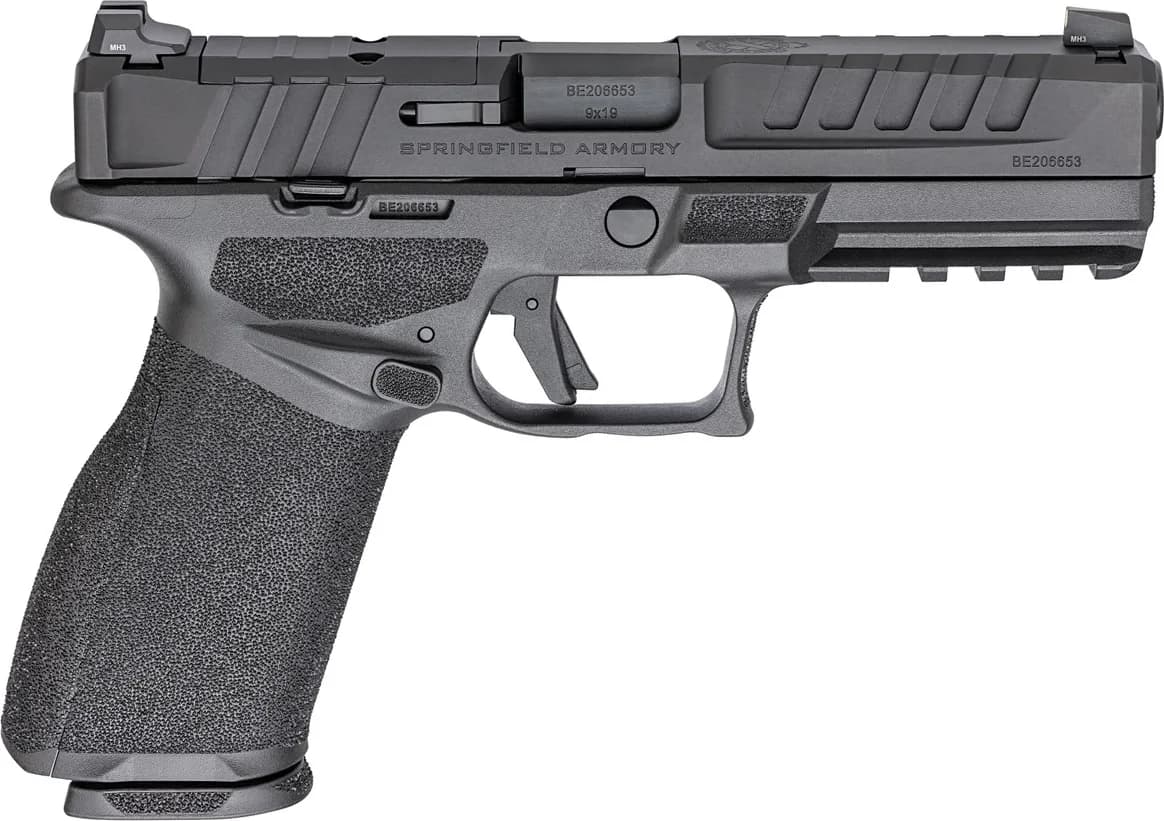
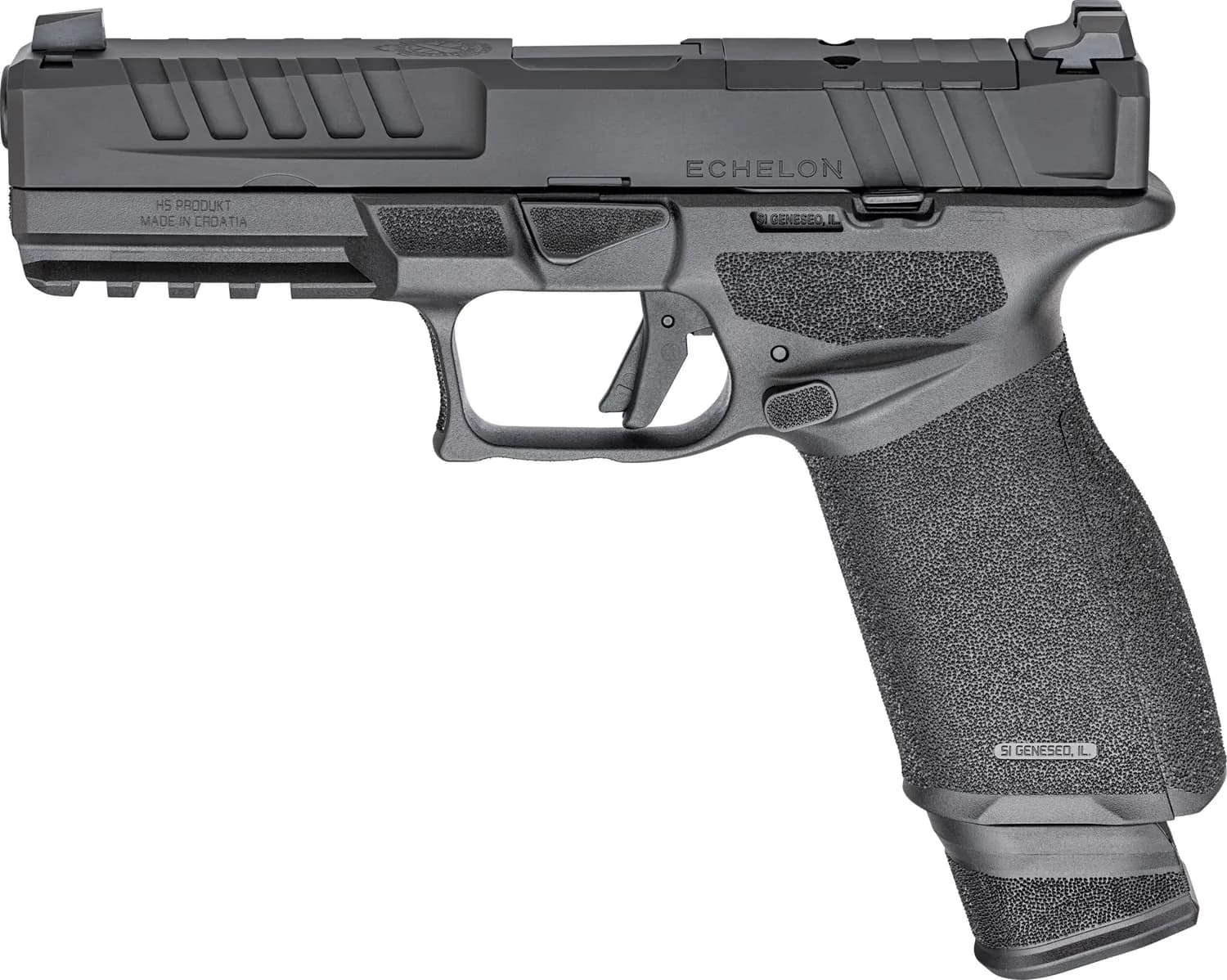
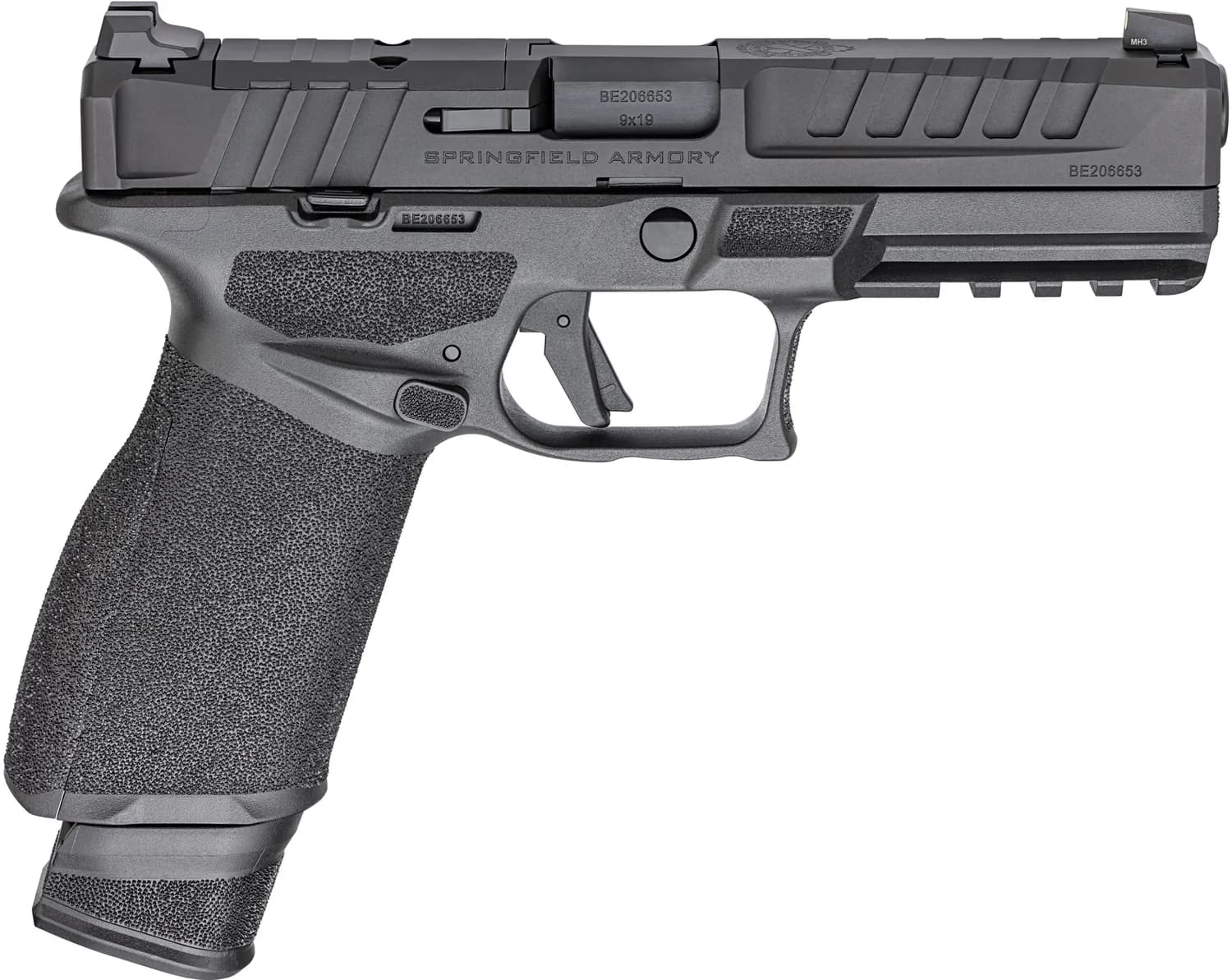
Buy from Impact GunsSpringfield Armory® introduced the Echelon™ in mid‑July 2023 as a purpose‑built, full‑size striker‑fired pistol aimed at duty, defensive and general‑purpose shooters. The company positioned the platform as a next‑generation entry in its handgun family — a modular design that bridges the gap between traditional polymer pistols and serialized fire‑control‑unit (chassis) architectures favored by some military and law‑enforcement contracts. Springfield’s launch materials emphasize a serialized stainless‑steel “Central Operating Group” (COG) as the heart of the design and highlight a patent‑pending optics mounting system intended to simplify red‑dot integration.
Although sold under Springfield’s brand and distributed from Geneseo, Illinois, the Echelon™’s design and early production lineage trace to Springfield’s long relationship with HS Produkt; reviewers and industry write‑ups note HS Produkt as the manufacturer of the initial Echelon™ production examples. That manufacturing partnership places the Echelon™ alongside other Springfield lines that have been produced in Croatia in recent years.
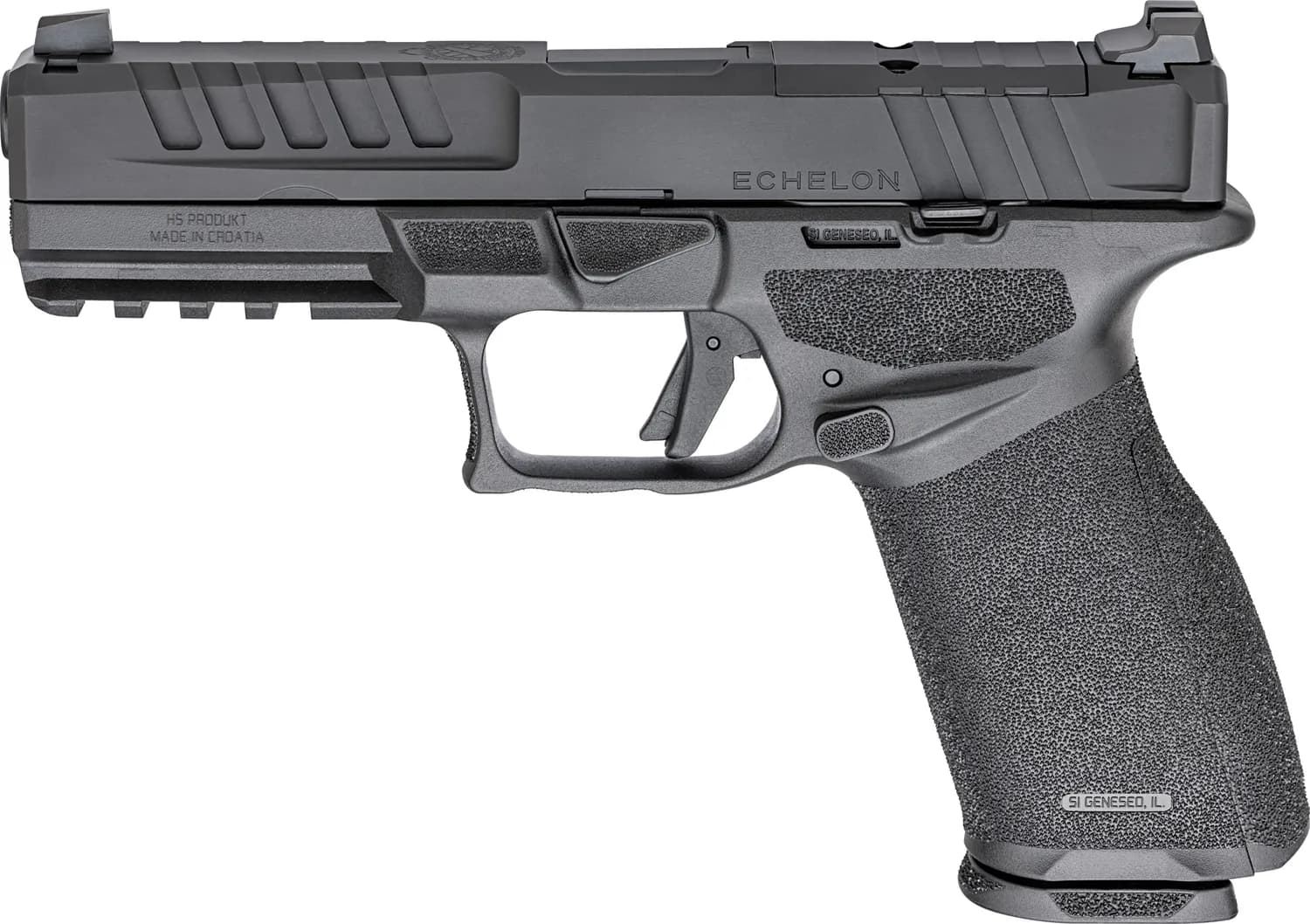
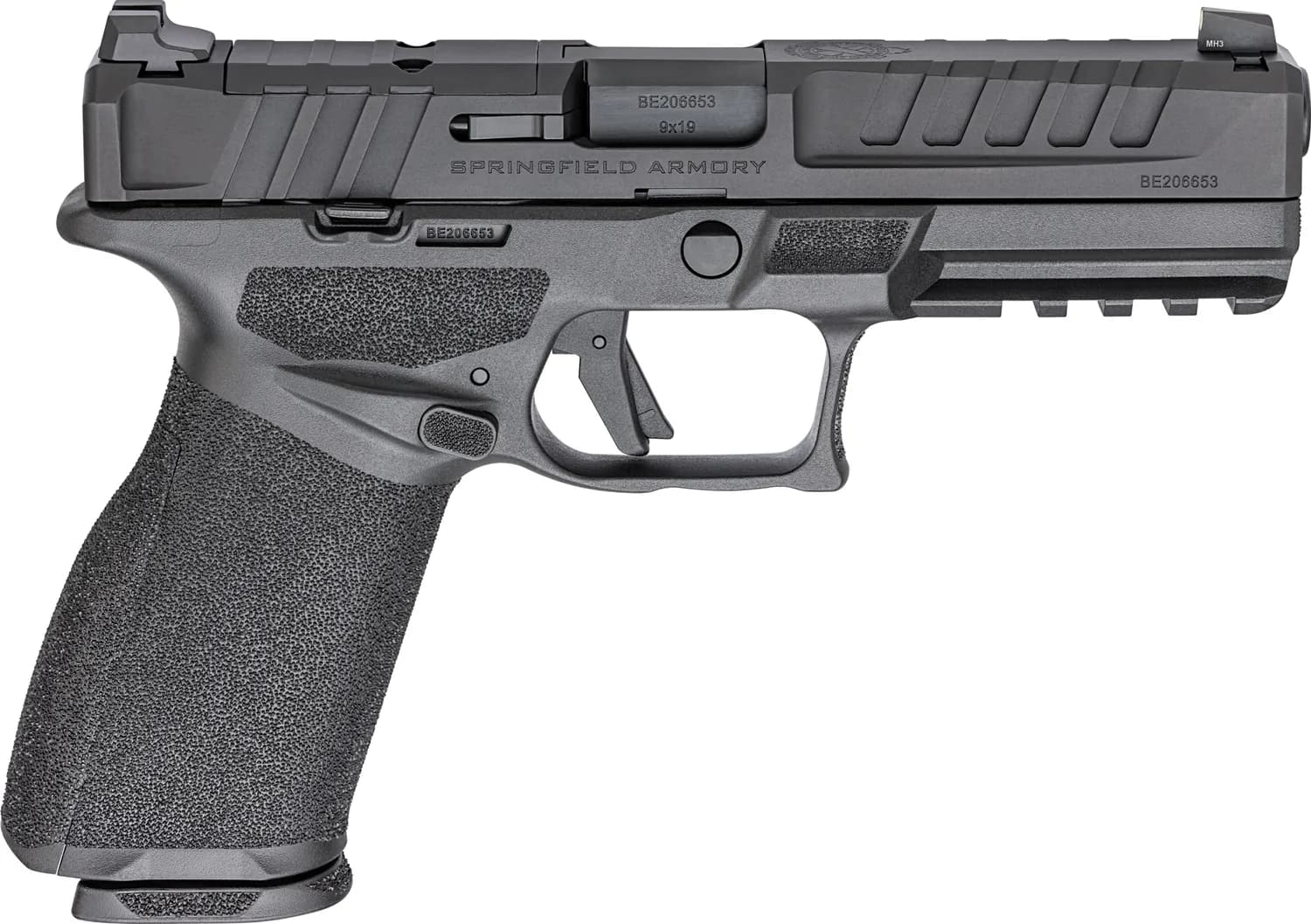
The Echelon™ launched with a family of variants around a 4.5‑inch hammer‑forged barrel (and later threaded and shorter versions), several sight packages (including a tritium front with a Tactical Rack U‑Dot rear), and magazines engineered to offer a flush 17‑round capacity or an extended 20‑round capacity with a swap‑on basepad. From the outset Springfield marketed the pistol as duty‑grade and optics‑friendly, while also offering interchangeable backstraps and grip modules to fit a wide range of hand sizes.
The Echelon™ is built around the Central Operating Group — a serialized stainless‑steel chassis that houses the sears, trigger components and related fire‑control elements. That chassis is removable from the polymer grip module, enabling Springfield and third parties to offer multiple grip modules that change ergonomics without replacing the serialized part. Springfield’s press materials and hands‑on reviewers both point to this architecture as a deliberate engineering choice to combine chassis reliability with modular user customization.
The Variable Interface System (VIS), Springfield’s patent‑pending optics solution, uses adjustable, self‑locking pins to match multiple optic footprints and clamp the optic tightly as mounting screws are torqued. The system is designed to put the red dot low on the slide and minimize lateral movement that can upset point‑of‑impact consistency — a practical response to the plate/adapter complexity many users encounter when optics‑mounting. In practice reviewers found VIS to be one of the Echelon™’s more notable innovations.
Other engineering details that affect handling include a relatively low bore axis, a contoured slim grip with multi‑layer “adaptive” texture, pronounced front and rear slide serrations and a trench cut forward of the ejection port that serves as an index point for press checks and racking. The slide is billet‑machined steel and the barrel is hammer‑forged with a Melonite finish; Springfield also designed new magazines with witness holes and an extended basepad option to move between 17 and 20 rounds without changing springs. These choices yield a pistol that looks and feels like a modern duty handgun rather than a stripped‑down compact.
The Echelon™’s safety architecture is layered: the manual‑safety variants add an ambidextrous thumb lever, and the action includes internal striker/trigger safeties and a secondary sear as a redundant, drop‑safety feature. The factory manual and parts lists also document a loaded‑chamber indicator and striker‑related safeties built into the slide and chassis.
Independent testing and magazine reviews give a consistent picture: the Echelon™ is accurate, controllable and durable, with a trigger and ergonomics that many testers praise while some critique finer points. Guns & Ammo’s extended evaluation logged more than 1,000 rounds with zero malfunctions and measured a repeatable, defined trigger break in the neighborhood of 4–5 pounds with a short, positive reset — language that mirrors Springfield’s claim about a polished, chassis‑contained trigger group. Bench accuracy for a supported pistol was typically in the 2–2.5‑inch range at 25 yards in that testing.
Gun Tests ran comparative drills against contemporary duty pistols and found competitive split‑times and practical accuracy; their sample did show some sensitivity to a particular brand/weight of ammunition in accuracy testing, demonstrating that, like many semi‑autos, the Echelon™ performs best with a range of modern factory loads rather than with every type of low‑cost or specialty ammo.
On recoil management and rapid‑fire control the Echelon™’s low bore axis, ergonomic grip and textured “gas‑pedal” shelf ahead of the takedown lever help shooters get fast returns to target and maintain tight follow‑up groups. Reviewers note the pistol’s balance and willingness to return to point of aim as among its strongest selling points. Some testers raised minor quibbles — mostly subjective — about the feel of the trigger reset or the smallness of the slide‑lock lever; overall the consensus in professional testing leans positive on durability and handling.
Where the Echelon™ excels is duty and range use: its full‑size footprint, optical readiness and 17/20‑round magazines make it a sensible option for open carry, patrol use, range training and competition divisions that favor full‑size platforms. The modular chassis also opens the door to agencies and individuals who want serialized interchangeability between grip modules. Reviewers have noted that the pistol’s ergonomics and controllability make it pleasant for high‑round‑count use, and its threaded‑barrel variants and suppressor‑height sight options make it adaptable for specialized roles.
Limitations are predictable: the full‑size weight and dimensions reduce suitability for deep concealment carry compared with subcompact designs, and some users will prefer a lighter, crisper trigger for pure competitive or carry‑centric roles. Early user reports and forum threads call out the importance of proper optic mounting and periodic checks — good practice for any optic‑equipped handgun — and a few reviewers suggested swapping the guide rod or aftermarket components if an owner intends to run the pistol at very high round counts or under extreme conditions.
The Echelon™ landed as Springfield’s push to take a place at the center of the duty‑pistol market. Reviewers compare it to the SIG P320 family and full‑size Glock offerings; direct comparisons often highlight Echelon™’s chassis modularity, optics mounting approach and ergonomics as its competitive differentiators. Professional testing outlets have been favorable: the platform earned industry awards and endorsements early in its life and has been praised in extended torture‑style testing for running reliably across a broad array of quality factory ammunition.
Value‑wise the Echelon™ sits toward the mid‑to‑upper tier of mainstream full‑size polymer service pistols. Its features — a serialized stainless chassis, robust VIS optics system, hammer‑forged barrel and modern ergonomics — position it as an attractive option for agencies and private owners who prioritize modularity and optics compatibility over the very lowest sticker price. Early market reception and professional testing suggest the Echelon™ is more than a run‑of‑the‑mill new model; it’s a considered attempt to bring chassis‑style modularity and optics ease‑of‑use to a mainstream duty pistol market.
In short, the Echelon™ is a contemporary, thoughtfully engineered full‑size 9mm that seeks to combine the strengths of serialized chassis systems with practical ergonomics and a sensible feature set for duty and defensive shooters. Its real‑world track record in independent testing so far supports Springfield’s positioning: accurate, reliable and optimized for today’s optics‑centric shooting environment.
Start with a practical guide if you want a faster way to narrow the field before comparing specific models.
Learn how to choose the right 9mm handgun based on size, budget, and how you plan to use it.
Read guideHome-focused buyersLearn how to choose the right handgun for home defense based on safety, ease of use, and practical everyday considerations.
Read guideComparison-focused shoppersA practical guide to comparing handguns the right way: what actually matters, what to ignore, and how to use comparison tools effectively.
Read guide