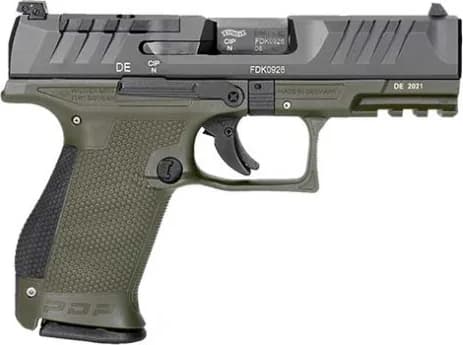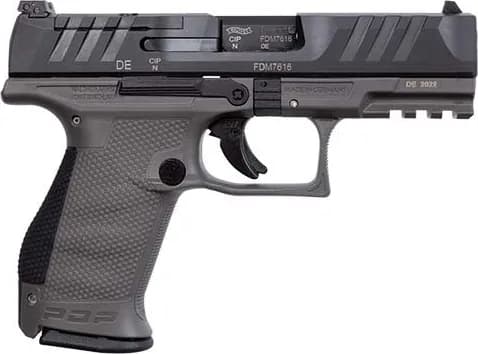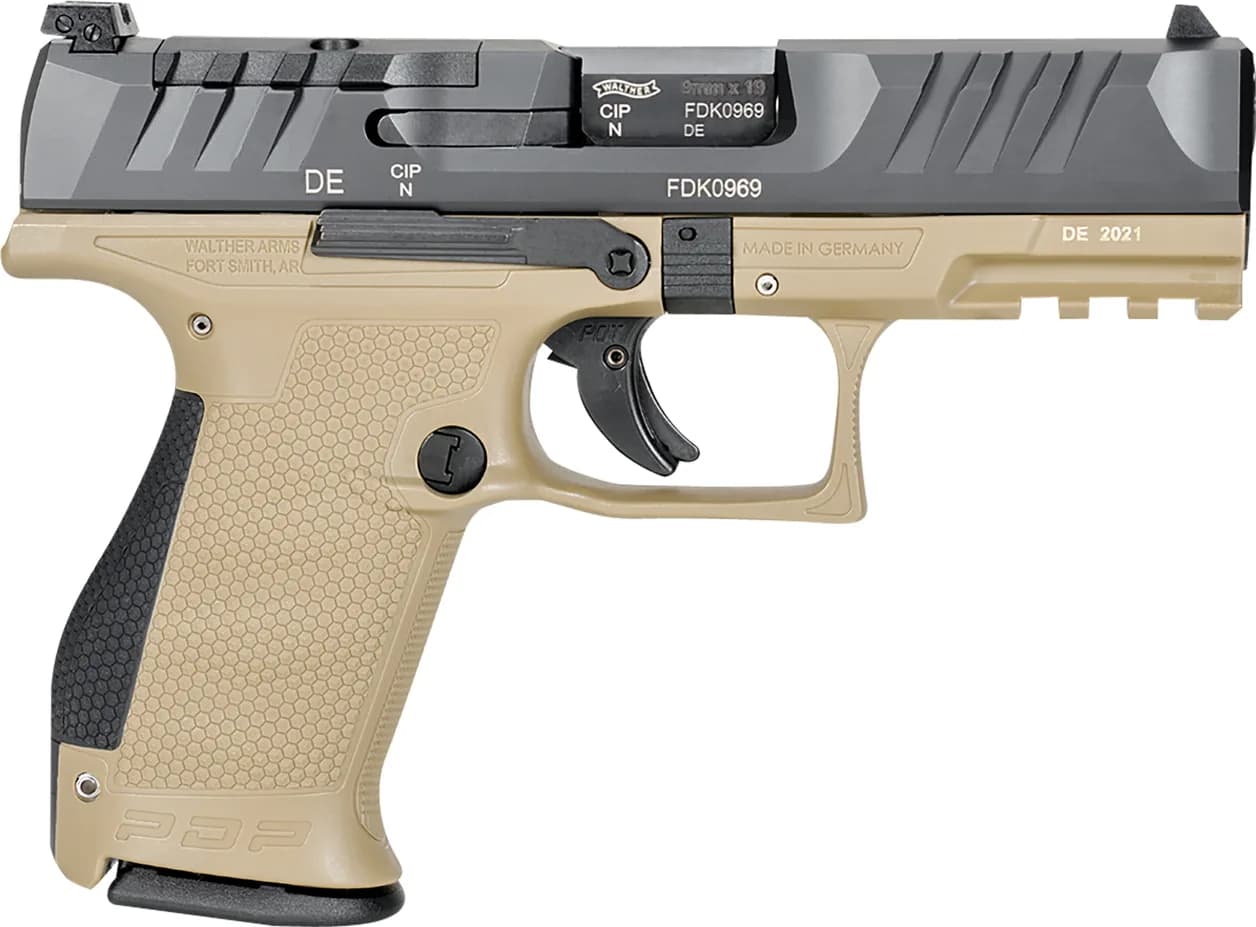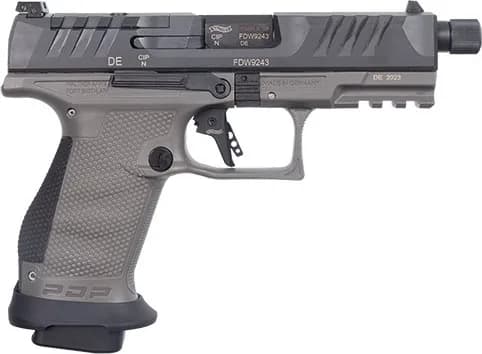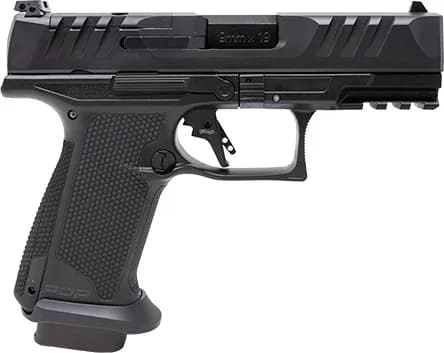
Performance Duty Trigger, Front & Rear Slide Serrations, Ambi Slide Stop
Walther’s Performance Duty Pistol (PDP) arrived as the company’s move to modernize its striker-fired lineup and to compete directly in the duty and carry markets dominated by high-capacity semi-autos. The PDP family was introduced to the public in 2021 and has since expanded into multiple slide and frame permutations—full-size, compact, and match-oriented variants—alongside steel-frame options introduced later. The 4.0-inch optics-ready variant has become one of the most visible models in the PDP family because it strikes a balance between shootability and concealability for users who want a red-dot-ready pistol in a compact footprint.
Within Walther’s lineup the 4.0-inch optics-ready compact sits between the full-size PDPs (with longer slides and higher capacities) and smaller carry-oriented pistols. Walther positioned the PDP series as an evolution of the PPQ family—keeping the ergonomics and a high-quality trigger feel familiar to PPQ fans while adding factory optics integration, refreshed slide serrations, and an aggressive grip texture aimed at duty and serious defensive use.
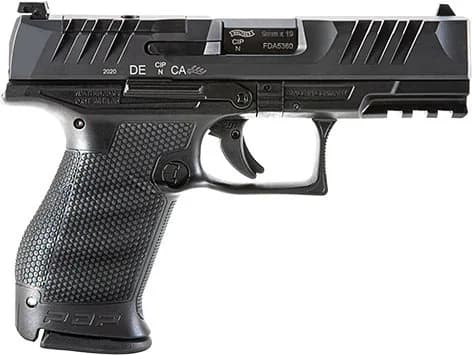
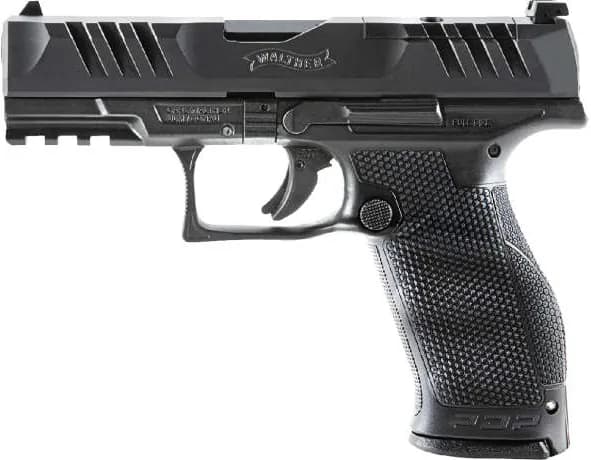
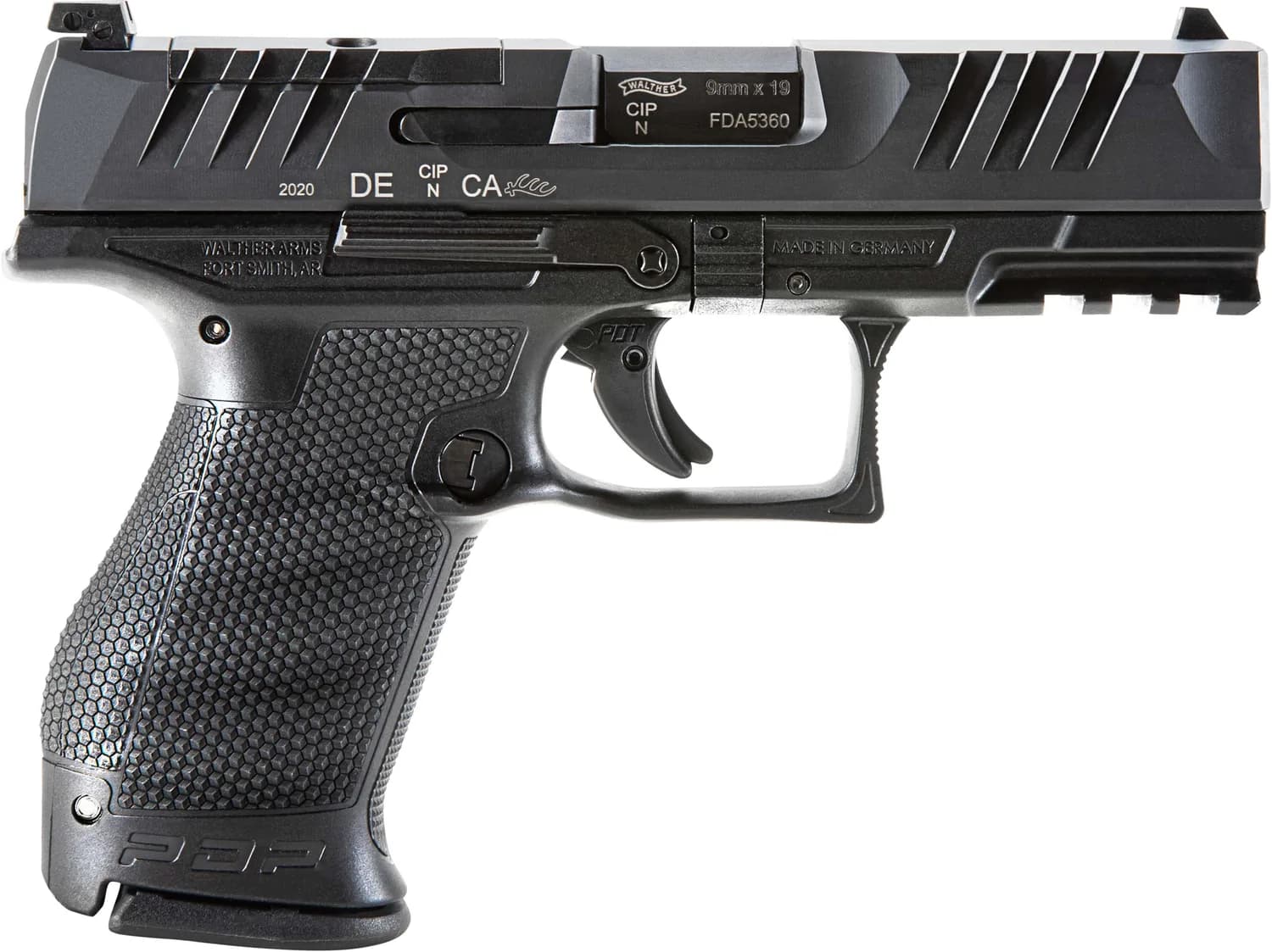
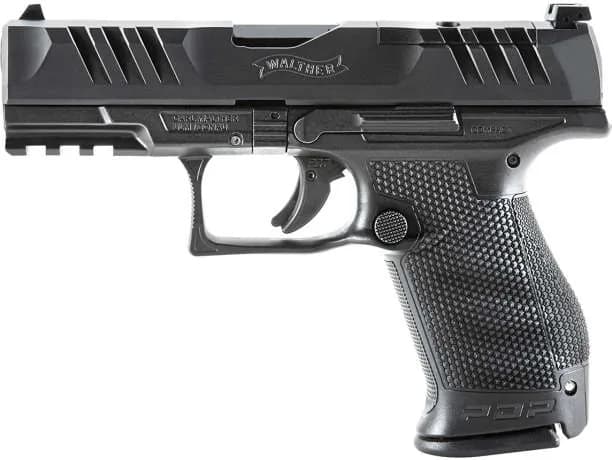
The PDP’s compact optics-ready variants pair a 4.0-inch barrel with a polymer grip module and a slide machined to accept adapter plates for a range of miniature reflex sights. Walther’s factory literature and spec sheets list the compact as a 9 mm pistol with a 15-round standard magazine, Performance Duty Trigger, adjustable rear sight and a Picatinny-style mounting interface milled into the slide for optic adapters. Those choices reflect an intent to offer a modern service-capable handgun that’s also practical for everyday carry when an owner wants an RDS fitted.
Several deliberate engineering choices affect how the pistol handles. The slide features pronounced “SuperTerrain” serrations for positive purchase when racking, and the grip frame uses a three-dimensional tetrahedral texture and interchangeable backstraps to help secure a higher, consistent purchase—critical for dot shooting and follow-up accuracy. Walther’s stepped chamber profile and a captive recoil-spring system are design touches intended to help both reliability and accuracy, and the PDP’s magazines are compatible with the PPQ M2 pattern in the compact length, which eases logistics for shooters who already have PPQ mags.
On balance and ergonomics, the compact PDP is heavier and a touch thicker than some modern “micro-compact” carry options, which many users view positively: the extra mass damps felt recoil and returns the pistol to target quickly. Published dimensional listings place the compact PDP’s overall length roughly around 7.2–7.5 inches with an unloaded weight in the mid- to high-20-ounce range, a package that shoots closer to a duty gun than a lightweight subcompact.
Independent range testing and multiple professional reviews have settled on a consistent narrative: the PDP is an outstanding shooter, especially for a box-stock striker-fired pistol. The Performance Duty Trigger (PDT) is regularly singled out—reviewers characterize it as a short take-up to a firm wall with a clean break and a short, tactile reset; many testers compared it favorably to the PPQ lineage and to the best factory striker-fired triggers on the market. That trigger geometry, combined with the grip ergonomics and stepped chamber, translates to repeatable accuracy in both slow-fire bench groups and dynamic drills.
Reliability during early-adopter testing has been strong. Independent reviewers reported high round counts with few to no stoppages when using typical defensive and range loads, and many testers noted a smooth, robust cycling characteristic across different PDP sizes. Durability notes are generally positive, though some owners have reported break-in periods before trigger and cycling characteristics fully settle—an observation reflected in user forums and some long-term-use writeups.
Recoil is described as manageable rather than negligible: the compact PDP’s relative mass and ergonomic grip mitigate muzzle flip and let most shooters get rapid, accurate follow-up shots. For shooters migrating from lighter micro-9s, the PDP feels stiffer initially but rewards with faster recovery and more consistent hits once the grip and trigger reach a comfortable cadence.
Where the PDP compact optics-ready model really shines is as a hybrid: a pistol that works well as a range and training handgun, is perfectly suited to duty or serious home-defense roles, and remains usable for concealed carry for those willing to accept a slightly larger carry footprint. Its strengths are rapid target acquisition with a red dot, controllability during rapid strings of fire, and an out-of-the-box trigger that makes deliberate precision work easier than many competitors in the same class.
Limitations are born of trade-offs. Compared with purpose-built micro-compact carry pistols, the compact PDP is larger and heavier—less ideal for deep concealment in hot climates or for users demanding the thinnest possible carry profile. Some users who prioritize minimalist weight and concealability will prefer slim single-stack designs or the latest micro double-stacks from other manufacturers. Additionally, owners who want a completely plug-and-play optics solution sometimes note the need to source the correct adapter plate and mount their optic carefully to achieve perfect co-witness or desired sight height.
In the compact, optics-ready 9 mm segment the PDP competes against legacy duty pistols retrofitted for optics and newer designs that put optics readiness at the center. What separates Walther’s PDP compact is the combination of a high-quality factory trigger, user-friendly ergonomics, and a slide/mounting approach that accepts a broad array of RDS footprints—features that reviewers say give the PDP “puncher’s chance” against better-known incumbents. Value perception is strong: buyers looking for an out-of-the-box optic-ready performer frequently cite the PDP’s feature set and shootability as persuading factors.
Against direct rivals—Glock MOS-type pistols, the M&P series, and several European and American compact optics-ready pistols—the PDP is often praised for trigger and ergonomics while judged similar or slightly heavier in size and mass. For shooters who prioritize an excellent factory trigger and a pistol that is genuinely pleasant to shoot in both defensive and accuracy-work contexts, the compact PDP occupies a compelling place on the shortlist; for those whose top priority is minimal carry bulk, other platforms may be more appropriate.
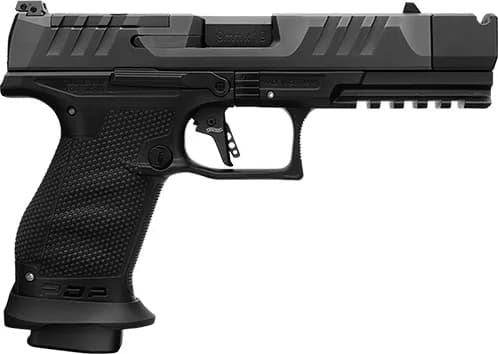
As the PDP line has matured, Walther has broadened the family and addressed niche demands (steel-frame and match models among them), which keeps the compact optics-ready variant relevant as part of a larger, flexible product family for shooters who want a modern, red-dot-capable pistol that shoots above its class.
Start with a practical guide if you want a faster way to narrow the field before comparing specific models.
Learn how to choose the right 9mm handgun based on size, budget, and how you plan to use it.
Read guideCarry-focused shoppersLearn how to choose the right concealed carry handgun based on size, comfort, safety, and everyday usability.
Read guideComparison-focused shoppersA practical guide to comparing handguns the right way: what actually matters, what to ignore, and how to use comparison tools effectively.
Read guide