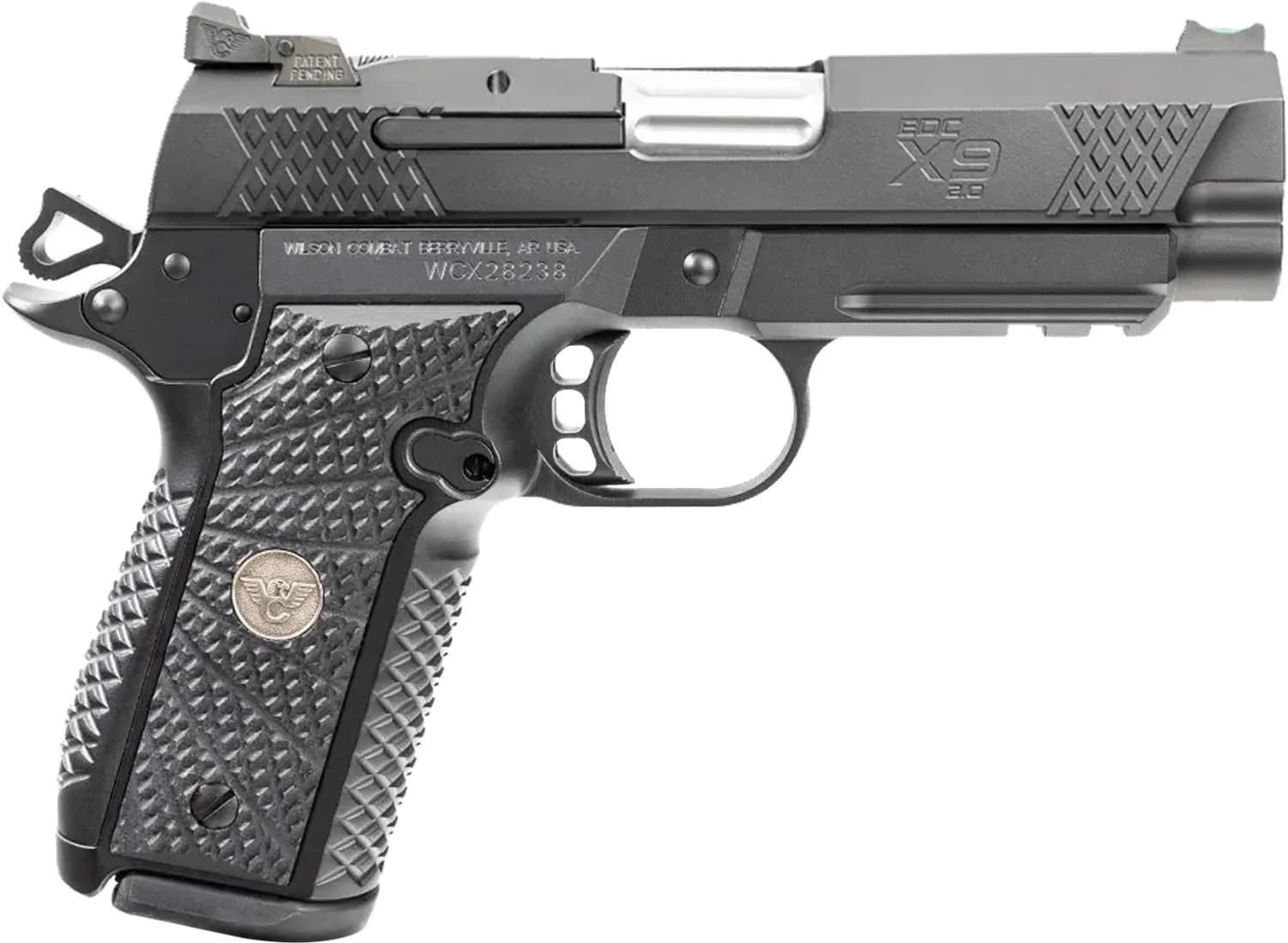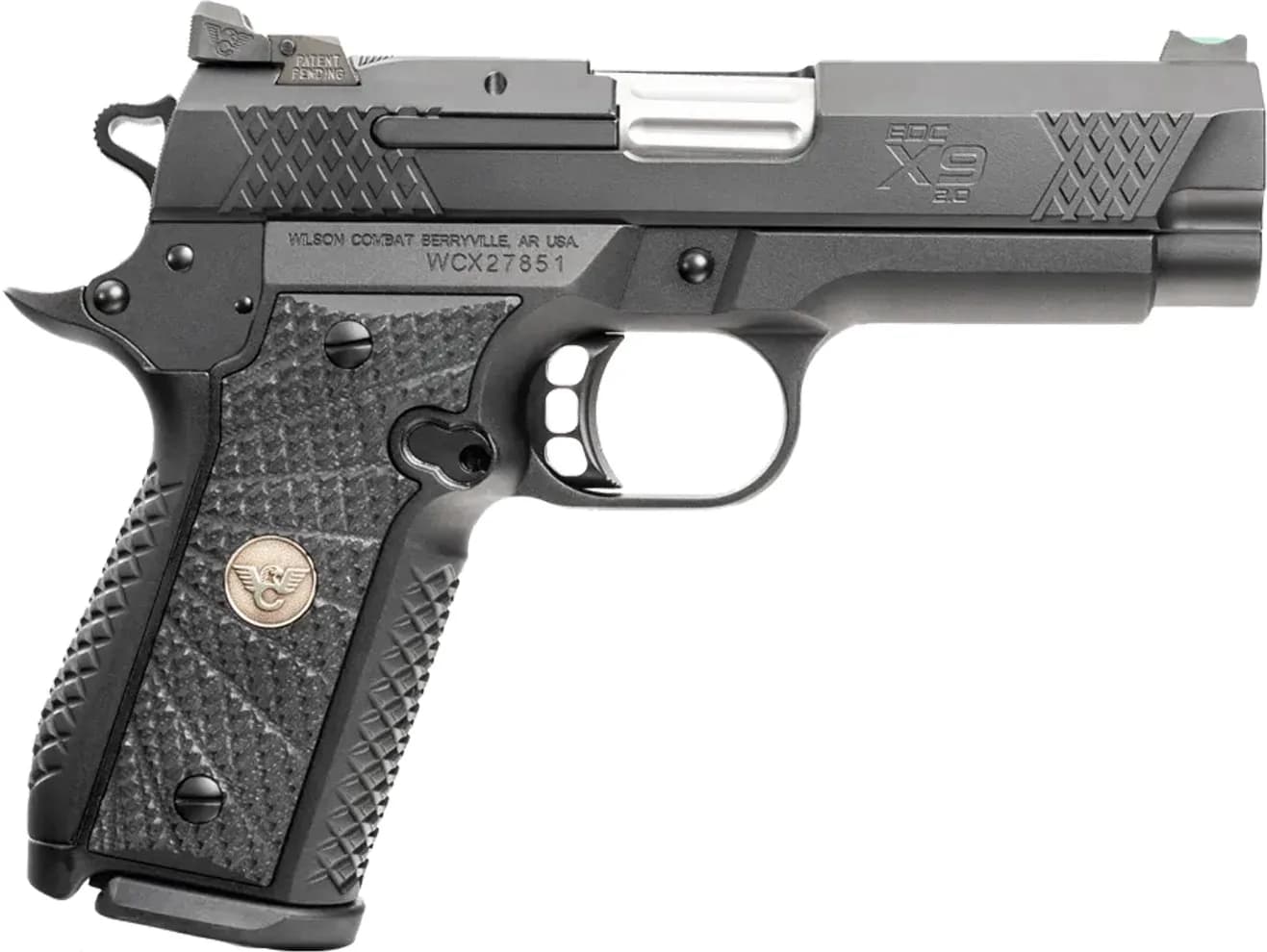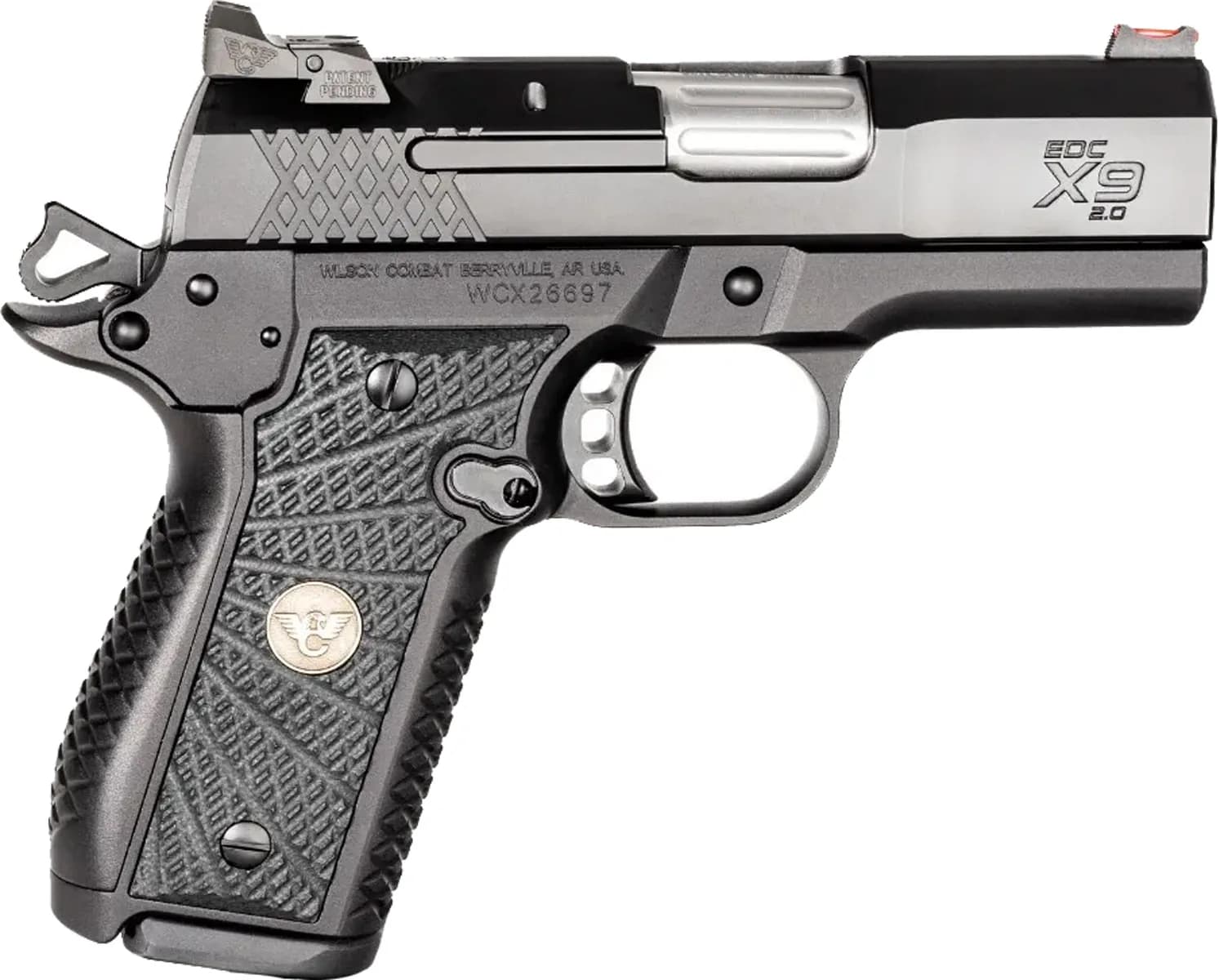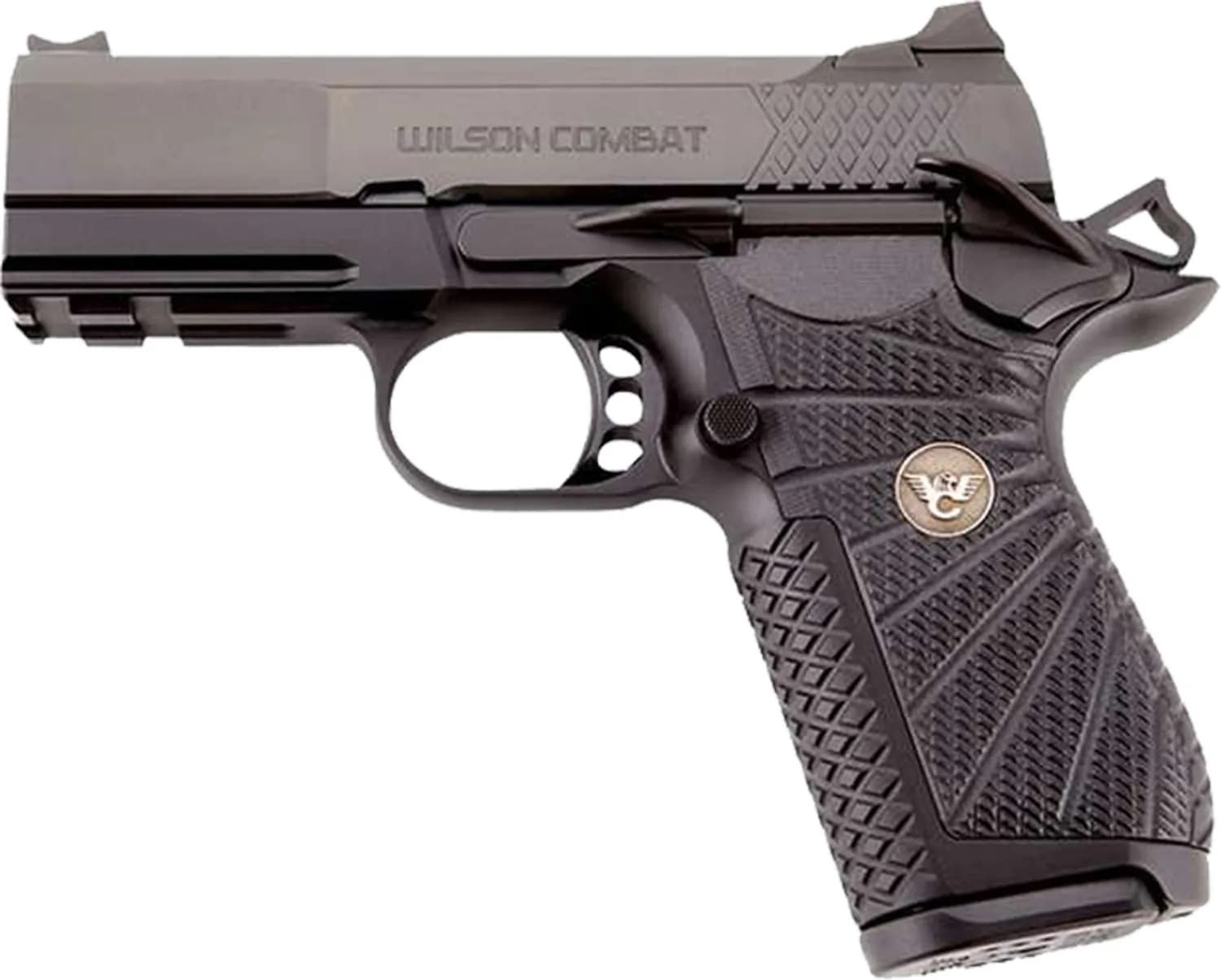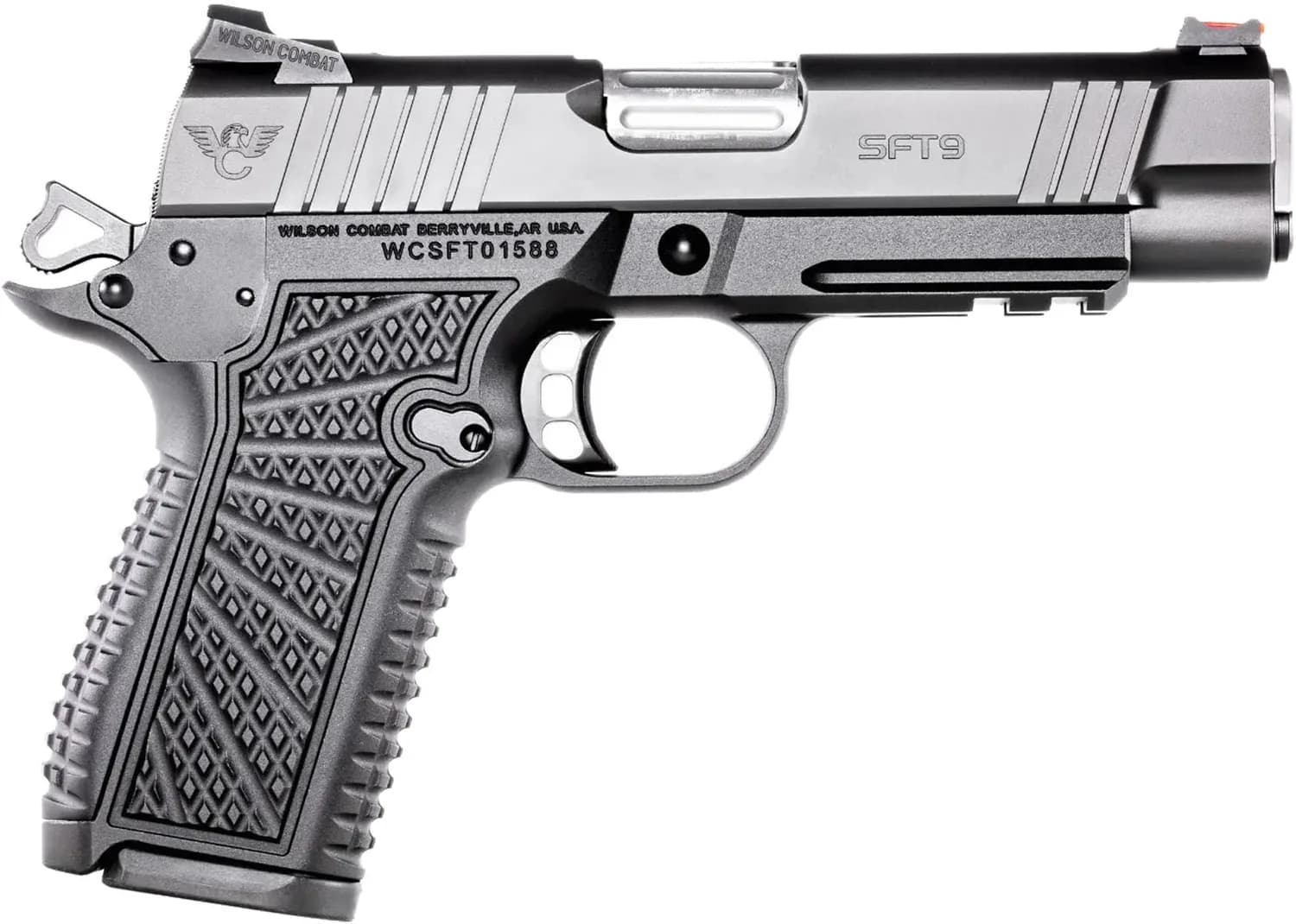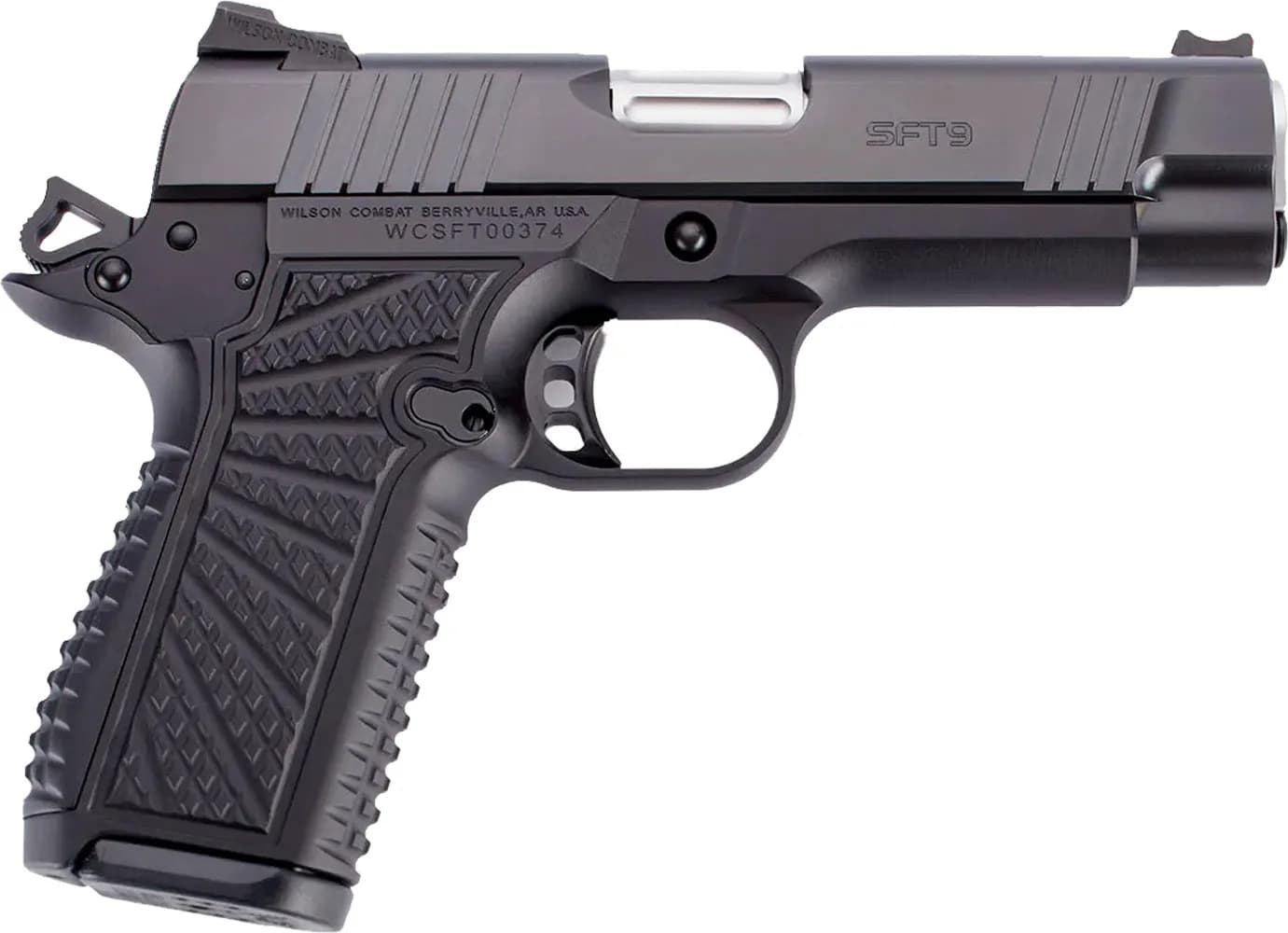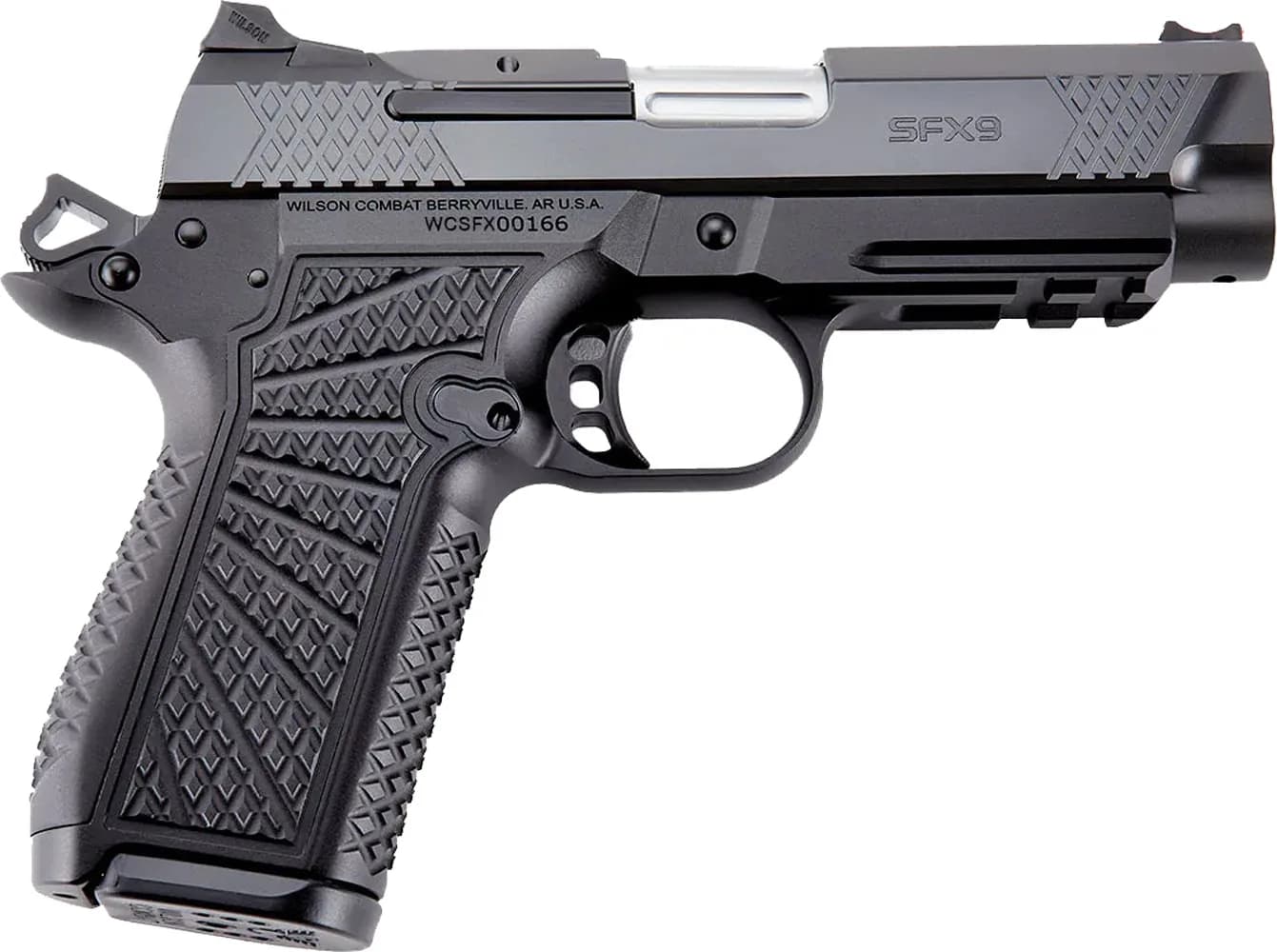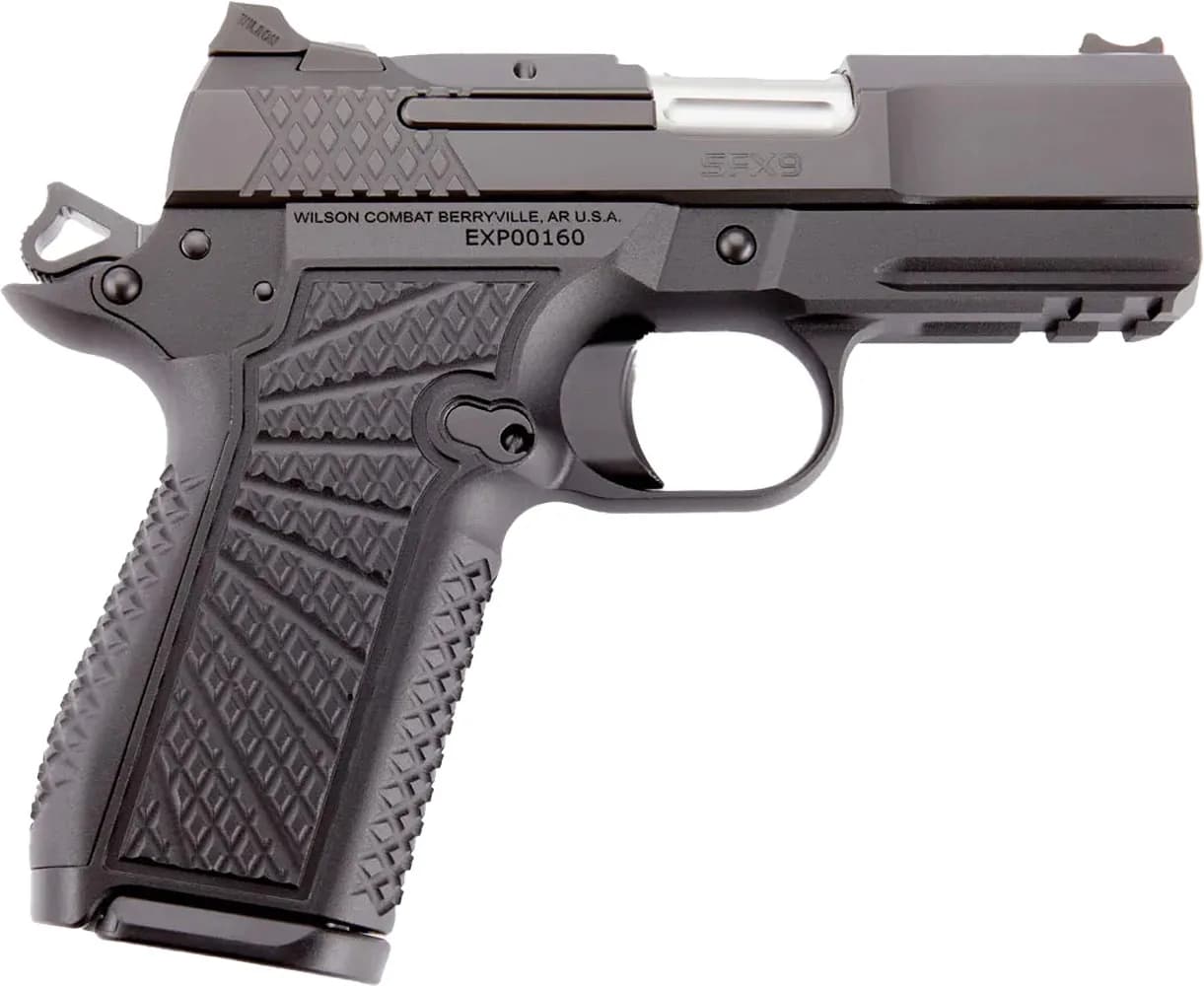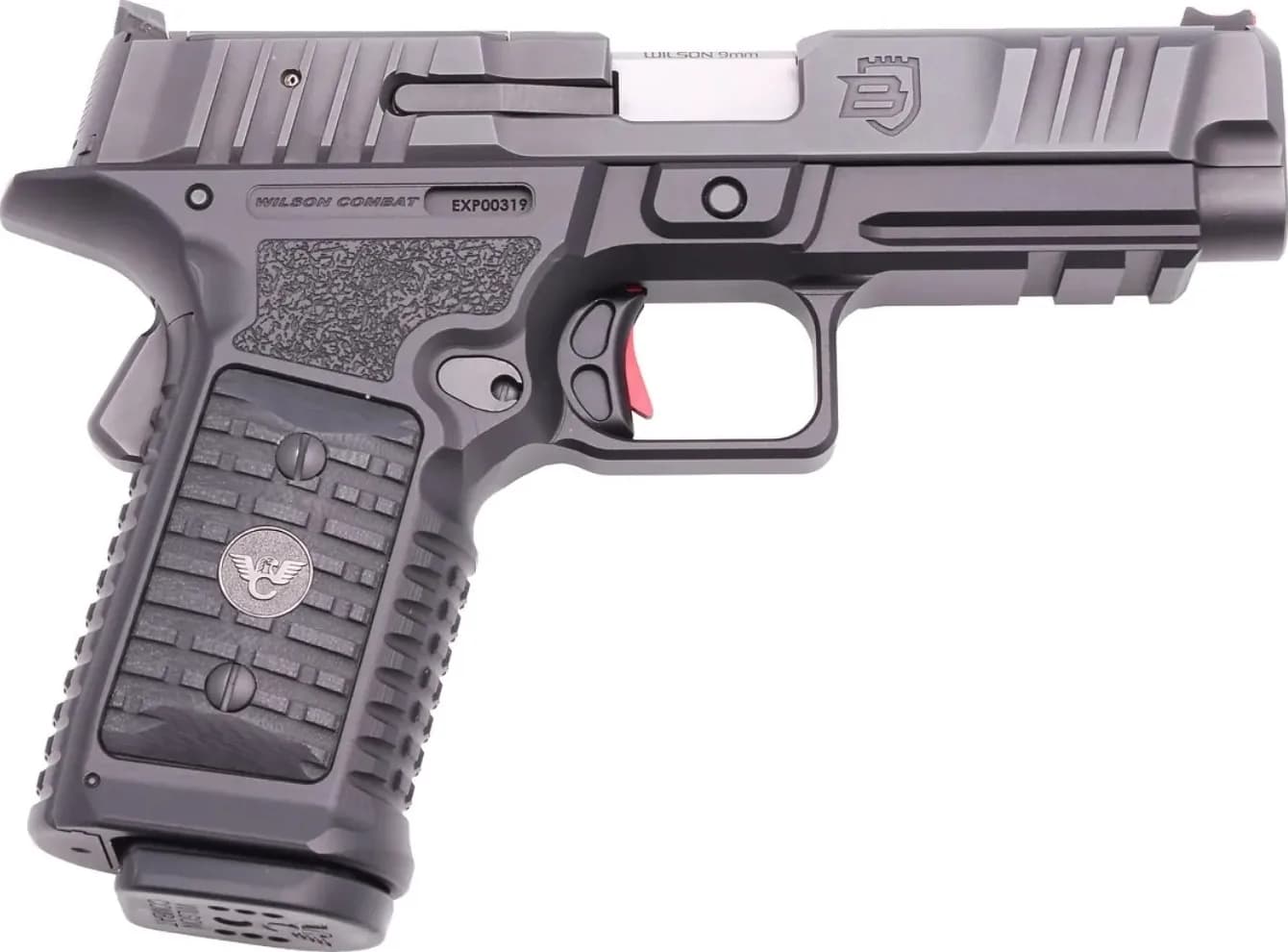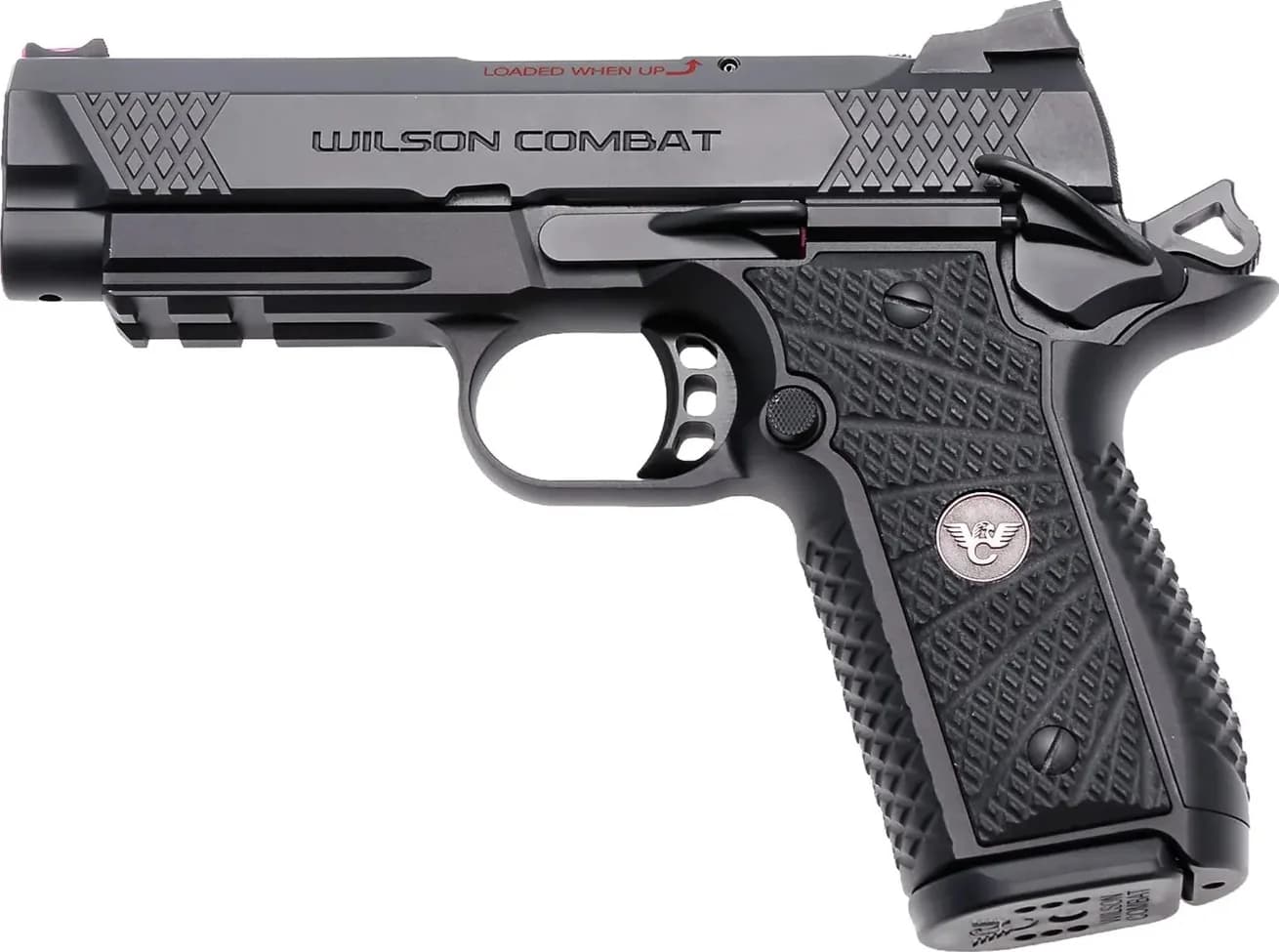
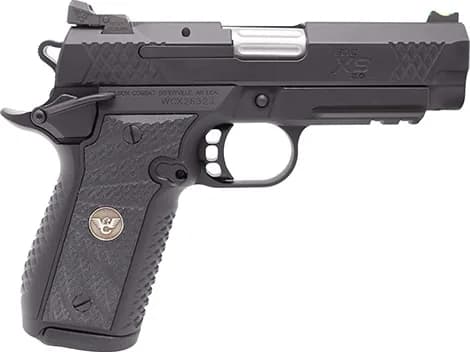
Flat Backstrap, Medium Length Trigger
The EDC X9 began life as Wilson Combat’s answer to a long-standing wish among 1911 fans: a true high-capacity, compact pistol that preserves the 1911 trigger and ergonomics while delivering modern double‑stack capacity. The original EDC X9 was introduced in the late 2010s; the 2.0 version is a deliberate evolution of that platform with revised frame geometry, updated fitment and option packages intended to sharpen concealability and sight/optic compatibility. The California-certified Lightrail variant—added to the California Department of Justice roster in April 2026—represents a factory-configured EDC X9 2.0 built to meet state compliance while offering the railed frame option many users expect for mounting lights or lasers.
At the heart of the EDC X9 family is Wilson’s X‑frame: a compact, high‑capacity frame machined from billet 7075‑T6 aluminum that is intended to feel more like a familiar single‑stack 1911 in the hand than many double‑stack offerings. The X‑frame’s frontstrap and mainspring housing are machined with Wilson’s X‑TAC texture to provide a secure purchase without excessively aggressive bite. The slide is a tri‑top profile built around a single‑lug, tapered‑cone match barrel that locks into the ejection port for reliability and simplified fitting—design choices intended to reduce friction and sensitivity to fouling compared with traditional 1911 lug geometries. The 2.0 refresh introduced further refinements to the frame and user options, including interchangeable backstraps and selectable trigger pad lengths (short/medium/long) so shooters can tailor reach and leverage to their hands. The LightRail designation refers to the optioned dust‑cover/rail on the frame that accepts weapon lights or small accessories.
Those engineering choices translate in practical handling ways: the aluminum X‑frame keeps mass forward of the shooter’s hand relative to a polymer compact, which helps tame muzzle flip and returns the pistol to target quickly. The raised frontstrap geometry encourages a higher, more consistent grip—important for recoil management—while the X‑frame’s narrower grip circumference than some other double‑stack designs aids concealability. The modular backstraps and trigger‑pad options allow users to fine‑tune the ergonomics to their grip, and the tri‑top slide profile is compatible with common red‑dot footprints when ordered with optic cuts, making the platform forward‑looking for modern carry and defensive use.
Independent shooting reviews and range testing of EDC X9 2.0 examples repeatedly emphasize its accuracy potential and pleasant trigger characteristics for a compact defensive pistol. The single‑action trigger on a well‑fitted 1911‑type action—combined with Wilson’s careful slide/barrel fit and the option for a medium (factory) trigger pad—produces a crisp, predictable break that many testers describe as a highlight of the package. With quality ammunition and a steady rest, the EDC X9 platform has produced match‑grade groups in published tests and in field reviews.
Recoil is frequently described as moderate and well controlled for a compact 9 mm, especially when the shooter uses the version equipped with the compensator option; reviewers note the compensator flattens the perceived recoil and shortens follow‑up time. Even un‑compensated 4‑inch 9 mm examples tend to track well, aided by the X‑frame weight distribution. Wilson’s ERS (Enhanced Reliability System) and fluted chamber/barrel details are engineering elements intended to improve feeding and reduce sensitivity to fouling; reviewers have reported consistent function across a variety of factory defensive and range loads when the pistol is properly configured and broken in. Durability reflects Wilson Combat’s positioning as a high‑end builder: materials, fit and finish are held to a high standard and the guns are generally reported to stand up to heavy use.
The EDC X9 2.0 Lightrail is explicitly a concealed‑carry/designed EDC platform that also appeals to shooters who want 1911 controls and trigger feel in a modern double‑stack package. Its strengths are concealability relative to its capacity, controllable recoil, and the ability to accept optics and lights when ordered with those options—making it a strong candidate for defensive carry, particularly for owners who prefer a metal framed pistol and a 1911‑style trigger. Reviewers who have tested the pistol in defensive scenarios and everyday carry setups find it eminently practical with the right holster and belt setup.
Limitations are largely driven by cost and familiarity. The EDC X9 is positioned as a premium product with premium fit‑and‑finish; that level of investment puts it well above mass‑market polymer compacts in both purchase price and sometimes parts‑to‑service expectations. The X‑frame disassembly and maintenance differ from striker‑fired polymer pistols and may be less intuitive to shooters unfamiliar with 1911 style takedown; likewise, the larger, heavier aluminum frame compared with many ultralight compacts can be a negative for those who prioritize absolute minimal carry weight. Finally, in jurisdictions that impose magazine capacity limits—California among them—Wilson offers roster‑compliant configurations to meet local law, which changes the available magazine count for buyers in those states.
Wilson Combat markets the EDC X9 2.0 as a bridge between the classic 1911 experience and modern high‑capacity carry pistols. The platform compares differently depending on what metric the buyer prioritizes: in terms of build quality, customization and trigger feel it sits above mainstream polymer compacts and alongside other premium 1911‑style and 2011/competition‑grade offerings; in raw price‑to‑rounds terms it is more expensive than mass‑market carry guns. Reviewers and industry reporting place the EDC X9 in a premium category—valued for its engineering, materials and customization options—rather than as a value leader. Market‑data aggregators and dealer pricing trends show that EDC X9 models typically trade at a considerable premium to baseline polymer compacts, reflecting the brand’s reputation and the cost of precision manufacturing. For buyers who prize a 1911 trigger, build provenance and the ability to order factory optics/rail options, the EDC X9 2.0 is competitively unique; for those focused purely on lowest‑cost carry solutions, it is a different calculus.
The EDC X9 2.0 Lightrail CA variant is effectively Wilson’s way of making this premium platform available to owners in a restricted market while preserving the core handling and option set that define the model. For shooters who want a high‑quality, 1911‑inspired carry pistol with modern features—and who accept the associated premium—this model answers that brief with careful engineering and a level of finish that supports the Wilson Combat reputation.
Start with a practical guide if you want a faster way to narrow the field before comparing specific models.
Learn how to choose the right 9mm handgun based on size, budget, and how you plan to use it.
Read guideCarry-focused shoppersLearn how to choose the right concealed carry handgun based on size, comfort, safety, and everyday usability.
Read guideComparison-focused shoppersA practical guide to comparing handguns the right way: what actually matters, what to ignore, and how to use comparison tools effectively.
Read guide