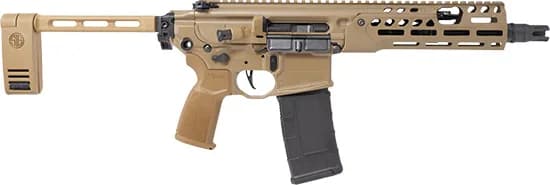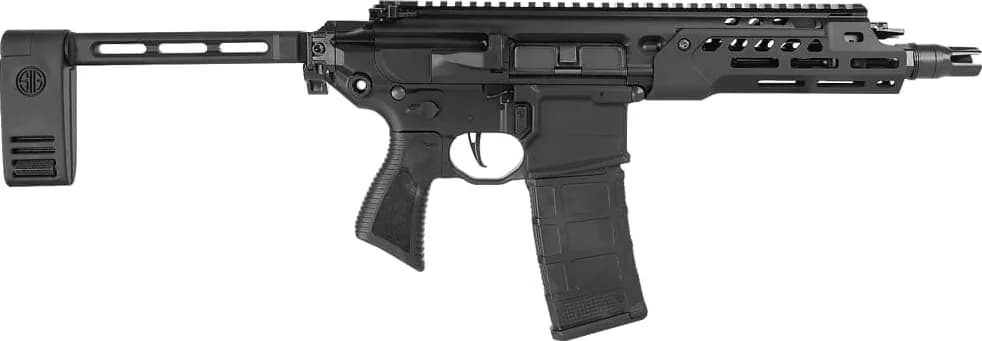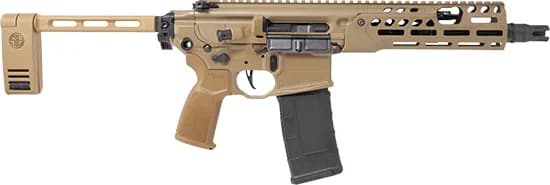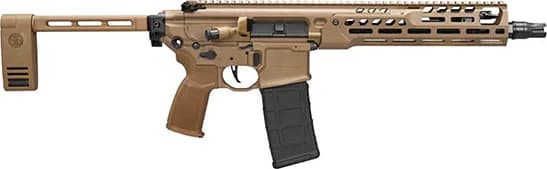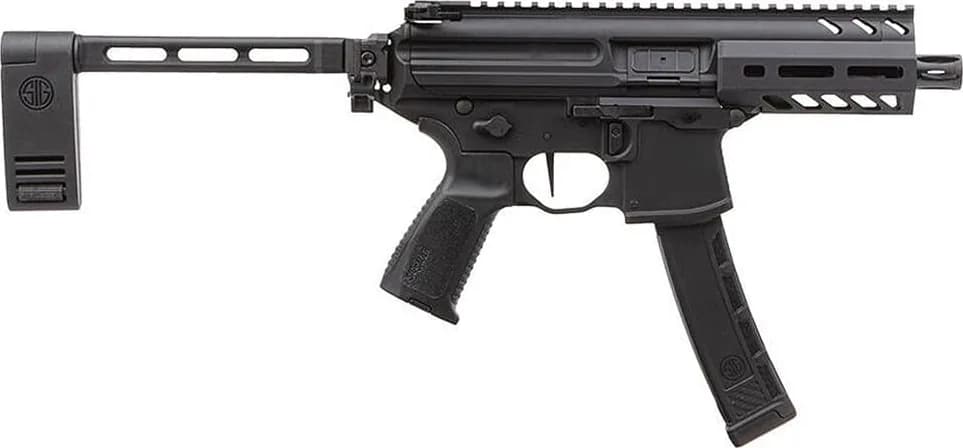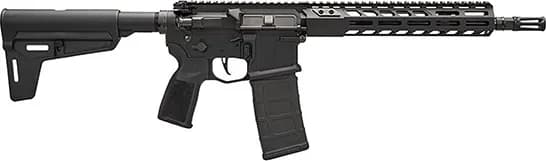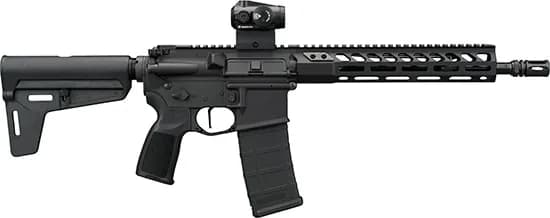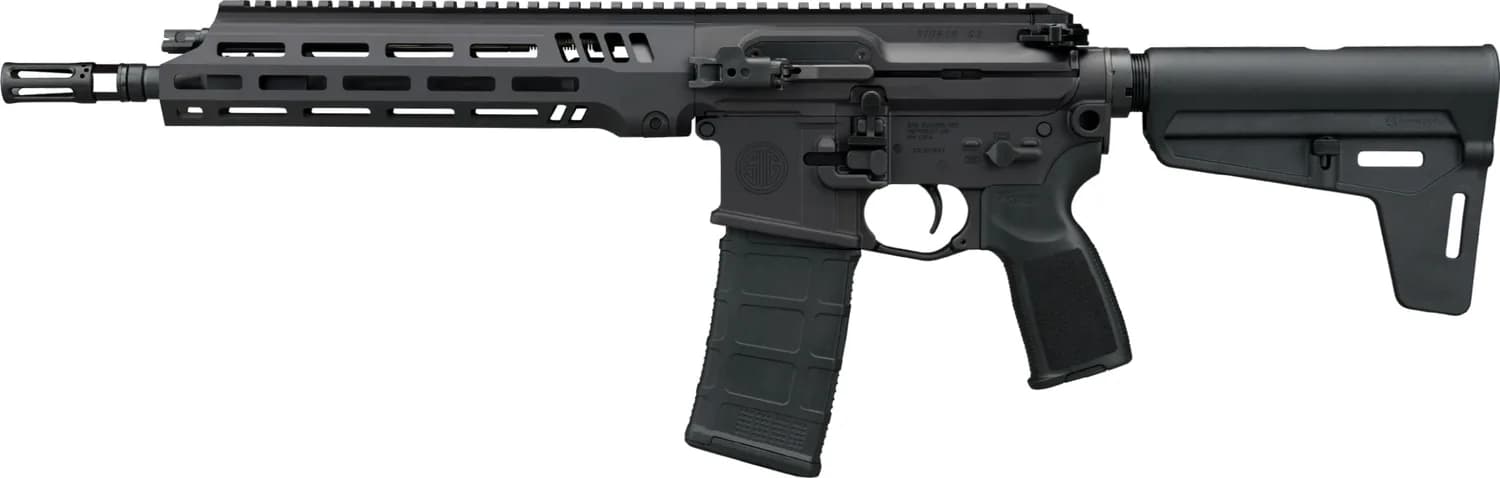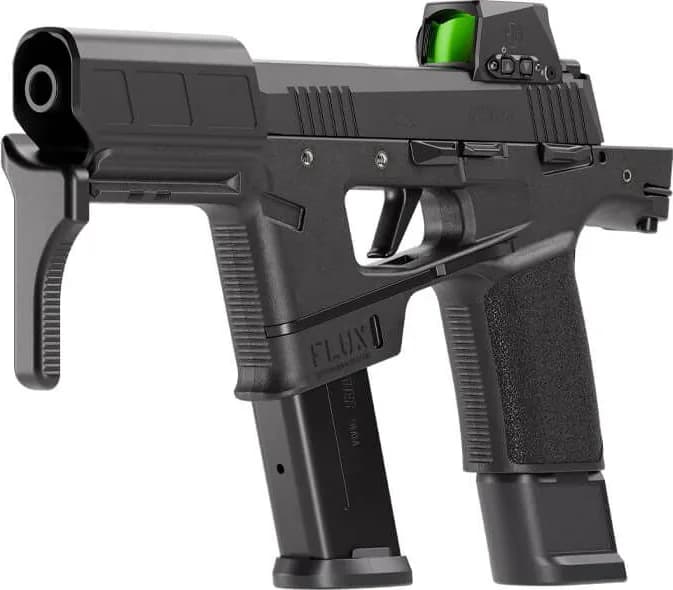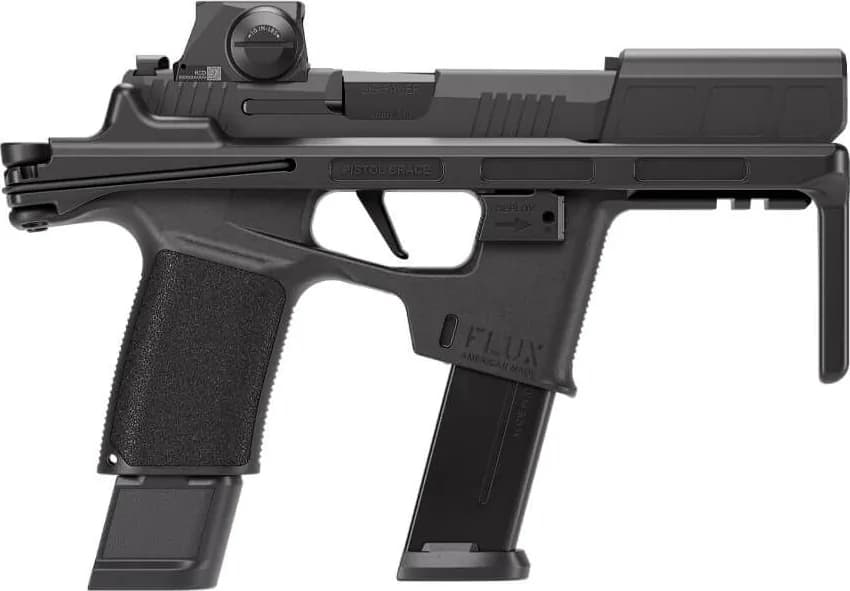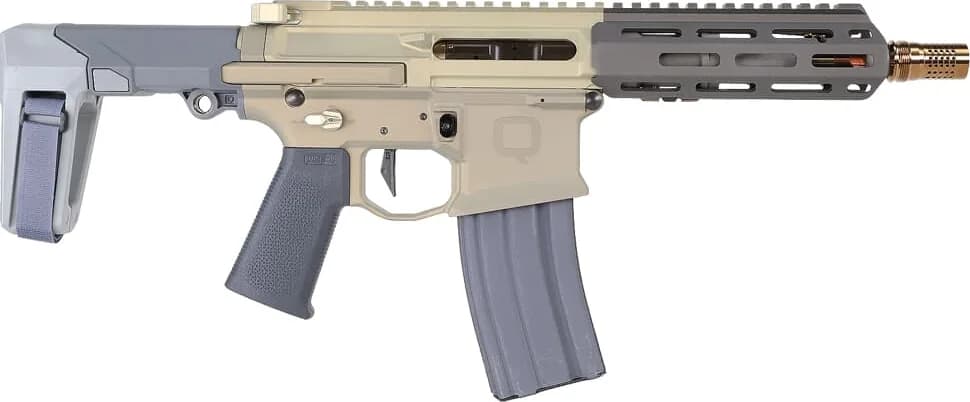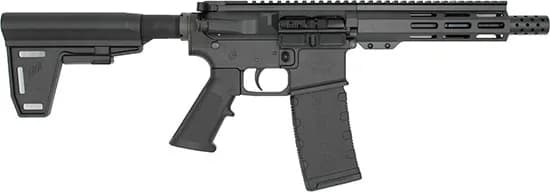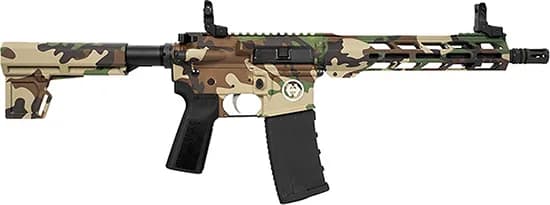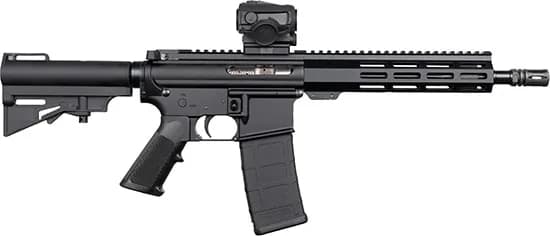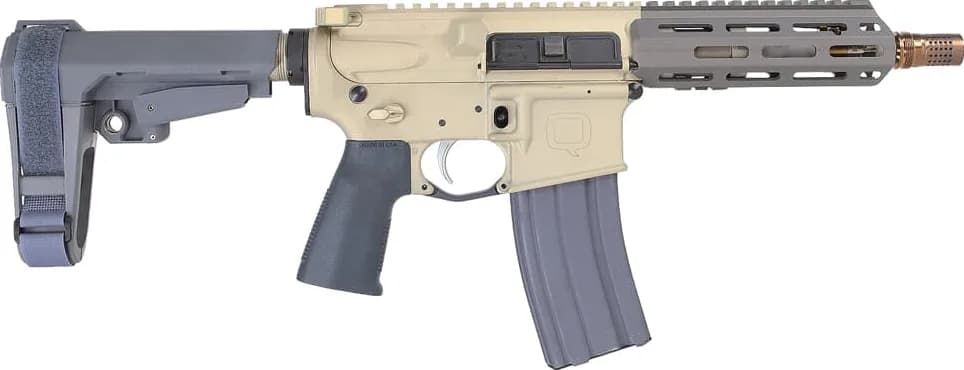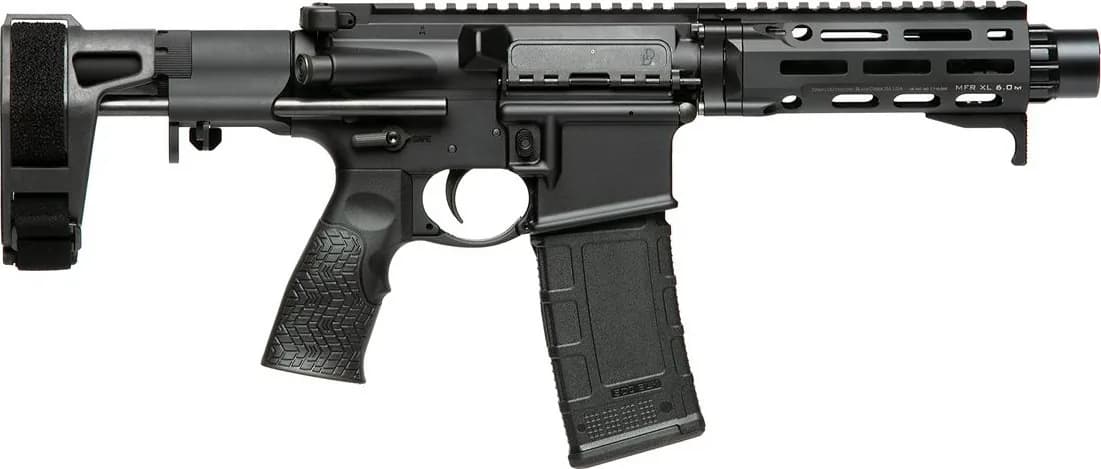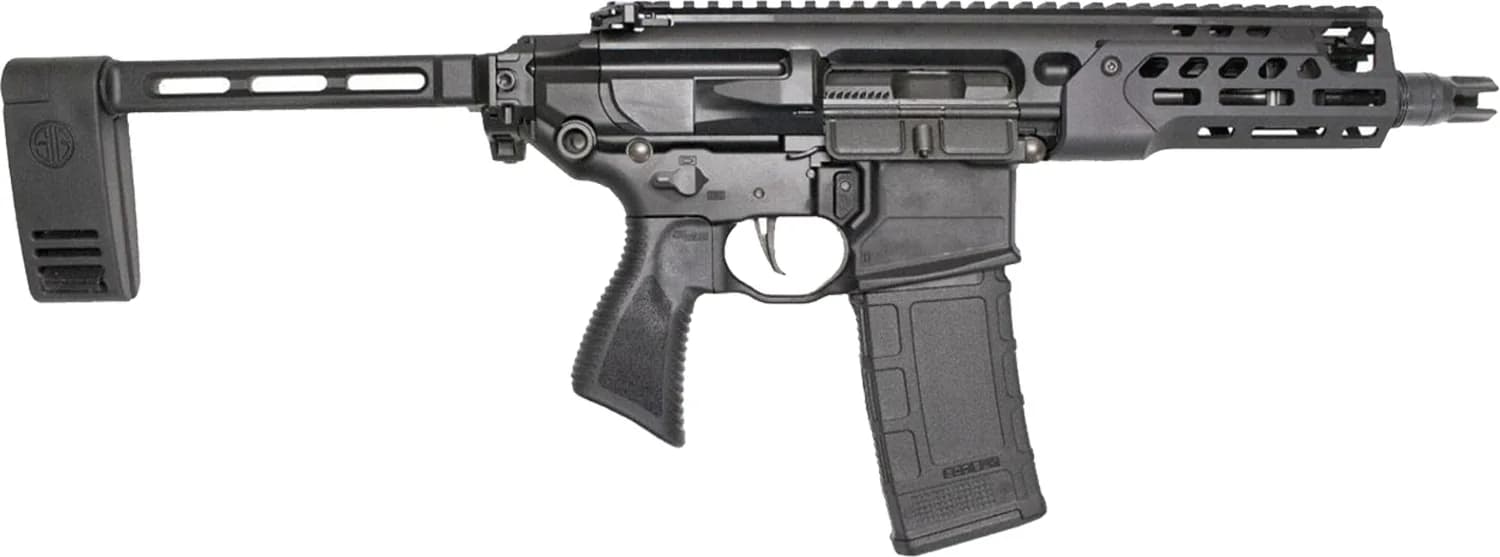
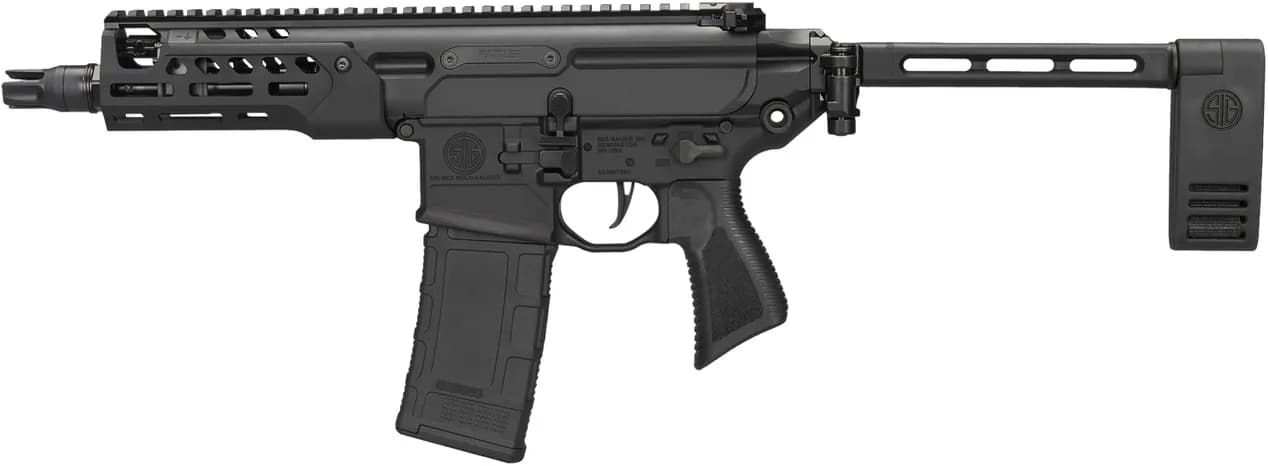
Flat Blade Match Trigger, Folding Pistol Cane Brace, QD Suppressor-Ready Flash Hider, 5/8x24 Threaded
The MCX RATTLER‑LT is Sig Sauer’s compact iteration of the MCX family that marries the original Rattler concept—an ultra‑compact personal defense weapon—with the “LT” (lightweight / LT family) design refinements developed for the later MCX‑SPEAR line. The Rattler nameplate began as SIG’s short‑barreled, PDW‑oriented MCX offering; the RATTLER‑LT adapts that footprint to the third‑generation MCX architecture (LT), arriving in SIG’s catalog and dealer materials as the company extended the LT improvements across MCX variants. SIG’s product listings identify the model as the 6.75‑inch .300 AAC Blackout pistol version with a folding pivoting contour brace and a 30‑round magazine as standard equipment.
The MCX family has long been marketed to military, law‑enforcement and civilian customers seeking a modular, suppressed‑friendly short‑stroke piston rifle system. The Rattler platform itself drew formal interest from U.S. special operations elements and later figured in SOCOM procurement initiatives; SIG’s continued refinement and the LT derivative reflect that operational lineage, bringing features developed for elite users into the broader commercial product line.
The RATTLER‑LT is built around the MCX LT upper/handguard geometry: a free‑float M‑LOK handguard, a cold hammer‑forged 6.75‑inch barrel for the .300 AAC Blackout chambering, and a folding pivoting contour brace (PCB) that preserves the MCX’s ability to be used in very compact configurations. SIG’s dealer materials list the model as a complete pistol package with a single 30‑round magazine and identify the 6.75‑inch .300 BLK barrel and fold‑brace configuration as defining features.
Engineering choices on the LT platform—lightened handguard profiles, LT‑series barrel geometry and an emphasis on suppressor compatibility—translate to a package that is compact without feeling toy‑like. The MCX’s short‑stroke gas piston system removes the AR buffer‑tube dependency, allowing folding braces and stocks that shorten the overall length when stowed. The RATTLER‑LT’s muzzle device and gas system are set up for suppression; SIG’s product literature and accessories line describe clutch‑style QD compatibility and muzzle threading appropriate to 300 BLK suppressors. These design elements were expressly intended to make the platform efficient with both supersonic and subsonic .300 BLK loads when a suppressor is fitted.
Ergonomics are familiar to AR‑pattern users—ambidextrous controls, a flat‑blade match trigger option in LT configurations, and a grip/receiver layout compatible with common lower parts kits. The LT handguard and shorter barrel concentrate mass toward the receiver, aiding maneuverability in confined spaces; critics and owners describe the balance as “compact and forward of the hands,” favoring quick target transitions but making the gun feel more handheld than a full‑length carbine.
Independent reviews and early owner reports place the RATTLER‑LT in a positive light for accuracy and suppression performance for its size class. Range tests of the 6.75‑inch .300 BLK configuration demonstrate repeatable accuracy at typical PDW engagement ranges, and the platform’s adjustable gas system aids reliability with both suppressed and unsuppressed shooting. Reviewers who evaluated the LT uppers and complete pistols note that the cold hammer‑forged barrel and adjustable gas help maintain consistent cycling across load types when properly set.
Trigger feel on LT‑series MCX products that ship with the flat blade/match trigger is widely described as an upgrade over basic AR two‑stage triggers; shooters report a clean, relatively short‑takeup pull that contributes to practical accuracy. Recoil from a 6.75‑inch .300 BLK barrel is perceptibly sharper than a longer‑barrel carbine, but the MCX’s gas‑piston system and the mass of the receiver/brake/brace assembly tame impulse enough for rapid, controllable follow‑ups—especially with supersonic rather than very slow subsonic loads.
Owner‑community feedback is generally favorable on reliability, but it is not without caveats: some users report sensitivity to very slow subsonic ammunition without appropriate gas tuning or with certain suppressor mounts, and heat build‑up along the handguard can be pronounced on sustained strings from such a short‑barrel package. These are common tradeoffs for compact, suppressor‑capable pistols and are widely discussed by early adopters.
The RATTLER‑LT is purposefully niche: it excels as a compact truck, patrol or vehicle defense tool and as a suppressed home‑defense and range gun for users who want .300 Blackout’s versatility in short barrels (supersonic power with supersonic ammo; excellent suppression with subsonics). Its size and folding brace make it easy to stow and maneuver in confined environments, and its compatibility with MCX‑LT accessories allows owners to tailor the gun for suppressor use, optics, and mission‑specific furniture.
Limitations flow from physics and regulation: the short barrel reduces muzzle velocity compared with longer rifles, limiting terminal performance and long‑range accuracy versus carbine‑length systems. Sustained shooting generates more heat and concussion, and some buyers will find finishing a full complement of suppression‑optimized parts and gas tuning necessary for reliable operation with very low‑energy subsonic loads. Finally, as a pistol‑braced platform it occupies a different legal and practical space than a conventional rifle, which matters for owners considering an SBR conversion or ownership rules.
Within the compact PDW/pistol‑brace market the RATTLER‑LT competes with modern compact AR variants, PDW offerings and small‑frame, suppressor‑oriented platforms. What differentiates the RATTLER‑LT is its MCX LT internals: short‑stroke piston operation, LT‑series suppressor‑native engineering, and the direct carryover of features developed for SIG’s SPEAR programs. That pedigree—together with SIG’s accessory ecosystem and SOCOM interest in Rattler configurations—positions the RATTLER‑LT as a premium, purpose‑built option rather than a budget clone. Prospective buyers weighing value should compare the RATTLER‑LT’s out‑of‑the‑box suppressor readiness and modularity against similarly compact offerings and account for the likely need for optics, suppressor mounts and magazines to realize the platform’s full potential.
In sum, the MCX RATTLER‑LT is a tightly packaged, suppression‑aware evolution of the MCX Rattler concept. It is designed for shooters who prioritize compactness, modularity and suppressed performance, and it brings a suite of engineering choices—adjustable gas, match trigger, LT‑handguard and suppressor‑oriented muzzle devices—that make those priorities practical. For its intended roles the RATTLER‑LT is a credible, thoughtfully executed entry; like any high‑performance, compact firearm, it requires informed ammunition selection and setup to extract the best, most reliable results.
Start with a practical guide if you want a faster way to narrow the field before comparing specific models.
Learn how to choose the right handgun for home defense based on safety, ease of use, and practical everyday considerations.
Read guideComparison-focused shoppersA practical guide to comparing handguns the right way: what actually matters, what to ignore, and how to use comparison tools effectively.
Read guideFirst-time buyersLearn how to choose your first handgun by focusing on size, comfort, ease of use, and budget instead of getting lost in unnecessary details.
Read guide