Affiliate disclosure: HandgunCloud may earn a commission if you continue to the retailer and complete a purchase.
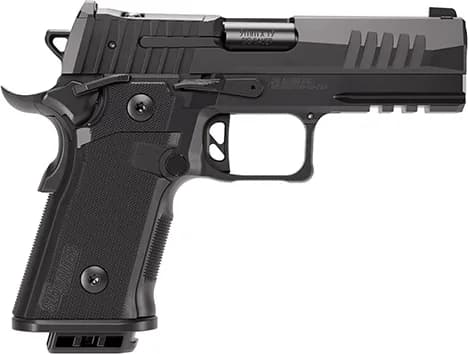
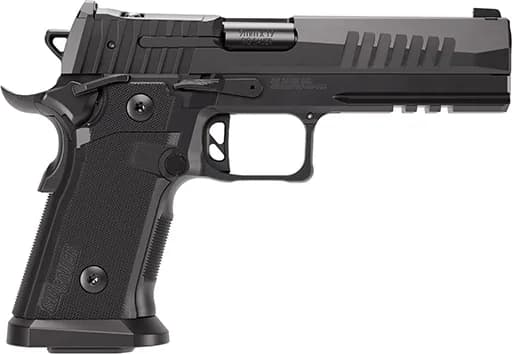
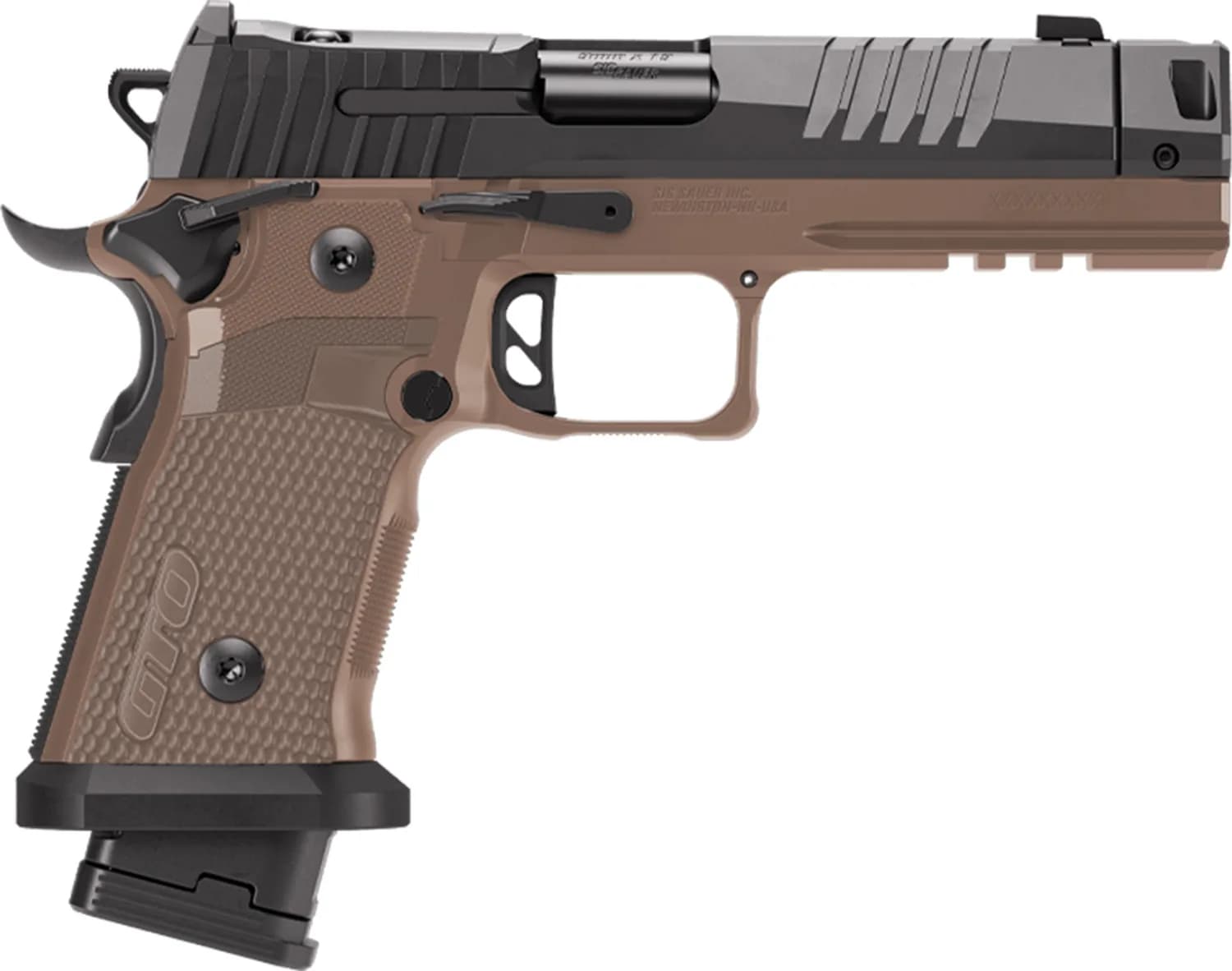
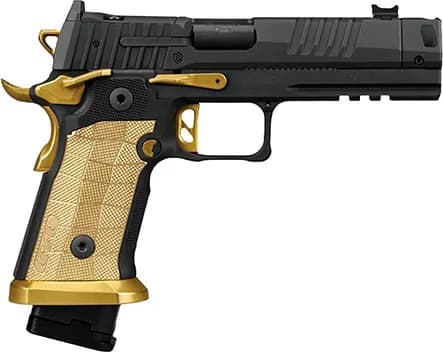
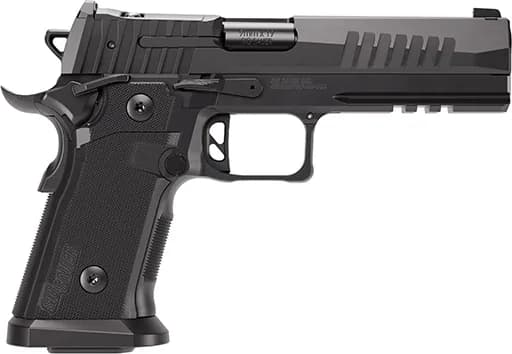
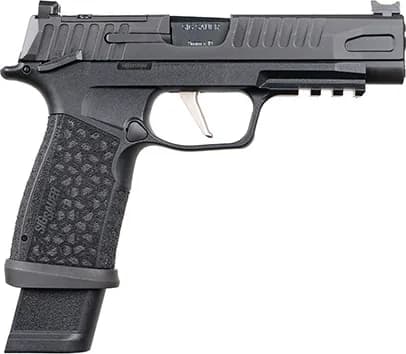
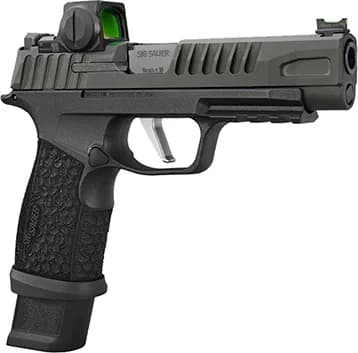
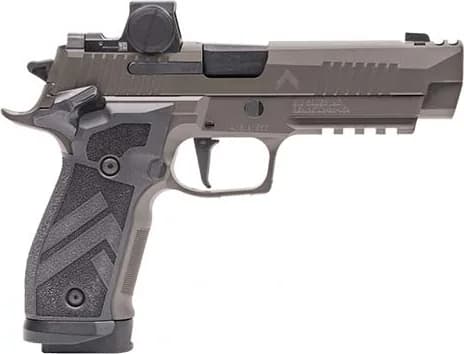
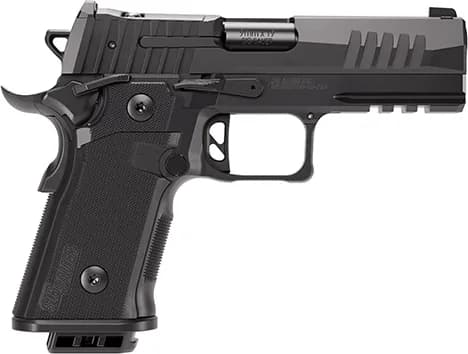
Buy from Impact GunsThe P211 GT4 is Sig Sauer’s compact addition to the P211 family — the company’s modern double‑stack, hammer‑fired take on the classic 1911/2011 platform. Sig announced the GT4 (and its full‑size sibling, the GT5) at the January 2026 product launch and displayed both at SHOT Show that month, positioning the GT4 specifically as a carry‑oriented, non‑compensated 4.2‑inch variant while the GT5 targets competition and duty use with a 5‑inch bull barrel.
The P211 itself debuted as Sig’s effort to bring 2011‑style shootability into a more modern, production‑scale package. Where older 2011 designs relied on proprietary magazines and hand fitting, Sig has designed the P211 line to integrate with its existing ecosystem and factory processes — a strategy the company pushed further with the GT4 and GT5. Early industry coverage and SHOT Show reporting framed the GT4 as the “carry” half of that strategy: a compact, high‑capacity single‑action pistol for shooters who want 2011 ergonomics without the logistics headaches of legacy double‑stack magazines.
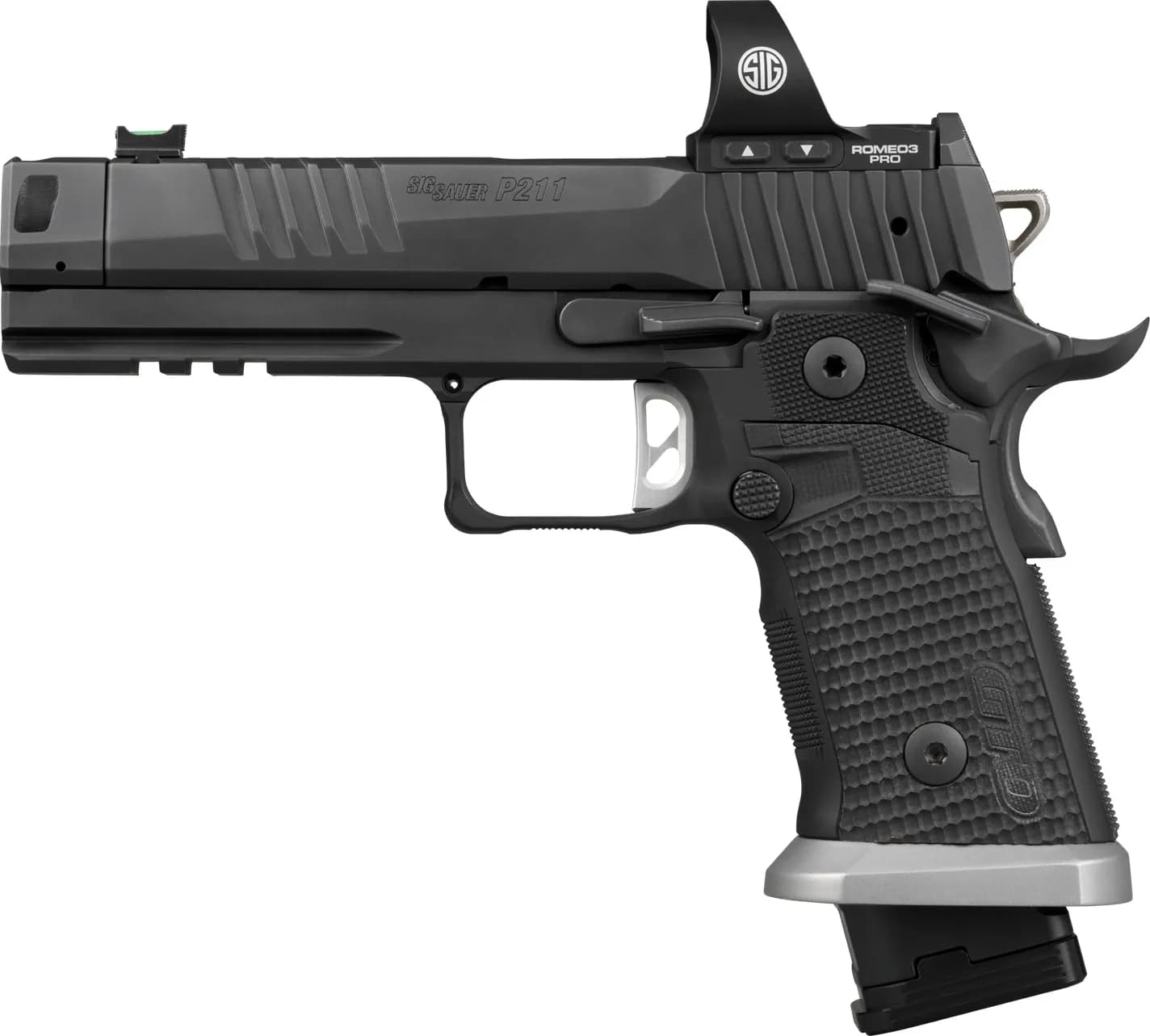
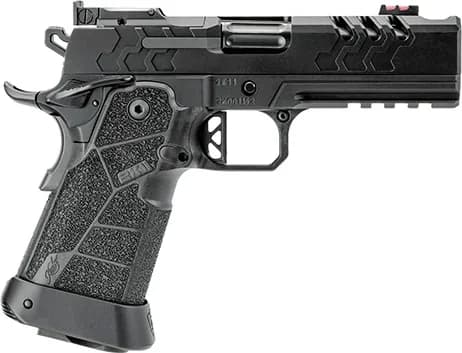
Mechanically the P211 is a modern hammer‑fired, short‑recoil, mechanically locked pistol that preserves key 1911 ergonomics — grip safety, ambidextrous thumb safeties and a single‑action trigger geometry — while adopting contemporary manufacturing choices. Sig describes the GT4 as a steel‑framed pistol with a precision alloy grip module finished with G10 panels; it uses a target‑crowned 4.2‑inch bull barrel, a carry‑length dust cover with an integrated three‑slot accessory rail, and the company’s SIG‑LOC PRO optic footprint (direct‑mount for popular mini‑red dots).
A number of engineering choices matter for how the gun handles. The steel frame and heavy bull barrel increase mass at the axis of recoil, which reduces muzzle rise and softens the perceived impulse — a deliberate tradeoff for controllability at the cost of added weight. Sig’s straight‑pull trigger and flat skeletonized shoe echo modern competition ergonomics and are intended to deliver a crisp, repeatable break with minimal take‑up. The P211’s use of Sig’s P320‑pattern steel magazines (supplied as two 21‑round and one 17‑round magazine with the GT4) is a strategic design decision: it leverages a widely adopted, proven magazine platform rather than a bespoke 2011 magazine that can be expensive and finicky. The slide is optic‑ready to the SIG‑LOC PRO footprint and is shipped with X‑RAY 3 day/night front and black rear iron sights on the factory GT4.
On paper the GT4’s specifications create a balance that favors shootability over absolute carry lightness. With a loaded weight in the same neighborhood as other full‑metal carry 2011s, the GT4 is heavier than a polymer micro‑ or compact duty pistol but offers a noticeably softer recoil impulse and a stable sight picture for rapid follow‑ups. The low‑profile steel magwell on the GT4 improves reload speed without becoming as obtrusive as a full competition magwell, which helps concealability for many shooters while preserving good magazine insertion geometry.
Early hands‑on coverage from SHOT Show and contemporaneous reporting highlighted the straight‑pull trigger and the platform’s “flat‑shooting” feel; trade‑show testers noted that the combination of barrel profile, mass, and grip geometry produced a smoother impulse than many short‑slide 2011‑style pistols. Sig’s operator documentation also underscores modern safety architecture and conventional short‑recoil operation, which align with the company’s emphasis on durability and drop safety.
Community reports are generally positive about initial reliability, with many shooters praising the use of P320‑pattern magazines as a practical boon for availability and cost of spares. As with any new platform, a handful of early owners reported minor fit‑and‑finish or break‑in observations on forums; these are anecdotal and normal for a recent platform release, and manufacturers and owners commonly address them during early production runs.
The GT4’s bull barrel and full‑metal construction point it toward inherent mechanical accuracy: heavier barrels and solid lockup generally yield better shot‑to‑shot consistency than lighter, thin barrels. Range impressions from industry coverage describe the GT4 as capable of tight groups with defensive‑grade 9mm loads and rewarding with controlled‑pairs and transitions thanks to the damped muzzle rise. The straight‑pull skeletonized trigger is widely reported to provide a clean, predictable break, though long‑term trigger maintenance and wear characteristics will be better judged after longer duty cycles and extended testing by independent reviewers.
Recoil mitigation is the GT4’s primary advantage over comparable short‑slide 2011 clones: the additional mass and bull barrel translate into a softer, slower‑moving recoil impulse that most shooters find easier to control for rapid, accurate follow‑ups. On durability, Sig’s decision to use established magazine architecture and modern machining practices suggests a conservative approach to field longevity; definitive endurance data will come from longer‑term duty and high‑round‑count testing. Early community feedback shows encouraging function reliability, supported by the P320 magazine ecosystem.
The GT4 is built to straddle roles: it is intended primarily as a carry‑capable 2011‑style pistol for shooters who prize capacity and a single‑action trigger, but it retains attributes that make it appealing for range and occasional competition use. It excels where controllability and fast follow‑up shots are priorities — for example, for shooters who want higher magazine capacity in a hammer‑fired, single‑action package and who accept the trade‑off of extra weight for reduced recoil. The factory optic readiness and comfortable grip geometry also make it a practical candidate for those who prefer red‑dot equipped defensive pistols.
Limitations follow naturally from its design: the GT4 is heavier and larger than modern polymer compacts, which can make it harder to carry comfortably for some users; the slide‑and‑barrel mass that improves shooting comfort also increases concealment and carry demands. Shooters who want the lightest possible daily‑carry gun or who require very deep concealment will likely prefer a smaller polymer striker‑fired handgun. Additionally, while using P320 magazines addresses a major logistical issue of legacy 2011s, it steers the platform toward the P320 magazine form factor, which is itself wider than some single‑stack alternatives.
The P211 GT4 represents Sig’s deliberate entry into a segment historically dominated by boutique 2011 makers: high‑capacity, single‑action, competition‑grade pistols that often carry premium prices. By leveraging in‑house manufacturing scale, modern design choices (P320‑pattern magazines, direct‑mount optic footprint, G10 panels) and established safety features, Sig positions the P211 line to compete on performance at a more accessible price tier than many legacy 2011 offerings. Industry commentary at SHOT Show treated the P211 as a disruptive move — offering much of the 2011 experience with fewer logistical downsides and at a street price that undercuts traditional premium 2011 makers. The P211 GT4’s blend of capacity, controllability, and optics‑ready ergonomics is its main competitive advantage.
As an editorial assessment based on early published technical details and first‑look impressions, the GT4 is best read as Sig’s pragmatic modernization of the double‑stack 1911 formula: it keeps the elements that shooters cite as most valuable (single‑action trigger, low bore axis, stout barrel) while solving distribution and magazine issues that have long constrained broader adoption of the 2011 style. Longer‑term independent testing and broader user experience will ultimately determine where it sits in the same conversations that today revolve around established high‑end competition pistols and duty‑grade carry guns.
Start with a practical guide if you want a faster way to narrow the field before comparing specific models.
Learn how to choose the right 9mm handgun based on size, budget, and how you plan to use it.
Read guideHome-focused buyersLearn how to choose the right handgun for home defense based on safety, ease of use, and practical everyday considerations.
Read guideComparison-focused shoppersA practical guide to comparing handguns the right way: what actually matters, what to ignore, and how to use comparison tools effectively.
Read guide