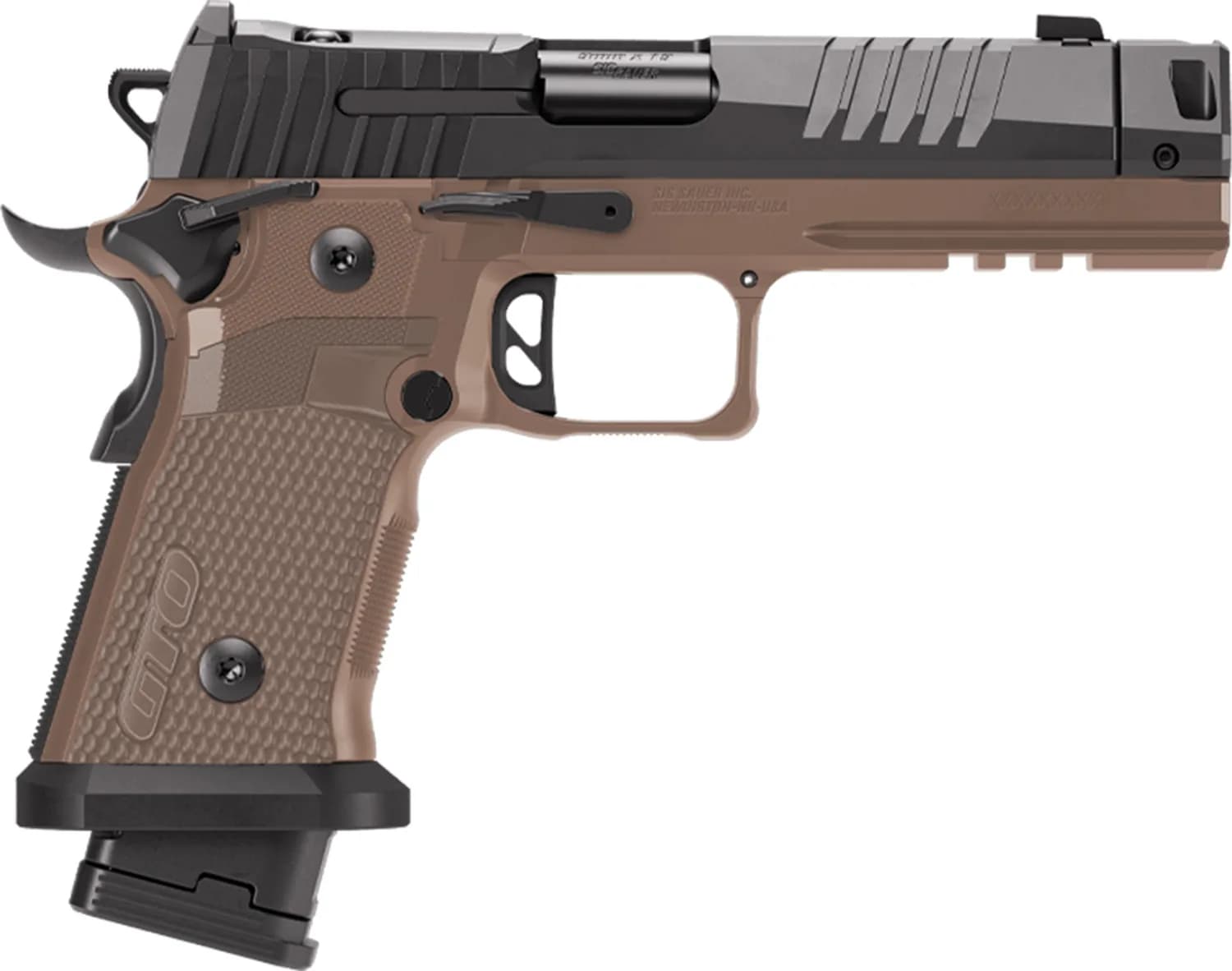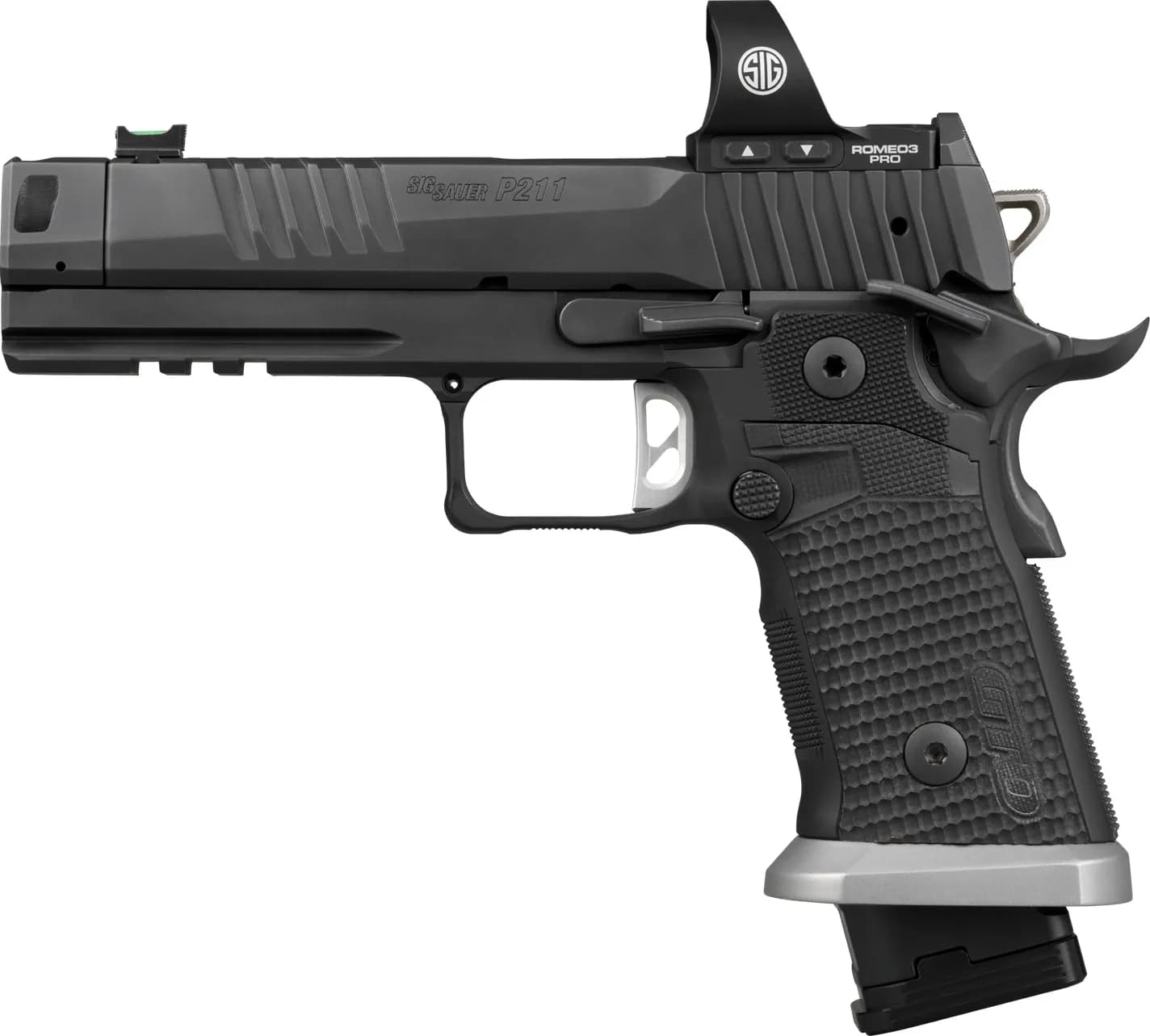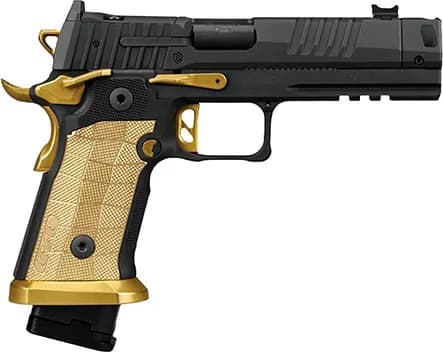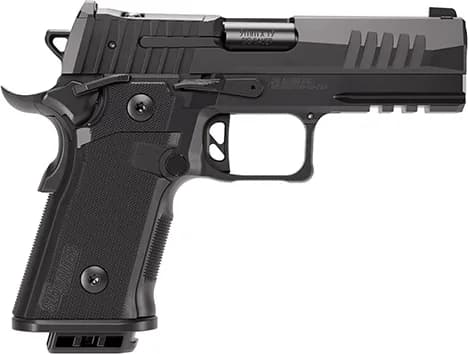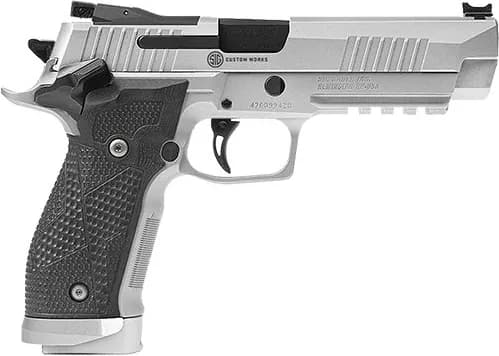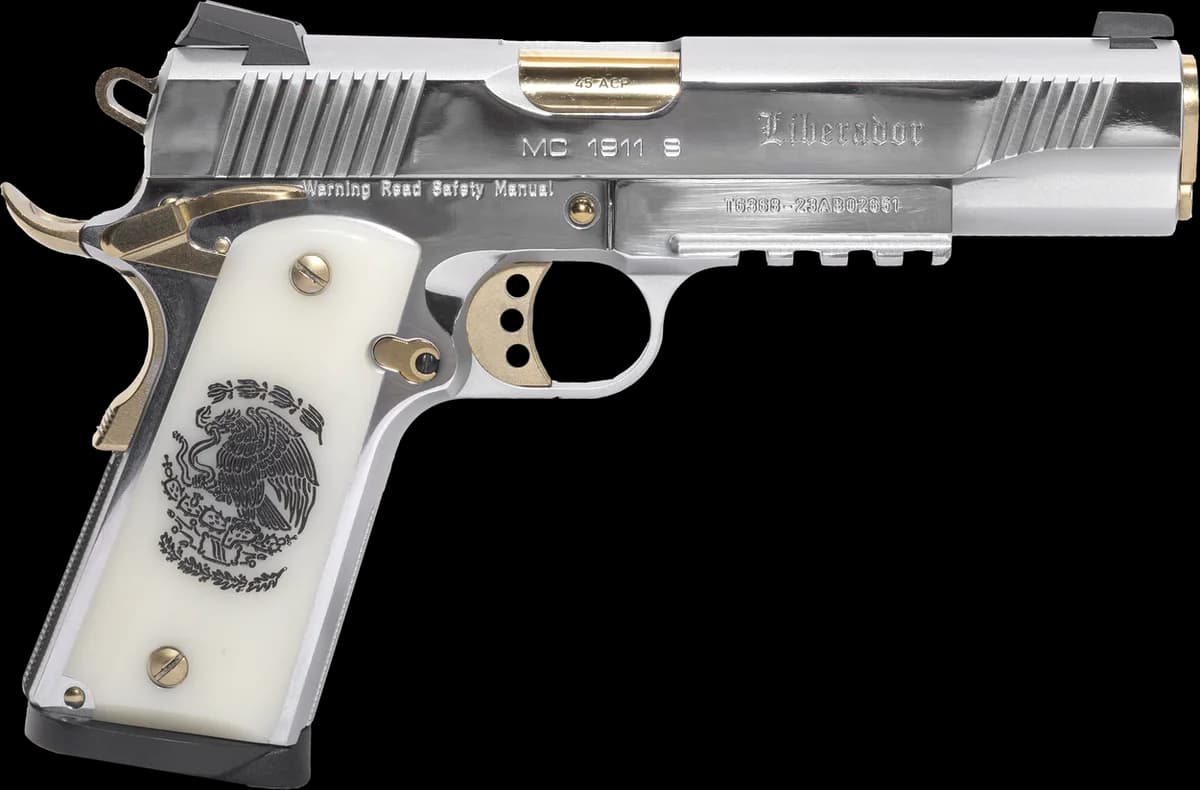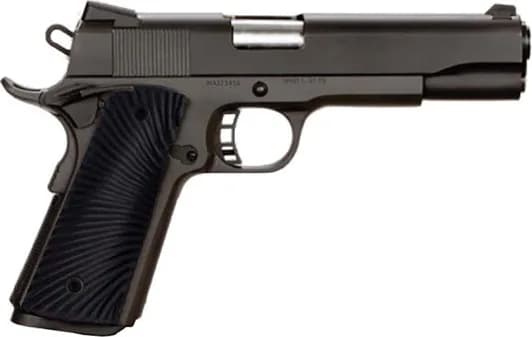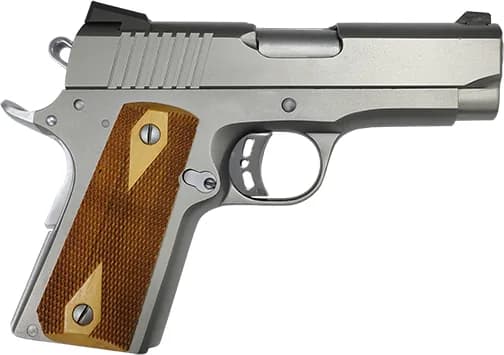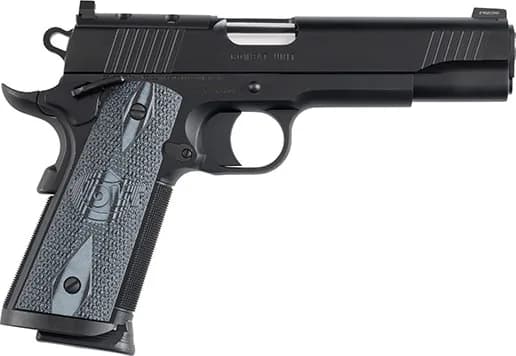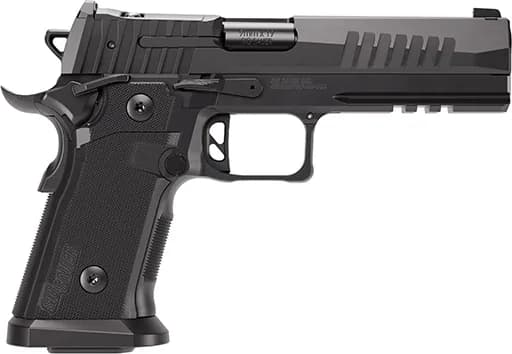
G10 Grip Panel, 5 Bull Barrel, Ambidextrous Controls, SIG-LOC Pro Footprint, 1913 Picatinny Rail
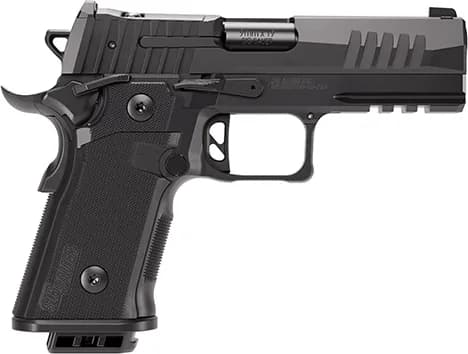
SIG Sauer introduced the P211 GT4 and GT5 variants in January 2026 as extensions of its recently launched P211 family — a modern, double‑stack, hammer‑fired pistol that reinterprets 1911 principles for higher capacity and optics‑ready performance. The GT5 was positioned as the full‑size model in the new line, intended to bridge the gap between competition/duty pistols and SIG’s existing hammer‑fired offerings. The company presented the GT4 and GT5 as complementary options: the shorter GT4 for carry and the longer‑slide GT5 for range, duty, and competition use.
At its core the P211 GT5 is a full‑length, steel‑framed pistol using an alloy grip module and removable G10 panels; SIG built the platform around user familiarity with modern P‑series magazines while keeping classic 1911 ergonomics and a hammer‑fired control system. The GT5’s defining characteristics are a full‑length slide and a 5‑inch target‑crown bull barrel, a SIG‑LOC Pro optic‑ready slide, and a three‑slot Picatinny rail. Controls are ambidextrous and the gun incorporates traditional 1911‑style safeties (including a grip safety), while magazines are P320‑compatible steel magazines supplied in both 21‑round and 17‑round configurations. These choices drive a forward‑set center of gravity, a long sight radius, and a platform that’s deliberately tuned for steadiness and fast follow‑ups.
Real‑world handling reflects those engineering choices. The heavy, full‑length steel frame and 5‑inch bull barrel move mass forward, lowering perceived muzzle flip and contributing to a more sedate recoil impulse compared with lighter polymer‑framed 9mm pistols. The SIG‑LOC Pro slide footprint and optic‑ready machining reduce the need for aftermarket slide work for red‑dot mounting, and the Picatinny rail lets users add lights or lasers without adapters. The straight‑pull, flat skeletonized trigger seen across the P211 line is aimed at delivering a consistent, repeatable break while preserving the single‑action characteristics that many competition and duty shooters prefer. The operator manual and parts documentation emphasize the P211’s short‑recoil, locked‑breech mechanics and SIG’s standard safety features.
Published reviews and early hands‑on impressions for the P211 family — primarily focused on the GTO variant that preceded the GT4/GT5 introductions — praise the platform for its flat, controllable recoil and practical accuracy at typical defensive and competitive distances. Testers consistently note that the heavy front end and bull barrel make the P211 “flat” in recoil and comfortable to shoot for extended strings, with good inherent accuracy out of the box. Review evaluations also emphasize that the straight‑pull trigger is clean and consistent, contributing to fast, accurate follow‑ups when the shooter’s fundamentals are sound.
Specific, published range tests of the GT5 remain limited at the time of writing, but early community reports and dealer sightings indicate the GT5 is arriving in retail channels and being compared favorably to the GTO and other 2011‑style pistols for competition and duty use. Where testers have compared GT‑series pistols, comments center on the GT5’s longer sight radius and slightly different reciprocating mass compared with shorter variants — attributes that typically favor accuracy and perceived recoil reduction but can trade off a touch of slide speed. Community feedback also stresses that the P211’s use of proven P320‑pattern magazines is a logistical advantage.
Durability and reliability reporting is still developing for the GT5 specifically, but SIG’s documentation and early reviews of the platform indicate robust construction and conservative mechanisms aimed at service use. The operator manual describes conventional short‑recoil, locked‑breech mechanics and standard safeties that are familiar to experienced users, and SIG’s parts and service network supports the line. As with any new platform, longer‑term durability trends and endurance testing will refine the public assessment over time.
The GT5 is engineered to excel where a long sight radius, soft‑shooting recoil characteristics, and large magazine capacity matter. That makes it a natural fit for plate‑and‑action competitive shooting, practical carbine‑style pistol matches, and for duty or home‑defense roles where a full‑size, controllable 9mm with a high magazine count and optics readiness is desirable. Its weight and size make it less appropriate as a daily concealed‑carry option for most users, but excellent for range‑day work, competition, or a duty holster. The 5‑inch barrel and steel frame favor precision and controllability over the carry‑friendly features found on compact pistols. Early adopters point to the GT5 as a “race‑ready” gun in fundamentals while still offering duty‑suitable controls and mounting options.
Limitations mirror this design focus: the GT5 is not optimized for deep concealment due to its length and weight, and shooters who prize minimal carry weight or want a compact profile will prefer shorter‑slide variants. Additionally, those who require threaded barrels or integral compensation for specific competitive divisions should note that some P211 variants (such as the GTO or Spectre Comp configurations) have different barrel/compensator arrangements; the precise configuration will determine suitability for particular match rules.
SIG’s P211 GT5 arrives into a crowded but specialized segment: full‑size, hammer‑fired, 2011‑style pistols aimed at competitors, duty users, and enthusiasts who want an out‑of‑the‑box performance package. Its most immediate competitors are other premium steel‑framed 2011 derivatives that prioritize low muzzle flip and high capacity. The P211’s use of readily available P320‑pattern magazines, an optic‑ready SIG‑LOC Pro slide, and SIG’s distribution and aftermarket support are strategic advantages that support its value proposition. Early commentary from shooters and industry outlets positions the P211 family as a credible entrant that marries traditional hammer‑fired ergonomics with modern modularity and optics readiness; how the GT5 settles into the market will depend on long‑term reliability data, user preference for the GT5’s weight/handling tradeoffs, and how SIG prices and supports the line relative to established 2011 makers.
What remains clear is that the P211 GT5 is SIG’s deliberate statement in the high‑performance 9mm arena: a full‑size, high‑capacity, optics‑ready 1911 derivative that leans into controllability and competition/duty usage rather than lightweight carry. As broader long‑term testing and more independent GT5‑specific reviews become available, shooters will get a fuller picture of its place against entrenched competition models.
Start with a practical guide if you want a faster way to narrow the field before comparing specific models.
Learn how to choose the right 9mm handgun based on size, budget, and how you plan to use it.
Read guideHome-focused buyersLearn how to choose the right handgun for home defense based on safety, ease of use, and practical everyday considerations.
Read guideComparison-focused shoppersA practical guide to comparing handguns the right way: what actually matters, what to ignore, and how to use comparison tools effectively.
Read guide