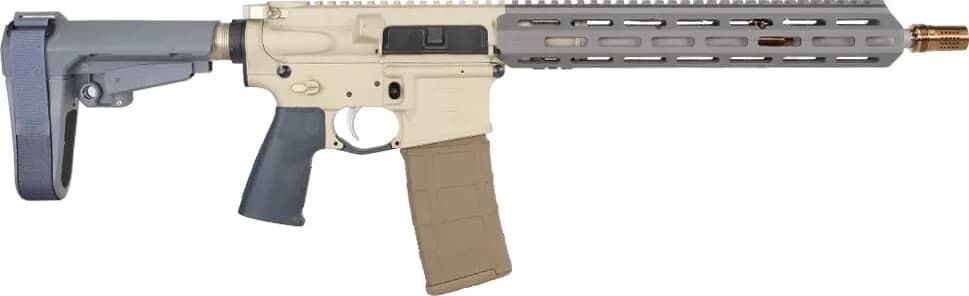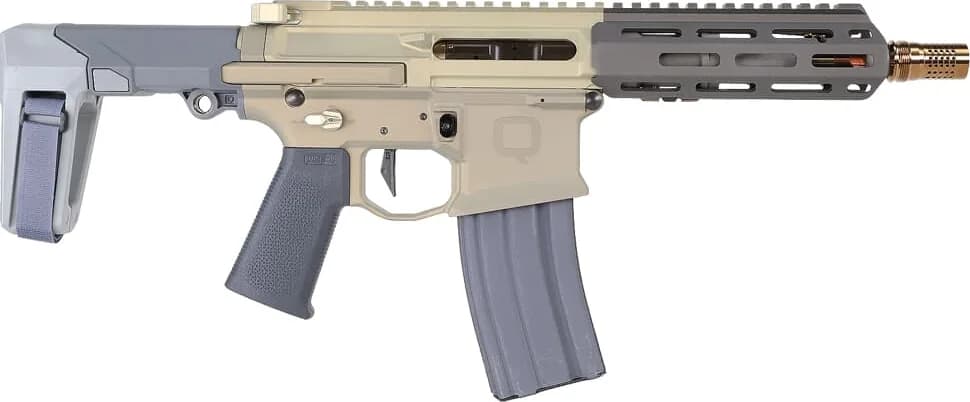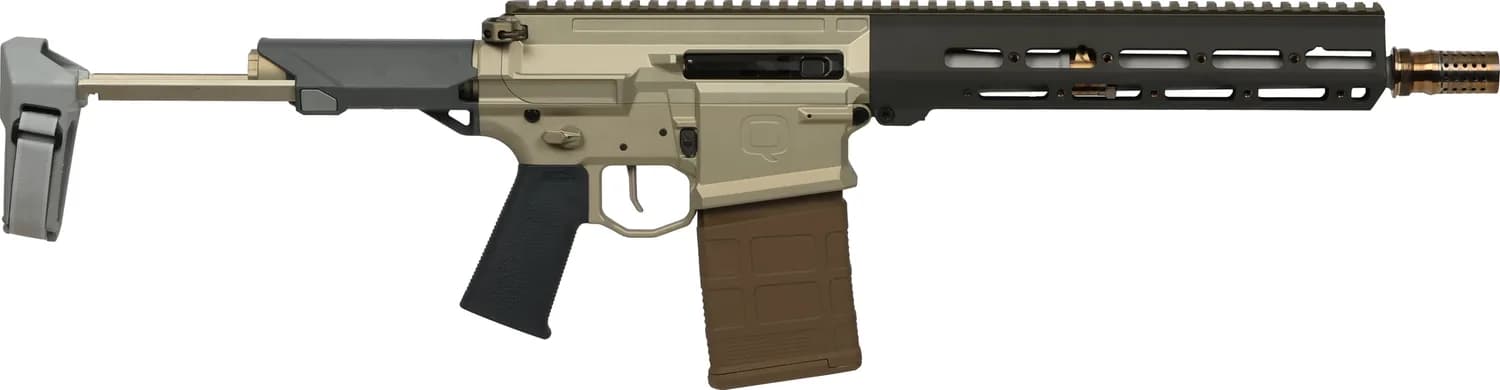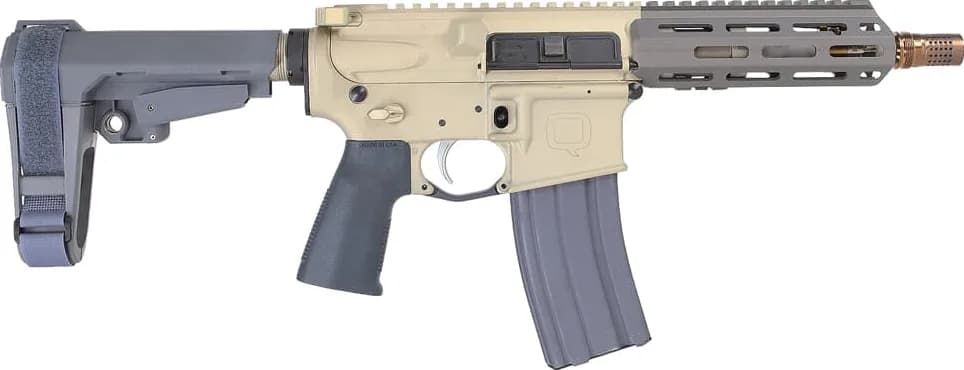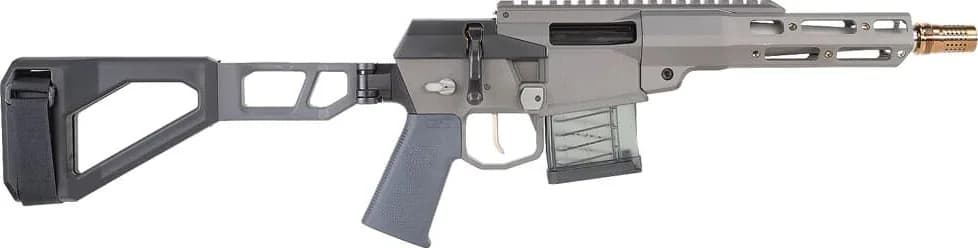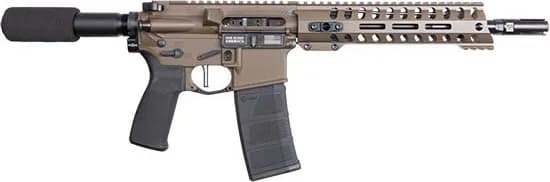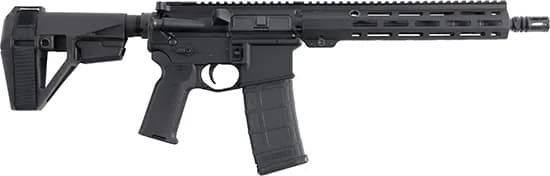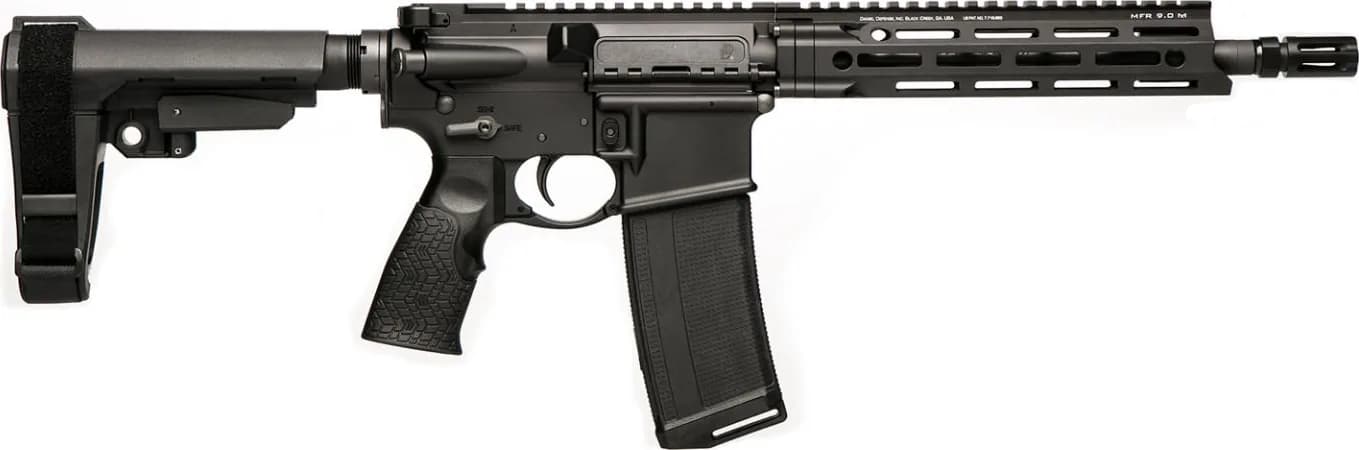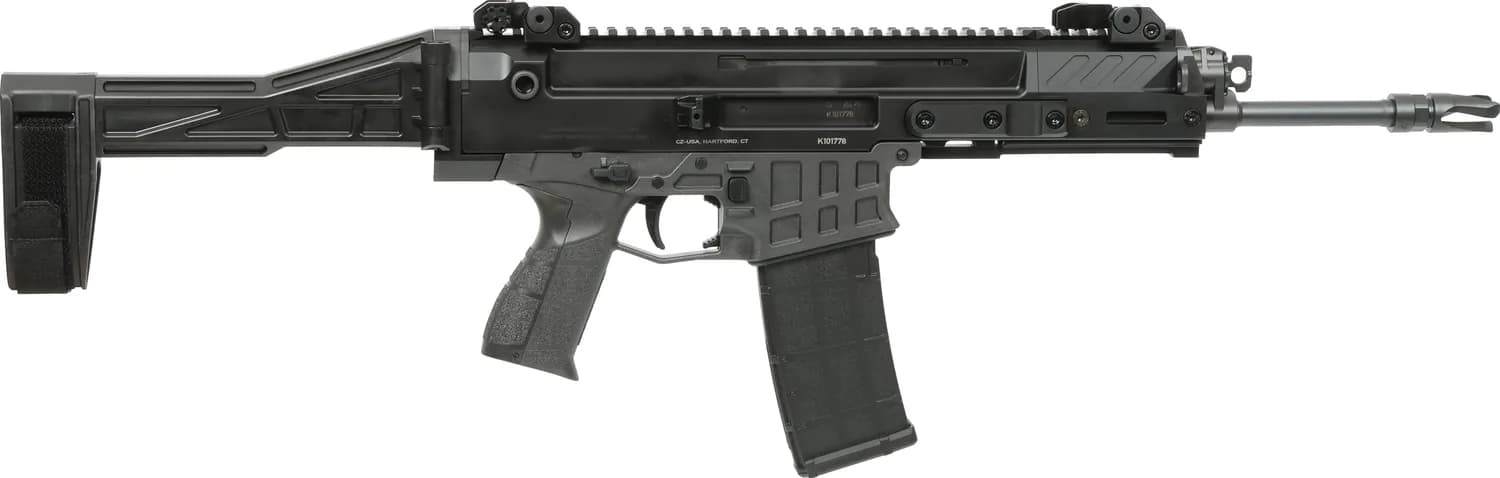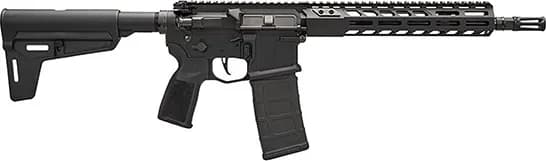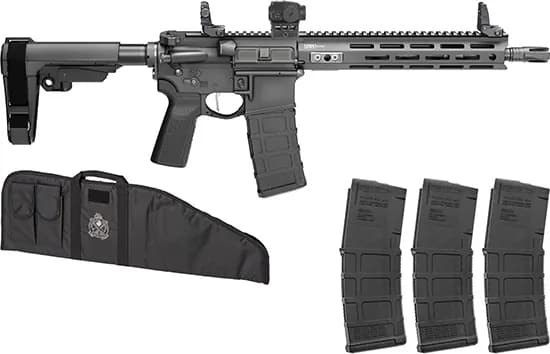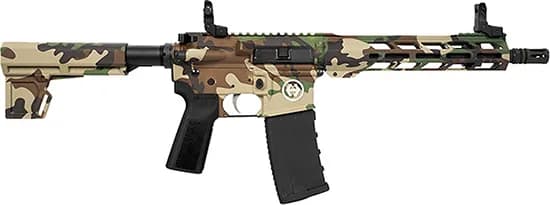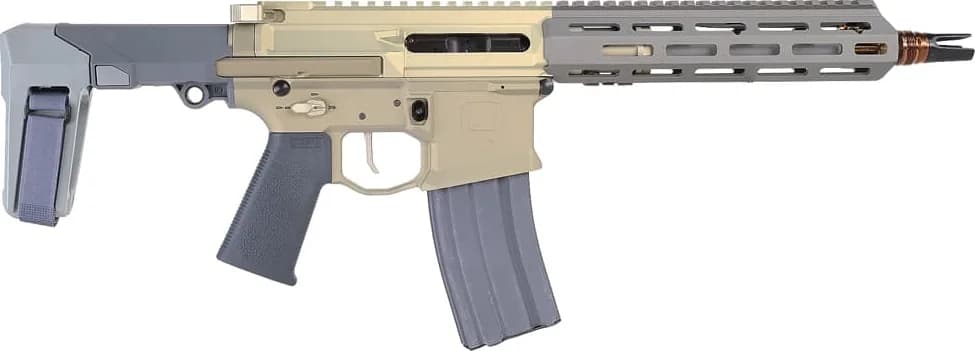
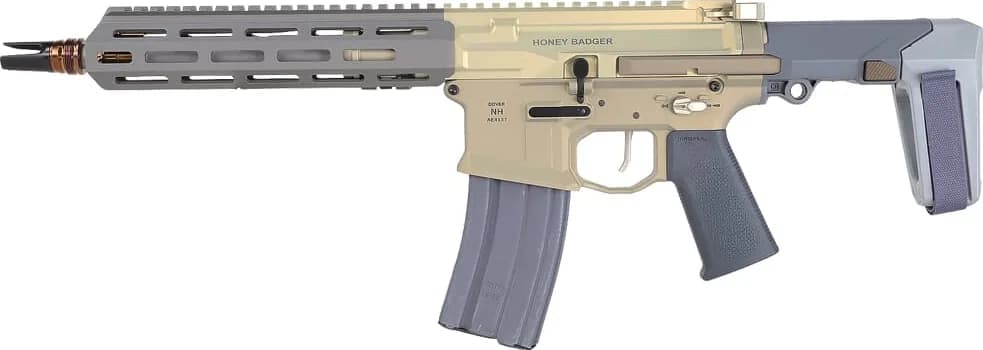
Adjustable Gas Block, 2-Stage Match Trigger, Picatinny Rail, Q-sert Handguard, Pistol Brace
The Honey Badger pistol arriving from Q, LLC is the civilian descendant of a PDW concept that dates back to the AAC Honey Badger and the work of Kevin Brittingham. Q’s modern Honey Badger family was developed after Brittingham founded Q and revived the concept with a focus on a compact, suppressor-friendly AR-type platform. Q describes the Honey Badger line as a “personal offensive weapon” that was originally conceived to meet special-operations needs for an MP5-SD–type capability in an AR-pattern system; the company’s documentation stresses the design’s origins and the intent to deliver a shorter, lighter, and quieter platform using rifle-caliber ammunition.
That development path has not been quiet in the regulatory sense: in 2020 the Bureau of Alcohol, Tobacco, Firearms and Explosives (ATF) issued a cease-and-desist determination against Q’s Honey Badger pistol configuration, characterizing certain braced Honey Badger pistols as short‑barreled rifles. Q and industry groups disputed that interpretation, and the matter generated litigation, temporary suspensions and wide industry discussion about how stabilizing braces are treated under federal rules. Coverage at the time documented the agency action and Q’s response.
Q’s Honey Badger pistol follows the family’s emphasis on compactness and suppressor optimization. The 5.56‑chambered pistol variant ships with a roughly 10‑inch threaded barrel and an M‑LOK handguard with a full-length top rail; Q’s factory literature and dealer spec sheets present the platform as an AR‑pattern, semi‑automatic pistol configured specifically for short overall length and easy suppressor mounting. Factory documentation and product guides also describe a two‑stage match trigger, an adjustable gas block to tune cycling with different ammunition or suppressor backpressure, and the Honey Badger’s proprietary recoil/ buffer system that differs from a traditional carbine buffer tube arrangement.
Ergonomically the Honey Badger diverges from a run‑of‑the‑mill AR. Q’s receivers and handguard are clear‑anodized for the distinctive honey/gold and gray finish that has become a brand signature, and Q typically outfits the pistol with a short, PDW‑style collapsible brace produced in partnership with SB Tactical. The HBPDW‑style brace (and its SB Tactical retail version) is a compact, integrated buffer/bracing kit that reduces length of pull and keeps the rear profile small; reviewers have noted the brace’s short collapsed length and that the Honey Badger receiver has machined rails to accept the brace assembly. Many factory builds also use a Magpul‑pattern grip (Magpul K or similar) and ambidextrous controls such as a Radian-style safety lever on higher‑trim examples.
From a handling perspective the spec sheet translates into a fast, maneuverable gun: the short barrel and compact brace keep overall length down, the M‑LOK handguard allows close‑in support hand placement, and the two‑stage trigger improves perceived control for precision follow-ups. The trade‑offs are familiar—short 5.56 barrels reduce muzzle velocity compared with longer rifles, and PDW geometry compresses sight radius and accessory real estate—so the Honey Badger accepts engineering compromises to prioritize mobility and suppressor compatibility.
Published hands‑on reviews of Q’s 5.56 Honey Badger variants describe generally good accuracy for the platform’s intended role and praise the suppressor‑first engineering. Testers note the two‑stage match trigger offers a predictable let‑off and that with the adjustable gas block the gun can be tuned to run reliably with both supersonic and suppressed subsonic loads when appropriate settings (and break‑in) are used. Reviewers who evaluated the 5.56 models also flagged the system’s light weight and short‑stroke handling as strengths for close‑in work and rapid target transitions.
On the other hand, community reports have been mixed on reliability in the field: several owners and forum threads document a small but real set of break‑in and parts‑fit issues that required tuning—buffer/spring swaps, gas‑block adjustments, or minor fitting—to achieve trouble‑free cycling across a wide variety of ammunition and suppressed configurations. These are not universal failures, but they are common enough in community discussion to be part of the performance picture—particularly for shooters expecting flawless out‑of‑the‑box operation without configuration.
Durability impressions are likewise a balance: reviewers of Q’s suppressed Honey Badger SD and related products have praised Q’s finish choices (clear anodize and selective coatings on suppressors) and the overall component fit, but some owners have reported cosmetic blemishes on early production runs and emphasized that proprietary components (brace/buffer assembly, handguard tooling) can complicate simple swapping of off‑the‑shelf AR parts.
The Honey Badger pistol’s sweet spot is short‑range, maneuver‑centric work: suppressed or unsuppressed close‑quarters training, vehicle‑adjacent deployments, home‑defense setups in jurisdictions where such a configuration is lawful, and as a compact pistol‑caliber alternative for ranges where a short, rifle‑caliber platform is preferred. Its 30‑round magazine capacity and AR‑style controls make it easy to integrate into existing AR training and magazines, while the 10‑inch 5.56 barrel preserves more velocity and terminal performance than extremely short rifle barrels.
Limitations are inherent to the architectural choices. Short 5.56 barrels mean diminished ballistic performance compared with full‑length rifles at extended ranges; the brace‑centric design creates regulatory complexity in some legal environments; and the use of proprietary buffer/brace components means some owners see less parts interchangeability than a standard mil‑spec AR. For buyers that prize maximum aftermarket interchangeability or long‑range performance, a conventional AR‑15 build with a longer barrel may be a better match.
Q has positioned the Honey Badger pistol as a premium, factory‑finished PDW/PDW‑style AR pistol that brings a ready‑to‑run, suppressor‑friendly package out of the box. Compared with compact AR pistols and PDWs from other manufacturers, the Honey Badger differentiates on finish, integrated brace engineering, and the brand’s suppressed‑weapons ecosystem (suppressors and muzzle devices designed to work in Q’s family). That positioning commands a premium relative to a do‑it‑yourself short‑barrel AR build, but it also offers a finished product with factory‑matched components and a distinct aesthetic and engineering approach. Reviewers and buyers therefore tend to weigh brand, factory fitment, and suppressor‑centric design against cost and aftermarket flexibility when judging value.
Taken together, the Honey Badger pistol is a distinctive, purpose‑driven option for shooters who want a compact, suppressor‑capable 5.56 platform that preserves AR ergonomics in a small package. Its strengths—ergonomic PDW layout, factory matched brace and buffer system, match trigger and adjustable gas tuning—are balanced by regulatory complexity, some owner‑reported break‑in/tuning needs, and the usual ballistic compromises of a short‑barrel 5.56. For those who prioritize that specific mission set, it remains one of the more fully realized factory PDW builds on the market.
Start with a practical guide if you want a faster way to narrow the field before comparing specific models.
Learn how to choose the right handgun for home defense based on safety, ease of use, and practical everyday considerations.
Read guideComparison-focused shoppersA practical guide to comparing handguns the right way: what actually matters, what to ignore, and how to use comparison tools effectively.
Read guideFirst-time buyersLearn how to choose your first handgun by focusing on size, comfort, ease of use, and budget instead of getting lost in unnecessary details.
Read guide