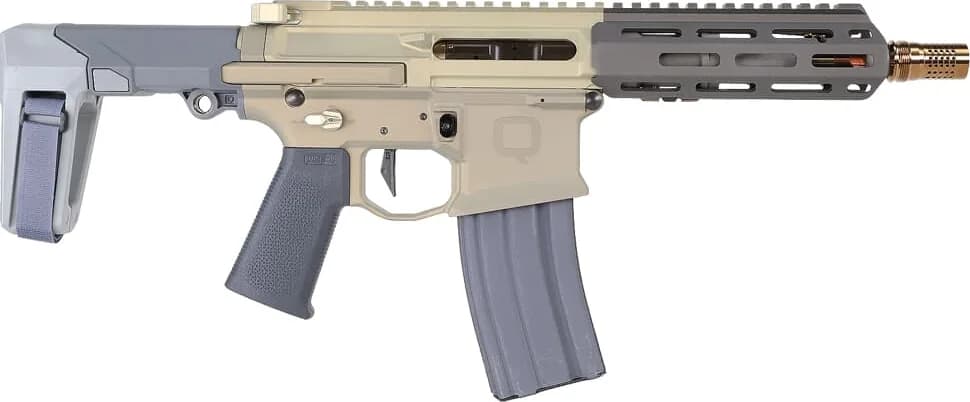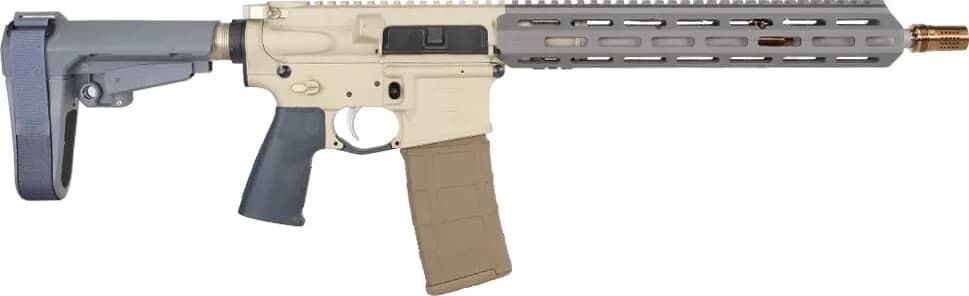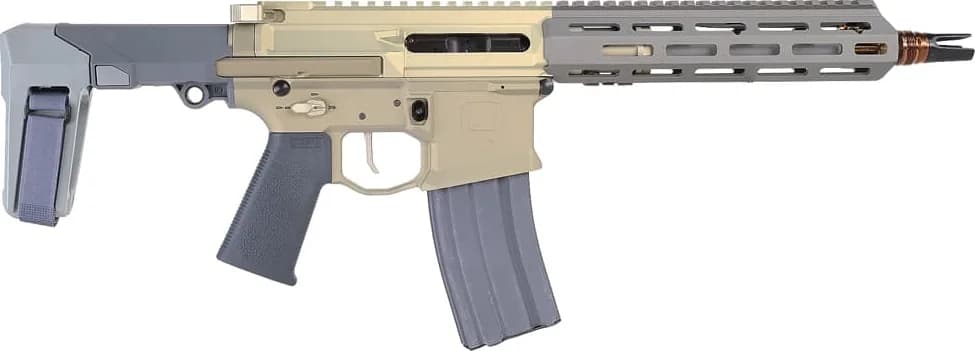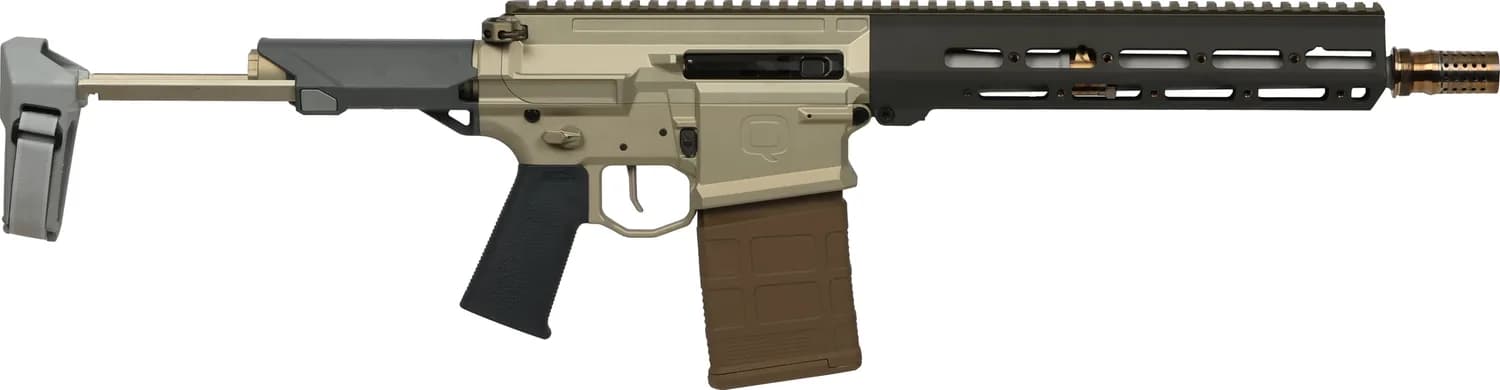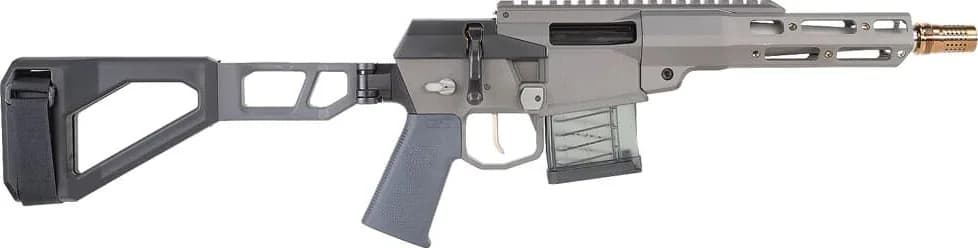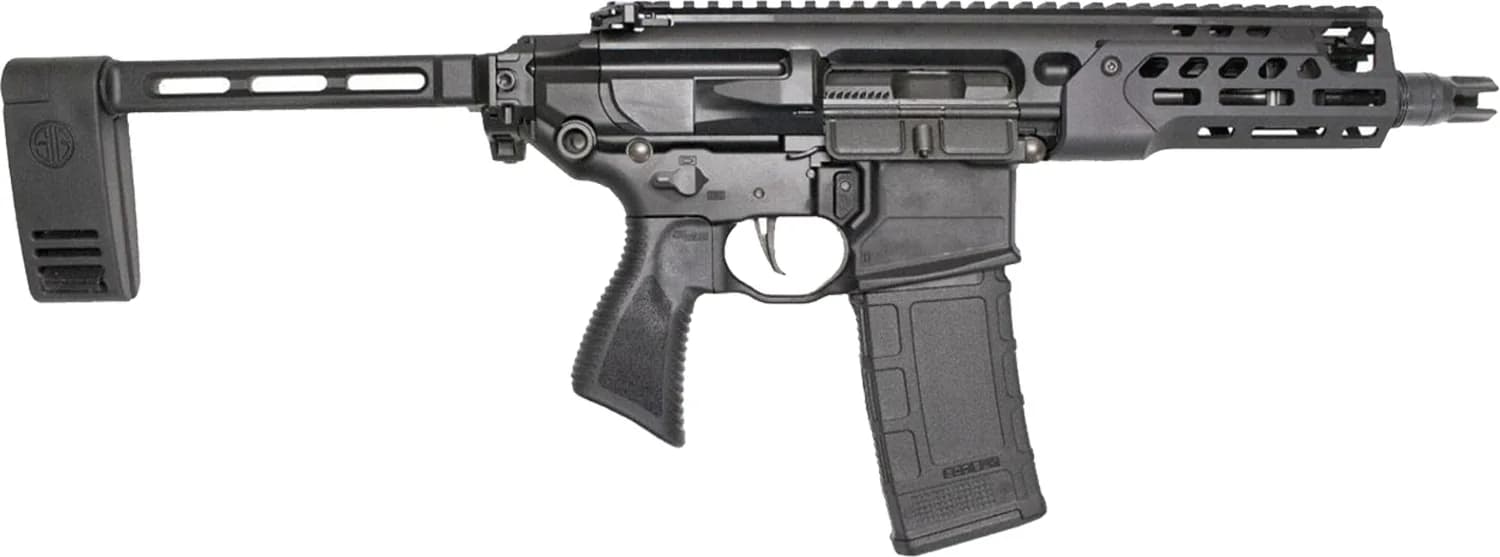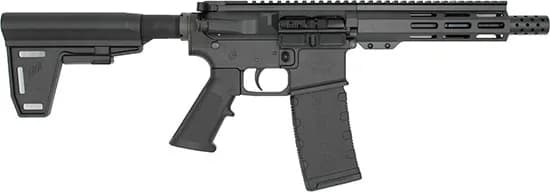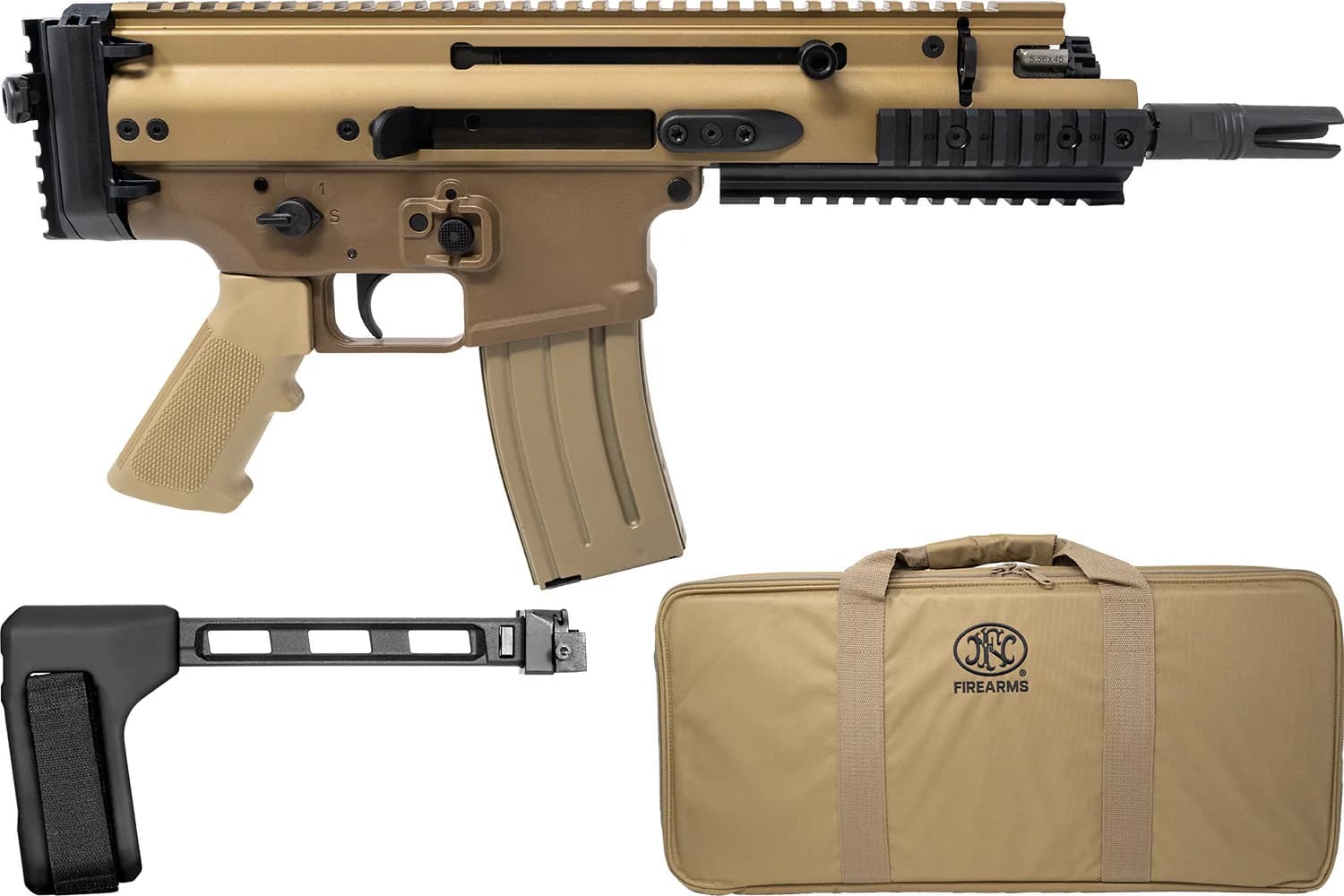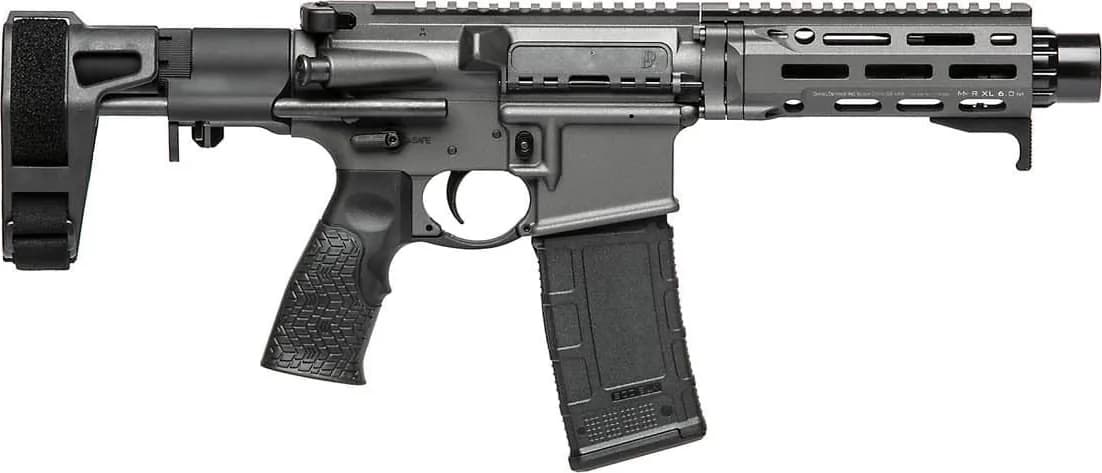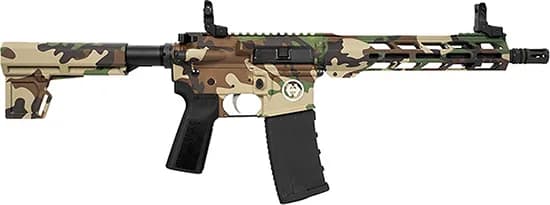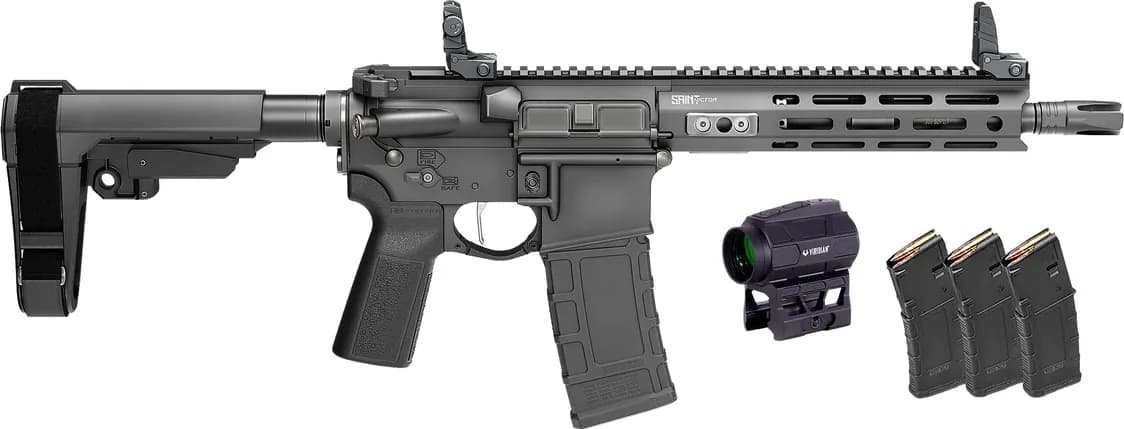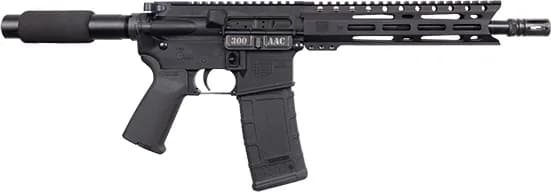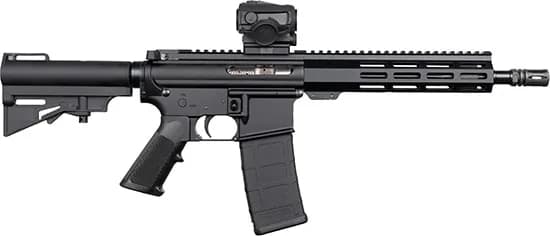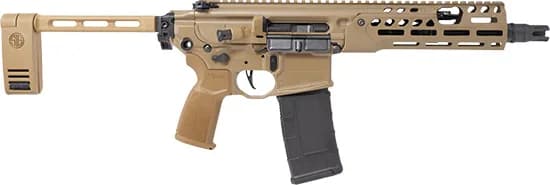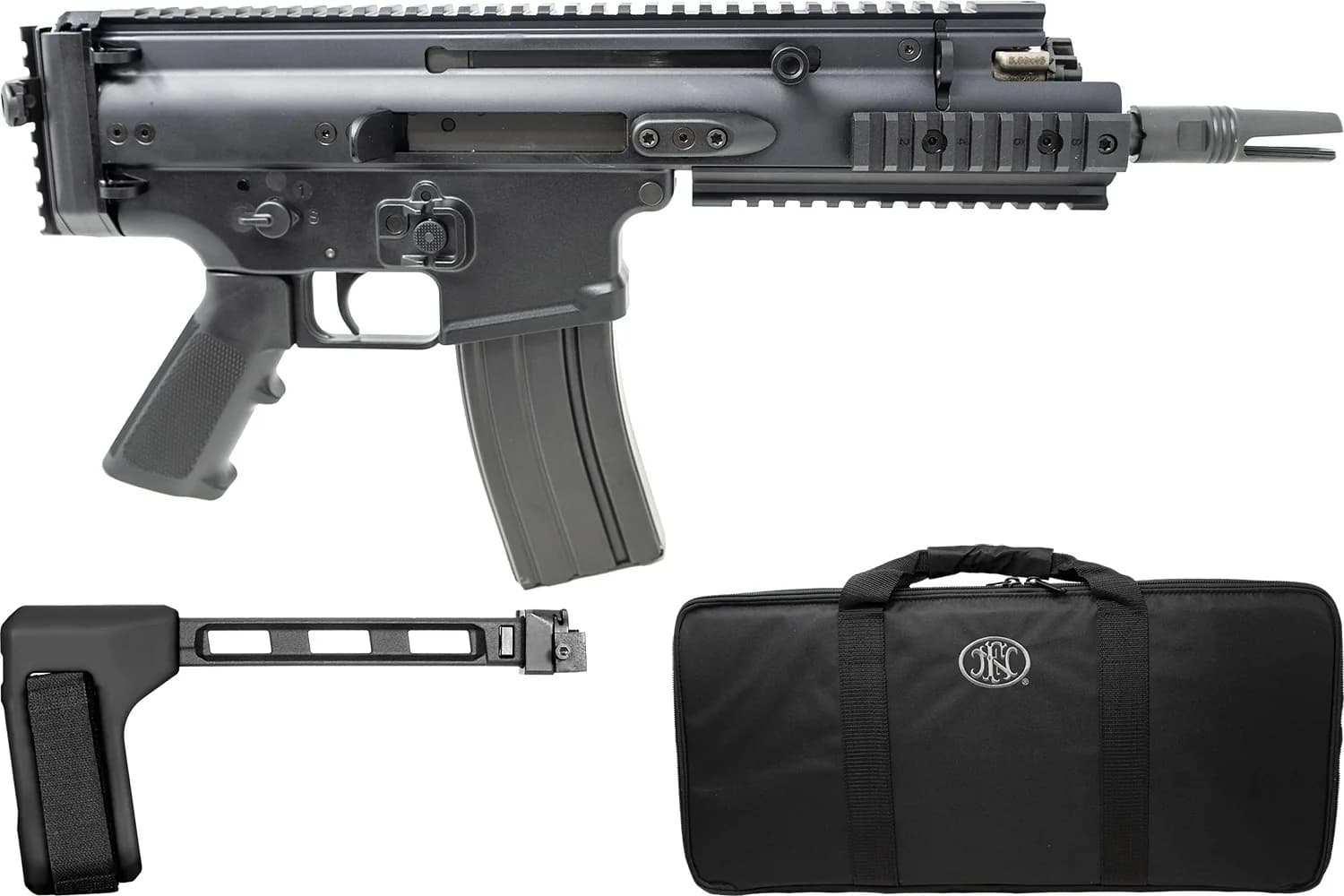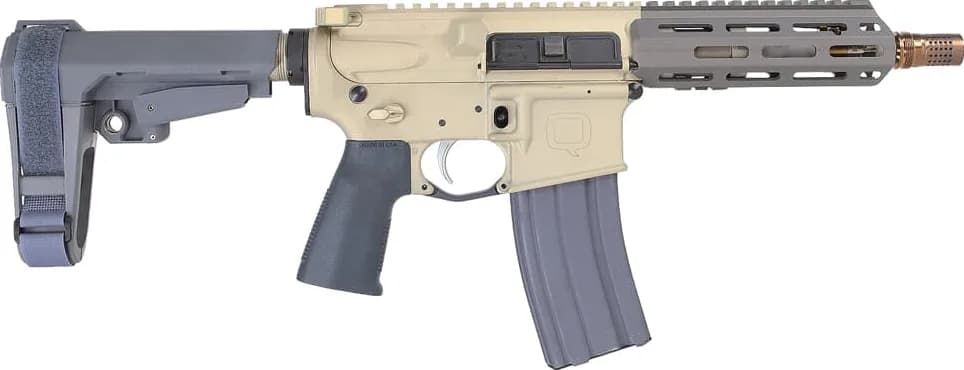
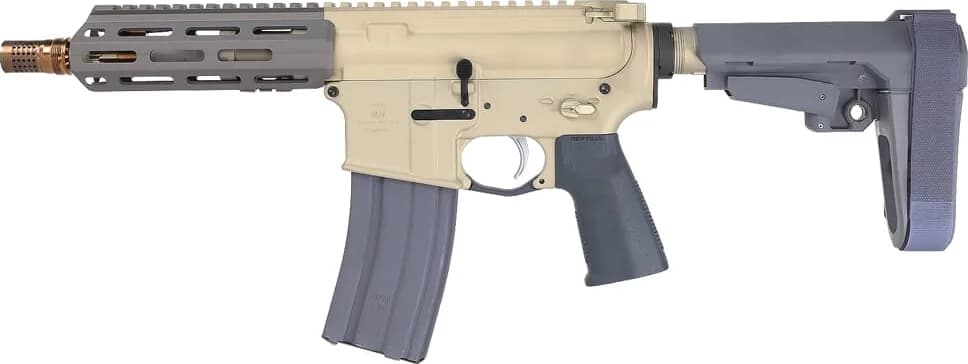
Adjustable Gas Block, 2-Stage Match Trigger, Picatinny Rail, MLOK Handguard, Pistol Brace
The Sugar Weasel arrived as Q, LLC’s pragmatic counterpoint to the company’s more expensive Honey Badger family — a compact AR-style platform offered in several configurations, including a 7‑inch .300 AAC Blackout pistol variant. Published reviews and vendor materials describe the Sugar Weasel as a “downsized” or more budget-friendly sibling to Q’s Honey Badger designs, reusing the core short‑barrel, suppressor‑oriented philosophy but with simpler construction and off‑the‑shelf components where the Honey Badger uses more bespoke parts. The Sugar Weasel has appeared in Q’s product line in multiple barrel lengths and calibers and has been referenced in regulatory and product‑listing documents alongside Q’s other small‑format platforms.
Q’s move with the Sugar Weasel fits a broader industry pattern: offering a compact, suppressor‑friendly AR variant that is easier to produce and sell at a lower price point than a fully bespoke PDW. That positioning — a purpose‑built short‑barrel AR optimized for .300 BLK performance with a simplified feature set — is how most contemporary reviews and spec summaries treat the product.
The .300 Blackout Sugar Weasel pistol is built around a 7‑inch barrel and a short, pistol‑length gas arrangement intended to be tuned for suppressed subsonic use while still running supersonic loads with proper adjustment. Factory configurations commonly include an adjustable gas block, a Cherry Bomb style muzzle device designed for close‑tucked suppressor compatibility, and a short free‑float M‑LOK handguard with a continuous Picatinny/flat top rail for optics and accessories. Typical factory furniture has included a pistol stabilizing brace and a Magpul‑style pistol grip; some press materials and dealer flyers also list a two‑stage “match” trigger on certain Sugar Weasel builds. Several government and dealer listings show the platform offered in both anodized and cerakote finishes and with 30‑round magazine compatibility in standard configurations.
In practice the combination of a very short barrel, heavy‑profile chambering for .300 BLK, and an adjustable gas system forces certain engineering tradeoffs. Short barrels change the pressure curve and increase gas port pressure at the gas block, so designers give the user an adjustable gas block and a robust carrier and buffer arrangement to lengthen dwell and soften the carrier impact. The Sugar Weasel’s parts kit—standard AR‑pattern bolt/carrier groups and commercial grip/brace components—keeps serviceability simple and parts compatibility high. That approach reduces manufacturing cost but also leaves more of the final tuning burden to the owner when they add a suppressor or shift between heavy subsonic and light supersonic loads.
Ergonomically the platform reads like a short AR: balance tends to be forward of the receiver because of the short handguard and the short barrel, and with a brace installed the Sugar Weasel is intended for one‑hand or braced‑shoulder control rather than full stock‑length cheek weld. Reviewers note that with common pistol braces and modern optics the handling is intuitive for shooters familiar with AR‑pattern controls.
Independent reviews and hands‑on writeups describe the Sugar Weasel as “suppressor‑friendly” when properly set up, with manageable recoil and a point‑of‑aim that holds reasonably well for close engagements. Short‑barrel .300 BLK is most effective when matched to the intended ammunition (heavy subsonic for suppressed use, lighter supersonic for maximum velocity), and testers consistently emphasize that the adjustable gas block must be tuned to the ammo/suppressor combination to avoid short‑stroking or over‑gassing. When tuned, reviewers report reliable cycling and pleasant follow‑up shots with subsonic loads; when not tuned, users have reported extraction/ejection problems or the need to change buffer configurations.
Accuracy expectations for a 7‑inch .300 BLK pistol are modest: the cartridge performs well in short barrels against close targets, but the platform is not a long‑range precision rig. Review testing and buyer experiences typically praise the gun for consistent 25–100‑yard work when using quality ammunition and optics, and they note that a quality two‑stage trigger (where fitted) improves shot‑to‑shot control. Durability reports are mixed: many owners describe thousands of trouble‑free rounds, while a smaller number of owners on public forums report early‑life teething issues that required gas‑system adjustments or parts replacement. That split mirrors the broader market pattern for value‑oriented factory ARs.
The Sugar Weasel’s sweet spot is short‑range, suppressed PDW or home/vehicle defense roles where compactness and muzzle‑suppressor compatibility matter. Its 7‑inch barrel length and threaded muzzle make it natural for owners who plan to run a can; the .300 BLK cartridge performs well suppressed with heavy subsonic bullets, and the built‑in adjustable gas arrangement helps tune the action for that use. It is also a convenient platform for range work where compact AR handling is desired, and some owners convert or register builds as SBRs for suppressed short‑barrel use where legal. The platform is less suitable for precision long‑range shooting, general‑purpose patrol work that demands longer sight radius and barrel, or for buyers who want a turnkey, out‑of‑box ultra‑low‑maintenance solution without any setup.
The Sugar Weasel sits below Q’s Honey Badger in the company hierarchy: reviewers and retailers frame it as a more affordable, simpler way into Q’s short‑barrel AR philosophy. That positioning has attracted buyers who want a compact .300 BLK PDW without paying for the Honey Badger’s milled parts and higher‑end components, but it has also drawn criticism from some enthusiasts who argue that the Sugar Weasel is a fairly conventional short‑barrel AR re‑badged at a premium. Overall, the gun’s reputation is pragmatic rather than glamorous — it offers many of the same advantages as other 7‑inch .300 BLK pistols (suppressor compatibility, compact handling, parts commonality) but requires user attention to gas tuning and set‑up to reach its best performance. Public commentary and sales materials therefore emphasize the Sugar Weasel as a value‑oriented Q product rather than the company’s flagship.
Across the board, buyer and reviewer feedback converges on a few practical takeaways: the Sugar Weasel will do exactly what a short‑barrel .300 BLK pistol is designed to do when assembled and tuned correctly, it benefits from aftermarket tuning and sensible suppressor pairing, and it occupies a clear place in the market as Q’s accessible, compact offering rather than a top‑tier boutique PDW.
Start with a practical guide if you want a faster way to narrow the field before comparing specific models.
Learn how to choose the right handgun for home defense based on safety, ease of use, and practical everyday considerations.
Read guideComparison-focused shoppersA practical guide to comparing handguns the right way: what actually matters, what to ignore, and how to use comparison tools effectively.
Read guideFirst-time buyersLearn how to choose your first handgun by focusing on size, comfort, ease of use, and budget instead of getting lost in unnecessary details.
Read guide