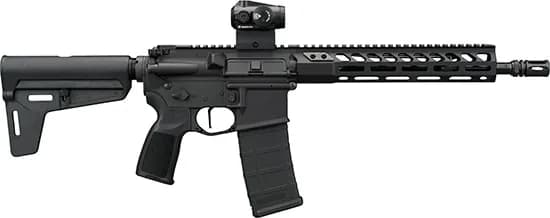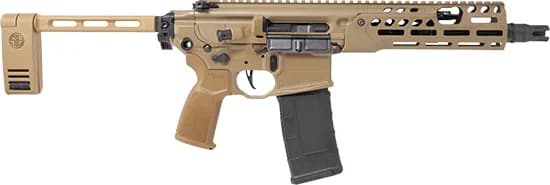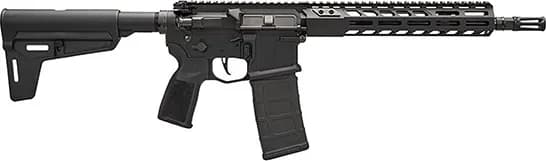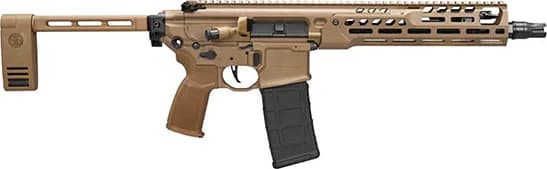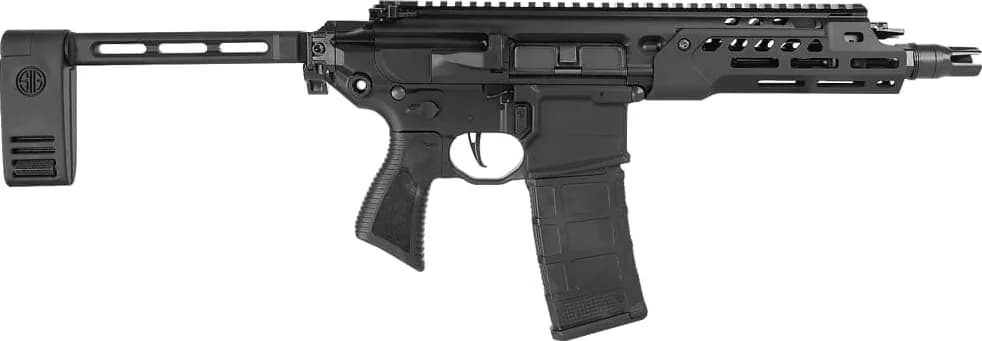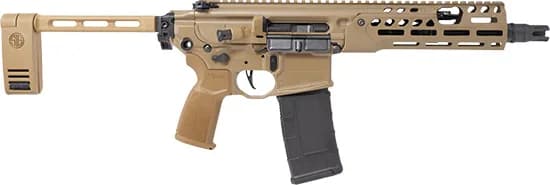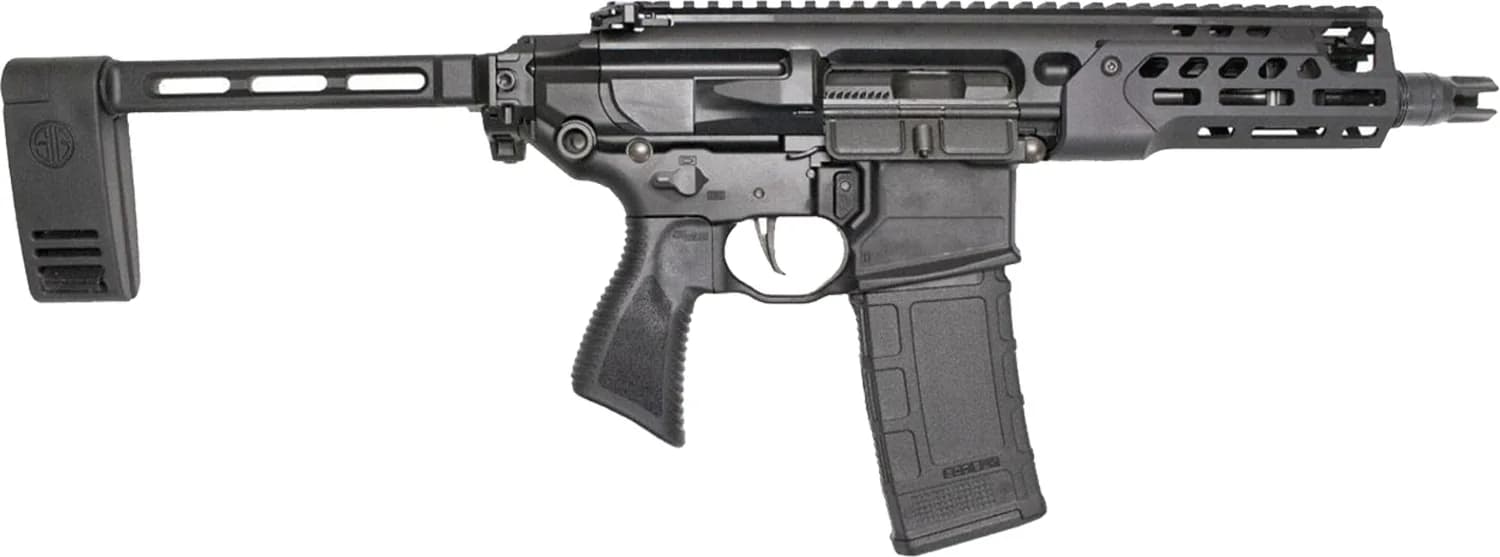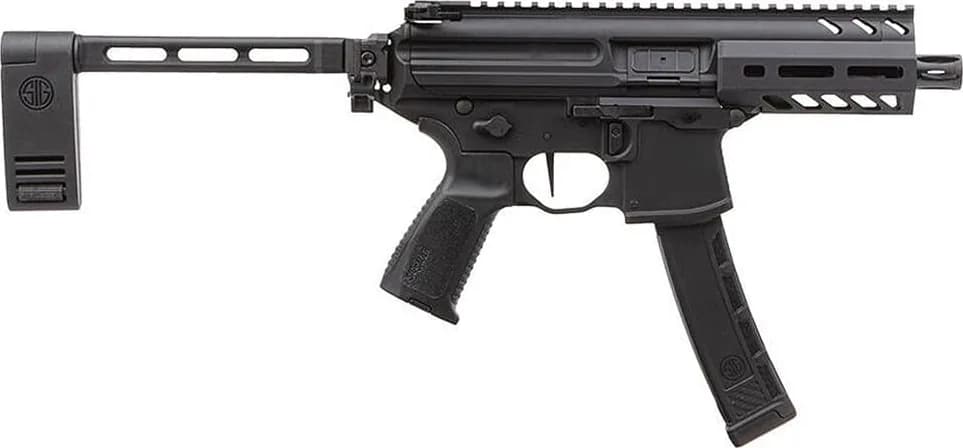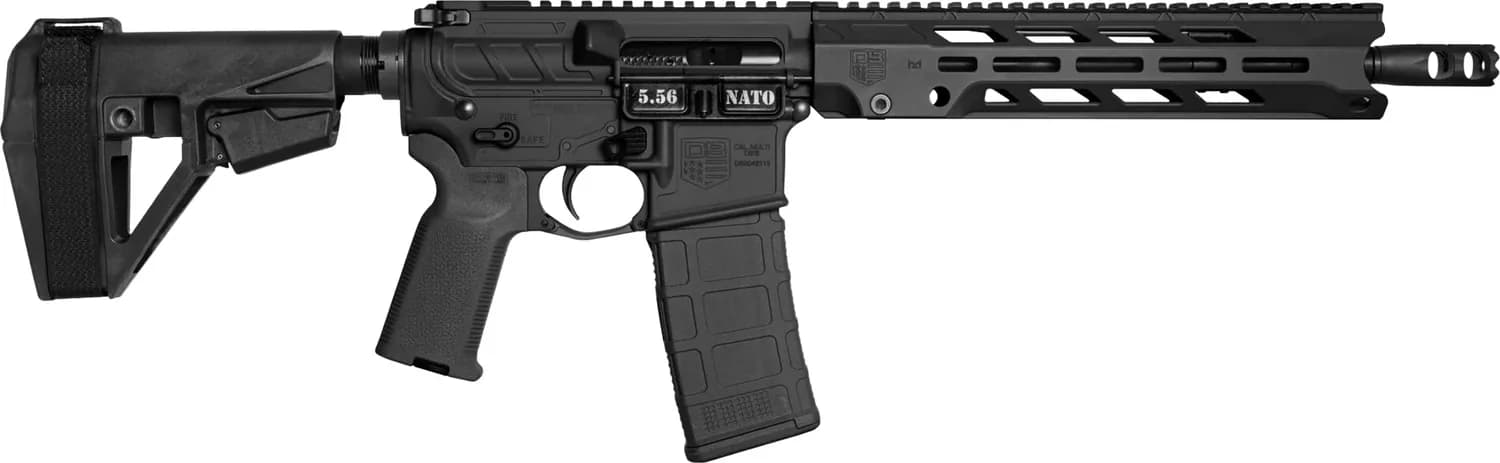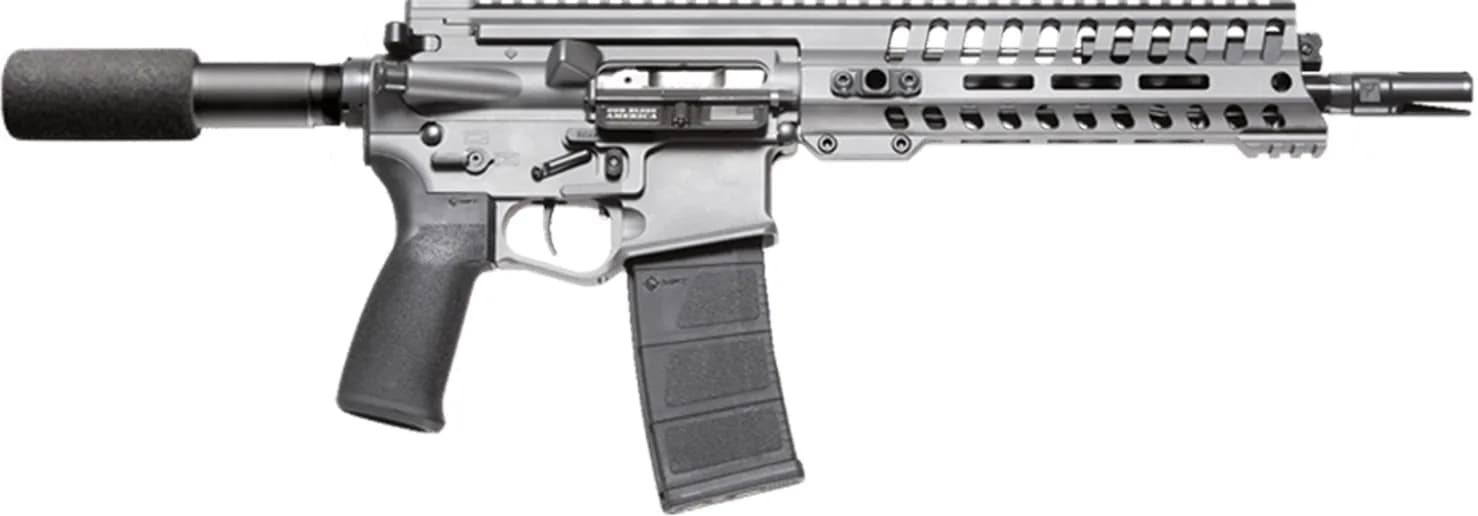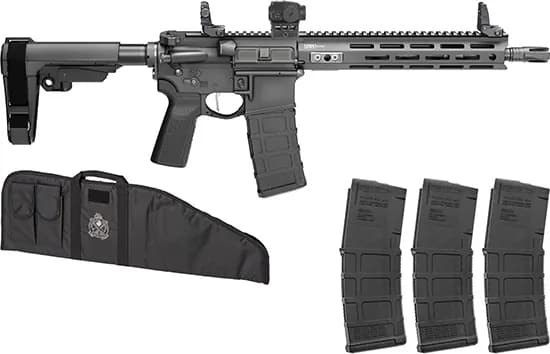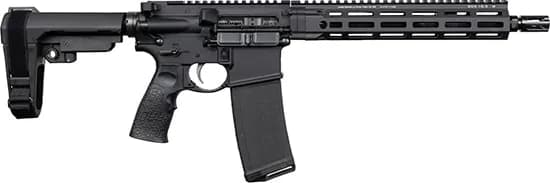
Free-Floating M-LOK Handguard, Fully Ambi Controls, Rear and Side Non-Reciprocating Charging Handles
The SIG Sauer 516 G3 is the third-generation iteration of SIG’s 516 family — a short-stroke gas‑piston AR‑pattern platform that SIG reworked to incorporate lessons learned from the MCX line and to meet modern duty requirements. SIG publicly demonstrated the refresh during SIG NEXT events in mid‑2025 and subsequently folded the model into its catalog offerings; the company and industry press positioned the G3 as a return of the 516 name with heavier-duty internals, updated ergonomics and modern accessory interfaces.
SIG has presented the 516 G3 as a multi‑role platform intended for professional users (military and law enforcement) while also marketed to serious civilian shooters who want a robust, piston‑driven AR‑style rifle. The G3 name covers several configurations and barrel lengths — SIG’s materials and press coverage note 11.5", 14.5" and 16" barrel options — allowing customers to choose a carbine, short‑barrel or standard‑rifle form factor depending on legal and mission requirements.
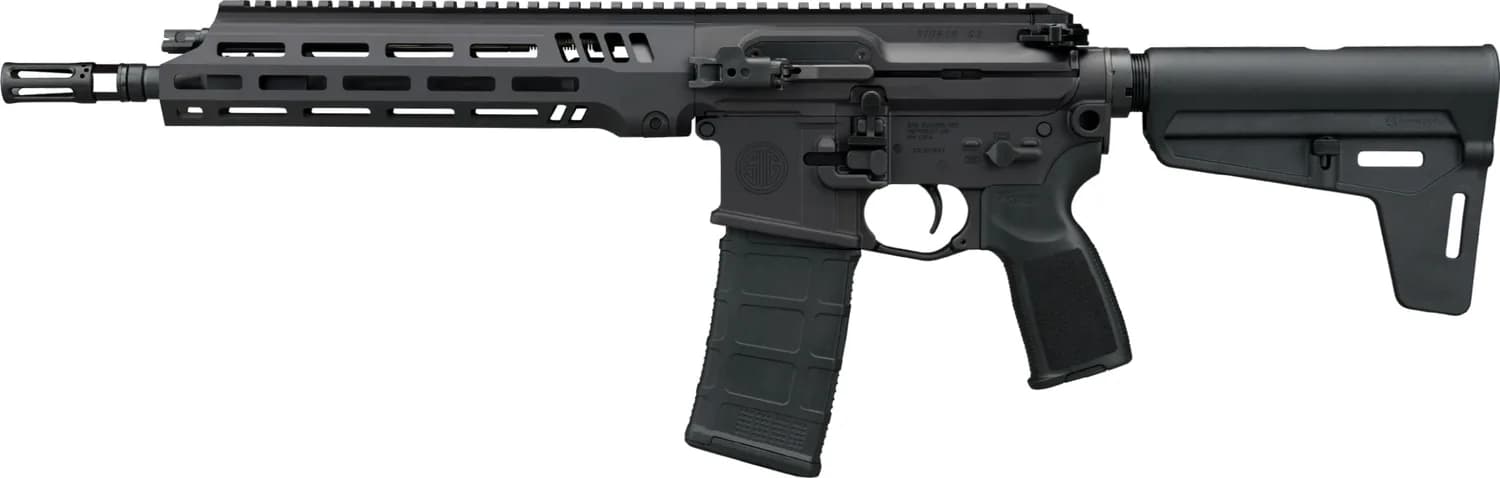
At its core the 516 G3 is a short‑stroke gas piston design with a rotary bolt, but SIG redesigned major wear points with hardened, replaceable steel inserts and updated feed geometry to improve longevity and serviceability. The upper receiver incorporates a raised top rail and a folding, non‑reciprocating side charging handle in addition to a traditional ambidextrous top charging handle — giving operators multiple ways to charge and clear the rifle without changing firing grip. SIG also included a multi‑position adjustable gas valve and a granulated‑tungsten buffer to broaden suppressed and adverse‑condition reliability. These features are called out in SIG’s own materials and the rifle’s operator documentation.
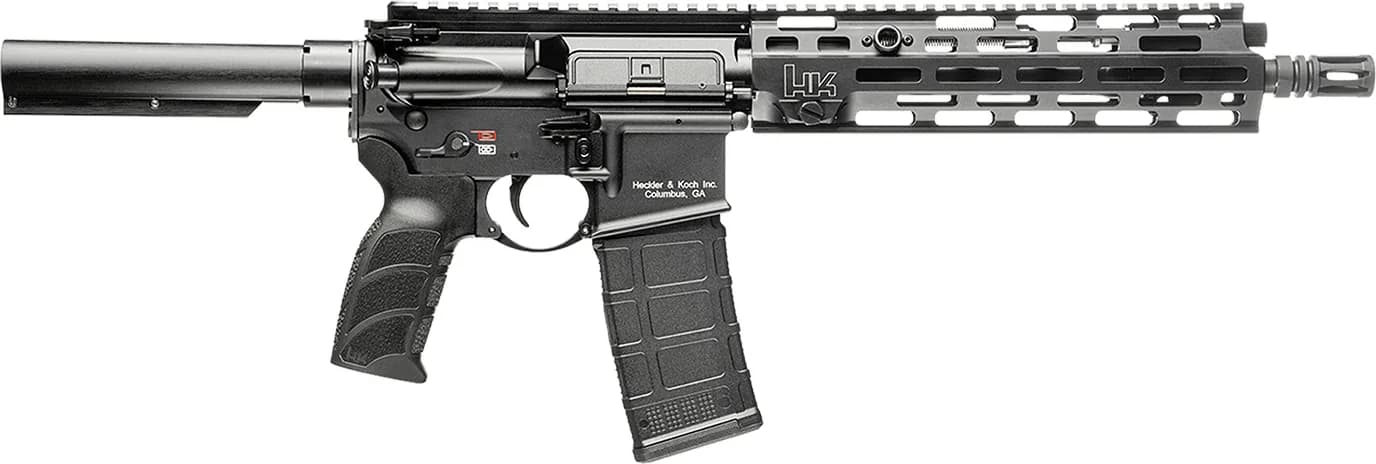
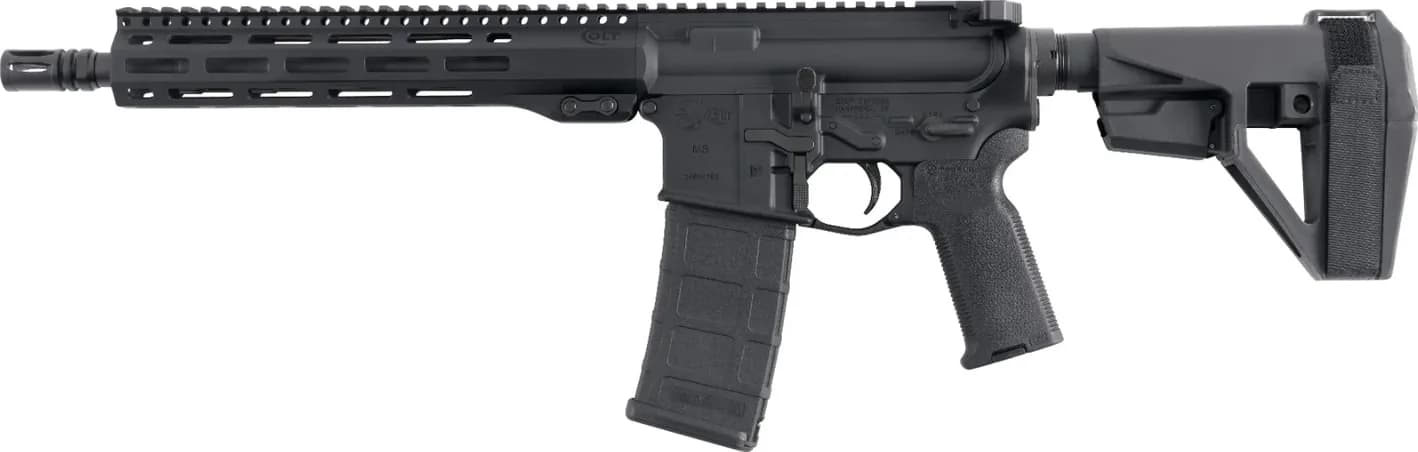
The 516 G3 ships with a free‑floating M‑LOK handguard and a full‑length top rail, enabling modern accessory fitment while keeping the barrel isolated for accuracy. SIG carried forward a reduced‑angle pistol grip and an ambidextrous lower‑receiver layout; high‑use components such as the cam path and feed ramps are steel and modular, which makes field servicing and part replacement easier than on many traditional AR designs. Early hands‑on coverage highlighted SIG’s intent to blend AR familiarity with MCX‑derived durability upgrades.
Early hands‑on reviews and SIG’s own demonstrations emphasize the G3’s controllability and “soft” recoil impulse compared with direct‑impingement AR‑pattern rifles. Reviewers who fired the platform during range demonstrations noted flat‑shooting behavior and good follow‑up shot control, which is consistent with short‑stroke piston operation and a heavier buffer system that damps felt recoil. The side charging handle was singled out repeatedly as ergonomically beneficial, particularly for manipulations from weak‑side positions and when using optics.
SIG and reviewers describe accuracy as consistent with a modern, cold‑hammer‑forged 5.56 barrel patterned to a 1:7 twist on many configurations; as with any modern AR‑class platform, practical accuracy will depend on the specific barrel length, ammunition choice and optic combination. The updated internal geometry and hardened wear parts are intended to improve long‑term durability, and operator documentation details an adjustable gas valve with settings for normal, adverse and suppressed operation to keep the action working across loads and environments.
The 516 G3 is best understood as a duty‑oriented, modular carbine/rifle platform. Its strengths include suppressed operation and reliability in adverse conditions (thanks to the adjustable gas valve and piston system), strong ambidextrous ergonomics, and a free‑floating M‑LOK fore‑end that accommodates modern accessories — all qualities that align it with patrol, protective services and tactical competition roles. The various barrel lengths allow it to be configured for close‑quarters work, general patrol use, or longer‑range engagements depending on configuration.
Limitations are pragmatic rather than technical. Piston systems typically add weight and mechanical complexity compared with lightweight DI ARs; the G3’s reinforced components and buffer system make it heavier than minimalist AR‑15s, which matters to shooters prioritizing minimal carry weight. Short‑barrel variants (11.5") will be marketed and sold in different legal configurations depending on jurisdiction (pistol, SBR, or short‑barreled rifle), so buyers should be aware of local laws and transfer requirements. Finally, as with any newly refreshed platform, long‑term service records and broader user feedback will take time to accumulate beyond initial hands‑on impressions.
SIG positioned the 516 G3 as a modern, duty‑grade evolution of the 516 line rather than a budget AR. Its parts‑upgrades from the MCX family, ambidextrous focus, and emphasis on serviceability place it in the premium tier of AR‑pattern piston rifles — a segment populated by producers who sell mission‑oriented carbines to law enforcement, government and demanding civilian shooters. Industry coverage at launch and early hands‑on reporting framed the G3 as SIG’s answer to contemporary piston AR competitors rather than a mass‑market entry, stressing compatibility with AR‑style lowers and a design intent that favors durability over lightweight economy.
Community discussion and buyer comparisons have paired the G3 against other high‑end piston hosts (products from makers such as PWS, LMT and similar tactical manufacturers) with debate centered on which platform best balances weight, recoil impulse and long‑term parts availability. That conversation reflects typical buyer tradeoffs in this class: some prefer the marginal weight savings and simplicity of DI rifles, while others prioritize the G3’s suppressed‑use and durability features despite a higher price point. Early reporting suggests SIG is aiming squarely at buyers who want a battle‑ready, serviceable AR‑pattern rifle that preserves AR ergonomics while improving duty‑cycle longevity.
The 516 G3 is therefore not positioned as a lightweight range toy but as a modernized, mission‑capable evolution of the 516 family — one that combines SIG’s recent engineering lessons with familiar AR controls for users who need durability, ambidextrous ergonomics and suppressed‑mission responsiveness.
Start with a practical guide if you want a faster way to narrow the field before comparing specific models.
Learn how to choose the right handgun for home defense based on safety, ease of use, and practical everyday considerations.
Read guideComparison-focused shoppersA practical guide to comparing handguns the right way: what actually matters, what to ignore, and how to use comparison tools effectively.
Read guideFirst-time buyersLearn how to choose your first handgun by focusing on size, comfort, ease of use, and budget instead of getting lost in unnecessary details.
Read guide